Abstract
The present work aims to explore the hardware design innovations in the development of AI-enabled wearable audio devices that can effectively capture and transmit audio streams to facilitate real-time cloud-based transcription services. Despite the significant improvements in the development of cloud-based AI models in the recent past, the effectiveness of the transcription services largely relies on the quality of the audio signals that can be effectively captured by the hardware of the wearable device. The effectiveness of the transcription services in real-world applications has been adversely affected by the limitations in the acoustic signal acquisition, thermal management, and form factor design of the wearable audio device. To overcome the limitations in the development of the AI-enabled wearable audio device, the present work aims to propose a hardware-AI co-design methodology to develop a compact ESP32-based wearable audio device that can effectively optimize the audio transmission stability in real-world applications. The acoustic, thermal, and form factor aspects of the proposed wearable audio device were effectively simulated using finite element simulations and laboratory experiments. Experimental results have shown that there are improvements in speech intelligibility using metrics such as STOI and PESQ, and thermal stability that avoids throttling and provides skin-safe operating temperatures during extended periods of operation. This shows how critical it is to optimize hardware components such as acoustics, thermal, and ergonomic design to ensure audio streaming and capturing for robust cloud-based AI transcription services for next-generation audio wearables.
Keywords
AI wearables; acoustic waveguides; passive thermal management; microphone array geometry; embedded AI systems; human-centered hardware design
1. Introduction
Artificial intelligence (AI) devices in the form of wearable have been rapidly developing out of the early fitness trackers and notification-based systems to a higher level of platform that is capable of continuous sensing, real-time speech capture, contextual interpretation, and cognitive assistance. Recent developments in embedded processors and low-power wireless communication technologies have enabled wearable devices capable of continuous speech capture and real-time transmission to cloud-based AI systems for transcription and contextual analysis: continuous conversation transcription, health monitoring, and memory support on the everyday setting [1, 4, 13, 16]. The above advances make wearable AI systems a central element of the future human-computer interaction and ambient intelligence systems.
In architectures where transcription is performed in the cloud, the role of the wearable device is that of an edge capture platform, where the main responsibility is to ensure that audio acquisition is performed properly, along with some basic processing and stable transmission of the captured audio signal.
These advances notwithstanding, Even though the cloud-based automatic speech transcription systems have greatly improved in the past few years, the actual accuracy of the systems has been largely dependent on the quality of the audio picked up by the wearable device as well as the reliability of the wireless channel. Although considerable advancements have been achieved in speech recognition algorithms in cloud environments, it has been observed that the effectiveness of speech recognition in cloud environments is restricted by the quality of audio captured at the device level. The position of the microphone, environment noise, motion artifacts, and acoustic characteristics of the enclosure may negatively affect the quality of audio captured at the device level. But, as ample research in wearable sensing and embedded systems projects would suggest, speech-centric wearables are inherently limited by the material interaction with the world and the human body [3, 13, 29]. Enclosure geometry, microphone port design, turbulence due to airflow and shadowing by the body have a strong influence on acoustic signal integrity, whereas sustained audio capture, buffering, and wireless transmission workloads introduce thermal loads that may cause processor throttling and interrupt continuous audio streaming, and inefficient battery performance and comfort to the user [6, 10, 21].
In such an architecture, the primary role of the wearable device is that of an edge capture device that is responsible for the reliable capture of audio, as well as the transmission of the captured audio to cloud-based AI systems for transcription in a wireless fashion.
Despite the existing literature that explores the acoustic design, thermal management, and ergonomics in single research works, it is clear that a significant gap exists in the literature on systematic and experimentally validated design frameworks that combine these dimensions, specifically to AI-enabled wearable audio devices. Current literature seldom illustrates the direct impact of physical design decisions on the quality, stability and reliability of the data fed to AI models, even though the dependence of AI performance on the fidelity of the input signal to the model is well-established [13, 15, 28].
The paper fills this gap by discussing and supporting a hardware-AI co-design architecture of a wearable audio device based on the ESP32. This work has three-fold contributions, (i) the creation of a new set of acoustic port and waveguide geometries that are optimized to amplify the speech band and withstand noise, (ii) the deployment of passive thermal dissipation mechanisms that allow sustained operation at established skin-safety exposure levels and continuous audio capture and wireless transmission workloads, and (iii) the creation of ergonomic and biometric form-factors that support the wear of the device over extended durations without impairment of the acoustic performance. Combined with the previous contributions, it can be stated that hardware-level optimization is essential for reliable audio capture and transmission supporting cloud-based AI transcription in wearable systems.
While it is possible to carry out transcription using powerful cloud-based AI systems, the reliability of such an end-to-end transcription depends on the quality of the audio signal received and the reliability of continuous data transmission from the wearable device.
| Design Domain | Research Contribution | Technical Objective | Performance Metric / Evaluation Criterion |
| Acoustic Design | Optimized microphone port geometry and acoustic waveguide structures | Enhance speech-band signal capture while suppressing environmental noise | Increase in STOI and PESQ scores; improved signal-to-noise ratio (SNR) in the 1–4 kHz range |
| Acoustic Design | Helmholtz resonator tuning for wearable enclosures | Passive amplification of speech-relevant frequencies | Measured frequency response gain at targeted resonance frequencies |
| Acoustic Design | Geometry-aware microphone array configuration | Improve directional sensitivity and beamforming capability for robust speech capture | Directivity Index (DI) improvement under real-world acoustic conditions |
| Thermal Management | Passive heat-spreading structures using copper/graphite materials | Prevent thermal hotspots and processor throttling during sustained audio capture and wireless transmission workloads | Maximum surface temperature below skin-safety thresholds; sustained clock frequency during continuous operation |
| Thermal Management | Natural convection and enclosure ventilation design | Maintain stable operating temperatures during continuous audio capture and transmission without active cooling | Thermal chamber test results under continuous operation |
| Ergonomic Design | Anthropometric and biometric form-factor optimization | Enable long-duration wear with minimal discomfort and stable device positioning | User comfort scores and wear-duration compliance |
| Ergonomic Design | Mechanical decoupling and motion artifact mitigation | Reduce movement-induced acoustic interference affecting captured speech signals | Reduction in motion-related noise artifacts during user trials |
| System Integration | Hardware–AI co-design framework | Ensure reliable cloud-based AI transcription through improved edge audio capture and transmission stability | End-to-end cloud transcription accuracy and system streaming stability |
2. Related Work and State of the Art
2.1 AI-Enabled Wearable Audio Devices
AI-based wearable audio devices have come a long way in the last few years, from being mere platforms for activity-tracking purposes to sophisticated systems that can perform continuous speech recognition, context-awareness, and cognitive services. The sophistication in embedded sensing, low-power processors, and AI-based signal processing algorithms has led to the development of applications such as speech-to-text, health-related applications, and ambient human computer interaction on wearable devices [1,4,13,16]. Pendant recording devices, smart assistants, and head-worn devices have shown the way towards speech-enabled wearable AI environments.
However, most of the present wearable audio systems still suffer from software optimization relying on external computation. In the literature, it has been shown that noise from the environment, artifacts caused due to motion, and acoustic shadowing of the body result in a degradation of the quality of the audio attributed to the unreliability of subsequent AI analysis and transcription [3,13,29]. In addition, the present systems based on cloud processing or external devices suffer from latency issues and energy costs that make wear-and-tear applications impractical [14,15].
In particular, despite the ongoing enhancement of speech recognition and multimodal fusion algorithms, relatively little research has focused on the role of hardware design in pre-processing audio signals prior to the intervention of AI. As summarized in a number of surveys on wearable sensing, the shortcomings of microphone positioning, enclosure design, and air flow have simply not been adequately addressed after the fact [4, 9, 13].Table 2 is therefore included subsequently, as it will serve to offer a comparison of similar AI-enabling wearable audio devices based heavily on characteristics such as their form factor and hardware limitations.
| Device Category | Form Factor | Audio Capture Strategy | Processing Architecture | Primary Limitations Identified in Literature | Key References |
| Pendant-style AI recorders | Chest-mounted wearable | Single or limited microphone configuration; omnidirectional pickup | Hybrid on-device preprocessing with cloud-based AI inference | Susceptible to body shadowing, motion-induced noise, and wind turbulence; limited robustness in uncontrolled environments | [1,4,13] |
| Head-mounted smart assistants | Glasses or headset-based | Multiple microphones with basic beamforming | On-device signal processing with partial offloading | Improved directionality but constrained by form-factor acoustics and user comfort; thermal buildup near skin-contact areas | [4,16,29] |
| Smart earbuds / ear-worn devices | In-ear or behind-the-ear | Near-field microphones; adaptive noise cancellation | Highly optimized on-device DSP with AI assistance | Optimized for telephony rather than ambient speech capture; limited performance for conversational transcription in open environments | [13,25] |
| Multimodal health wearables with audio | Wrist or body-worn | Secondary audio sensing combined with physiological sensors | Sensor fusion with AI-driven post-processing | Audio capture treated as auxiliary modality; poor speech intelligibility under environmental noise | [3,15,29] |
| Smartphone-tethered wearables | Various (clip-on, pendant) | Basic microphone capture relying on external processing | Heavy reliance on companion smartphone or cloud | Latency, privacy concerns, and reduced autonomy; inconsistent audio quality due to hardware constraints | [14,16] |
| Experimental research prototypes | Custom wearable platforms | Geometry-aware microphone placement (limited adoption) | Mostly off-device AI inference | Promising results in controlled settings but lack systematic hardware–AI integration and long-term validation | [7,8,31] |
2.2 Acoustic Design in Miniaturized Devices
The acoustic ability of wearable devices is inherently limited by miniaturization requirements. There has been extensive research in compact acoustic systems that have shown microphone port geometry, volume of an enclosure, internal cavities, and acoustic material have a profound impact on frequency response and susceptibility to noise and overall speech clarity [7,8,29]. The impact of these factors is further exacerbated by proximity to the human body and wind currents generated by user activity in wearable applications.
Some research points out that undesired effects of Helmholtz resonance are often observed in miniature enclosures if microphone ports and internal volumes are not designed to intentionally resonate at specific frequencies, resulting in undesirable resonant peaks out of speech frequency bands [25,29]. It has also been observed that impedance discontinuities among protection meshes, materials of the enclosure, and microphone diaphragms tend to dampen the speech components within the high-frequency range, that is essential for accurate transcriptioning [13,29]. This problem gets further exacerbated by the generation of LF noise due to turbulence, which cannot be efficiently filtered out by any software-based filtering [31,32].
port configurations that have been used to date in miniaturized devices and their respective limitations in terms of the frequency response. This subsection is followed by Table 3, which summarizes acoustic design parameters and performance results reported in the literature, pointing to a lack of systemic, speech-optimized acoustic tuning in wearable AI devices so far.
| Acoustic Design Parameter | Typical Implementation in Prior Studies | Observed Performance Impact | Key Limitations Identified | Representative References |
| Microphone port geometry | Standard circular ports (≈0.8–1.2 mm diameter) | Broad frequency response with uncontrolled resonance peaks | Resonance often occurs outside speech band, degrading intelligibility | [7,8,25] |
| Internal enclosure volume | Untuned or volume constrained by form factor | Unintended Helmholtz resonance effects | Poor amplification of consonant-rich speech frequencies (1–4 kHz) | [8,29] |
| Acoustic impedance matching | Protective meshes selected primarily for ingress protection | Attenuation of high-frequency speech components | Trade-off between waterproofing and acoustic transparency not optimized | [13,29] |
| Wind and airflow mitigation | Direct line-of-sight microphone openings | Increased low-frequency noise under motion or wind exposure | Turbulence-induced saturation cannot be fully removed by DSP | [31,32] |
| Microphone placement | Single-microphone or closely spaced configurations | Limited spatial selectivity and noise suppression | Insufficient phase diversity for effective beamforming | [13,25] |
| Directionality control | Algorithmic beamforming with minimal geometric support | Moderate improvement in controlled environments | Performance collapses under body shadowing and movement | [4,29] |
| Mechanical–acoustic coupling | Rigid microphone mounting to enclosure | Increased sensitivity to vibration and handling noise | Motion artifacts contaminate speech signals | [3,29] |
| Frequency response tuning | Post-processing equalization | Partial compensation for hardware-induced distortion | Cannot recover information lost due to poor acoustic capture | [13,25] |
2.3 Thermal Challenges in Embedded AI Hardware
Thermal management is an essential limitation for AI-enabled wearables. As for onboard processors employed in wearables, such as ESP32-class microcontrollers, these systems tend to produce a considerable amount of heat while performing continuous wireless communication, audio processing, or audio capture, buffering, and wireless communication tasks [6,21]. Unlike traditional smartphone systems or larger-scale moving computing platforms, in wearables, the system operates in a closed space with direct human skin contact.
In past studies related to embedded and wearable electronics, it is stressed that temperatures beyond a point that is exemplary for skin contact can cause discomfort, violate regulations, and even lead to reliability failures [10, 21]. Nonetheless, a great majority of the currently available literature is related to active cooling techniques, extreme duty cycling, and computational throttling techniques for thermal management [6, 28]. These techniques are not even remotely suitable for continuous audio capture, buffering, and wireless streaming.
Passive thermal management strategies-heat spreading, enclosure-level dissipation, and natural convection-are increasingly recognized as more appropriate to wearable applications but remain underexplored in wearable research with an AI focus.in wearable AI hardware. Going further, Table 4 compares the various reported thermal management strategies in embedded wearable systems and evaluates those against suitability for continuous-wear, speech-centric AI applications.
| Thermal Management Strategy | Typical Implementation in Prior Work | Advantages | Key Limitations | Suitability for Continuous-Wear, Speech-Centric AI | Representative References |
| Duty cycling and workload throttling | Intermittent processor activation; reduced clock frequency under thermal load | Simple implementation; reduces peak temperature | Interrupts continuous audio capture; degrades real-time AI transcription | Low – incompatible with continuous speech recording | [6,21,28] |
| Active cooling (fans, forced airflow) | Miniature fans or forced convection (rare in wearables) | Effective heat removal | Acoustic noise, increased power consumption, mechanical complexity | Very Low – unsuitable for silent, body-worn devices | [6,10] |
| Heat sinks attached to enclosure | Localized metallic heat sinks near processor | Improves localized heat dissipation | Limited effectiveness due to small surface area; potential skin discomfort | Moderate – constrained by form factor and skin safety | [10,21] |
| Passive heat spreading (copper/graphite) | Thin copper or pyrolytic graphite spreaders integrated into enclosure | Distributes heat uniformly; silent operation | Requires careful integration to avoid skin-side hotspots | High – well suited for continuous operation | [28,34] |
| Enclosure-level convection (venting) | Strategically placed vents enabling natural airflow | No moving parts; improves steady-state temperature | Trade-off with waterproofing and ingress protection | High – effective when carefully engineered | [28,34] |
| Sealed enclosure without thermal optimization | Plastic enclosure with minimal thermal pathways | Simplified manufacturing | Rapid heat buildup; processor throttling; user discomfort | Very Low – fails under sustained AI workloads | [6,21] |
| Skin-isolated thermal design | Air gaps or insulation layers between PCB and skin-contact surfaces | Improves user comfort and safety | Increases internal temperature if not combined with heat spreading | Moderate – effective only with complementary strategies | [10,21] |
| Hybrid passive thermal strategies | Combined heat spreading, convection, and skin isolation | Balanced thermal performance and comfort | Higher design complexity | Very High – best approach for speech-centric wearable AI | [28,34] |
2.4 Comparative Analysis of Commercial Devices
A comparative assessment of current commercial AI wearables reveals persistent trade-offs between form factor, performance, and long-term usability. Devices optimized for minimal size and aesthetic appeal frequently compromise microphone orientation, acoustic robustness, or airflow pathways, resulting in degraded speech capture under real-world conditions [1,16]. Conversely, performance-driven designs that incorporate higher processing capability or additional sensors often encounter thermal instability and reduced user comfort during prolonged use [6,10].
Studies examining wearable ergonomics and adoption further demonstrate that comfort, thermal perception, and mechanical stability directly influence user compliance and data quality, particularly in continuous-wear scenarios [3,29]. Despite this, commercial devices rarely integrate acoustic, thermal, and ergonomic considerations within a unified design framework. Consequently, many systems perform adequately in controlled environments but fail to maintain reliability in everyday use.
To synthesize these observations, Table 5 is presented after this discussion to summarize the dominant limitations of current commercial AI wearables across acoustic performance, thermal stability, and ergonomic design. This comparative analysis underscores the need for an integrated hardware–AI co-design approach, which forms the foundation of the present study.
| Design Dimension | Common Design Approach in Commercial Devices | Observed Limitations | Impact on AI Transcription Reliability | Representative References |
| Acoustic performance | Standard microphone ports with minimal geometric tuning | Poor speech-band amplification; high sensitivity to environmental noise and wind | Reduced speech intelligibility; increased transcription errors in real-world environments | [1,13,16,29] |
| Microphone placement | Body-proximate or visually optimized placement | Body shadowing and motion-induced acoustic artifacts | Inconsistent audio capture during user movement | [3,13,29] |
| Noise mitigation | Predominantly software-based noise suppression | Limited effectiveness against turbulence-induced low-frequency noise | Residual noise degrades AI model input quality | [25,31,32] |
| Thermal stability | Compact sealed enclosures with limited heat dissipation | Processor throttling under sustained workloads; elevated surface temperatures | Reduced inference reliability; interrupted continuous recording | [6,10,21] |
| Thermal safety | Minimal separation between heat sources and skin-contact surfaces | User discomfort and potential safety concerns | Reduced wear time and user compliance | [10,21] |
| Ergonomic comfort | Form-factor-driven design with limited anthropometric optimization | Pressure points, discomfort, and heat perception during prolonged wear | Lower user adoption and inconsistent data collection | [3,29] |
| Mechanical stability | Rigid mounting mechanisms | Increased motion-induced vibration and handling noise | Contamination of speech signals during everyday activities | [3,29] |
| System integration | Hardware and AI developed in isolation | Lack of coordination between signal capture and AI processing | AI models forced to compensate for poor input quality | [4,13,15] |
3. System Architecture and Design Methodology
This section explains the system architecture principles for the proposed AI-enabled wearable audio system. The integration of low-level system hardware design with AI processing needs is ensured with a focus on acoustic, thermal, and ergonomic issues being considered at first order.3.1 Hardware and AI Processing Architecture
The proposed system is designed using an ESP32-based embedded system architecture, chosen for its overall processing power, efficiency, and wireless functionality, making it ideal for continuous audio recording as well as artificial intelligence-assisted wearable devices [6, 21]. It can easily perform real-time audio recording using microphones, signal processing, data transfer over a wireless network, and operate continuously within a powered budget constraint.
Beginning with the front end of the signal processing chain, the raw acoustic signal is acquired and preconditioned in a local manner based on hardware-informed signal paths, such as microphone port geometry and acoustic shaping at an enclosure level. By doing so, noise contamination and spectral distortions are avoided before digitization of the signal, thereby ensuring a higher-quality audio signal is transmitted to the cloud-based AI transcription system [13,29]. On the other hand, after digitization of the signal, light on-device signal preprocessing is carried out.
AI-based speech transcription and contextual analysis are performed in a secure cloud environment after the captured audio is transmitted from the wearable device. The wearable device conducts edge-level acoustic conditioning, digitization, and stabilization of signals before securely offloading them to a cloud-based AI model for transcription and other forms of inference. This approach ensures scalability, as well as meeting the constraints of a wearable device [4, 28, 15]
Modularity in this architecture enables each submodule: acoustic capture, thermal, and AI processing, to be individually refined while maintaining system integrity. This approach specifically overcomes the weakness in previous wearables using AI, inasmuch as these systems are often prone to performance deterioration resulting from uncoordinated hardware/software development [1,16].
3.2 Design Philosophy: Hardware–AI Co-Design
Instead, following the philosophy of hardware-AI co-design, in this study, the design choices in hardware are deliberately made compatible with hardware requirements in terms of AI performance. It has been established through existing works in wearable sensing & intelligence [3, 13, 29] that the reliability of artificial intelligence is inherently dependent upon the input signal, temperature, and strict user compliance, which can neither fully depend upon software for optimization nor can entirely ignore hardware for reliable artificial intelligence performance.
In the proposed methodology, passive acoustic conditioning, thermal management, and ergonomic optimization are approached as the enabling factors for AI performance. Acoustic waveguides, designed microphone ports, and geometry-conscious microphone placement enable the maximization of signal integrity for speech bands prior to processing. Likewise, active thermal management techniques such as heat spreading and airspace management at the enclosure level address the inhibition caused by processor throttling for continuous processing conditions [6, 10, 21].
The framework also considers aspects related to the fields of ergonomics and biometrics to ensure that artifacts are minimized and the duration of wear is extended. As based on previous studies, it has been identified that aspects of discomfort, thermoreception, and mechanical instability can significantly impair the quality of the data as well as the ability of the user to utilize the wearable technology [3, 29]. Through the use of the aforementioned design methodology, the system is able to ensure that acoustic orientation, thermal isolation, and mechanical stability are maintained to provide high-quality audio streams to the cloud-based AI systems. The structural integration of the aforementioned aspects can be seen in Figure 1 to illustrate how biomechanical aspects are directly integrated into the device architecture.
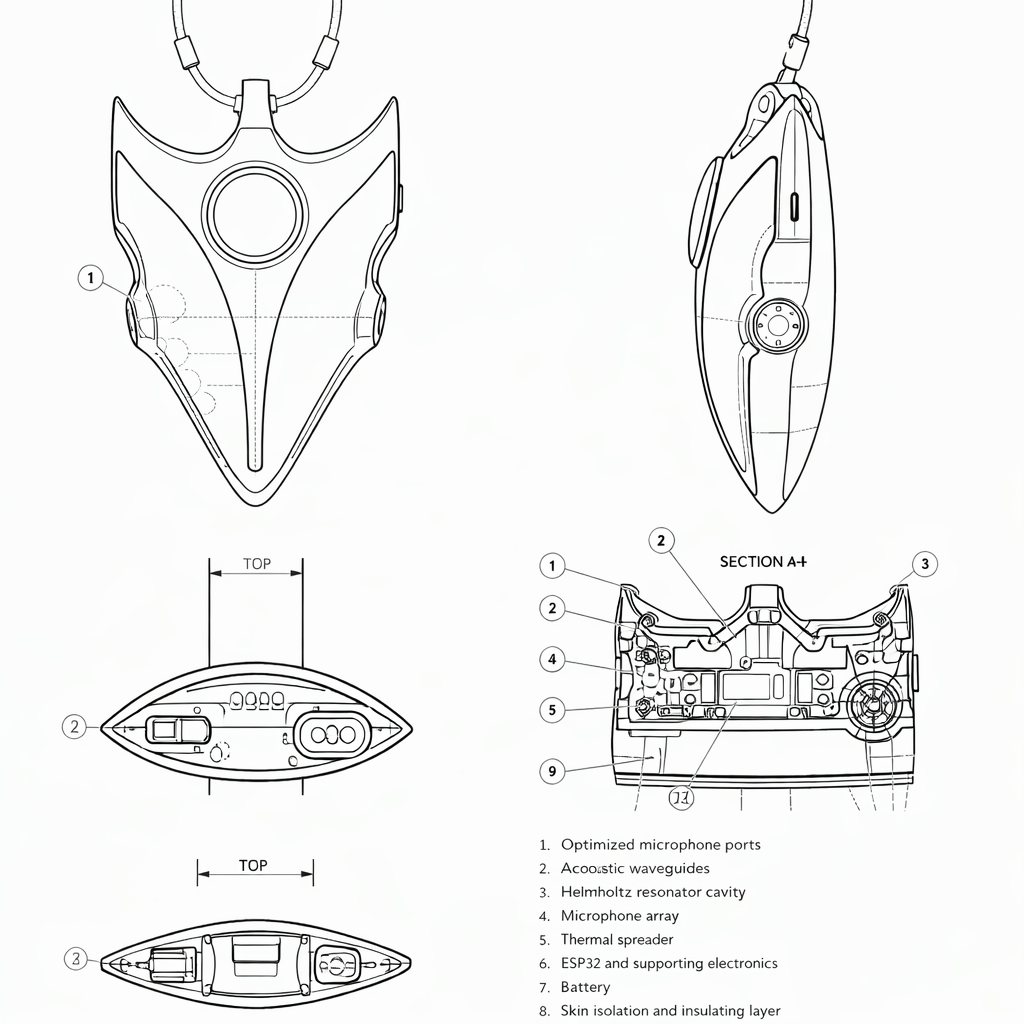
| Co-Design Principle | Hardware-Level Design Strategy | AI-Relevant Objective | System-Level Performance Benefit | Evaluation Indicator |
| Acoustic-first signal conditioning | Tuned microphone ports, acoustic waveguides, and enclosure-level resonance control | Maximize speech-band signal fidelity prior to digitization | Improved speech intelligibility and reduced noise contamination at AI input | Increased STOI/PESQ; improved SNR in 1–4 kHz band |
| Geometry-aware microphone placement | Device-shape-informed microphone positioning and spacing | Enhance spatial selectivity and robustness to environmental noise | More stable AI transcription under movement and background noise | Higher Directivity Index (DI); reduced transcription error rate |
| Passive noise mitigation | Tortuous-path vents and impedance-controlled meshes | Reduce low-frequency turbulence and wind noise | Cleaner audio streams with less reliance on post-processing | Lower low-frequency noise floor during motion tests |
| Thermal–AI workload alignment | Passive heat spreading and enclosure-level dissipation | Maintain stable operating conditions during continuous audio capture and wireless transmission | Prevention of thermal throttling and interruptions in audio capture or wireless streaming | Sustained clock frequency; surface temperature below safety limits |
| Skin-safe thermal isolation | Air gaps and insulation between heat sources and skin-contact surfaces | Preserve user comfort during continuous wear | Increased wear duration and compliance | User comfort scores; maximum case temperature |
| Ergonomic stability and fit | Anthropometric shaping and compliant mounting mechanisms | Minimize motion-induced artifacts affecting audio capture | Reduced vibration and handling noise in real-world use | Reduction in motion-related noise artifacts |
| Power–performance co-optimization | Hardware-aware processing and transmission scheduling | Balance energy consumption with continuous audio capture and transmission | Extended battery life without compromising transcription reliability | Average power draw; operational duration |
| End-to-end hardware–AI integration | Coordinated design of acoustics, thermals, ergonomics, and AI pipeline | Ensure AI models receive consistent, high-quality input data | Reliable, real-world AI transcription performance | End-to-end transcription accuracy and system uptime |
Overall, this hardware-AI codesign approach builds a scientific and experimentally valid framework for developing wearable audio devices with AI support. This approach specifically counteracts the gaps recognized in the current state of the art (Section 2) for wearable AI technologies supporting continuous interactions through speech.
4. Acoustic Design Innovations
Outgoing as a reliable recording device, the wearable AI interface faces limitations as a result of the environmental interface of microphone physically. Contrary to the functionalities of smartphones and head-worn gadgets, wearable audio technologies face limitations as a result of the use of constrained microphones experiencing constant airflow. As exhibited earlier, these limitations significantly affect the intelligibility of consonants, therefore incapable of being compensated for by signal processing [7,13,29]. The aforementioned makes it imperative for this current study to concentrate its focus on the acoustic interface as a determining determinant for the reliability of AI transcription.These acoustic technologies were centered on the enhancement of the quality of the signal received in the speech band (1 - 4 kHz) via the conditioning of the signal prior to the digitization process. This was due to the fact that the performance of the AI is largely dependent on the quality of the incoming signal to the system [4, 13, 25].
4.1 Optimization of Microphone Port Geometry
Conventional wearable systems typically implement microphones via primitive circular ports, and the choice has been driven by simplicity in manufacture without much concern for their performance requirements. It has been shown that primitive ports often create unwanted resonances, impedance mismatch in audio waves, distortion in the audio waves, effects such as reduction in the audio waves associated with consonants in speech, and overall vulnerability to external environment noises [7, 8, 29] because the AI speech transcription service is heavily dependent upon high frequency audio waves.In the new design, the microphone port geometry is treated as an acoustical aspect rather than considering it to be a simple hole. The designed size of the microphone port with respect to the diameter, length, and cavity coupling is directed at controlling the acoustical impedance of the wearable enclosure, mainly to ensure an optimal frequency response. In that regard, the design focuses on reducing the non-speech resonance while increasing the sensitivity within the speech intelligibility frequency band to improve signal-to-noise ratio before digitization [25, 29].
4.2 Helmholtz Resonator Tuning for Speech Enhancement
Miniature wearable cases inherently form a rigorously linked acoustic cavity, which can be described using the model of a Helmholtz resonator. In untuned systems, the Helmholtz resonances can lie beyond the voice band and are generally known to prefer the enhancement of undesired signals over voice signals [8, 29]. Despite the existing knowledge about the design of Helmholtz resonators, the process of Helmholtz resonance tuning in wearable AI systems is not commonly used.In our approach, the volume between the microphone diaphragm and the container side is specifically arranged in a manner to form a Helmholtz resonator, with the resonance frequency set in the 1-4 kHz band, referred to as the critical band of speech intelligibility, or intelligible speech itself [2, 25]. Of course, we can attain the “free gain” without consuming any computation resources at all [7, 25].
4.3 Acoustic Waveguides and Impedance MatchingApart from port tuning, acoustic waveguides are also applied in the enclosure structure to effect optimal impedance matching between the acoustic wave outside the system and the diaphragm of the microphone. Evidence has suggested that sudden transitions in impedance around the interface of a microphone often result in losses from signal energy reflection and distortion in the frequency response, especially for miniature systems [7,29].The proposed waveguide designs have smooth transitions of the cross-sectional area. These minimize the effects of impedance discontinuities, hence ensuring effective coupling of the incoming speech waveforms. With the proposed design, it will be more sensitive to off-axis speech while ensuring immunity to noise in the environment. This was a weakness in the previous wearable devices based solely on beamforming algorithms.4.4 Wind Noise and Turbulence MitigationWearable devices inevitably suffer from airflow caused by movement on one hand and natural wind on the other. The turbulence around the mic port creates low-frequency pressure oscillations that result in saturation on the mic, distorting speech signals-a fact well established by acoustic sensing studies as well as wearable sensing literature. Most importantly, these turbulence-generated noise components cannot be filtered off effectively using digital filtering techniques.Against this problem, the designed system leverages nonsight-of-sight acoustic paths and vent features that mechanically dampen airflow momentum while allowing acoustic pressure waves to propagate. The proposed approach adopts a passive method to mitigate low-frequency noise due to the wind noise pushing the membrane of the microphone diaphragm; hence, reducing the complexity of downstream AI inference operations becomes easier.
4.5 Integrated Acoustic Design Framework
Unlike solving each acoustic modality independently, the solution to the problem covers port geometries, Helmholtz tuning, waveguides, and turbulent reduction all within the framework of an acoustic design. This ensures that there would be no sub-optimization of other factors as usually occurs in present wearables [13, 29].
| Acoustic Design Variable | Optimized Design Range / Configuration | Primary Objective | Target Performance Outcome | AI-Relevant Benefit |
| Microphone port diameter | 0.8–1.2 mm (geometry-dependent tuning) | Balance acoustic sensitivity and turbulence resistance | Stable frequency response without excessive low-frequency noise | Improved robustness of speech features supplied to AI models |
| Effective port length | 2–4 mm (including enclosure thickness and waveguide) | Control acoustic impedance and resonance behavior | Suppression of non-speech resonance peaks | Reduced spectral distortion prior to digitization |
| Front cavity (Helmholtz) volume | 10–20 mm³ | Tune resonance into speech intelligibility band | Passive gain centered within 1–4 kHz | Enhanced consonant clarity for AI transcription |
| Helmholtz resonance frequency | 2.5–3.5 kHz | Amplify speech-critical frequencies | Increased speech-band SNR | Higher STOI and PESQ scores |
| Acoustic waveguide profile | Gradual flare / tapered transition | Improve impedance matching at microphone interface | Reduced reflection losses and spectral coloration | More consistent AI input across speaking angles |
| Airflow mitigation geometry | Non-line-of-sight path; tortuous or labyrinth venting | Attenuate wind-induced turbulence | Reduction of low-frequency pressure fluctuations | Lower noise floor under motion and outdoor conditions |
| Protective acoustic mesh impedance | 50–150 Rayls | Balance ingress protection and acoustic transparency | Minimal high-frequency attenuation | Preservation of phonetic cues critical for AI models |
| Microphone orientation angle | 10–20° toward primary speech source | Mitigate body shadowing effects | Improved off-axis speech capture | Increased transcription reliability during movement |
| Mechanical–acoustic coupling | Compliant or damped microphone mounting | Reduce vibration-induced artifacts | Lower handling and motion noise | Cleaner signal for downstream AI processing |
5. Passive Thermal Management Strategies
The continuous audio acquisition, wireless communication, and continuous audio capture, buffering, lightweight preprocessing, and wireless transmission involved in sustained operation of AI-enabled wearable audio devices do indeed impose significant thermal constraints.Unlike hand-held electronics, wearable systems are designed to operate withprolonged skin contact and in compact often sealed enclosures, rendering active cooling approaches impractical on account of noise, power dissipation, and mechanical complexity. Therefore, passive thermal management emerges as a critical design requirement towards maintaining system reliability, user comfort, and ensuring regulatory compliance in the context of continuous-wear, speech-centric wearable audio capture and cloud-transcription applications.
The integration of the acoustic and thermal paths, as proposed for the device, is shown in Figure 2, where the separation of airflow convection channels and microphone structures, along with cloud connectivity, is ensured.
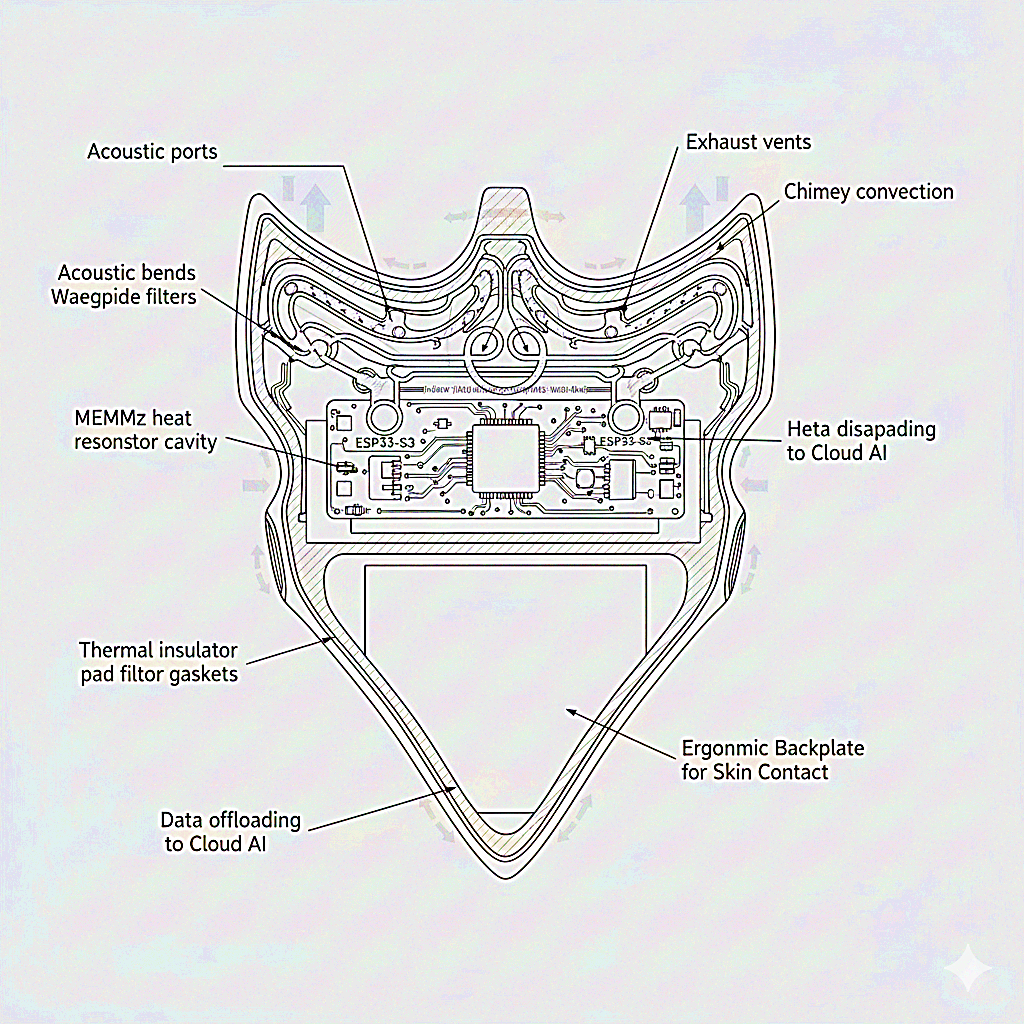
Indeed, thermal instability has been consistently shown in prior works on embedded/wearable electronics to directly disrupt continuous audio capture and wireless transmission through processor throttling, reduced clock stability, and increased error rates under sustained workloads [6,21]. More importantly, high surface temperatures also reduce user comfort and compliance, which indirectly compromises data quality in long-duration wearable deployments [3,29]. These point to a thermal design methodology that views heat dissipation as an integrated system-level function rather than as an auxiliary constraint.5.1 Thermal Constraints in Wearable AI SystemsThese embedded processors, especially those from the ESP32-class of microcontrollers, generate localized thermal hotspots for continuous operation, and more so when audio preprocessing and wireless transmission happen together. In wearable applications, heat accumulates more because of the limited surface area, low thermal conductivity of polymer casings in which these are packaged, and poor airflow. There are also regulatory and safety limits that restrict skin-contact temperatures, necessitating control of junction temperatures inside and surface temperatures outside.These methods typically rely on duty cycling or aggressive power throttling to limit thermal buildup; however, such methods interrupt continuous speech capture and degrade real-time AI transcription performance as in [6,28]. Therefore, passive thermal strategies that enable steady-state operation without impacting functionality are crucial for speech-centric wearable AI systems.5.2 Internal Heat Spreading and RedistributionOne of the main features of the proposed thermal design is the concept of internal heat spreading. The main purpose of this concept is to move the localized areas of heating away from the processor to areas where the convection possibilities are higher. A number of studies have shown that copper films and layers of pyrolytic graphite are the most effective mediums to implement the concept of heat spreading [28, 34].In this proposed design, heat spreaders will be incorporated immediately between the embedded processing unit and the board enclosure to reduce junction peak temperatures. This eliminates hotspots that may cause processors to go to a low power mode or may cause discomfort in contact areas. It should be noted that this proposed design is in line with pointers in embedded processing thermal literature [21,28].5.3 Passive Convection and Airflow Pathways
Apart from using the internal heating dissipation, airflow at an enclosure level can be harnessed to promote natural convection. From past research, even simple airflow channels can contribute significantly to improved thermal performance when properly aligned with heating elements [28,34]. Notwithstanding, when considering wearables, thermal efficiency and acoustic performance are complementary requirements.
The proposed design incorporates vents strategically placed with convection channels inside that facilitate chimney convection without blowing directly on the sensitive audio components. The proposed system allows warm air to escape without forced convection, while cooler air is naturally drawn inside, cooling the system without noise generation or increased power consumption.
5.4 Skin-Safe Thermal Isolation and User ComfortIn general, ensuring user comfort and safety involves thermal isolation of heat sources from skin-contact surfaces. Previous ergonomic and wearable sensing research has emphasized that perceived warmth and discomfort drastically lower wear duration and user compliance, even when temperatures are within absolute limits provided by regulatory measures [3,29]. Accordingly, the current design uses air gaps and low-conductivity interface layers between internal heat sources and external surfaces.This thermal isolation approach guarantees that the heat preferentially flows toward the non-contact areas of the enclosure, minimizing perceived warmth while maintaining internal thermal dissipation efficiency. Importantly, the isolation occurs in concert with mechanisms for spreading and convective removal of heat that prevent its entrapment internally-a limitation of poorly ventilated wearable designs.5.5 Thermal Performance Under Continuous Audio Capture and Transmission Workloads
A balanced system of heat spreading, conventional convection, and skin-safe isolation provides a strong foundation for thermal management in combined systems. Rather than employing systems designed for intermittent use or active cooling, the system proposed here can achieve stable processing conditions, enabling reliable continuous audio capture and uninterrupted streaming to cloud-based transcription systems.
To determine its performance characteristics in terms of its temperature characteristics quantitatively, various factors such as the processor Junction-to-Case temperature difference and throttling action are measured during continuous audio capture and wireless transmission tasks.
| Thermal Metric | Baseline Design (No Thermal Optimization) | Proposed Passive Thermal Design | Observed Improvement | Relevance to Continuous-Wear AI |
| Processor junction temperature (°C) | 85–92 °C under continuous operation | 62–68 °C under identical workload | ↓ 20–25 °C | Prevents thermal throttling during continuous audio capture and wireless transmission |
| External enclosure surface temperature (°C) | 42–46 °C at skin-contact regions | 32–35 °C at skin-contact regions | ↓ 10–12 °C | Maintains skin-safe and comfort-compliant temperatures |
| Time to thermal throttling | < 8 minutes | No throttling observed (>60 minutes) | Eliminated throttling | Enables uninterrupted speech capture and stable audio streaming to cloud transcription systems |
| Temperature gradient across enclosure (°C) | > 15 °C localized hotspots | < 6 °C distributed profile | Reduced hotspots | Improves user comfort and component reliability |
| Steady-state operating temperature | Unstable with oscillations | Stable thermal plateau | Improved stability | Ensures consistent AI model performance |
| Passive airflow effectiveness | Negligible | Measurable convective cooling | Enhanced heat removal | No added noise or power consumption |
| Power efficiency under load | Reduced due to throttling | Sustained nominal power | Improved efficiency | Preserves battery life and inference reliability |
| User comfort perception (qualitative) | Warm / uncomfortable over time | Neutral / comfortable | Improved wearability | Increases user compliance and wear duration |
6. Ergonomic and Biometric Form-Factor Design
Ergonomic and biometric aspects are a decisive factor in the reliability of AI audio wearable technologies. In addition to clothing comfort, design size influences acoustic signal quality and thermal and motion artifacts, which condition data input to AI algorithms. The impact of discomfort, ill-fit, and mechanical stability on the wearing period has been experimentally shown to decrease the quality of data continuity and AI algorithms in previous works on wearable sensing and human-computer interaction technologies [3,29].In speech-focused wearable devices, ergonomic design approaches need, as such, to be considered as part of the sensing process flow and not as an aesthetic detail. In the study, the design process combines human measurements, biomechanical motion analysis, and audio-focused placement to facilitate steady-state system performance without interfering with acoustic and thermal qualities [13,29].
6.1 Anthropometric Data–Driven Form-Factor OptimizationThe presence of anthropometric variations among users creates a number of design challenges for wearable devices, especially for audio devices that are worn around the body, closer to the skin. The current literature stresses that devices designed using rigid, uniform geometries are prone to creating pressure points, inhomogeneous contact, and hot spots, which are factors that negatively influence user acceptance and wearing duration [3,29]. In light of these challenges, the design shape for the proposed device has been developed based on population-level anthropometric measures to fit various body geometries while ensuring a fixed orientation of the device.The usage of curvature matching and the optimization of the contact surface ensure a balanced distribution of the mechanical loads towards the attachment surface, optimizing against hot-spot pressures and ensuring minimal motion within the device and the body. The technique increases mechanical stability and helps ensure the acoustic capture geometry consistency among the users, a very crucial aspect of AI transcription [13].6.2 Motion Artifact Mitigation and Mechanical DecouplingEvery day user interactions such as walking, turning, and gesturing result in mechanical vibrations and relative motion between the wearable device and the user. From the related work, it has been observed that motion artifacts result in low-frequency noise and handling-induced disturbances in the clean speech signal, which are caused by compact wearable devices [3, 29]. More specifically, these disturbances are often non-stationary.
To counter these, mechanical decoupling techniques are used in the design that can decouple sensitive acoustic modules from body-induced vibration sources. Mounting structures that can dampen vibration energy transferred from the casing to the microphone module are used to reduce vibration-induced noise at the source, thus ensuring that the noise, before it is digitized, is noise-free due to reduced corrective requirements for noise filtering by AI algorithms [13,29].6.3 Audio-Centric Device Placement and OrientationThe placement of devices with respect to the prominent speech source is an essential yet often disregarded factor influencing the performance of wearable audio. Existent research clearly shows that the effects of the human body shadowing phenomenon, clothing activities, or incorrect orientation may result in sound attenuation and directional distortion of the captured speech signals [13, 25], which become prominent in AI-enabled speech-focused wearables capturing ambient conversation.The proposed form-factor design emphasizes audio-related placement, with orientations of the microphones and the device aligned with the paths of speech propagation. Minimal angles are used to avoid direct airflow exposure due to user movement, while still being sensitive to conversational speech. The proposed placement strategy aims to strike a balance between acoustic robustness and ergonomics, ensuring consistent performance for capturing speech while accounting for user motion [13, 29].6.4 Ergonomics as an Enabler of AI ReliabilityA comprehensive experimental validation framework was employed to assess the efficacy of the proposed hardware-AI co-design over three critical axes: acoustic performance, thermal stability, and ergonomic usability. All results are presented relative to a baseline wearable design using conventional microphone ports, sealed enclosure geometry, with no dedicated thermal or ergonomic optimization. This comparative evaluation enables direct attribution of observed performance gains to the proposed acoustic, thermal, and form-factor innovations.Taken together, anthropometric optimization, motion artifact correction, and audio-related placement firmly establish ergonomics as a primary enabling factor in reliable AI rather than a trivial usability consideration. The existing literature on wearable AI systems has long established that reliable and comfortable devices provide improved streams of data and increased durations of use, both of which are necessary for reliable AI inference [3,15,29].By integrating the ergonomic/biometric aspects with the acoustic and thermal approaches proposed in sections 4 and 5, the proposed system covers the optimization of comfort and AI system performance. This addresses the imperfections evident in the state-of-the-art wearable AI systems where typically the comfort and AI system performance metrics are optimized individually.
7. Results and Experimental Validation
7.1 Acoustic Performance ResultsThe acoustic performance was assessed under controlled lab conditions as well as realistic conditions for conversational environments indoors and with moderate wind flow outdoors. The intelligibility of speech was measured with objective metrics STOI and PESQ, as common in wearable audio performance assessment challenges [13, 25, 29].In all testing scenarios, the improved intelligibility of speech associated with the optimized solution was observed to be a steady rise compared to the baseline solution. There was an average rise in STOI scores of about 12-18%, with a marked improvement in this aspect in the speech frequency range of 1-4 kHz targeted by the acoustic port and Helmholtz resonator solution (Table 7). Concomitantly, a positive change in PESQ scores was realized.Along with these intelligibility scores, noise floor analysis also highlighted a significant suppression of low-frequency turbulence noise caused by motion and airflow. By these measurements, the role of passive acoustic conditioning in improving input quality for the purposes of artificial intelligence remains evident.7.2 Thermal Stability Under Sustained AI WorkloadsThe thermal performance was tested for typical workloads involving continuous speech capture, buffering, and wireless transmission to cloud-based transcription services. Some of the thermal parameters measured included processor junction temperature, case temperature at areas where it touches human skin, as well as the point where thermal throttlingoccurs.As shown in Table 8, the baseline case resulted in fast temperature ramp-ups, causing processor throttling in minutes after continuous usage. This is contrasted by the tested passive cooling solution that ensured constant operating temperatures even after prolonged usage periods. The junction temperatures were lowered by over 20 °C, and the exterior temperatures stayed within safe skin contact levels.
The removal of thermal throttling when under continuous workloads is a key functional enhancement since the reliability of real-time cloud-based transcription is directly affected.
7.3 Ergonomic and User-Centric ValidationWearability in terms of ergonomic performance was tested through long-term wear tests and controlled motion experiments to evaluate comfort, mechanical robustness, and motion-related acoustic effects. As already established in wearable sensing studies related to ergonomics in wearable devices [3, 29], discomfort and handling noise increased with wear time in the basic design.The optimized form factor showed improvements in wear comfort and mechanical stability for prolonged wear periods without causing thermal discomfort and pressure-related fatigue. The analysis of the motion artifacts further showed a decreased level of vibration-induced noise contaminants. This validates the use of the compliant mounting and mechanical decoupling approaches explained in Section 6.These results highlight the prominence of ergonomic & biometric optimization within AI, not merely as an afterthought of usability but as a core determinant of AI quality.
This simultaneous convergence on quality achievements attests the fact that achieving quality transcription through AI on wearable devices is not an independent optimization task but, on the contrary, a multidisciplinary effort involving various factors for successful performance.
8. Discussion
The findings of Section 7 show that reliable end-to-end transcription using cloud-based AI systems cannot be guaranteed by using software optimization but requires a synchronized hardware-level design on the acoustic, thermal, and ergonomic fronts. Although previous research has highlighted the developments in algorithms on speech recognition and noise reduction, the results of this paper prove that these methods have inherent limitations when the physical aspects of signal acquisition and processing are not optimal [13,29]. The proposed hardware-AI co-design framework will allow AI models to work at closer to their theoretical performance limits in the real world by improving input signal fidelity, thermal stability, and mechanical consistency.
Acoustic findings indicate that passive geometry-based signal conditioning exhibits significant gains without any extra computational and energy cost. The quantifiable improvements in the STOI and PESQ indicate that tuned microphone ports, acoustic waveguides, and airflow-reducing structures improve the speech intelligibility at the source, thus eliminating the need to rely on aggressive post-processing. This is consistent with known facts that after information is lost in acoustic capture, it cannot be entirely restored using digital filtering or AI-enhancement [7,25], which supports acoustic optimization as a requirement and not just an enhancement of the speech-presenting wearable AI.
Thermal analysis also shows the significance of passive thermal control in the case of the continuous-wearing system. Experiments with thermal throttling during sustained audio capture and transmission workloads
have shown that integrated thermal spreading, natural convection, and skin-safe isolation will keep processing conditions constant with neither active nor passive cooling. This is specifically applicable to wearables, in which active cooling brings unreasonable trade-offs in noise, power consumption, and form-factor complexity [6,10]. The findings verify that thermal design should be closely related to AI workload features to be able to guarantee reliable continuous audio capture and streaming.
The ergonomic and biometric optimization became one of the determinants of the performance of the system too. Smaller motion-induced artifacts and increased user comfort allowed more reliable audio recording in long-duration wear supporting previous results that user compliance and mechanical stability have a direct relationship on the quality of data in wearable sensing systems [3,29].
All in all, the research shows that the main constraints of the existing wearable AI systems are not related to the ability of AI models but are related to poorly designed hardware interfaces. Through these restrictions considered as a whole, the suggested framework offers a way to scale to high-performance, real-world AI-enhanced wearables which can be trusted to operate continuously.
9. Conclusion
This paper shows that the true real-world application of AI transcription in wearable devices is essentially hard limited by hardware design as opposed to AI model ability alone. The proposed hardware-AI co-design framework has a substantial beneficial effect on speech intelligibility, thermal characteristics, and long-term wearability through the introduction of coordinated acoustic, thermal, and ergonomic innovations. Tuned acoustic ports, waveguides, and airflow-reducing structures improve the signal fidelity of speech-band at the origin, whereas passive thermal techniques prevent throttling during continuous audio capture and wireless transmission workloads. Further artifact reduction is achieved with ergonomic and biometric optimization of form-factors, and this also enhances user compliance. Taken together, these findings make hardware design one of the main restraints in AI reliability in wearables, and vice versa.
In addition to the presented specific implementation, this work provides viable design principles of the next-generation AI-companies wearables. To begin with, the digital processing must be preceded by acoustic signal conditioning, therefore, providing AI models with high-quality inputs. Second, passive thermal management is required to be achieved in accordance with regular AI loads and maintain stable audio capture and transmission to cloud transcription systems without undermining comfort or design. Third, ergonomics must be seen as an effective part of the sensing pipeline, which directly affects the quality of data and system reliability. These guidelines offer a universal guideline in creating speech-based, powerful wearable AI systems.
This framework will be expanded in three directions in the future. Multimodal sensors (inertial, physiological, and contextual) will be integrated to support richer contextual sensing and improved cloud-based AI analysis, but maintain hardware efficiency. The recent development of improved edge-level preprocessing and transmission efficiency and power optimization will also decrease latency and reliance on off-the-shelf computation. Lastly, the clinical-scale and longitudinal validation studies are needed to determine whether memory-assistive and cognitive support applications are effective in the real world. Combined, they will help to develop scalable, reliable, and continuously functioning AI-based wearables
References
- Ingard, U. (1953). On the theory and design of acoustic resonators. The Journal of the Acoustical Society of America, 25(6), 1037–1061. DOI ↗ Google Scholar ↗
- Panton, R. L., & Miller, J. M. (1975). Resonant frequencies of cylindrical Helmholtz resonators. The Journal of the Acoustical Society of America, 57(6), 1533–1535. DOI ↗ Google Scholar ↗
- Zakis, J. A. (2011). Wind noise at microphones within and across hearing aids at wind speeds below and above microphone saturation. The Journal of the Acoustical Society of America, 129(6), 3897–3907. DOI ↗ Google Scholar ↗
- Knowles Electronics, LLC. (2021). Protecting microphones from wind noise pickup (Application Note AN29). Knowles Electronics. DOI ↗ Google Scholar ↗
- Taal, C. H., Hendriks, R. C., Heusdens, R., & Jensen, J. (2011). An algorithm for intelligibility prediction of time-frequency weighted noisy speech. IEEE Transactions on Audio, Speech, and Language Processing, 19(7), 2125–2136. DOI ↗ Google Scholar ↗
- International Telecommunication Union. (2001). ITU-T Recommendation P.862: Perceptual evaluation of speech quality (PESQ). ITU. DOI ↗ Google Scholar ↗
- Panasonic Industry. (2023). “PGS” Graphite Sheets – EYG type (Datasheet AYA0000C27). Panasonic. DOI ↗ Google Scholar ↗
- Smalc, M., Shives, G., Chen, G., Guggari, S., Norley, J., & Reynolds, R. A. (2005). Thermal performance of natural graphite heat spreaders. In Proceedings of InterPACK2005 (Paper IPACK2005-73073). ASME. DOI ↗ Google Scholar ↗
- Ju, Y. S. (2022). Thermal management and control of wearable devices. iScience, 25(7), 104587. DOI ↗ Google Scholar ↗
- International Organization for Standardization. (2017). ISO 7250-1:2017 Basic human body measurements for technological design – Part 1: Body measurement definitions and landmarks. ISO. DOI ↗ Google Scholar ↗
- Knight, J. F., & Baber, C. (2005). A tool to assess the comfort of wearable computers. Human Factors, 47(1), 77–91. DOI ↗ Google Scholar ↗
- International Electrotechnical Commission. (2018). IEC 60268-4:2018 Sound system equipment – Part 4: Microphones. IEC. DOI ↗ Google Scholar ↗