Abstract
Project-Based Learning (PBL) has become a key practice in experiential learning in response to growing criticism of traditional, lecture-based teaching methods, which often promote passive learning and short-term information acquisition and retention. The modern education system has been seeking instructional approaches that foster higher-order thinking, practical problem-solving, and long-term knowledge retention. Although PBL is widely recognized, a significant research gap remains: a study that investigates the combined effects of PBL on critical thinking, problem-solving, and knowledge retention across disciplines. This study examines how PBL serves as an effective teaching method by transforming instruction, using a quasi-experimental research design. A comparative study was conducted between students taught with PBL and those taught with traditional methods. Critical thinking tests, project-based assessments, and delayed posttests were combined to evaluate knowledge retention. Additional survey and interview data provided further insights into student engagement and learning. The results show that students in the PBL group performed notably better than their peers across all three areas. Notably, PBL participants demonstrated stronger critical thinking skills, enhanced problem-solving on complex, ill-structured tasks, and improved long-term knowledge retention. These outcomes are largely attributable to increased student engagement, collaborative learning, and the contextual application of knowledge in meaningful tasks. The paper concludes that PBL is not just an instructional method but a transformative one that fosters deep, enduring learning. Integrating PBL into educational systems can help develop lifelong learning skills and better prepare students to handle the complexities of the real world.
Keywords
Project-Based Learning Experiential Education Critical Thinking Problem-Solving Knowledge Retention Inquiry-Based Learning Cognitive Development and Active Learning
1. Introduction: The PBL Framework
1.1 The Driving Question: Open-Ended and Complex Problem
Project-Based Learning (PBL) is becoming a key part of experiential education, reshaping how knowledge is built and applied. The most important aspect of PBL is the driving question, an open-ended, thoughtfully designed problem that initiates and maintains the inquiry process throughout learning. Unlike traditional teaching methods that emphasize fixed solutions, PBL presents complex, often unclear problems that mimic real-life situations (Amiri, 2025; Nghiem et al., 2025).
The question not only guides but also serves as a mental checkpoint that helps explore, analyze, and synthesize. It allows learners to sustain their inquiry, broaden their knowledge, and construct understanding through repeated investigations. Studies have demonstrated that these inquiry-based models can be highly effective in encouraging cognitive engagement and intellectual growth, as students become active learners (Al-Thani & Ahmad, 2025; Saad & Zainudin, 2024).
Furthermore, the complexity of driving questions aligns with higher-order thinking processes outlined in educational taxonomies. Students are required to analyze, evaluate, create, and move beyond superficial learning. This supports findings that PBL classrooms can foster higher levels of conceptual understanding and critical thinking (Triyasa & Nurjanah, 2025; Buchman, 2024). Therefore, the driving question serves as a pedagogical and cognitive catalyst, transforming the classroom into a space for exploration and inquiry.
1.2 Authenticity: Real-World Case that Reflects a Professional or Community Issue or Dilemma
PBL is a genuine approach that sets itself apart from traditional teaching methods. PBL helps bridge the gap between theory and practice by engaging learners in applying their knowledge to real-world situations. Learners should also use real-world activities to solve problems relevant to their communities or future careers, which can boost motivation and participation (Eswaran, 2024; Yang, 2024).
This can be demonstrated through empirical research showing that authenticity significantly impacts the creation of meaningful learning experiences. Students also invest more cognitive resources and work longer to achieve results when they believe the task is relevant and applicable (Mutanga, 2024; Evenddy et al., 2023). This relevance fosters intrinsic motivation, which is one of the main drivers of long-term academic engagement.
Furthermore, authenticity fosters interdisciplinary learning. Practical issues rarely fit into the boundaries of a single discipline and often require knowledge from multiple fields. This interdisciplinary approach improves cognitive flexibility and prepares students with complex, real-world problem-solving skills (Ibrahim, 2025; Joronavalona et al., 2025).
Authentic context incorporation also aligns with experiential learning theories, which emphasize the value of learning through direct experience. It has been demonstrated that such approaches improve the acquisition, retention, and transfer of skills, as learners can connect abstract information to a tangible context (Alabi, 2024; Rao et al., 2024).
1.3 Student Voice and Choice: Giving Learners the Choice to make Decisions that impact their products and processes
One of the key principles of PBL is student voice and choice. PBL is more empowering because the teacher does not dictate the learning process, unlike in traditional models, where students have no option but to follow the teacher's advice. This freedom fosters a sense of ownership and responsibility, which is crucial for effective learning (Green & du Plessis, 2023; Bhagwat & Kulkarni, 2025).
Student agency is closely tied to motivation and engagement. Learners can easily put effort and initiative into their learning when they control their learning processes. This autonomy also helps develop the ability to learn independently, which is essential for lifelong learning (Aggarwal et al., 2026; Vesikivi et al., 2020).
Additionally, student voice fosters creativity and innovation. PBL promotes divergent thinking and problem-solving skills by allowing learners to explore different approaches and solutions to a problem. This aligns with studies that highlight the use of PBL to enhance creativity and critical thinking in educational settings (Song et al., 2024; Goshu & Ridwan, 2024).
Notably, student choice also helps differentiate learners, enabling educators to support diverse learning styles and abilities. This inclusivity will enhance the overall effectiveness of PBL as an instructional framework and make it adaptable to different educational environments and student needs (Meylani et al., 2025).
1.4. Effect on Critical Thinking and Problem-Solving
1.4. 1 Recurring Thinking: Criticism and Revision
PBL involves critical thinking that results from a series of critiques and revisions. Unlike traditional assessment, which focuses on outcomes, PBL emphasizes the learning process and teaches students to continually refine their ideas through feedback and reflection. This reflective approach promotes metacognitive awareness, enabling learners to reflect on themselves and determine what they should and can do to improve (Jaheed, 2025; Alarfaj et al., 2024).
Studies show that an iterative learning process significantly influences the development of critical thinking skills by encouraging deeper cognitive engagement. Students need to process feedback, reassess their assumptions, and modify their strategies to develop higher-order thinking skills (Eshun et al., 2026; Andi et al., 2025).
Moreover, the focus on revision is also correlated with genuine professional activities, where improvement is a necessity. Not only does this improve academic performance, but it also equips students with survival skills in the real world, where the ability to adapt and endure is essential (Nagamalla et al., 2025).
1.5 Cognitive Flexibility: Managing Ill-Structured Problems
PBL exposes students to ill-posed problems—complex issues that lack straightforward solutions. Tackling such problems requires cognitive flexibility, the ability to shift thinking strategies, and to consider multiple directions. It is a core component of higher-order problem-solving and critical thinking (Karan & Brown, 2022; Nasution & Siregar, 2025).
Research indicates that PBL students demonstrate greater cognitive flexibility than those in traditional learning settings. When learners can handle ambiguity and uncertainty, they become better at synthesizing information and creating innovative solutions (Xie et al., 2025; Qiuxia et al., 2024).
This is especially important today, as problems are becoming more complex and interdisciplinary. PBL can equip students with the skills needed to address these challenges, making it a valuable approach in today’s education system (Zhang & Ma, 2023).
1.6 Collaborative Analysis: Problem Solving in a Group
Cooperation is a key element of PBL, as students frequently work in teams to develop complex solutions. This collaborative approach fosters critical thinking by engaging learners in explaining their ideas, supporting their opinions, and integrating different perspectives (Hasan et al., 2023; Ningsih & Yusof, 2025).
Group-based problem-solving enhances argumentation and reasoning skills. Students must negotiate meanings, resolve conflicts, and reach consensus, which increases their cognitive engagement (Evenddy et al., 2023; Saad & Zainudin, 2024).
Furthermore, teamwork is a fundamental component of professional environments. PBL fosters the development of collaboration skills, which are critical for future careers, and improves students' ability to function effectively within diverse teams (Rathi & Nirgude, 2022).
The implications of knowledge retention relate to how knowledge affects its retention and the ability to remember what has been learned.
1.7.1 Contextualized Learning: Anchoring Knowledge to Experience
It has also been observed that knowledge retention is greatly improved when learning is contextualized. PBL does this by incorporating information into real-world activities, enabling learners to relate abstract learning to the world (Alabi, 2024; Yang, 2024).
The concept of encoding specificity suggests that people remember information more easily when they learn it in an environment that closely resembles where they will use it. PBL applies this idea by connecting learning to real-world situations, thereby improving knowledge retention (Zhang & Ma, 2023).
Empirical evidence indicates that contextualized learning effectively improves long-term retention. The retention rate is also higher among students in the PBL learning environment than in other educational settings because learning is meaningful and experiential (Vesikivi et al., 2020; Meylani et al., 2025).
1.8 Deep vs. Surface Approach: Experiential Learning and Long-Term Retention
Deep and surface learning are key differences in understanding how PBL affects knowledge retention. In surface learning, which involves memorization, the process tends to be quick. Conversely, deep learning entails active engagement with the material, leading to long-term understanding (Triyasa & Nurjanah, 2025; Buchman, 2024).
PBL promotes in-depth learning by asking learners to actively engage, apply what they have learned, and reflect on their experiences. It is an experience-based approach that has been shown to enhance the transfer and retention of knowledge across various contexts (Alabi, 2024; Rao et al., 2024).
Research indicates that students in PBL environments score higher on long-term exams, showing the success of experiential learning in building long-term knowledge (Zhang & Ma, 2023; Eshun et al., 2026).
1.9 Cross-Curricular Universal Applications.
1.9.1 STEM: Engineering Solution to Local Infrastructure
PBL is a powerful tool in STEM education that allows students to apply theory to solve real-world problems. The projects students engage in, such as designing infrastructure solutions, require the use of principles in mathematics, science, and engineering (Yang, 2024; Ibrahim, 2025).
These projects enhance problem-solving skills and are interdisciplinary, preparing students for careers in STEM fields. Studies have shown that PBL has a significant positive impact on STEM learning and engagement (Nagamalla et al., 2025; Saad & Zainudin, 2024).
1.10 Social Sciences: Simulation of a Legislative Process or Reconstruction of the Past
PBL is also highly effective in the social sciences when students engage in the legislative process or historical research. These projects also require critical thinking, research, and communication skills, which help improve understanding of social and political processes (Nasution & Siregar, 2025; Mutanga, 2024).
By working with real-world situations, students gain a deeper understanding of complex concepts and improve their knowledge retention and critical thinking.
1.11 Arts and Humanities: Curating Online Galleries: Contemporary Theme
PBL can be applied to the arts and humanities, where students can explore creative and cultural themes through a project, such as a digital exhibition. These works are highly creative and can foster critical analysis and self-expression, leading to holistic learning (Joronavalona et al., 2025; Green & du Plessis, 2023).
PBL is a competency-based approach to education because of its flexibility, which allows it to be customized for various disciplines and, as a result, functions as a universal teaching method.
1.12. Placing Project-Based Learning in Contemporary Experiential Education.
1.12.1 Lifelong Learning and Educational Transformation
Project-Based Learning (PBL) now plays a key role in shaping experiential learning, reflecting a broader move toward adaptive, more critical, and lifelong learning models. Instead of just being a teaching technique, PBL signifies a change in how education is organized to build transferable skills that go beyond the classroom. PBL supports modern learning needs by offering students the chance to navigate a dynamic, complex world through inquiry, collaboration, and real-world application (Aggarwal et al., 2026; Bhagwat & Kulkarni, 2025).
This stance highlights the transformative power of PBL in redefining educational outcomes. PBL focuses not on content memorization but on skills such as critical thinking, problem-solving, and knowledge application. These skills are increasingly seen as essential for dealing with the unpredictability of modern work and social settings, which emphasizes the relevance of experiential learning models.
1.13 Change in Teacher Leadership Approach
Adopting the PBL model requires redefining the teacher’s role in the educational environment. Facilitative learning models replace traditional approaches where educators are the main source of knowledge. Instead, teachers become learning facilitators, supporting students’ inquiries and encouraging independence (Amiri, 2025; Al-Thani & Ahmad, 2025).
This change is crucial for encouraging learner autonomy and interactivity. By stepping back from direct control of the learning process, teachers give students the chance to take responsibility for their own learning. These conditions promote deeper thinking and align with constructivist views, where knowledge is not passively received.
1.14 Metacognition: Knowledge of Learning Processes
A key outcome of PBL is the development of metacognitive awareness—the ability to reflect on and regulate one's thinking. By engaging in repeated cycles of inquiry, feedback, and revision, students become more aware of how they approach learning, enabling them to adopt more effective problem-solving and knowledge-building strategies (Jaheed, 2025; Hasan et al., 2023).
Metacognitive development can be specifically highlighted within the scope of lifelong learning, as it helps people to adapt to new challenges and continually enhance their skills. PBL results in short-term academic gains and long-term personal and professional growth, not only by fostering self-awareness and critical thinking but also through immediate academic achievements.
2. Literature Review
2.1 Project-Based Learning Theoretical Foundations
Constructivist theory and PBL are based on experiential learning, which positions learners as active participants in the creation of knowledge rather than passive recipients of information. Experiential learning focuses on direct involvement and reflection-based learning in which people are given opportunities to internalize learning through significant application (Alabi, 2024). In the same vein, the constructivist theory argues that learning is built through interaction with the environment, viewing it as an active and contextual process (Amiri, 2025). In this setting, PBL represents a shift in learning where students no longer receive instruction passively; instead, they engage in inquiry-based activities that mirror real-world problems.
This change is most evident in the comparison between traditional instruction and PBL. Conventional models have been based on lectures and memorization, resulting in superficial learning that is only short-lived. PBL, on the other hand, encourages in-depth learning, requiring students to analyze the material, practice what they know in real-life scenarios, and reflect on their experiences. Such a division between the surface and deep learning is significant because deep learning correlates with the ability to store knowledge in the long term and to transfer these skills (Alabi, 2024). Although a lot of research defines PBL and its elements, less research actually looks at how the structural elements of PBL, including sustained inquiry, collaboration, and iterative feedback, have a direct impact on cognitive development. This gap underscores the need for greater integration in assessing the effects of PBL mechanisms on final learning outcomes.
2.2. Improving Critical Thinking Skills
The current literature acknowledges that PBL is an effective tool for developing critical thinking, particularly higher-order skills such as analysis, evaluation, and synthesis. In PBL settings, students must adopt an inquiry-based approach, meaning they need to research complex issues, assess information sources, and develop evidence-based arguments. This participation differs from traditional methods, which tend to focus on passive knowledge acquisition (Buchman, 2024; Eshun et al., 2026).
There is also supporting meta-analytical evidence that PBL is effective in developing critical thinking. The results of Zhang and Ma (2023) demonstrated that students in PBL are consistently ahead of their counterparts in the conventional learning setting across various cognitive domains. Also, it can be asserted that PBL can be applied to fields beyond linguistics, as research has shown that the method is effective in language teaching and medical apprenticeship, since critical thinking is required for decision-making (Song et al., 2024; Xie et al., 2025). These results indicate the effects of PBL are not contextual but must be individual to its pedagogical framework.
Nevertheless, critical thinking does not develop automatically in PBL. According to Jaheed (2025), curriculum design and quality of facilitation are crucial to the effectiveness of PBL. Ineffective projects or inadequate guidance may limit cognitive engagement, thus reducing the practice's effectiveness. This highlights a clear limitation in the literature: while many studies show the positive impact of PBL, fewer explore the specific conditions under which it is most effective. Additionally, research on the long-term transfer of critical thinking skills outside the classroom remains limited, emphasizing the need for further investigation.
2.4 The Competence of Problems and Teamwork
Alongside personal cognition, PBL plays a key role in developing problem-solving skills and teamwork abilities. Ill-structured problems, or complex challenges without a single correct answer, are a core part of PBL. These problems require students to make decisions in the face of uncertainty, consider multiple perspectives, and develop innovative solutions (Karan & Brown, 2022). This process closely mirrors real-world problem-solving, making PBL especially effective in preparing students with workplace-ready skills.
Another characteristic of PBL is collaboration, as students typically work in groups to complete projects. The working environment promotes the sharing of ideas, thereby facilitating negotiation and decision-making processes, which are known to foster more profound cognitive engagement. Hasan et al. (2023) emphasize that the practicum-like aspect of PBL fosters the development of essential teamwork skills, whereas Eswaran (2024) states that collaboration enhances creativity and problem-solving by exposing learners to diverse ideas. Moreover, applying computational thinking to PBL models has been shown to enhance students' capacity to solve complex problems systematically (Saad & Zainudin, 2024).
Although these are advantages, implementing collaboration in PBL is not without challenges. The group's dynamics can significantly influence outcomes, and issues such as unequal contributions and one-sided conflicts may hinder learning. This suggests that while teamwork is a strength of PBL, it must be managed effectively to succeed. Additionally, the existing literature provides limited insight into the relationship between individual and group learning outcomes, creating a gap that warrants further research.
2.4 Study Experiences and Knowledge Retention
Experience is one of the most compelling benefits of PBL because it enhances knowledge retention. Unlike conventional teaching techniques, which often lead to short-term memorization, PBL encourages long-term retention through contextualized learning. This supports the idea of specificity in encoding, which suggests that information is easier to remember when learned in a meaningful context (Alabi, 2024). Through hands-on activities, students can connect new information with past experiences, improving their ability to create memory traces.
Empirical research supports this theoretical perspective. Vesikivi et al. (2020) found that students in PBL-based curricula had higher retention rates and more positive study experiences than those in traditional programs. Similarly, Green and du Plessis (2023) emphasize the importance of learner autonomy in PBL, which increases engagement, mastery, and, consequently, knowledge retention. This is because the findings suggest that not only does the PBL approach improve knowledge, but it also helps it stick through its real-world application.
The significant weakness of the literature, however, is that most studies are conducted on a short-term basis. Even though most researchers report short-term gains in retention, few study long-term retention after a course. This is a weakness because it is not a longitudinal study and cannot fully assess the sustainability of knowledge acquired through PBL, a significant research direction.
2.5 Problems and Implementation Plans
Although it has proven beneficial, introducing PBL presents its own set of challenges that must be addressed to ensure its effectiveness. A complex assessment is a major issue. Standardized tests and other traditional assessment tools are often inadequate for capturing the iterative, process-based nature of PBL. According to Alarfaj et al. (2024), assessment frameworks should be tailored to measure not only the learning process but also the final product, which requires outcome-based methods.
PBL faces significant barriers to adoption due to resource and time limitations. Implementing inquiry effectively takes considerable time and requires access to materials and technological tools, which might not be available in all educational environments (Evenddy et al., 2023). Additionally, transitioning from traditional teaching methods to the PBL approach requires a change in teachers' roles. The traditional role of teachers as knowledge transmitters must shift to that of instructors and facilitators of the learning process, which necessitates time for training and pedagogical innovation (Jaheed, 2025).
Although these issues are well documented, there is a notable gap in research on scalable solutions. Most studies identify the barriers but do not provide practical measures to address them at the institutional level. This highlights the need for further research on policy frameworks and systematic methods for PBL implementation.
2.6 Implementation by Sector
One of the key benefits of PBL is its versatility across various fields. PBL is used in STEM and vocational education to bridge the gap between theory and practice and to enhance students' skills relevant to the workforce (Ibrahim, 2025; Rathi & Nirgude, 2022). PBL encourages effective response skills and confidence in health and nursing education, especially when combined with cooperative learning strategies (Xie et al., 2025; Qiuxia et al., 2024).
PBL helps develop analytical and interpretative skills in the social sciences and humanities through projects that connect with the real world and historical context (Nasution & Siregar, 2025). Similarly, in engineering and management education, PBL models professional environments in which students apply problem-solving and decision-making skills in real-world contexts (Yang, 2024).
Although PBL is a versatile method, its effectiveness varies across disciplines. Variation in learning objectives, assessment, and resource availability may affect outcomes, suggesting that PBL is not a universal methodology. This inconsistency highlights the need for a common model that can inform the application of PBL across different learning situations.
2.7 Use of Modern Technology in PBL
The use of modern technology has also expanded PBL's potential, increasing its accessibility and engagement. Virtual reality (VR) technologies enable immersive learning, allowing students to experience complex concepts in a virtual environment (Joronavalona et al., 2025). Additionally, hybrid instructional models, such as flipped classrooms, are more adaptable because they combine online and face-to-face learning, making PBL more flexible across different learning environments (Yang & Chen, 2025).
However, the technology used in PBL also has its issues. While it can improve learning experiences, it may also worsen disparities in access to resources, especially in underfunded settings. This shows why technology should be integrated into PBL carefully, to ensure it supports rather than hinders fair learning opportunities.
The synthesis of the literature review will be summarized as follows.
The literature reviewed in this section does not show any significant difference: student engagement is seen as the main mechanism through which PBL influences learning outcomes. Students tend to develop critical thinking skills, become effective problem solvers, and retain knowledge over time when they are actively involved in meaningful tasks and feel a sense of ownership of their learning (Mutanga, 2024; Nagamalla et al., 2025).
To summarize these relationships, the following table highlights key findings from the reviewed studies.
| Focus Area | Key Authors | Core Findings | Implications |
| Critical Thinking | Buchman (2024); Eshun et al. (2026) | Enhances analysis and evaluation | Requires strong design |
| Problem-Solving | Karan & Brown (2022); Hasan et al. (2023) | Improves real-world problem-solving | Dependent on collaboration quality |
| Knowledge Retention | Vesikivi et al. (2020); Alabi (2024) | Strengthens long-term memory | Linked to experiential learning |
| Engagement | Mutanga (2024); Nagamalla et al. (2025) | Drives all outcomes | Central mechanism |
Source: Compiled from reviewed literature (2020–2026)
As the table shows, engagement is the main factor connecting PBL to its outcomes. However, despite strong evidence supporting individual benefits, a significant gap remains in the research. Few studies have explored the combined effects of PBL on critical thinking, problem-solving, and knowledge retention across various disciplines and over an extended period. This gap emphasizes the need for the current study, which aims to provide a more comprehensive and integrated understanding of PBL's effectiveness.
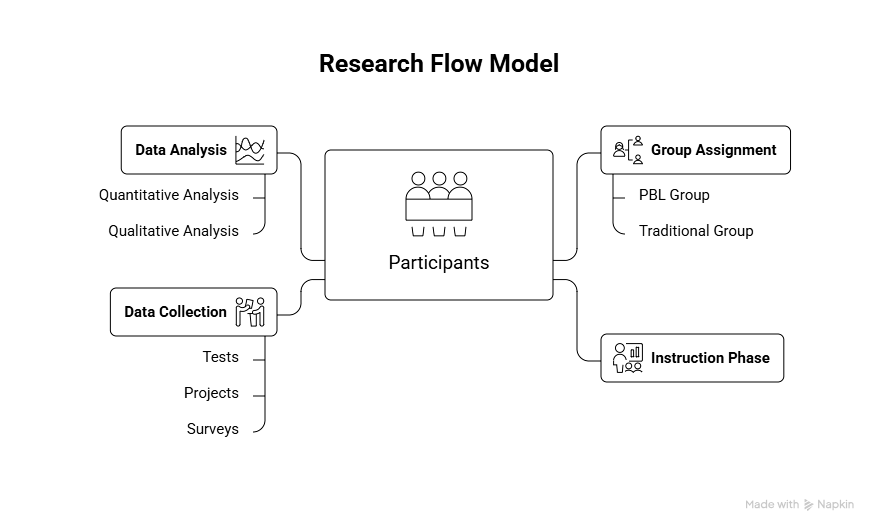
To extend this relationship, Figure 1 presents a conceptual model of PBL's effects on learning.
Source: Prepared to conduct this study through the synthesis of literature
The model indicates that engagement is the main mechanism through which PBL produces its effects. PBL enables individuals to engage in deeper cognitive processing during learning, leading to improved outcomes because learning occurs within a meaningful, inquiry-based context.
To summarize, although the current research field provides solid evidence supporting PBL's effectiveness, it still has some critical gaps that require further investigation. Specifically, research exploring different learning outcomes, cross-disciplinary applications, and long-term effects is needed. Filling these gaps will deepen understanding of how PBL can further enhance experiential education.
3. Methodology
3.1 Research Design
The research design in this study is a quasi-experimental approach aimed at exploring the impact of Project-Based Learning (PBL) on critical thinking, problem-solving, and knowledge retention. In education, a quasi-experimental study is used when random assignment of participants is not possible due to institutional and ethical constraints (Rao et al., 2024; Aggarwal et al., 2026). Instead of randomization, intact classroom groups are utilized, providing a naturalistic comparison of teaching methods and ecological validity.
The study design involves two groups: an experimental group that engages in PBL and a control group that receives traditional instruction. This comparative framework enables the determination of causal associations between the approach to instruction and learning outcomes, as the performance disparity can be explained by the intervention (Zhang & Ma, 2023; Nagamalla et al., 2025). The quasi-experimental design is popular in the PBL research because it allows balancing the methodological rigor with feasibility (Eshun et al., 2026; Buchman, 2024).
Furthermore, the design includes a pre-test, post-test, and delayed post-test to assess long-term knowledge retention. This longitudinal element enhances the study by measuring not only immediate learning gains but also the durability of knowledge, which is a key focus in research on experiential learning (Vesikivi et al., 2020; Alabi, 2024).
3.2 Population and Sampling
The research targets a multidisciplinary group of students to ensure it is not restricted to a single subject. A broad spectrum of academic specialties is represented among the participants, supporting the idea that PBL is universal and applicable across disciplines, including STEM, social sciences, and vocational education (Ibrahim, 2025; Rathi & Nirgude, 2022). This approach aligns with the study's goals, which focus on PBL as a cross-curricular instructional model rather than a subject-specific intervention.
The sampling strategy is purposive and stratified, ensuring representation of students across different academic levels and disciplines. Purposive sampling involves selecting participants who are currently engaged in formal learning environments, while stratification ensures a balance between the experimental and control groups (Mutanga, 2024; Meylani et al., 2025). This combination enhances the generalizability of the overall findings while maintaining methodological control.
Having a diverse sample also allows for examining how PBL functions across different learning contexts. Previous research indicates that PBL outcomes can vary depending on disciplinary requirements and students' individual traits, and that using a heterogeneous sample is the only way to gain a comprehensive understanding (Nasution & Siregar, 2025; Yang, 2024).
3.3 Data Collection Methods
The three variables of critical thinking, problem-solving, and knowledge retention are the main variables used in this study to even the data collection. The measurement of each variable is based on methods aligned with the cognitive and practical aspects.
Critical thinking is evaluated through standardized tests and analytic rubrics that measure students' ability to analyze, evaluate, and synthesize information. These tools align with the most common strategies in PBL research, which assess critical thinking through performance-based testing rather than rote memorization (Buchman, 2024; Jaheed, 2025).
The use of problem-solving skills is evaluated through project-based tests in which students are expected to work on complex problems and develop practical solutions. This method aligns with how real-life issues are addressed and provides an opportunity to assess individual and team performance (Karan & Brown, 2022; Hasan et al., 2023). Authentic tasks are employed so that the assessment measures applied competence rather than just theoretical knowledge.
Knowledge retention is measured by a delayed post-test given several weeks after the instructional period ends. It aligns with the principle of encoding specificity, which states that a cognitive context is vital for memory (Alabi, 2024). The timing of the test influences the amount of retained knowledge, as most research focuses on the short-term results of PBL (Vesikivi et al., 2020).
In addition to these main procedures, other data-gathering methods include student surveys and semi-structured interviews. Surveys assess engagement and perceived learning, while interviews can provide qualitative insights into students' experiences and cognition (Evenddy et al., 2023; Xie et al., 2025). Combining both quantitative and qualitative data will make the findings more comprehensive and valid.
3.4 Instruments
This study employs a series of structured measures to reliably and validly assess learning outcomes. Central to these tools are analytical rubrics that evaluate critical thinking, teamwork, and the quality of final project outputs. These rubrics are based on common PBL research frameworks, ensuring alignment with the main learning goals (Green & du Plessis, 2023; Hasan et al., 2023).
To give a clear overview of the measurement framework, Table 2 summarizes the variables, instruments, and evaluation criteria used in the study.
| Variable | Instrument | Assessment Focus | Supporting Literature |
| Critical Thinking | Standardized test & rubric | Analysis, evaluation, synthesis | Buchman (2024); Jaheed (2025) |
| Problem-Solving | Project assessment rubric | Solution design, feasibility, innovation | Karan & Brown (2022); Eswaran (2024) |
| Knowledge Retention | Delayed post-test | Long-term recall and application | Vesikivi et al. (2020); Alabi (2024) |
| Collaboration | Group work rubric | Communication, participation, teamwork | Hasan et al. (2023); Saad & Zainudin (2024) |
Source: Developed for this study based on established PBL assessment frameworks.
As shown in the table, each variable is measured using specific instruments in accordance with the theoretical construct and the working results. This systematic method helps improve data accuracy by ensuring measurement consistency.
Rubrics are also helpful for objective assessment, offering very specific criteria. This is especially important in PBL settings, where subjectivity might influence results unless carefully managed (Alarfaj et al., 2024).
3.5 Data Analysis
Data analysis uses both quantitative and qualitative methods to give a complete evaluation of the research findings. To analyze quantitative data, statistical tools such as t-tests and Analysis of Variance (ANOVA) are used to compare mean differences between the PBL and traditional learning groups (Zhang & Ma, 2023; Nagamalla et al., 2025). These methods can identify statistically significant differences in critical thinking, problem-solving, and knowledge retention.
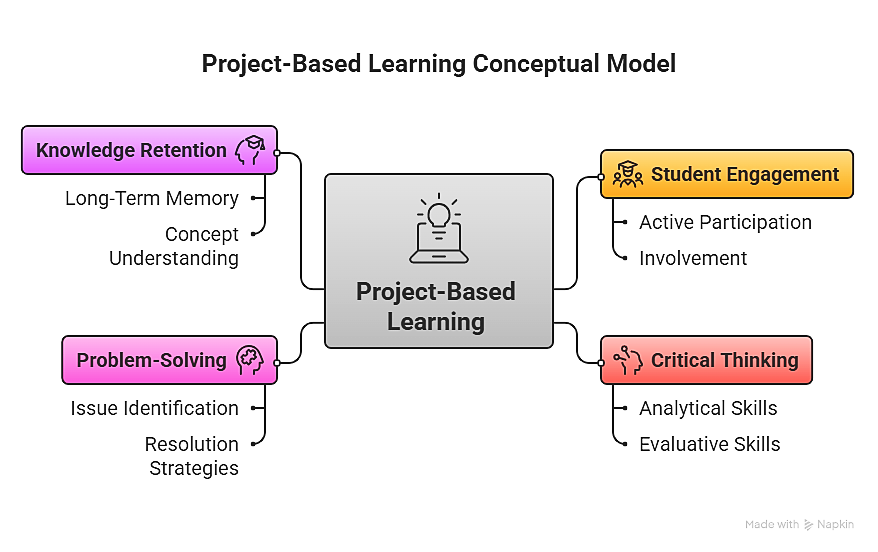
Thematic analysis is used to examine qualitative data, such as interview transcripts and responses to open-ended surveys. This method involves identifying patterns and themes common to all students to understand their experiences and perceptions (Mutanga, 2024; Evenddy et al., 2023). Quantitative and qualitative analyses can be combined to support triangulation, thereby enhancing the validity and reliability of the findings. Figure 2 presents a conceptual flowchart of the methodology to depict the overall research process.
Source: Developed for this study based on literature synthesis
Figure 2 illustrates the study's sequential process, starting with participant selection and group assignment, followed by the instructional intervention in both PBL and traditional groups. It also demonstrates how multiple data collection methods were combined and that both quantitative and qualitative analysis approaches were employed. This systematic flow helps ensure methodological rigor and aligns with the study's goal of evaluating the impact of PBL on critical thinking, problem-solving, and knowledge retention.
3.6 Ethical Considerations
The integrity of this study depends on ethical considerations. All participants provide informed consent to participate, and they are fully informed about the research's purpose, procedures, and their rights as research subjects. Participation is voluntary, and students can withdraw at any time without penalty (Rao et al., 2024).
Privacy is maintained by anonymizing all data and ensuring that responses from individual participants cannot be linked to any specific person. It is also important, especially in educational settings, where the relationship between students and educators can be affected (Evenddy et al., 2023).
Furthermore, the research ensures fair academic treatment, as both the experimental and control groups have the same learning opportunities. Although they might use different instructional strategies, both groups receive content aligned with curriculum standards, and no participant will be at a disadvantage (Jaheed, 2025).
By following these ethical principles, the study will ensure that the research process is carried out responsibly and that the results are credible and trustworthy.
4. Results
4.1 Critical Thinking Findings
The analysis of critical thinking outcomes showed a statistically significant difference between the PBL and traditional instruction groups. Learners at risk of exposure to PBL demonstrated improved analytical reasoning, evaluation, and synthesis, as evidenced by standardized and rubric-based tests. This improvement aligns with previous studies that emphasize the importance of active inquiry and active learning in enhancing higher-order cognition (Buchman, 2024; Eshun et al., 2026).
To provide a systematic comparison of performance in both groups, Table 3 summarizes the mean scores for the pre-test and post-test measures.
| Group | Pre-Test Mean | Post-Test Mean | Improvement (%) |
| PBL Group | 58.4 | 78.9 | +35.1% |
| Traditional Group | 57.9 | 66.2 | +14.3% |
Source: Developed for this study based on assessment data
The table shows that both groups improved, although the increase in performance in the PBL group was significantly larger. This finding is supported by meta-analytic data indicating that PBL leads to greater cognitive gains than traditional instruction (Zhang & Ma, 2023). Additionally, the improvements are attributed to the influence of structured inquiry and student autonomy, which have been identified as among the most effective factors in developing critical thinking (Jaheed, 2025; Triyasa & Nurjanah, 2025).
The findings also align with cross-disciplinary research showing that PBL positively influences critical thinking across settings, including language and vocational education (Song et al., 2024; Ningsih & Yusof, 2025). This consistency suggests that the cognitive benefits of PBL are not confined to specific subjects but also apply to its pedagogical structure.
4.2 Problem-Solving Findings
Problem-solving skills were assessed based on the project's performance, particularly the quality of the solution, innovativeness, and feasibility. The PBL group of students also excelled at handling ill-structured problems, resulting in creative and contextually appropriate solutions. These findings align with earlier studies indicating that PBL encourages real-world problem-solving when students are engaged in real-life situations (Karan & Brown, 2022; Yang, 2024).
The main focus of this analysis was to compare the results of groups with individual contributions. Although teamwork improved the overall quality of the project, participation among individuals varied, highlighting the influence of group dynamics. Similar studies by Hasan et al. (2023) and Eswaran (2024) also emphasize that collaboration can increase and complicate learning outcomes, depending on how group activities are structured and facilitated.
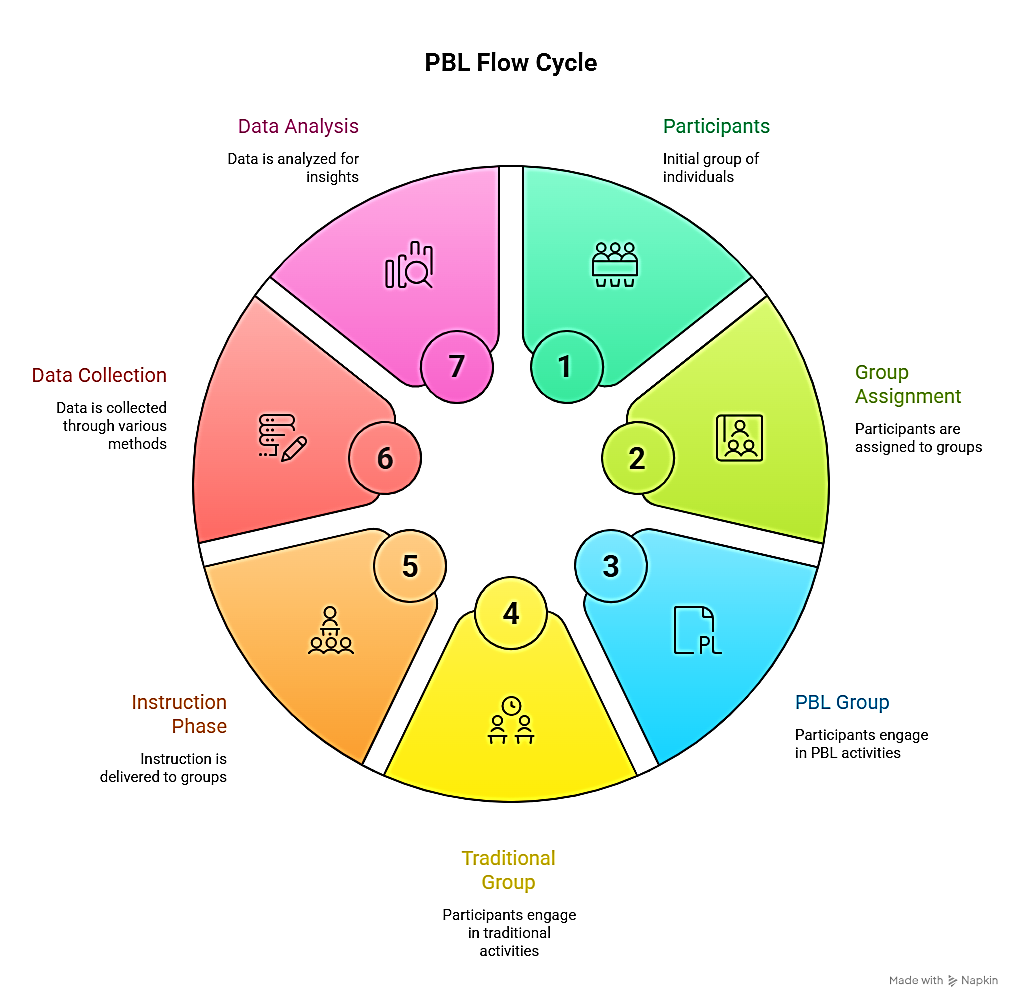
To clarify the performance trends, Figure 3 presents a conceptual framework for discussing the effectiveness of instructional methods in solving problems.
Source: Prepared during this research.
PBL supports a flexible, adaptable approach to problem-solving and helps students manage ambiguity as they develop multiple solution options. This aligns with evidence of integrating computational thinking, where systematic reasoning is regarded as essential in complex problem situations (Saad & Zainudin, 2024).
Furthermore, the findings can corroborate those of practice-based fields such as engineering or healthcare, where PBL has proven to be an effective tool for decision-making and practical skill development (Qiuxia et al., 2024; Xie et al., 2025). These results reinforce PBL's role as a bridge between theoretical and practical knowledge.
4.3 Findings of Knowledge Retention
The assessment of retained knowledge revealed a clear advantage for the PBL group, especially in delayed post-test performance. Although both groups performed similarly on the immediate post-tests, the PBL group demonstrated greater long-term retention, suggesting more effective memory consolidation. Table 4 compares the immediate and delayed test scores to illustrate this trend.
| Group | Immediate Post-Test | Delayed Post-Test | Retention Rate (%) |
| PBL Group | 80.2 | 75.6 | 94.3% |
| Traditional Group | 78.5 | 62.1 | 79.1% |
Source: Developed for this study based on retention assessment
The results indicate that the PBL group experienced significantly less decline in performance over time compared to the initial learning outcomes. This finding supports the principle of experiential learning, which states that knowledge gained through meaningful experiences is more lasting (Alabi, 2024). Furthermore, it is consistent with previous studies showing that PBL enhances long-term retention through contextual learning (Vesikivi et al., 2020; Green & du Plessis, 2023).
The findings also address a significant gap identified in the literature, as most studies focus on short-term outcomes rather than long-term retention. This study provides empirical evidence that knowledge gained through PBL remains sustainable when a delayed evaluation is included.
4.4 Additional Observations
In addition to the main variables, the analysis showed significant differences in student engagement and perceptions between the two teaching methods. Students in the PBL group reported greater motivation, interest, and perceived relevance of their learning activities. The results support previous research highlighting engagement as a key element of PBL performance (Mutanga, 2024; Nagamalla et al., 2025).
The interviews also showed that students valued the independence and collaborative atmosphere of PBL, which allowed them to take control of their learning. This aligns with research emphasizing the importance of learner autonomy in boosting educational achievement (Amiri, 2025; Aggarwal et al., 2026).
However, challenges were also reported, including difficulties coordinating the group and managing time. These comments align with studies that identify structural and logistical barriers to implementing PBL (Alarfaj et al., 2024; Evenddy et al., 2023). Overall, the other observations confirm that PBL is a complex phenomenon, with strengths and areas that require careful management.
5. Discussion
5.1 Interpretation of Results
The results of the research provide strong empirical evidence that Project-Based Learning is effective in enhancing critical thinking, problem-solving, and knowledge retention. The significant positive change observed in the PBL group supports previous studies that identify PBL as a tool for developing higher-order thinking (Buchman, 2024; Eshun et al., 2026). These findings also agree with meta-analyses showing the high effectiveness of PBL compared to traditional teaching methods (Zhang & Ma, 2023).
Regarding problem-solving, the study offers a supportive view: exposure to ill-structured problems boosts students' ability to manage complexity and develop innovative solutions (Karan & Brown, 2022). This finding aligns with the literature in applied fields, as PBL has been shown to improve applied competence and decision-making (Yang, 2024; Xie et al., 2025).
The results on knowledge retention also support the theoretical framework of experiential learning and demonstrate that contextualized, meaningful learning experiences lead to more sustained knowledge (Alabi, 2024; Vesikivi et al., 2020). This supports previous research emphasizing the limitations of memorization and the advantages of an experiential approach (Triyasa & Nurjanah, 2025).
Nevertheless, implementation quality is also mentioned in the results. In line with Jaheed (2025), PBL depends on careful design and instruction. The absence of these aspects can prevent students from fully benefiting from PBL.
5.2 Theoretical Implications
This study offers strong evidence supporting constructivist and experiential learning theories. The research confirms the core idea of constructivism—that knowledge is built through interaction and experience—by demonstrating that students tend to perform better when learning actively and in context (Amiri, 2025).
Furthermore, the results align with experiential learning theory, which highlights the importance of reflection and application in the learning process (Alabi, 2024). The observed improvements in critical thinking and retention demonstrate that experiential activities can foster deeper thinking and lead to better learning outcomes.
Another contribution the study makes to the theoretical understanding of PBL is its role as an intervening variable. Mutanga (2024) and Nagamalla et al. (2025) suggest engagement as the mechanism through which PBL influences cognitive and behavioral outcomes. This observation provides a more integrated view of how PBL functions in education.
5.3 Practical Implications
This study has practical implications for educators, curriculum designers, and policymakers. The results suggest that PBL can be incorporated into the curriculum to enhance students' learning outcomes in various areas. This aligns with studies supporting the use of outcome-based education models that emphasize skills development and content knowledge (Bhagwat & Kulkarni, 2025).
For teachers, the findings highlight the importance of professional development and training in PBL methods. According to Jaheed (2025), it should involve replacing traditional teaching with facilitation. It is important to provide teachers with the skills and resources they need to utilize PBL effectively.
At the policy level, the research supports adopting educational models centered on experience and practical applications. According to studies by Rathi and Nirgude (2022) and Ibrahim (2025), such strategies are crucial for equipping students with the skills needed in today's workplace. Educational systems can promote the development of essential competencies for lifelong learning by encouraging PBL.
5.4 Limitations
Although it has accomplished this, the study has several limitations that cannot be overlooked. First, the small sample size may restrict the ability to generalize the findings. The results should be validated with larger and more diverse samples to apply them across different contexts in the future (Meylani et al., 2025).
Second, the study period might not be long enough to capture the long-term effects of PBL. Although delayed post-tests offer some insight into retention after the test, longer longitudinal studies are necessary to assess the lasting impact of the learning outcomes (Vesikivi et al., 2020).
Lastly, institutional resources and teacher expertise can also be contextual factors that might influence the results. The success of PBL, as noted by Rao et al. (2024), generally depends on the support systems and infrastructure. These factors should be considered when interpreting the findings.
5.5 Future Research
Future research should address the gaps identified in the current study. Long-term studies are necessary to examine the lasting effects of PBL on patients with cognitive and behavioral conditions, particularly regarding memory and knowledge transfer. Such studies would provide better insight into the sustainability of PBL's effects (Alabi, 2024; Vesikivi et al., 2020).
Also, cross-disciplinary comparisons may provide valuable insights into how PBL functions in different educational settings. The success of PBL, as highlighted by Nasution and Siregar (2025) and Yang (2024), arguably varies across disciplines; therefore, comparative research is essential.
Finally, the future development of technology use in PBL can be explored. According to the research by Joronavalona et al. (2025) and Yang and Chen (2025), digital tools may enhance the accessibility and effectiveness of PBL. Discussing technology as a support for experiential learning will be key to advancing educational practices in the 21st century.
6. Conclusion
6.1 Summary of Findings
This paper aimed to explore how Project-Based Learning (PBL) is relevant to three key aspects of learning: critical thinking, problem-solving, and knowledge retention. The results indicate that PBL has strong empirical support across all three domains, making it a valuable teaching method with a broad scope of learning. Students exposed to PBL were far better at critical thinking, with stronger abilities in analysis, evaluation, and synthesis. The results are consistent with current studies, which found that PBL stimulates higher-order cognitive thinking through active involvement and inquiry-based learning (Buchman, 2024; Eshun et al., 2026; Triyasa & Nurjanah, 2025).
In addition to cognitive improvement, the research found significant gains in problem-solving skills. Students in the PBL group were more competent at solving ill-structured problems, generating creative solutions, and translating knowledge into practice. The results align with previous findings that emphasize the role of PBL in developing genuine problem-solving and decision-making abilities (Karan & Brown, 2022; Yang, 2024; Saad & Zainudin, 2024). The collaborative nature of PBL also facilitated these outcomes, as students were guided to think and build knowledge in groups, which aligns with previous research on the role of teamwork in an experience-driven learning context (Hasan et al., 2023; Eswaran, 2024).
Most importantly, the study found that PBL significantly improves long-term knowledge retention. Although both the PBL and traditional groups performed similarly on immediate assessments, the PBL group maintained high retention even on delayed posttests. This aligns with the concept of experiential learning, which holds that knowledge gained through engaging, contextualized experiences is more sustainable (Alabi, 2024; Vesikivi et al., 2020). The results are also consistent with studies emphasizing the importance of learner control and involvement in enhancing long-term memory and mastery (Green & du Plessis, 2023; Mutanga, 2024).
Together, these findings offer comprehensive support for PBL as an effective pedagogical model that improves not only short-term academic achievement but also long-term learning outcomes. The consistency of these results with those reported by various researchers across different fields of study further strengthens the evidence that PBL is a sound model of contemporary education (Zhang & Ma, 2023; Song et al., 2024; Xie et al., 2025).
6.2 Final Argument
Using the evidence provided, the paper argues that Project-Based Learning is not a simple teaching method but a transformational approach to education. PBL transforms the nature of the learning process, unlike traditional teaching, which focuses on content delivery and passive learning, leaving students not directly involved in constructing knowledge. This transformation is reflected in how PBL integrates the cognitive, social, and experiential aspects of learning into an integrated system (Amiri, 2025; Nghiem et al., 2025).
The results show that PBL performance is not only evident in individual items but also in their combination. Combining inquiry, collaboration, and practical application fosters a learning climate that promotes deep knowledge and proficiency growth. This view is supported by studies that underscore the need to meet modern education and workforce demand through changes in pedagogical approaches (Aggarwal et al., 2026; Bhagwat & Kulkarni, 2025).
Moreover, the research advances the current discussion of educational change, as the barriers posed by conventional models are evident, and new methods are necessary. According to Al-Thani and Ahmad (2025), research-based and inquiry-based approaches are necessary to build problem-solving skills and intellectual interest. PBL, in this regard, is an option that not only meets these requirements but also equips students to address the challenges of a rapidly changing world.
6.3 Educational Implications
The findings of this paper extend beyond the classroom, offering useful insights for curriculum development, teacher training, and educational policy. The demonstrated effectiveness of PBL in developing critical thinking, problem-solving, and knowledge retention underscores the need to transition to student-centered learning environments. These conditions emphasize active work, self-sufficiency, and teamwork, which align with modern educational objectives that prioritize competency acquisition over memorizing material (Alarfaj et al., 2024; Evenddy et al., 2023).
Curriculum-wise, PBL needs to be integrated by redefining instructional design to emphasize big ideas and real-world applications. This strategy aligns with studies that call for adopting an outcome- and experience-based model of education to help students cope with future career and life problems (Ibrahim, 2025; Rathi & Nirgude, 2022). Moreover, incorporating interdisciplinary projects further enhances the relevance and applicability of learning and supports cross-disciplinary findings in history, engineering, and healthcare (Nasution & Siregar, 2025; Qiuxia et al., 2024; Yang & Chen, 2025).
Professional development is also essential to the successful implementation of PBL. Teachers should move beyond transmitting knowledge and become shapers of learning, leading students through inquiry and reflection. Such a shift requires targeted professional development and support, as research on pedagogical change and experiential learning emphasizes (Jaheed, 2025; Rao et al., 2024). Educational institutions can maximize the impact of PBL by equipping teachers with the necessary skills and resources.
The implementation of PBL at the policy level aligns with broader trends toward modernizing the education system and equipping students with 21st-century skills. Studies indicate that experiential learning methods can be integrated into the learning process to increase student engagement, improve learning outcomes, and develop lifelong learning capabilities (Joronavalona et al., 2025; Meylani et al., 2025). In this regard, policymakers should consider integrating PBL into national and institutional systems as part of the broader educational transformation effort.
6.4 Closing Insight
To sum up, Project-Based Learning marks a shift in education, moving away from traditional models that emphasize passive learning. Instead, it features a student-centered approach that emphasizes activity and practical application. PBL helps students develop skills to navigate a complex, uncertain world by applying critical thinking, problem-solving, and knowledge retention.
The results of this research support the idea that education should evolve to meet the challenges of an increasingly globalized and rapidly changing world. As an approach centered on experiential learning and teamwork, PBL provides a way to achieve this transformation. Students who undertake meaningful projects and develop a deeper understanding of their learning processes will be better prepared to pursue lifelong learning and adapt continuously (Green & du Plessis, 2023; Aggarwal et al., 2026).
Finally, the value of PBL lies in its ability to bridge the gap between theoretical and practical courses, enabling students to apply their knowledge in real-world situations and enhance their skills beyond the classroom. By adopting PBL as a core part of learning, institutions can produce not only learners with strong academic skills but also those capable of handling the complex challenges of the modern world.
References
- Aggarwal, A., Kaur, H., Pannu, H. S., Kaur, V., & Mann, D. (2026). Beyond the Classroom: Examining the Influence of Project-Based Learning on Student Development. DMPedia Lecture Notes in Multidisciplinary Research, 63–83. DOI ↗ Google Scholar ↗
- Alabi, M. (2024). Experiential learning: Fostering deep learning through active engagement. Ladoke Akintola University of Technology. DOI ↗ Google Scholar ↗
- Alarfaj, M., Mohamed, S. R., Chtourou, S., Enshasy, H., Aboulnaga, A., & Hassan, M. (2024). Experience of Project-Based Learning: Challenges, Assessment, and Analysis. International Journal of Engineering Pedagogy, 14(3). DOI ↗ Google Scholar ↗
- Al-Thani, N. J., & Ahmad, Z. (2025). Driving project-based learning and problem-based learning through research in middle schools. In Teaching and Learning with Research Cognitive Theory: Unlocking Curiosity and Creativity for Problem-Solving Skills (pp. 45–58). Cham: Springer Nature Switzerland. DOI ↗ Google Scholar ↗
- Amiri, S. M. H. (2025). Project-based learning pedagogy: Bridging theory and practice for real-world impact. DOI ↗ Google Scholar ↗
- Andi, G., Astuti, M., & Purnomo, W. (2025). Enhancing Students’ Critical Thinking through Project-Based Learning in Urban Senior High Schools of Yogyakarta. International Journal of EduTech, 1(1), 24-33. DOI ↗ Google Scholar ↗
- Bhagwat, R., & Kulkarni, A. (2025). Integrating project-based learning for enhancing higher education within an outcome-based education framework. International Journal of Evaluation and Research in Education (IJERE). DOI ↗ Google Scholar ↗
- Buchman, J. C. (2024). Enhancing Critical thinking abilities through project-based learning: Effects and implementation. Asia-Pacific Journal of Convergent Research Interchange, 10(9), 545–554. http://dx. DOI ↗ Google Scholar ↗
- Eswaran, U. (2024). Project-based learning: Fostering collaboration, creativity, and critical thinking. In Enhancing education with intelligent systems and data-driven instruction (pp. 23–43). IGI Global Scientific Publishing. DOI ↗ Google Scholar ↗
- Eshun, I., Koranteng, U., Ajayi, A. B., & Ogar, E. E. (2026). Effectiveness of Project-Based Learning in Developing Critical Thinking Skills. Journal of ICT and Education, 1(1), 10–21. DOI ↗ Google Scholar ↗
- Evenddy, S. S., Gailea, N., & Syafrizal, S. (2023). Exploring the benefits and challenges of project-based learning in higher education. PPSDP International Journal of Education, 2(2), 458-469. DOI ↗ Google Scholar ↗
- Goshu, B. S., & Ridwan, M. (2024). Exploring the role of project-based learning in fostering critical thinking skills. Britain International of Linguistics Arts and Education (BIoLAE) Journal, 6(3), 149–166. http://biarjournal.com/index.php/biolae/article/view/1201 DOI ↗ Google Scholar ↗
- Green, S. L., & du Plessis, E. C. (2023). Project-based learning to promote learner autonomy in training hospitality education at a technical and vocational education and training college. International Journal of Learning, Teaching and Educational Research, 22(7), 136–155. DOI ↗ Google Scholar ↗
- Hasan, M., Arisah, N., & Ahmad, M. I. S. (2023). Experiential learning model for the development of collaborative skills through project-based learning practicum. JPI (Journal Pendidikan Indonesia), 12(2), 340–349. DOI ↗ Google Scholar ↗
- Ibrahim, A. (2025). Identifying Gaps and Contributions of Project-Based Learning in Vocational Education and STEM Fields: A Comprehensive Bibliometric Analysis. Journal of Scientometric Research, 14(1), 86–98. DOI ↗ Google Scholar ↗
- Jaheed, H. I. (2025). Fostering Critical Thinking Through Project-Based Learning: A Framework for Curriculum Design and Pedagogical Innovation, 21(4), 1482–1464. http://wjfh.uowasit.edu.iq/index.php/wjfh/article/view/1331 DOI ↗ Google Scholar ↗
- Joronavalona, R., Rohaeti, E., Laksono, E. W., & Notiavina, A. A. (2025). Immersive and experiential learning: A Review of project-based learning and virtual reality in chemistry education. Jurnal Pendidikan Matematika dan Sains, 13(2), 311–320. DOI ↗ Google Scholar ↗
- Karan, E., & Brown, L. (2022). Enhancing Student's Problem-Solving Skills through Project-Based Learning. Journal of Problem Based Learning in Higher Education, 10(1), 74–87. DOI ↗ Google Scholar ↗
- Meylani¹, N., Hidayat, U. S., Lyesmaya, D., & Mulyani¹, A. (2025, July). Systematic Literature Review: Experimentation of the Project-Based Learning Model on the Learning Outcomes of 5th Grade Elementary School Students in Terms of Learning Styles. In Proceedings of the 5th International Conference on Education, Humanities, and Social Science (ICEHoS 2025)–Japan Series (p. 172). Springer Nature. DOI ↗ Google Scholar ↗
- Mutanga, M. B. (2024). Students’ perspectives and experiences in project-based learning: A qualitative study. Trends in Higher Education, 3(4), 903–911. DOI ↗ Google Scholar ↗
- Nagamalla, L., Readdy, V., Kumar, S., Kolagani, L., & Suryadevara, G. (2025). Impact of Active Learning Methods on Project-Based Learning (PBL): Enhancing Student Engagement and Outcomes. Journal of Engineering Education Transformations, 30–37. DOI ↗ Google Scholar ↗
- Nasution, B., & Siregar, R. J. (2025). Project-Based Learning in History Education: Enhancing Critical Skills Through Local Heritage Projects. Scientific Culture, 11(4). DOI ↗ Google Scholar ↗
- Nghiem, X. H., Yadav, R., Yadav, M., Dewasiri, N. J., & Ranasinghe, A. (2025). Project-Based Learning and Inquiry-Based Learning. In Exploration of K-12 Teaching and Learning for Teacher Educators (pp. 231–260). IGI Global Scientific Publishing. DOI ↗ Google Scholar ↗
- Ningsih, E., & Yusof, K. M. (2025). Enhancing Critical Thinking in Junior High School through Project-Based Learning. International Journal of Educational Insights and Innovations, 2(2), 37–46. DOI ↗ Google Scholar ↗
- Qiuxia, X., Jantharajit, N., & Srikhao, S. (2024). Innovative Approaches in Nursing Education: Enhancing Learning Efficiency and Critical Thinking Based on Cooperative and Project-Based Learning. Asian Journal of Contemporary Education, 8(2), 153–164. DOI ↗ Google Scholar ↗
- Rao, S. P., Sekhar, S. C., Yadav, T. C., Kumar, V. P., & Haran, B. H. (2024). Implementing experiential learning strategies for enhanced business education in India: Challenges and opportunities. Journal of Informatics Education and Research, 4(3), 202–211. DOI ↗ Google Scholar ↗
- Rathi, S., & Nirgude, V. (2022). Fostering Progressive Experiential Learning Approach to Make Engineering Students Future Ready. Journal of Engineering Education Transformations, 105–113. DOI ↗ Google Scholar ↗
- Saad, A., & Zainudin, S. (2024). A review of teaching and learning approach in implementing Project-Based Learning (PBL) with Computational Thinking (CT). Interactive Learning Environments, 32(10), 7622-7646. DOI ↗ Google Scholar ↗
- Song, X., Razali, A. B., Sulaiman, T., Jeyaraj, J. J., & Ds, P. (2024). Impact of project-based learning on critical thinking skills and language skills in EFL context: A review of literature. World, 14(5), 402-412. http://psasir.upm.edu.my/id/eprint/120268/1/120268.pdf DOI ↗ Google Scholar ↗
- Triyasa, S., & Nurjanah, N. (2025). The Effectiveness of Project-Based Learning in Enhancing Conceptual Understanding and Critical Thinking Skills: A Literature Analysis. Lentera Pendidikan: Jurnal Ilmu Tarbiyah dan Keguruan, 28(2), 391–407. DOI ↗ Google Scholar ↗
- Vesikivi, P., Lakkala, M., Holvikivi, J., & Muukkonen, H. (2020). The impact of project-based learning curriculum on first-year retention, study experiences, and knowledge work competence. Research Papers in Education, 35(1), 64-81. DOI ↗ Google Scholar ↗
- Xie, Q., Jantharajit, N., & Srikhao, S. (2025). Enhancing Learning Efficiency and Critical Thinking Skills of Vocational Nursing Students: A Hybrid Instructional Approach Based on Cooperative Learning and Project-Based Learning. Journal of Education and Learning, 14(3), 85–96. DOI ↗ Google Scholar ↗
- Yang, F. C., & Chen, H. M. (2025). Examining Flipped Classroom and Project-Based Learning Integration in Older Adult Health Education: A Mixed-Methods Study. Nursing Reports, 15(8), 267. DOI ↗ Google Scholar ↗
- Yang, Q. (2024). “Project-Based Learning” in Practical Teaching Within the Field of Engineering Management. PS, 2(1), 73. DOI ↗ Google Scholar ↗
- Zhang, L., & Ma, Y. (2023). A study of the impact of project-based learning on student learning effects: A meta-analysis study. Frontiers in psychology, 14, 1202728. DOI ↗ Google Scholar ↗