Abstract
This study aims to describe the critical thinking skills and self-confidence of lower secondary school pupils in solving mathematics problems based on Higher Order Thinking Skills (HOTS), as well as to analyse the influence of self-confidence on pupils’ critical thinking skills. This survey study involved 463 pupils from 15 state lower secondary schools in the Special Region of Yogyakarta, selected using a stratified random sampling technique based on data from the Regional Standardised Education Assessment (ASPD). The research instruments consisted of a self-confidence questionnaire and a HOTS-based critical thinking skills test. The data were analysed using simple linear regression, one-way ANOVA, and post hoc tests. The results showed that the students’ average critical thinking skills score was 47.89 and their average self-confidence score was 67.80. Self-confidence had a significant effect on students’ critical thinking skills, with the regression equation Ŷ = 14.351 + 0.129X and a significance value of 0.009 < 0.05. Furthermore, there were differences in critical thinking skills based on students’ levels of self-confidence. The results of the Post Hoc test showed that a significant difference was found between students with high and low self-confidence.
Keywords
Critical Thinking Self-Confidence. Secondary School Pupils Mathematics Higher-Order Thinking Skills
1. Introduction
Mathematics is a subject included in the Indonesian education curriculum and is taught to all students from primary school through to higher education. As a fundamental discipline, mathematics is considered so important in everyday life that there is a need for human resources who are competent in the field of mathematics. By studying mathematics, pupils can develop systematic, logical and critical thinking skills, particularly when communicating ideas or solving problems. This is in line with Ministry of Education and Culture Regulation No. 22 of 2016 on standards for the basic and secondary education process, namely: (1) enhancing intellectual abilities, particularly students’ higher-order thinking skills, (2) developing students’ ability to solve problems systematically, (3) achieving high learning outcomes, (4) training students to communicate ideas, particularly in writing academic papers, and (5) developing students’ character. Therefore, the learning process is conducted in an interactive, inspiring, enjoyable and challenging manner, motivating students to participate actively, whilst providing sufficient scope for initiative, creativity and independence in accordance with students’ talents, interests, and physical and psychological development.Rohmah (2024) Ministerial Regulation No. 37 of 2018 amending Ministerial Regulation No. 24 of 2016 on Core Competencies and Basic Competencies explains that the core knowledge competency at secondary school level is to understand knowledge (factual, conceptual and procedural) based on a curiosity about science, technology, the arts and culture in relation to observable phenomena and events. Meanwhile, core skills competencies involve attempting, processing and presenting in the concrete domain (using, analysing, assembling, modifying and creating) and the abstract domain (writing, reading, calculating, drawing and composing) in accordance with what is learnt at school and from other sources with the same perspective or theory. Based on the above explanation, it can be concluded that the fundamental skills students must possess when learning mathematics are critical thinking and self-confidence.The Programme for International Student Assessment (PISA), initiated by the Organisation for Economic Co-operation and Development (OECD), measures the mathematical ability of students worldwide. However, according to the results of the PISA programme, which is conducted every three years, Indonesian students’ mathematical ability remained below the average of OECD member countries from 2003 to 2018. The Indonesian government’s response to this situation has been to reform the curriculum, and it has implemented the latest curriculum, known as the ‘Merdeka’ curriculum.Ministry of Education and Culture (2021) The Merdeka Curriculum grants educational institutions the freedom to design learning processes of a quality that meets the needs of their students. The Merdeka Curriculum builds on the direction of previous curriculum development, which was holistic, competence-based and designed in accordance with the context and needs of learners. The Merdeka Curriculum has several key characteristics that can drive learning recovery, namely: (1) Learning activities are designed using project-based learning as an effort to develop soft skills and noble character, global diversity, cooperation, creativity, critical thinking and independence; (2) Learning materials focus on deepening literacy and numeracy as core competencies, and (3) Teachers have the freedom to design learning tailored to pupils’ abilities, aligned with local contexts and content.One of the key areas of focus is critical thinking. This is also linked to the internationally recognised 21st-century skills that are essential to possess, namely the 4Cs (critical thinking, collaboration, communication, dan creativity) (Miterianifa et al., 2021; Stanikzai, 2023) ; Masroor, 2025). Critical thinking skills are the ability to synthesise and analyse information that is acquired, mastered and practised. Students can develop critical thinking skills through training or learning. Critical thinking skills can be applied in student activities, including learning activities and learning assessments. To measure students’ level of critical thinking, assessment instruments should consist of a set of questions accompanied by critical thinking indicators.In reality, the critical thinking skills demonstrated by pupils when solving mathematical problems have not yet yielded satisfactory results. This is evident from the findings of a study conducted by (Suharyani & Siswanto, 2022 ; Shovira, 2024 ; Cacik & Widiyanti, 2024) which concluded that students’ critical thinking skills remain low. Meanwhile, the results of the study (Budi et al., 2023; Wahyuningsih et al., 2023) namely that critical thinking skills in the ‘drawing conclusions’ indicator have declined, from 29.35% to 21.17%. This decline in the ability to draw conclusions is likely due to the fact that, in direct teaching methods, pupils are not encouraged to draw conclusions from their own work. The focus of the teaching carried out is solely on students’ ability to solve problems and answer questions. Therefore, it is necessary to facilitate the development of students’ critical thinking skills.This is also consistent with the theory Jean Piaget (Al Firdaus, 2023; Wafa & Ismiyanti, 2025 ; Wahyuni et al., 2023) which states that learning should involve interaction with both the social and physical environments. In other words, students are said to be learning when there is interaction between students, or between students and teachers. It is this interaction that helps to develop students’ critical thinking skills. One aspect of attitude that can influence students’ critical thinking is self-confidence.(Al Firdaus, 2023; Wafa & Ismiyanti, 2025) self-confidence is the extent that one believes one can produce result, accomplish goals, or perform task competently” In other words, self-confidence is a person’s belief in their ability to achieve results, reach goals, or complete a task competently. This is in line with the view that (Messaoud, 2022 ; Jawan et al., 2025) that self-confidence is the belief within a person that they can achieve success. Self-confidence is a person’s belief in their ability to accomplish something; it is a personality trait that encompasses self-efficacy, optimism, objectivity, responsibility, rationality and realism (Muhammad et al., 2024; Mutaharoh et al., 2023). (Schipper & Petermann, 2026 ; Azizah, 2026; Fitra et al., 2025) states that self-confidence is an attitude possessed by every individual who has a positive view of themselves and their circumstances.Hali (2022), Ruka (2024) Ministerial Regulation No. 24 of 2016 states that the objective of mathematics education is for pupils to develop confidence in problem-solving. The objectives are for students to be able to (1) solve problems, (2) reason, (3) communicate, and (4) demonstrate attitudes and behaviour consistent with mathematical values. It is stated that achieving success is influenced by self-confidence.Research findings according to (Aisyah & Juandi, 2022; Hamzah & Dahlan, 2023 ; Fanni, 2024) shows that Indonesia’s average score was 397, placing it 44th out of the 49 participating countries. The average scores obtained for each assessment component were 395 for comprehension, 397 for application, and 397 for reasoning. Based on the TIMSS results, it is evident that the mathematical ability of students in Indonesia remains relatively low. (Kong et al., 2025 ; Fajar et al., 2025; Kulimbang, 2025) revealed that the personal factor that supports academic achievement is self-confidence.However, the results of a study conducted by (Matulessy & Hikmah, 2022) A study conducted at five junior high schools in Yogyakarta found that pupils’ self-confidence remains low, as they still lack the confidence to express their opinions and ask questions during lessons.Research (Ismiasih & Mustika, 2024) shows the same result, namely that 64% of pupils still have low self-confidence. Meanwhile, TIMSS data indicates that Indonesian pupils’ self-confidence in learning mathematics stands at just 28%, compared to the international average of 43% (Mullis et al., 2016, p. 183). Data TIMSS 2011 shows that students’ confidence in learning mathematics in Indonesia stands at 3%, compared to the international average of 14% (Mullis et al., 2012, p. 338). It can therefore be concluded that pupils’ confidence in learning mathematics is relatively low.Higher-order thinking skills (HOTS) are a key objective in the learning process, particularly in mathematics education. The learning objectives for HOTS are based on the taxonomy of learning. (Adhikari, 2024 ; Ulfah et al., 2023) One of the most widely used taxonomies is Bloom’s taxonomy. After Bloom’s taxonomy was revised by (Brown, n.d.; Listiani & Rachmawati, 2022; Mustika, 2024) As learning objectives are divided into two categories—cognitive processes and knowledge—the Higher-Order Thinking Skills (HOTS) in Bloom’s taxonomy require adjustment. The revised Bloom’s taxonomy includes the following dimensions of HOTS cognitive processes: analysing, evaluating, and creating. Meanwhile, the HOTS knowledge dimensions comprise conceptual knowledge, procedural knowledge, and metacognitive knowledge. The cognitive processes that fall under the HOTS category are analysing, evaluating, and creating. It can therefore be categorised that analysing and evaluating are part of critical thinking, whilst creating is part of creative thinking. Analysing and evaluating are part of critical thinking (Nurmalia & Sari, 2023 ; Leuwol et al., 2023 ; Gunartha, 2024) Higher Order Thinking Skills (HOTS) This can be done in the classroom by getting pupils used to working on assessment questions. Encouraging pupils to engage in higher-order thinking can be implemented in the classroom by developing lesson plans and assessments that align with HOTS standards. HOTS assessment can be optimised by teachers to include daily tests, mid-term exams, end-of-term exams, and final school exams. This research was conducted to train students in the use of higher-order thinking skills.Critical thinking skills are important, yet the reality on the ground falls short of expectations. The critical thinking skills of junior high school pupils in Indonesia remain relatively low. This is based on the quadrennial Trends in International Mathematics and Science Study (TIMSS), which assesses junior high school pupils using high-cognitive-level questions designed to measure their critical thinking skills; the results show that Indonesian pupils still rank at the bottom (Devana, 2024 ; Fitriani et al., 2022).Critical thinking is a cognitive skill that involves cognitive processes and encourages students to reflect on problems. Critical thinking involves inductive reasoning skills such as recognising relationships, analysing open-ended problems, determining cause and effect, drawing conclusions and considering relevant data. Meanwhile, deductive thinking skills involve the ability to solve spatial and logical problems, apply syllogisms, and distinguish between facts and opinions. (Miterianifa et al., 2021). In this case (Amri & Mustika, 2022 ; Fanani et al., 2024; Samadun et al., 2023) highlights several indicators of mathematical critical thinking skills that pupils need when solving mathematical problems: Focus, Reason, Inferences, Situation, Clarity, and Overview (FRISCO). These six indicators relate to the understanding of the problem presented, with a view to re-examining the solution (Rosanti & Anjariyah, 2025 ; Faizah et al., 2026). The six FRISCO criteria are as follows: (1) Focus, meaning that pupils answer questions in line with the context of the problem; (2) Reason, meaning that pupils can provide reasons based on relevant facts or evidence at each step in reaching a conclusion; (3) Inference, meaning that pupils can draw accurate conclusions based on the identification process in the solution steps; (4) Situation means that students are able to gather relevant information and use relevant mathematical concepts to answer questions, (5) Clarity means that students can clarify symbols or matters that are not yet clearly explained, (6) Overview means that students have checked their work from start to finish against the FRISCO criteria above.When solving mathematical problems, pupils are guided to develop the ability to construct new mathematical knowledge, solve problems in various contexts related to mathematics, apply the necessary strategies, and reflect on the mathematical problem-solving process. These abilities can be achieved if students become accustomed to solving problems according to the correct procedures, so that the benefits gained are not limited to the single problem solved, but can also extend to a range of other problems and encompass a broader spectrum of mathematical knowledge. Thus, problem-solving ability is a fundamental skill that every student must possess.(Mastuti et al., 2022 ; Cacik & Widiyanti, 2024) highlighted the following aspects of critical thinking skills: (1) Students’ level of critical thinking skills falls within the low category; (2) The sub-skills of critical thinking—namely analysis, evaluation, inference, explanation and self-regulation—fall within the low category, whereas interpretation falls within the moderate category. In line with this view, the results of research conducted by (Tsurayya et al., 2025 ; Harahap et al., 2024; Nurqodri & Setyaningsih, 2024) that the three research subjects demonstrated varying levels of critical thinking ability when solving word problems involving quadratic functions; however, all three subjects were able to demonstrate all aspects of critical thinking, namely: interpretation, analysis, evaluation, inference, explanation and self-regulation.Based on the above discussion, the researcher is interested in and wishes to find out more about students’ critical thinking skills and self-confidence in problem-solving. Therefore, the researcher is interested in conducting a study, the details of which will be outlined in the title “Critical Thinking Skills and Self-Confidence Among Junior High School Students in Solving Mathematical Problems Based on Higher Order Thinking Skills (HOTS)”.
2 Method
The type of research employed was a survey study using a quantitative approach. In this procedure, the study collected quantitative data using tests and questionnaires. This study collected data to answer research questions relating to the critical thinking skills and self-confidence of students at state junior high schools in the Special Region of Yogyakarta when answering critical thinking questions and completing self-confidence questionnaires. This study was conducted in the Special Region of Yogyakarta, specifically in 15 state junior high schools located in the region, selected based on their most recent ASPD scores.The population of this study comprises all Year 9 pupils at state junior high schools in the Special Region of Yogyakarta. There are 214 state junior high schools in the Special Region of Yogyakarta, with a total of 3,442 Year 9 pupils. The minimum sample size to be used in this study is 395 pupils. The sampling techniques employed in this study are stratified proportional random sampling and cluster random sampling. The data collection techniques in this study consist of tests and questionnaires. Tests are used to measure students’ critical thinking skills, whilst questionnaires are used to determine students’ levels of self-confidence. The test instrument used is a written essay-style test comprising four questions in line with the indicators of critical thinking, namely focus, reason, and inference, based on Ennis (1996, p. 4). The questionnaire used in this study contained 30 statements in line with the indicators of self-confidence based on Lauster (1978). The questionnaire contains statements regarding self-confidence in solving maths problems. The scale used in this study is a Likert scale comprising four response options: Always (AL), Often (OF), Rarely (RR), and Never (NE).
The content validity of the critical thinking instrument and the student self-confidence questionnaire was assessed by five experts in the field of mathematics. The validity results for the critical thinking test fell into the moderate category, whilst the student self-confidence questionnaire was classified as highly valid. The calculation of the reliability coefficient for the student critical thinking test instrument yielded a Cronbach’s alpha value of 0.65. Meanwhile, the calculation for the student self-confidence questionnaire yielded a Cronbach’s alpha value of 0.84. This indicates that the critical thinking and self-confidence questionnaires are considered reliable in accordance with the statement Ebel & Frisbie (1991, p. 86), The reliability test is considered acceptable if the minimum standard of 0.65 is met.
The data analysis techniques used in this study were descriptive statistics and inferential statistics. The descriptive analysis focused on critical thinking, self-confidence, and the relationship between students’ critical thinking and self-confidence.
3 Result
This sub-section describes the findings of a study of Year 9 pupils at state junior high schools in the Special Region of Yogyakarta (Yogyakarta City, Sleman Regency, Bantul Regency, Kulonprogo Regency and Gunung Kidul Regency), covering critical thinking and self-confidence. The detailed findings are presented in Table 1.
| Deskripsi | Kemampuan Berpikir Kritis | Kepercayaan diri |
| Rata-rata | 47,8909394 | 67,80657 |
| Kriteria | Sedang | Sedang |
| Nilai minimum siswa | 27,59181 | 20,38861 |
| Nilai maksimum siswa | 68,19007 | 115,22452 |
| Standar deviasi | 6,76637727 | 15,80599 |
Table 1 shows that the critical thinking skills and self-confidence of Year 9 pupils at state junior high schools in the Special Region of Yogyakarta fall into the ‘moderate’ category. The average score achieved by pupils in critical thinking skills was 47.89, with a standard deviation of 6.76. The average score achieved by pupils in the self-confidence questionnaire was 67.80, with a standard deviation of 15.80.
Kemampuan Berpikir Kritis
The critical thinking test administered to 463 Year 9 pupils at state junior high schools in the Special Region of Yogyakarta comprised four essay-type questions. These questions assessed the steps taken by pupils in solving the problems. The aspects assessed included focus, reasoning and inference. The number of pupils who completed the critical thinking steps for each question is presented in Table 2.
| Question Item | Number of student | Description (Number of Student who answered) | |||||
| Fokus | Reason | Inference | |||||
| Soal 1 | 463 | 331 | 71% | 460 | 99% | 362 | 78% |
| Soal 2 | 360 | 78% | 425 | 92% | 157 | 34% | |
| Soal 3 | 333 | 72% | 405 | 87% | 237 | 51% | |
| Soal 4 | 297 | 64% | 348 | 75% | 206 | 44% | |
| The percentage of students who answered | 29% | 88% | 52% |
Table 26 shows that the majority of pupils were able to complete the ‘focus’ stage, which involves identifying the key points or problems in the question. In question 1, out of 463 research samples, 132 (29%) students did not write down the problem in the question, 3 (1%) students did not write down the steps to solve the problem, and 101 (78%) did not write a conclusion based on the identification process in the problem-solving steps. In question 2, 103 (78%) students did not write down the problem in the question, 38 (92%) students did not write down the steps to solve the problem, and 157 (34%) did not write down a conclusion based on the identification process in the problem-solving steps. In question 3, 130 students (72%) did not state the problem, 58 students (87%) did not write down the steps to solve the problem, and 226 students (51%) did not write a conclusion based on the identification process in the problem-solving steps. In question 4, 166 students (64%) did not write down the problem in the question, more than 100 students (75%) did not write down the steps to solve the problem, and 257 students (44%) did not write down a conclusion based on the identification process in the problem-solving steps. The figure below shows the number of students in each category of critical thinking ability.
Frequency Percentage
| Critical Thinking | ||
| Category | Frequency | Percentage |
| Very high | 126 | 27,21% |
| High | 87 | 18,79% |
| Medium | 104 | 22,46% |
| Low | 81 | 17,47% |
| Very low | 65 | 14,04% |
| Total | 463 | 100% |
Table 3 shows that 27% of pupils fall into the ‘very high’ category for critical thinking skills. Pupils in the ‘high’ and ‘moderate’ categories account for 19% and 22% respectively. Meanwhile, 17% and 14% of pupils fall into the ‘low’ and ‘very low’ categories respectively.
| Student performance | Stages of critical thinking ability | Average score | Category | ||
| Focus | Reason | Inference | |||
| Question 1 | 68,5 | 95,8 | 71,6 | 78,63 | Very high |
| Question 2 | 72,9 | 82,1 | 31,2 | 62,06 | High |
| Question 3 | 68,5 | 80,3 | 45,4 | 64,73 | High |
| Question 4 | 58,6 | 57,7 | 26,1 | 47,46 | Moderate |
Table 4 describes the average scores achieved by students on each critical thinking question. For question 1, the average score was 78.63, falling into the very high category; for question 2, the average was 62.06, falling into the high category; for question 3, the average was 64.73, falling into the high category; and for question 4, the average was 47.46, falling into the moderate category.
Self Confidence
The self-confidence questionnaire administered to the students consisted of 30 statements based on self-confidence indicators. Each item was scored on a scale of 1 to 4. The frequency and percentage of students who completed the questionnaire are presented in Table 5.
| Self-confidence | ||
| Category | Frequency | Percentage |
| Very high | 1 | 0,22 % |
| High | 9 | 1,94 % |
| Medium | 51 | 11,02 % |
| Low | 290 | 62,63 % |
| Very low | 112 | 24,19 % |
| Total | 463 | 100% |
Table 5 shows the self-confidence levels of students at state junior high schools in the Special Region of Yogyakarta across each category. A total of 1 student (0.22%) had a very high mathematical self-concept, 9 students (1.94%) were in the high category, 51 students (11.02%) were in the moderate category, 290 students (62.63%) were in the low category, and 112 students (24.19%) were in the very low category. It can therefore be concluded that the majority of students’ self-confidence in their mathematical abilities falls into the low category. In this study, students’ self-confidence comprised four indicators. The scores obtained by students for each indicator are presented in Table 6.
| Indicator | Average score | Criteria |
| Confident in one’s abilities | 21,5 | Very low |
| Optimistic | 21,6 | Very low |
| Objective | 16,3 | Very low |
| Responsible | 22,6 | Very low |
As shown in Table 6, it can be seen that the average scores obtained by students for each indicator of self-confidence fall within the range of 16.3–22.6, which is classified as ‘very low’. This indicates that the self-confidence of Year 9 students at state junior high schools in the Special Region of Yogyakarta is in the ‘very low’ category.
The relationship between critical thinking and students’ self-confidence.
This study will examine the relationship between critical thinking and self-confidence among students at state junior high schools in the Special Region of Yogyakarta.
Assumption testing
-
Assumption of normality of the residuals
The normality of the residuals in this study was tested using the Kolmogorov–Smirnov test. The Kolmogorov–Smirnov test was conducted using R Studio. The results of the sample statistics for this study are shown in Table 7.
| Variable | p-value |
| Critical thinking ~ Self-confidence | 0,000 |
Table 7 shows that the data are normally distributed because the p-value of 0.000 is smaller than the specified significance level of 5% or 0.05.
-
Assumption of homogeneity
The assumption of homogeneity in this study was tested by examining a plot of the fitted values against the standardised residuals. As can be seen from the plot shown in the figure, the data points are scattered above and below the 𝑦 = 0 axis.
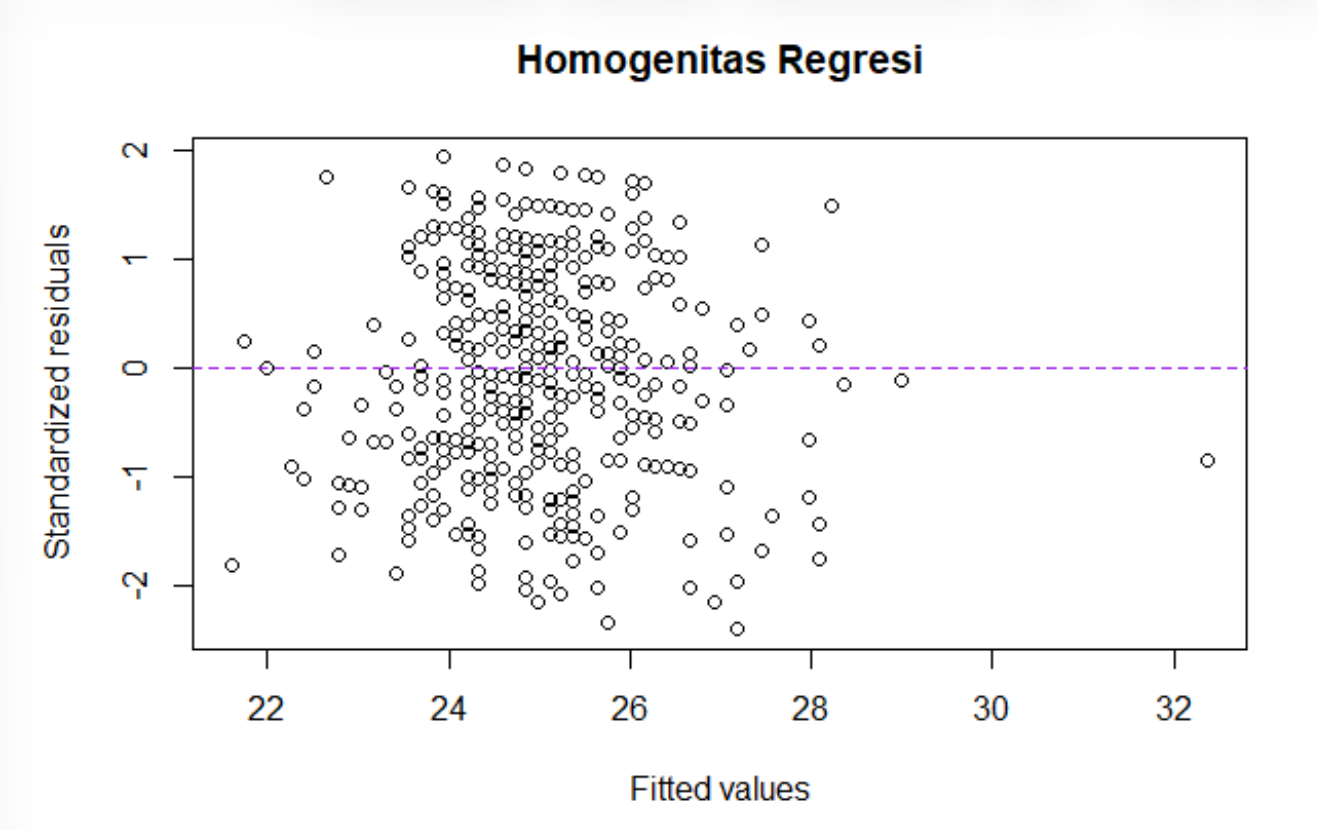
Figure 4 shows that the data points are scattered above and below the y = 0 axis. It can therefore be concluded that the errors have homogeneous variance.
Hypothesis Testing
Hypothesis testing was used to determine whether there is a relationship between self-confidence and critical thinking. Hypothesis testing was carried out using simple linear regression. The following are the results of the calculations performed using the R programme.
| coefficientsa | |||
| Variable | Unstandardized Coefficient | p-value | |
| Estimate | Std error | ||
| Critical thinking | 14.351 | 4.073 | 0,000 |
| Self-confidence | 0.129 | 0.049 | 0,009 |
Table 8 shows that the intercept (or constant) for critical thinking is 14.351, whilst the regression coefficient is 0.129, resulting in the regression equation Ŷ = 14.351 + 0.129X. The regression coefficient of 0.129 indicates that for every unit increase in self-confidence, students’ critical thinking ability increases by 0.129. The results show that the p-value of 0.009 is smaller than the predetermined significance level of 5% or 0.05. This implies that there is an effect of self-confidence on critical thinking. An average of 83.496 can increase critical thinking ability by 25.121. This indicates that the p-values for critical thinking and self-confidence are smaller than the predetermined significance level of 5% or 0.05. These results lead to the conclusion that H₀ is rejected, meaning there is an influence of self-confidence on critical thinking.
ANOVA test
An ANOVA test was used to determine whether there were differences in critical thinking among students with high, moderate, or low self-confidence. The results of the normality and homogeneity tests are presented below.
-
Normality Test
A normality test was conducted using the Shapiro-Wilk statistic. The results of the Shapiro-Wilk statistic for the research sample are shown in Table 9 below.
| Kategori | p-value |
| High | 0,421 |
| Medium | 0,109 |
| Low | 0,002 |
Table 9 above shows that the data are normally distributed in the High and Medium categories. This is because the p-value is higher than the specified significance level of 5% or 0.05. In the Low category, however, the data are not normally distributed, as the p-value is lower than the specified significance level of 5% or 0.05. Consequently, the sample originates from a population with a normal distribution for the High and Medium categories, whilst the Low category does not originate from a population with a normal distribution.
-
Homogeneity Test
The homogeneity test was conducted using Levene’s test. The p-value for the homogeneity test of critical thinking ability and self-confidence was 0.0036. As the p-value is less than 0.05, the data are not homogeneous. However, according to Glass & Kenneth D (1996, p. 501), further analysis may still be carried out.
-
Analysis of Variance (ANOVA)
Following the normality and homogeneity tests, a test for differences in means was conducted using JASP’s one-way ANOVA analysis. The results of the ANOVA hypothesis test are presented in Table 9.
| Category | N | Mean | SD | SE | Coefficient of variation |
| Low | 56 | 19.875 | 9.439 | 1.261 | 0.475 |
| Medium | 346 | 25.728 | 9.121 | 0.490 | 0.355 |
| High | 61 | 25.377 | 9.319 | 1.193 | 0.367 |
| Cases | Sum of Squares | df | Mean Square | F | P |
| Category | 1662.774 | 2 | 831.387 | 9.853 | <0.001 |
| Residuals | 38812.915 | 460 | 84.376 |
Table 9 shows that the p-value is statistically significant (p < 0.001); it can therefore be concluded that H₀ is rejected, implying that there is a difference in critical thinking among students with high, medium, or low self-confidence. These results indicate the presence of a difference. Further testing, or a post hoc test, is therefore required to determine the differences between the categories.
-
Post Hoc Test
A post hoc test was used to identify differences in critical thinking and self-confidence across the high, medium and low categories. The results of the post hoc test are presented in Table 11 below.
| Dependent variable | Mean Difference | SE | t | Ptukey | Pscheffe | |
| Low | Low | -5.853 | 1.323 | -4.424 | <.001 | <.001 |
| High | -5.502 | 1.700 | -3.237 | 0.004 | 0.006 | |
| Medium | Highg | 0.351 | 1.276 | 0.276 | 0.959 | 0.963 |
Table 11 shows that there is no significant difference between students with low self-confidence in critical thinking skills and those with moderate self-confidence in critical thinking skills, as indicated by a p-value smaller than the significance level. Students with low self-confidence in critical thinking skills differed significantly from those with high self-confidence in critical thinking skills, as indicated by a p-value greater than the significance level. Furthermore, students with moderate self-confidence in critical thinking skills differed significantly from those with high self-confidence in critical thinking skills, as indicated by a p-value greater than the significance level. However, on average, students with moderate self-
confidence in critical thinking skills performed better than those with low self-confidence in critical thinking skills, as seen from the mean difference. Students with high self-confidence in critical thinking skills performed better than those with low self-confidence in critical thinking skills, as indicated by the mean difference. Furthermore, students with moderate self-confidence in critical thinking skills performed better than those with high self-confidence in critical thinking skills, as indicated by the mean difference.
Gambar 5. Grafik Berpikir Kritis kategori tinggi, sedang, rendah
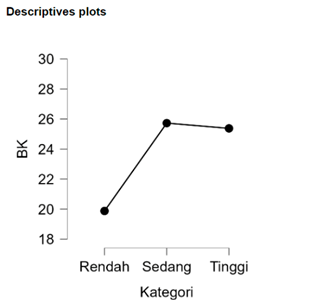
As shown in Figure 5, the data indicates that students’ critical thinking skills and self-confidence in solving moderate-level critical thinking problems rank highest, followed by high-level problems in second place, with low-level problems coming last. This suggests that students’ critical thinking skills and self-confidence fall within the moderate category.
Conclusion
Based on the research findings, the conclusions are as follows: (1) The average critical thinking ability of students at public junior high schools in the Special Region of Yogyakarta in solving mathematics problems is 47.89, which falls into the moderate category, with a standard deviation of 6.76. (2) The average self-confidence of public junior high school students in the Special Region of Yogyakarta in solving mathematical problems is 67.80, which falls into the moderate category, with a standard deviation of 15.8. (3) Based on the analysis of critical thinking and self-confidence, there is an influence of students’ self-confidence on the critical thinking ability of public junior high school students in the Special Region of Yogyakarta in solving mathematical problems. (4) There are differences in the critical thinking of students with high, moderate, or low self-confidence when solving mathematical problems. The results of the post hoc test are as follows: (a) There is no significant difference between students with low self-confidence in critical thinking ability and those with moderate self-confidence in critical thinking ability. (b) There is a significant difference between students with low self-confidence in critical thinking ability and those with high self-confidence in critical thinking ability. (c) There is a significant difference between students with moderate self-confidence in critical thinking ability and those with high self-confidence in critical thinking ability.
References
- Adhikari, Y. (2024). A Review of Revised Bloom’s Taxonomy of Educational Objectives. Education Review Journal, 1, 115–126. DOI ↗ Google Scholar ↗
- Aisyah, A., & Juandi, D. (2022). The description of Indonesian student mathematics literacy in the last decade. International Journal of Trends in Mathematics Education Research, 5(1), 105–110. DOI ↗ Google Scholar ↗
- Al Firdaus, M. Z. A. (2023). Menumbuhkan Sikap Percaya Diri Siswa pada Pembelajaran di Kelas. Proceedings Series of Educational Studies. DOI ↗ Google Scholar ↗
- Amri, A. A. U., & Mustika, J. (2022). FRISCO criteria: analysis of student’s mathematic critical thinking ability on HOTS test. International Conference on Language, Linguistics, Literature and Education (ICLLLE), 205–219. DOI ↗ Google Scholar ↗
- Azizah, S. (2026). Hubungan kepercayaan diri dengan motivasi belajar pada siswa kelas VII SMP Negeri 21 Malang. Universitas Islam Negeri Maulana Malik Ibrahim. DOI ↗ Google Scholar ↗
- Brown, A. L. (n.d.). Anderson, LW, & Krathwohl, DR. 2001. Taksonomi untuk Pembelajaran, Pengajaran, dan Penilaian: Revisi Taksonomi Tujuan Pendidikan Bloom. Longman. Arikunto, S. 2013. Prosedur Penelitian: Suatu Pendekatan Praktik. Jakarta: Rineka Cipta. Language, 3(1), 32–45. DOI ↗ Google Scholar ↗
- Budi, S., Franita, Y., & Hendrastuti, Z. R. (2023). Effectiveness of Problem Based Learning Models Assisted by Worksheets on Students’ Critical Thinking Ability. Journal of Instructional Mathematics, 4(2), 77–87. DOI ↗ Google Scholar ↗
- Cacik, S., & Widiyanti, I. S. R. (2024). Analysis of critical thinking ability of class X senior high school students. Journal of Research in Instructional, 4(2), 537–545. DOI ↗ Google Scholar ↗
- Devana, N. A. (2024). PENGARUH ALQURUN TEACHING MODEL TERHADAP KEMAMPUAN BERPIKIR KRITIS MATEMATIS DAN KEMANDIRIAN BELAJAR MATEMATIKA SISWA (Studi pada Siswa Kelas IX SMP Negeri 7 Kotabumi Semester Ganjil Tahun Pelajaran 2023/2024). DOI ↗ Google Scholar ↗
- Faizah, S., Hassan, A. Bin, Mashfufah, A., Rahayuningsih, S., Arifin, S., Rofiki, I., Mariani, S., & Sudirman, S. (2026). Investigating Students’ Critical Thinking in Solving Fractional Problems Based on Higher Order Thinking Skills (HOTS) Viewed from Self-Efficacy and FRISCO Model. DOI ↗ Google Scholar ↗
- Fajar, F., Ihsan, H., & Bernard, B. (2025). Pengaruh Efikasi Diri, Kesadaran Metakognitif, Literasi Digital dan Kemandirian Belajar terhadap Prestasi Belajar Matematika Siswa. Jurnal Profesi Pendidik dan Tenaga Kependidikan, 11(1), 93–107. DOI ↗ Google Scholar ↗
- Fanani, A. J., Mutamaqin, M. I., & Aziz, M. I. (2024). Penerapan Strategi Pembelajaran Berbasis Masalah untuk Mengembangkan Kemampuan Berpikir Kritis dan Menurunkan Kecemasan Matematika pada Siswa SMA. Dharma Pendidikan, 19(2), 156–163. DOI ↗ Google Scholar ↗
- Fanni, A. T. (2024). Studi analisis perbandingan buku teks pembelajaran matematika sekolah menengah di Indonesia dan Malaysia ditinjau berdasarkan pisa 2022 mathematics framework. UIN KH Abdurrahman Wahid Pekalongan. DOI ↗ Google Scholar ↗
- Fitra, D., Menrisal, M., Novita, R., & Yana, E. (2025). Analisis Kemandirian Belajar Matematika Siswa Ditinjau Dari Tipe Kepribadian Introvert. Jurnal Pti (Pendidikan Dan Teknologi Informasi) Fakultas Keguruan Ilmu Pendidikan Universita Putra Indonesia" Yptk" Padang, 14–22. DOI ↗ Google Scholar ↗
- Fitriani, A., Zubaidah, S., & Hidayati, N. (2022). The quality of student critical thinking: A survey of high schools in Bengkulu, Indonesia. JPBI (Jurnal Pendidikan Biologi Indonesia), 8(2), 142–149. DOI ↗ Google Scholar ↗
- Gunartha, I. W. (2024). Pengembangan penilaian berorientasi HOTS: Upaya peningkatan kemampuan berpikir kritis siswa di era global abad ke-21. Widyadari, 25 (1), 133–147. DOI ↗ Google Scholar ↗
- Hali, F., Rahayu, D. S., & Sari, D. U. (2022). Analisis Kemampuan Pemecahan Masalah Matematis Siswa Ditinjau dari Self confidence. Arus Jurnal Pendidikan, 2(1), 47–53. DOI ↗ Google Scholar ↗
- Hamzah, A. M., & Dahlan, J. A. (2023). Trends in International Mathematics and Science Study (TIMSS) as A Measurement for Students’ Mathematics Assessment Development Trends in International Mathematics and Science Study (TIMSS) sebagai Tolak Ukur Pengembangan Asesmen Matematika Siswa. 9. DOI ↗ Google Scholar ↗
- Harahap, A. N., Bentri, A., Musdi, E., Yerizon, Y., & Armiati, A. (2024). Analysis of students’ critical thinking skills in solving mathematics problems in terms of students’ initial ability. Indonesian Journal of Science and Mathematics Education, 7(1), 39–52. DOI ↗ Google Scholar ↗
- Ismiasih, N., & Mustika, T. N. (2024). Analisis Self Confidence pada Pembelajaran Matematika Siswa Madrasah Aliyah. Edu Journal Innovation in Learning and Education, 2(2), 121–128. DOI ↗ Google Scholar ↗
- Jawan, K. B., Erlinda, M., & Lio, S. (2025). Hubungan Antara Kepercayaan Diri Dengan Penyesuaian Diri Siswa Kelas VII UPTD SMP Negeri 11 Kota Kupang. Jurnal Pendidikan Indonesia: Teori, Penelitian, dan Inovasi, 5(5). DOI ↗ Google Scholar ↗
- Kong, S. E., Chhorn, T., & Chea, S. (2025). Self-motivation of Developing the Students’ Learning Performance. Journal of Education Innovation and Language Teaching (JEILT), 1(2), 49–61. DOI ↗ Google Scholar ↗
- Kulimbang, E. (2025). Pengaruh efikasi diri, metakognisi, dan keterampilan sosial terhadap hasil belajar matematika melalui motivasi berprestasi siswa kelas XI IPA SMA Negeri di Kota Rantepao. Jurnal Profesi Pendidik dan Tenaga Kependidikan, 10(2), 135–148. DOI ↗ Google Scholar ↗
- Leuwol, F. S., Busnawir, M. S., Saryanto, S. P. T., Retnaningsih, R., Amalia, R., Sembiring, T. B., Mardikawati, B., Bambang Sucipto, M. M., Doho, Y. D. B., & S Phil, M. M. (2023). Kemampuan Berpikir Tingkat Rendah (LOTS) VS Kemampuan Berpikir Tingkat Tinggi (HOTS). Penerbit Adab. DOI ↗ Google Scholar ↗
- Listiani, W., & Rachmawati, R. (2022). Transformasi taksonomi bloom dalam evaluasi pembelajaran berbasis HOTS. Jurnal Jendela Pendidikan, 2(03), 397–402. DOI ↗ Google Scholar ↗
- Masroor, R. (2025). Cultivating 21st Century Skills: Critical Thinking, Creativity, Collaboration, and Communication. DOI ↗ Google Scholar ↗
- Mastuti, A. G., Abdillah, A., Sehuwaky, N., & Risahondua, R. (2022). Revealing students’ critical thinking ability according to facione’s theory. Al-Jabar: Jurnal Pendidikan Matematika, 13(2), 261–272. DOI ↗ Google Scholar ↗
- Matulessy, A., & Hikmah, U. R. (2022). Students’ confidence in expressing opinions at a senior high school in Pademawu. 2nd International Conference on Social Science, Humanity and Public Health (ICOSHIP 2021), 46–50. DOI ↗ Google Scholar ↗
- Messaoud, H. E. Ben. (2022). A review on self-confidence and how to improve it. Global Journal of Human Resource Management, 10(5), 26–32. DOI ↗ Google Scholar ↗
- Miterianifa, M., Ashadi, A., Saputro, S., & Suciati, S. (2021). Higher order thinking skills in the 21st century: Critical thinking. Proceedings of the 1st international conference on social science, humanities, education and society development, ICONS 2020, 30 November, Tegal, Indonesia, 50–59. DOI ↗ Google Scholar ↗
- Muhammad, F., Siregar, N. R., & Marhan, C. (2024). Kepercayaan Diri Dengan Kesiapan Kerja Pada Siswa Smkn 1 Kendari. Jurnal Sublimapsi, 5(2), 258–265. DOI ↗ Google Scholar ↗
- Mustika, B. R. F. (2024). Pengembangan Soal Matematika Berbasis Higher Order Thinking Skills (HOTS). Jurnal Ilmiah IPA dan Matematika (JIIM), 2(3), 67–71. DOI ↗ Google Scholar ↗
- Mutaharoh, S., Hendriana, H., & Supriatna, E. (2023). Gambaran kepercayaan diri siswa smk aloer wargakusumah. FOKUS: Kajian Bimbingan dan Konseling dalam Pendidikan, 6(2), 71–77. DOI ↗ Google Scholar ↗
- Nurmalia, N. R., & Sari, C. K. (2023). Kemampuan berpikir kritis dalam memecahkan masalah HOTS. JPMI (Jurnal Pembelajaran Matematika Inovatif), 6(5), 2053–2064. DOI ↗ Google Scholar ↗
- Nurqodri, Z., & Setyaningsih, R. (2024). Students’ Critical Thinking Ability in Solving Story Problems of Three-Variable Linear Equation System. Journal of Medives: Journal of Mathematics Education IKIP Veteran Semarang, 8(1), 1–17. DOI ↗ Google Scholar ↗
- Rohmah, A. (2024). Critical Analysis Of The Graduate Competency Standards Policy And Basic Education Curriculum Content Standards. Ar-Rosikhun: Jurnal Manajemen Pendidikan Islam, 3(2), 130–137. DOI ↗ Google Scholar ↗
- Rosanti, D. A., & Anjariyah, D. (2025). Analisis Berpikir Kritis Siswa Dengan Persepsi Negatif Terhadap Pelajaran Matematika Dalam Menyelesaikan Soal Cerita. Prismatika: Jurnal Pendidikan dan Riset Matematika, 7(2), 248–261. DOI ↗ Google Scholar ↗
- Ruka, Y. L., Nurhayati, N., & Buyung, B. (2024). Analisis Kemampuan Pemecahan Masalah Matematika ditinjau dari Kepercayaan Diri Siswa pada Materi Himpunan di Kelas VIII SMP Torsina II Singkawang. Lencana: Jurnal Inovasi Ilmu Pendidikan, 2(4), 110–122. DOI ↗ Google Scholar ↗
- Samadun, S., Setiani, R., Dwikoranto, D., & Marsini, M. (2023). Effectiveness of Inquiry Learning Models to Improve Students’ Critical Thinking Ability. IJORER: International Journal of Recent Educational Research, 4(2), 203–212. DOI ↗ Google Scholar ↗
- Schipper, M., & Petermann, F. (2026). Self-confidence. In Facets of Trust and Mistrust: Challenges for Social Interaction (hal. 77–91). Springer. DOI ↗ Google Scholar ↗
- Shovira, M. S. (2024). MODEL PROBLEM BASED LEARNING (PBL) BERBASIS ETNOMATEMATIKA UNTUK MENINGKATKAN BERPIKIR KRITIS PESERTA DIDIK PADA PEMBELAJARAN MATEMATIKA. UNIVERSITAS LAMPUNG. DOI ↗ Google Scholar ↗
- Stanikzai, M. I. (2023). Critical thinking, collaboration, creativity and communication skills among school students: A review paper. European Journal of Theoretical and Applied Sciences, 1(5), 441–453. DOI ↗ Google Scholar ↗
- Suharyani, L. A., & Siswanto, J. (2022). Analisis kemampuan berpikir kritis siswa kelas x sma untuk pengembangan modul ajar konsep perubahan lingkungan melalui penerapan education for sustainable develpment (Esd). Journal of Comprehensive Science (JCS), 1(5), 1276–1284. DOI ↗ Google Scholar ↗
- Tsurayya, A., Septiani, T., & Marlena, L. (2025). Analisis Kemampuan Berpikir Kritis Matematis Siswa SMP Ditinjau dari Gaya Belajar Kolb. Jurnal Pendidikan Matematika, 23–36. DOI ↗ Google Scholar ↗
- Ulfah, U., Arifudin, O., & Kartika, I. (2023). Analisis teori taksonomi bloom pada pendidikan di Indonesia. Jurnal Al-Amar: Ekonomi Syariah, Perbankan Syariah, Agama Islam, Manajemen Dan Pendidikan, 4(1), 13–22. DOI ↗ Google Scholar ↗
- Wafa, N., & Ismiyanti, Y. (2025). PENGARUH MODEL PEMBELAJARAN KOLABORATIF BERBANTUAN MEDIA DIGITAL INTERAKTIF TERHADAP KEMAMPUAN BERPIKIR KRITIS PELAJARAN BAHASA INDONESIA. Integrative Perspectives of Social and Science Journal, 2(2 Mei), 2612–2619. DOI ↗ Google Scholar ↗
- Wahyuni, T., Uswatun, N., & Fauziati, E. (2023). Merdeka belajar dalam perspektif teori belajar kognitivisme Jean Piaget. Tsaqofah, 3(1), 129–139. DOI ↗ Google Scholar ↗
- Wahyuningsih, D., Yunus, M., Tahir, M. I. T., & Syarif, M. N. (2023). Influence of Problem Based Learning on Students Critical Thinking Ability. Jurnal Pendidikan Ips, 13(2), 175–183. DOI ↗ Google Scholar ↗