Abstract
Hospitals face high safety risks that necessitate fire preparedness through the optimal management of Portable Fire Extinguishers (APAR). Currently, the APAR inventory management system at RSUD Bakti Pajajaran Bogor relies on manual, paper-based record-keeping. This approach leads to slow reporting, the risk of data loss, and a lack of automated reminders for inspection schedules and extinguisher expiration dates. This study aims to develop a web-based APAR inventory system using the SDLC Prototyping model, which accommodates continuous feedback. Technically, the system architecture utilizes the Laravel framework for the back-end and Vue.js for the front-end. System testing results demonstrate that the system functions 100% as expected. The research has yielded a centralized digital platform that enables the OHS team to manage operations, monitor equipment suitability, minimize negligence, reduce paper consumption, and comprehensively enhance the effectiveness of workplace safety standards within the hospital.
Keywords
Fire Extinguisher Hospitals Inventory System Web.
1. Introduction
Hospitals involve a high level of safety complexity, making preparedness for fire risks crucial. According to , enhancing safety standards within the hospital environment relies heavily on optimizing the use of Portable Fire Extinguishers (APAR) through technology-integrated management. The application of digital technology in managing these extinguishers has proven effective in strengthening active fire protection systems and minimizing the risk of malfunction during emergencies. This aligns with the requirement for hospitals to continuously implement and develop Hospital Occupational Health and Safety (K3RS) programs, as mandated by service standards and accreditation instruments for healthcare facilities .
However, the management of portable fire extinguishers (APAR) in the field often faces challenges regarding administration and data accuracy. As explained by , manual methods have weaknesses in tracking inspection history and carry the risk of administrative data loss. Bakti Pajajaran Regional General Hospital (RSUD) in Bogor faces similar challenges in managing hundreds of fire extinguisher units. Inventory tracking is still conducted manually using paper records, a process that is time-consuming, prone to recording errors, and susceptible to data loss, while also lacking a reminder system for inspection schedules or equipment expiration dates.
Several previous studies have proposed digitalization solutions to address this issue. Research conducted by demonstrates that the development of a web-based fire extinguisher inspection application facilitates centralized, organized, effective, and efficient inventory management. Recent research by highlights the limitations of manual inspections and introduces a web-based system that not only automates data recording but also incorporates an automatic reminder feature for upcoming inspections. Furthermore, a study by recommends digitizing fire extinguisher documentation to minimize the risk of data loss and accelerate follow-up actions. Finally, emphasizes that migrating from paper-based records to a computerized system eliminates redundancy in critical asset data, simplifies the retrieval of equipment history, and ensures equipment suitability prior to field deployment.
Based on this background, this study aims to design a "Web-Based Portable Fire Extinguisher Inventory System at RSUD Bakti Pajajaran Bogor" as a digital solution for data management by the Occupational Health and Safety (OHS) team. The system was developed using the Prototyping method to effectively accommodate user requirements. To ensure stable and responsive performance, the system was built using the Laravel framework for the back-end, Vue.js for the front-end, and MySQL for the database. Implementation of this system is expected to enhance the efficiency of fire extinguisher data management, facilitate tracking of maintenance history, reduce paper usage, and optimally meet workplace safety standards.
2. Method
-
1.1 Method of Collecting Data
A. Observation Method
Observations were conducted through direct on-site assessment, specifically focusing on the fire extinguisher inventory system at RSUD Bakti Pajajaran Bogor. Through this observation, the researcher was able to understand how the inventory recording process is carried out in accordance with applicable standards.
B. Interview Method
Interviews were conducted with relevant parties specifically the OHS Committee Chairperson and the OHS officer responsible for managing portable fire extinguishers to gather information regarding the challenges faced, installation requirements, and expectations for the web-based system to be developed.
C. Literature Review Method
A literature review was conducted by examining various relevant references, such as scientific journals, workplace safety regulations, and standards concerning portable fire extinguishers. This method was employed to strengthen the theoretical foundation and ensure that the proposed solution complies with applicable regulations.
1.2 Software Development Method
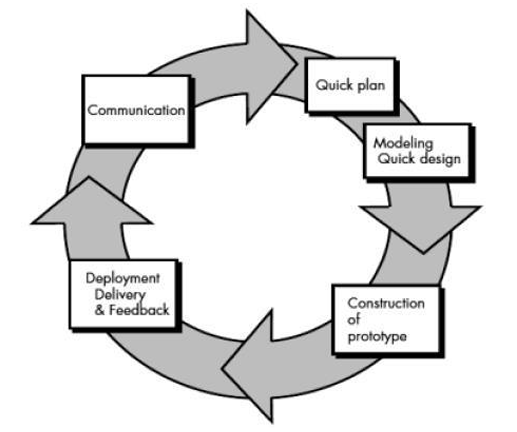
Prototyping is a software development method that is part of the Software Development Life Cycle (SDLC), which allows interaction between system developers and system users, thereby addressing incompatibilities between developers and users. The prototype development model includes communication, quick planning, quick design modeling, prototype construction, and deployment and feedback . The implementation of the prototype method process flow can be seen in Figure 1.
3. Result And Discussion
This chapter outlines the design results of the application system that has been developed. To assess the software's quality and stability, the subsequent phase focuses on performance testing to ensure the system is ready for operation.
3.1 System Modeling
The system design phase of this study utilizes Unified Modeling Language (UML) tools including Use Case, Activity, and Class diagrams based on the data collection results, followed by the development of the user interface design.
1. Use Case Diagram
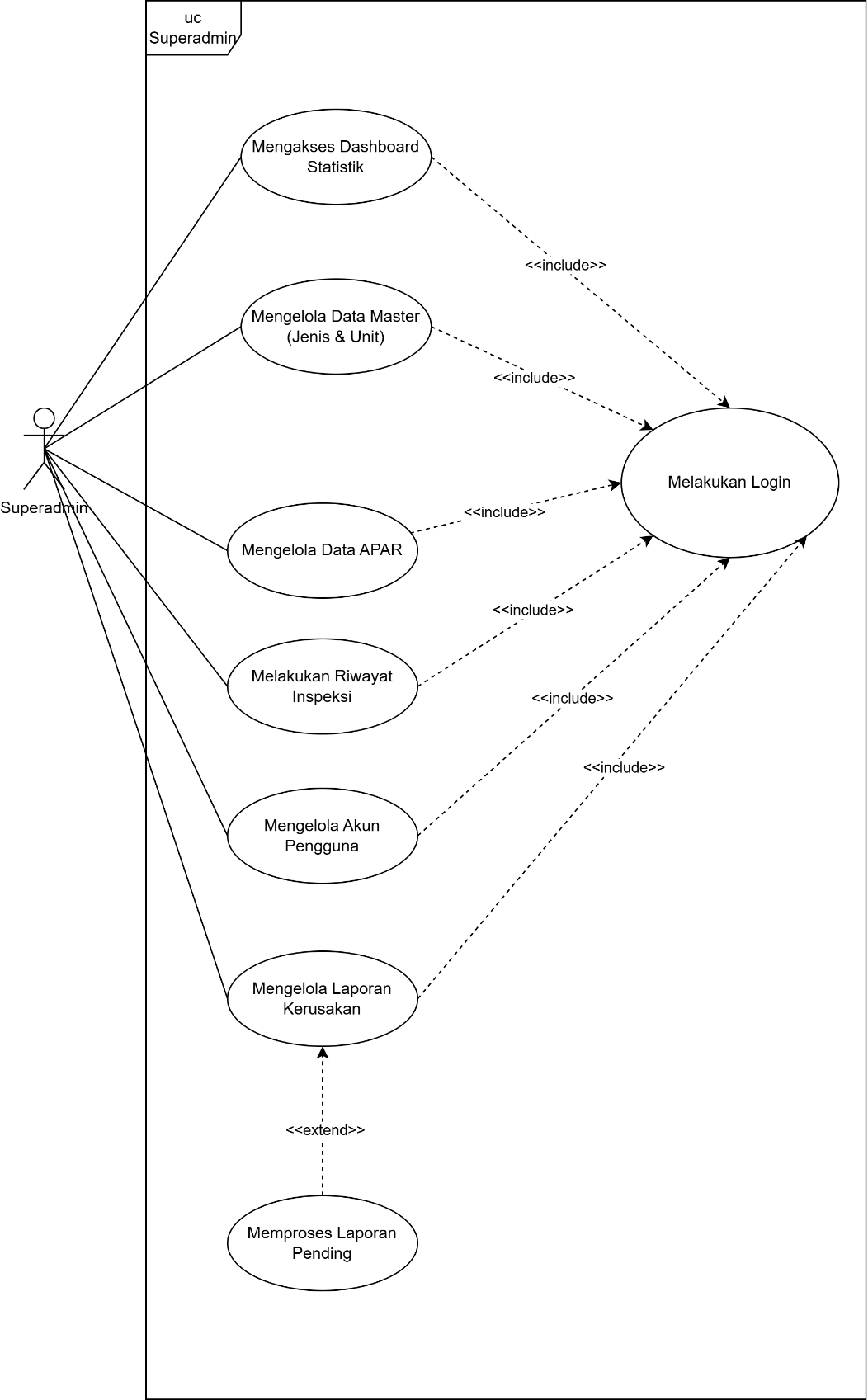
Use case diagram describes the expected functionality of a system to be built . The use case diagram can be seen in Figure 2.
2. Activity Diagram
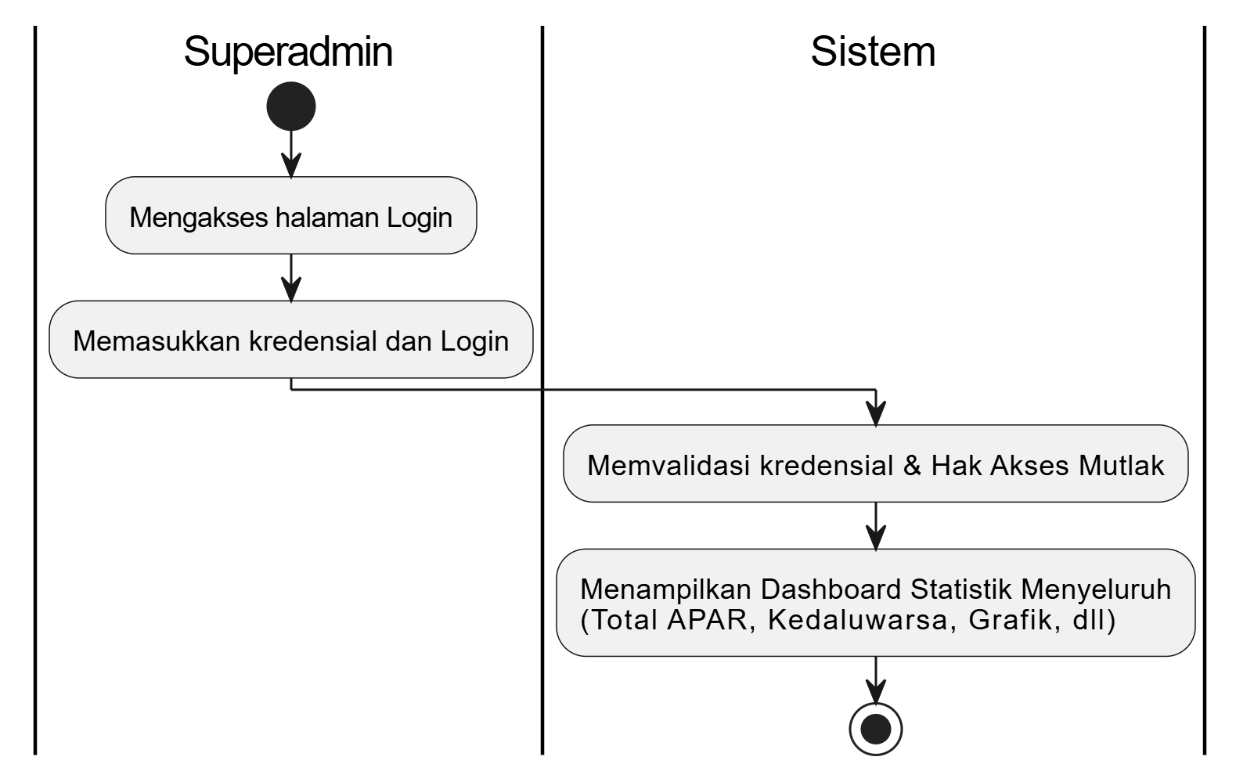
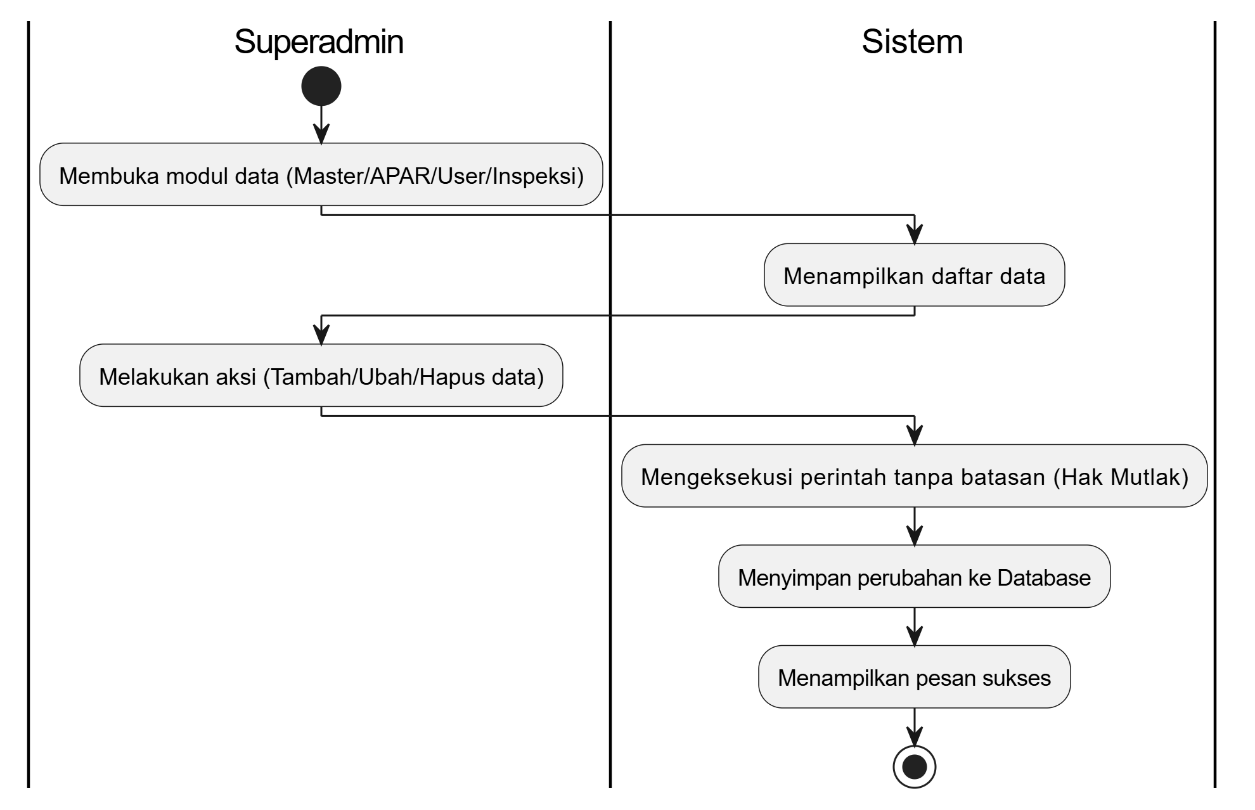
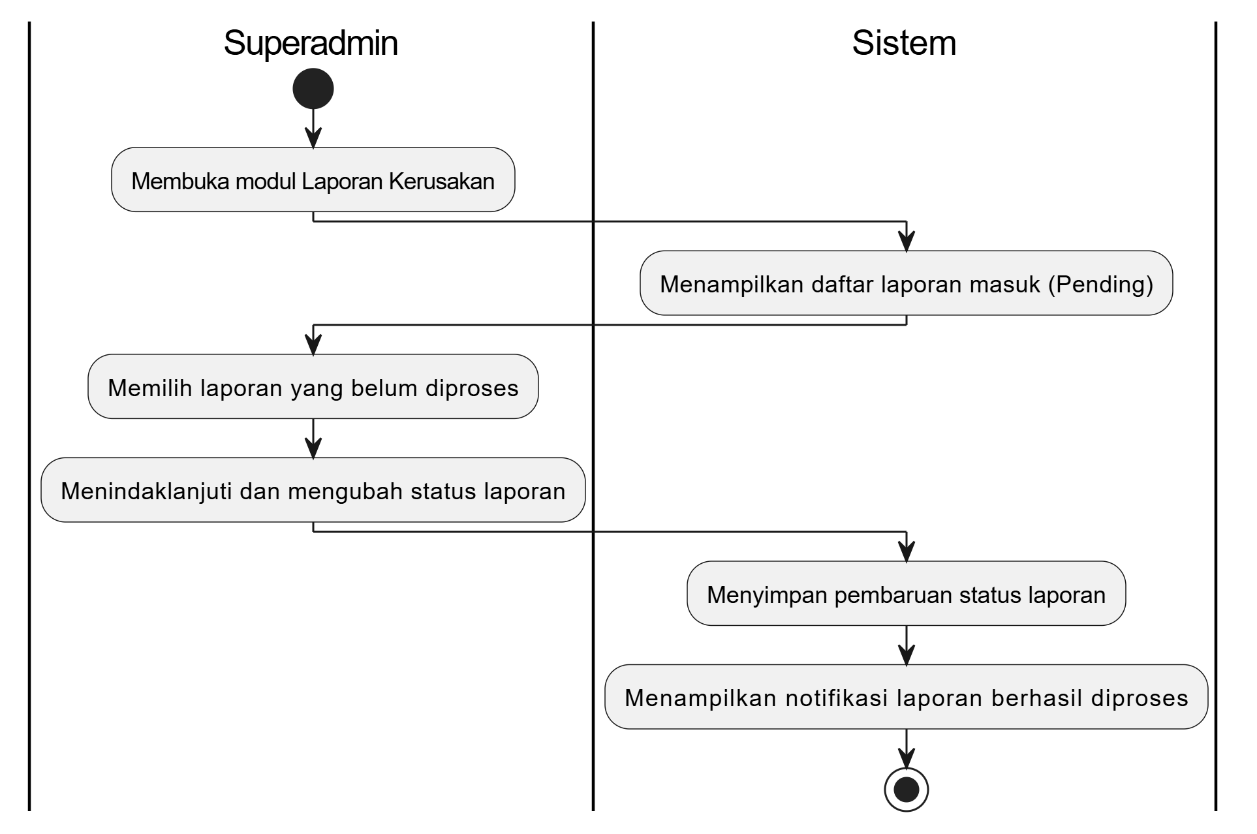
Activity diagram illustrates the various activity flows within the system being designed . Activity diagrams are shown in Figures 3, 4, and 5.
3. Class Diagram
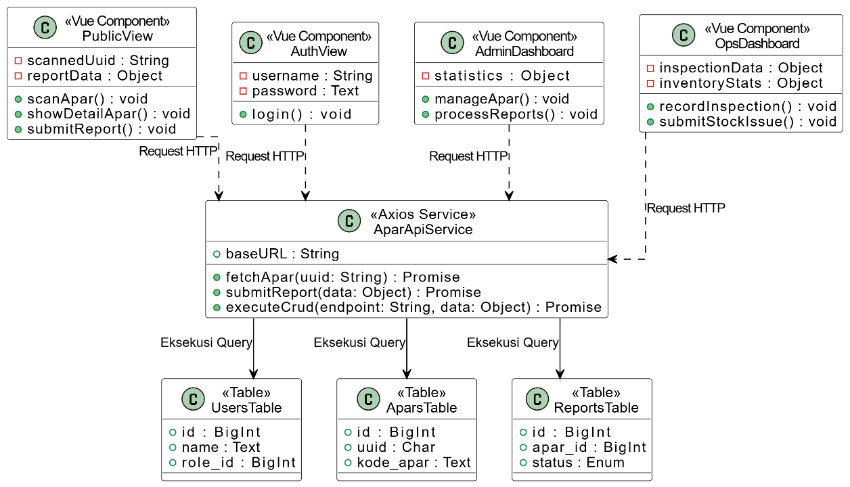
Class diagrams are used to model the structural appearance of a system, including its ability to carry data and execute actions . A class diagram can be seen in Figure 6.
-
Result
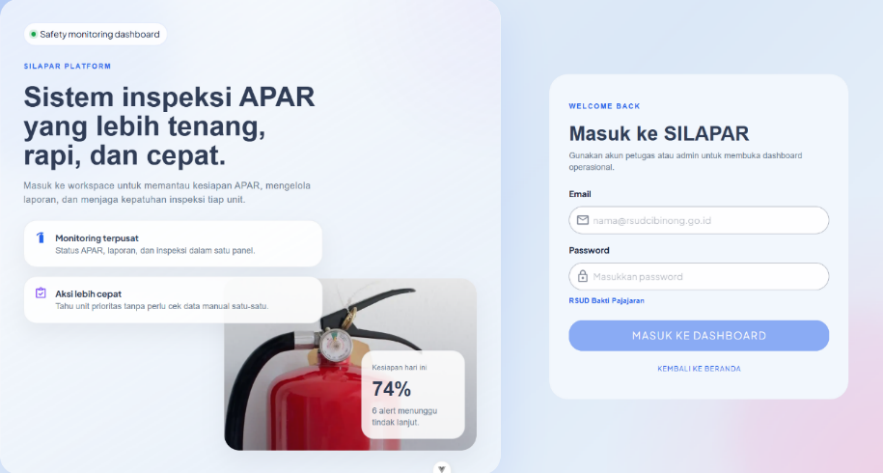
1. Authentication Page
This page serves as the primary security gateway for internal hospital users before they access the operational dashboard.
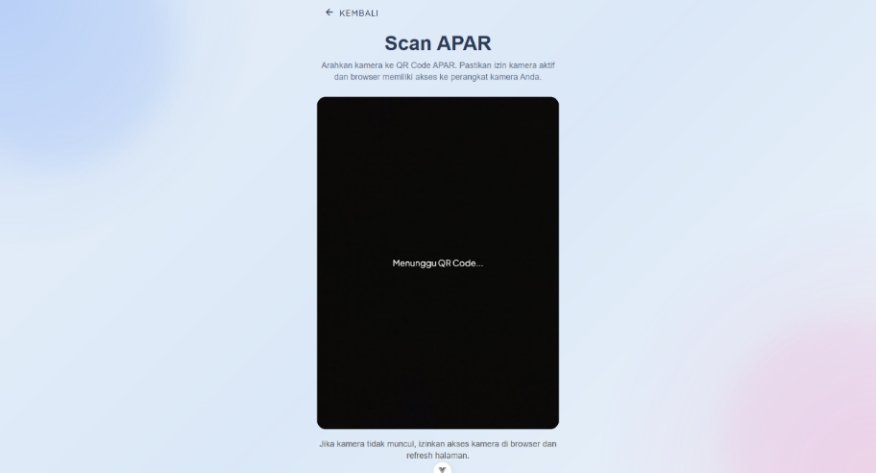
2. Fire Extinguisher (APAR) QR/Barcode Scanning Page
This page allows you to scan the QR code or barcode on the physical fire extinguisher cylinder directly using the device's camera.
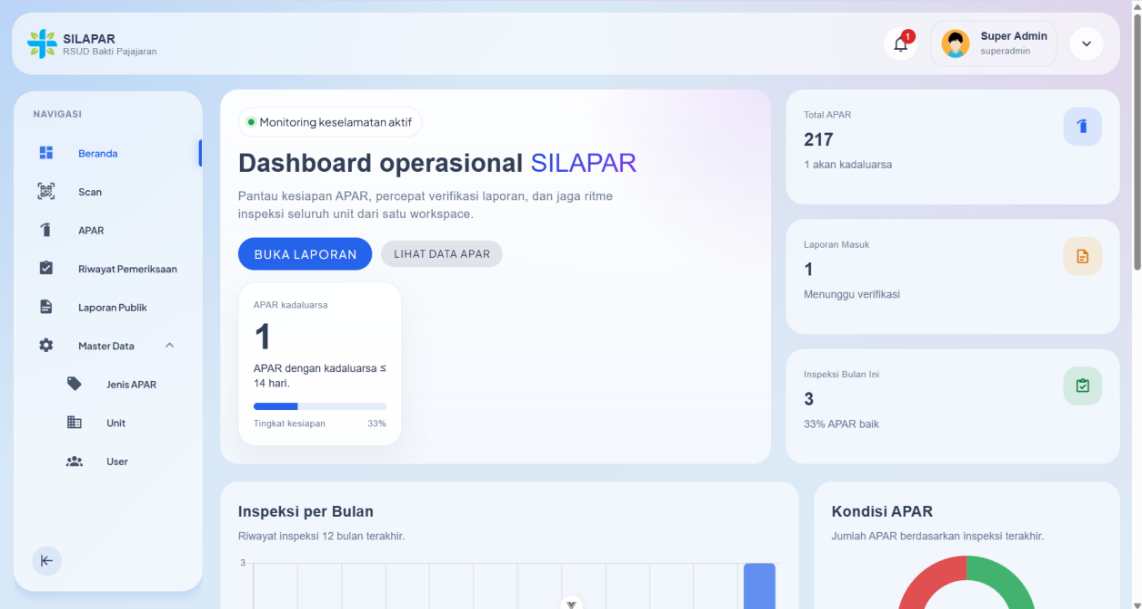
3. Operational Dashboard Page
The dashboard page presents a visual summary featuring charts and statistical figures regarding the total availability of fire extinguisher inventory and the number of units in good or damaged condition, as well as a notification panel.
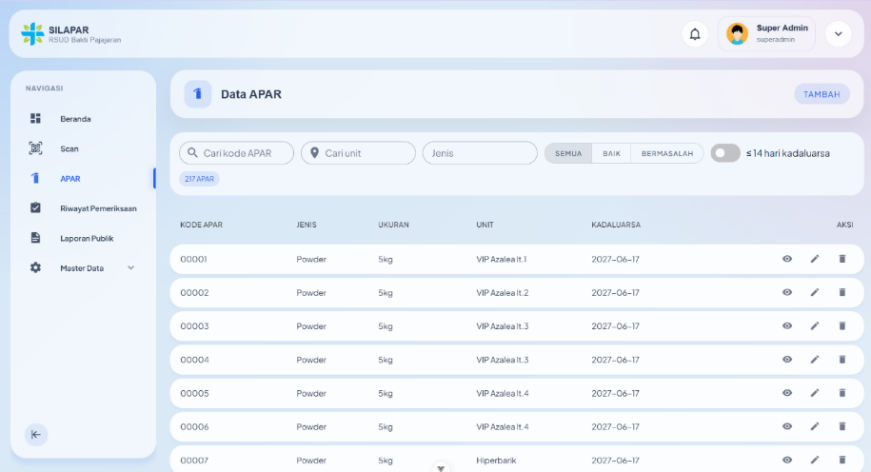
4. Fire Extinguisher Inventory Management Page
This page serves as an asset management hub, displaying a table listing all portable fire extinguisher units registered at RSUD Bakti Pajajaran Bogor.
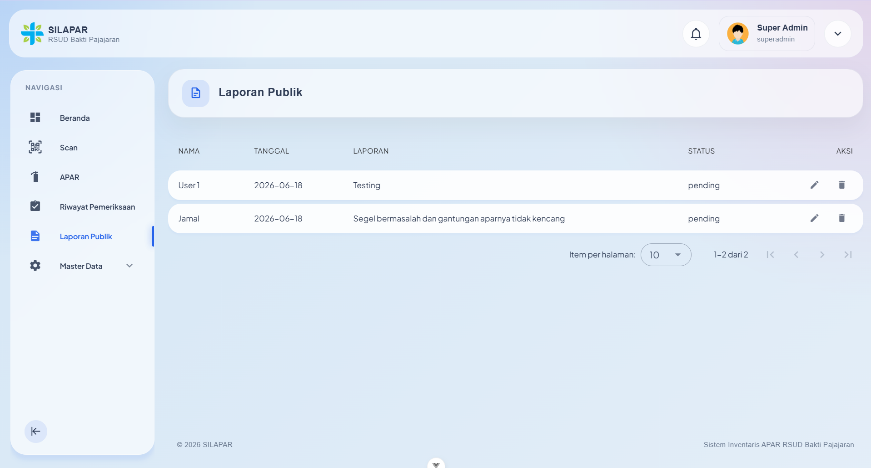
5. Public Report Page
This page serves as a centralized monitoring dashboard displaying the history of complaints regarding the serviceability of fire extinguishers.
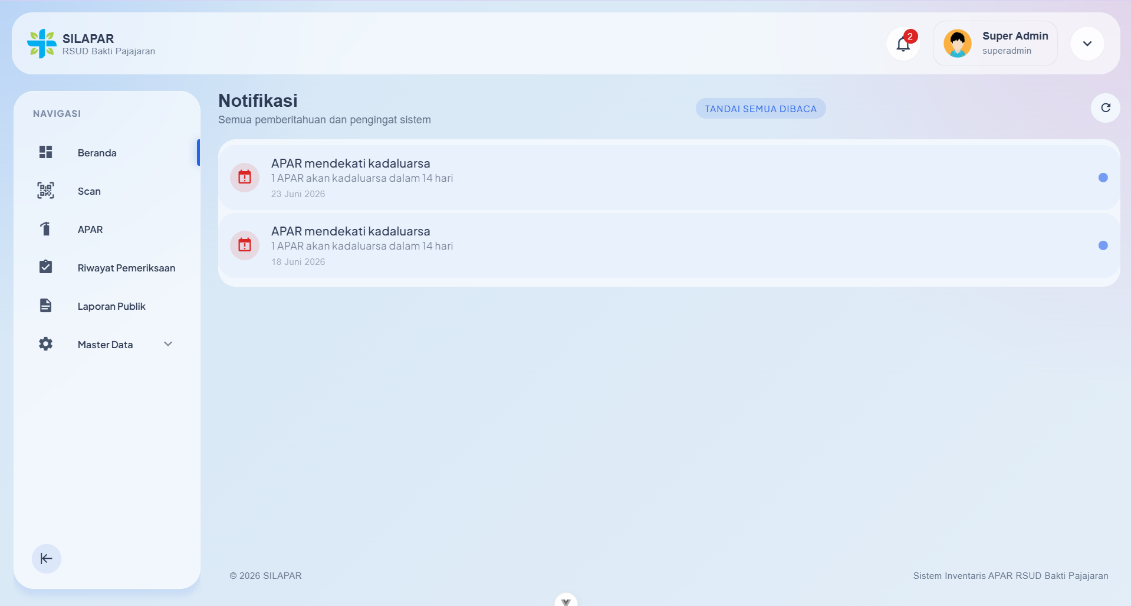
6. Notification Page
This page serves as a hub for automated notifications and reminders regarding upcoming fire extinguisher expiration dates (less than 14 days remaining). The interface displays a real-time log, featuring blue circle indicators for unread messages.
3.3 Discussion
The development of this system yields substantial improvements over previous studies regarding safety asset management. Unlike earlier research that relied on digital spreadsheets for inspection monitoring, SILAPAR automates the entire management workflow using a full relational database. Furthermore, while prior studies focused on automated notifications and the centralization of internal inspection documents, this research introduces a novel feature, the integration of UUID-based (Universally Unique Identifier) QR code scanning, accessible to the public without requiring a login. This approach not only accelerates response times for addressing damage through public participation (crowdsourcing) but also mitigates the risk of URL parameter manipulation, thereby ensuring the authenticity and validity of reports submitted from outside the system.
4. Conclusion
Based on the research, analysis, system design, and application development, the researcher concludes that the web-based Portable Fire Extinguisher (APAR) inventory system for RSUD Bakti Pajajaran Bogor successfully minimizes manual recording errors, streamlines inventory data management through centralized CRUD features, enables monitoring of inspection history and schedules, facilitate damage reporting and real-time notification features, accelerates equipment tracking, enhances data security, and features a user-friendly interface for the Occupational Health and Safety (K3) team, thereby ensuring more efficient and effective safety equipment management.
5. Declaration
We declare that we have no conflict of interest.
6. Acknowledgements
The author extends sincere gratitude to everyone who contributed to the conduct of this research and the preparation of this publication. Special appreciation goes to the academic supervisor for their consistent technical guidance during the system's development, as well as to the management and Occupational Health and Safety (OHS) staff at RSUD Bakti Pajajaran Bogor for their cooperation and the provision of field data. Thanks also go to the author's parents and fellow students for their unwavering moral support. It is hoped that the findings of this research will make a positive contribution to the digitalization of workplace safety management.
References
- Bisri M, Andriati DA, Saputra A, Kurtikawati E, Putri SR. Website-Based Inventory System Design for PT. Api Precision Cikarang 2021. DOI ↗ Google Scholar ↗
- Dery Riwayanto, Abdul Hakim Zakkiy Fasya. The Use of a Barcode System to Facilitate Monitoring During Portable Fire Extinguisher Inspections. SEHATMAS: Scientific Journal of Public Health 2023;2:976–81. DOI ↗ Google Scholar ↗
- Nurjannah A, Rusba K, Ramdan M. PORTABLE FIRE EXTINGUISHER INSPECTION PROGRAM AT PT XYZ IN BALIKPAPAN. vol. 11. 2025. DOI ↗ Google Scholar ↗
- Oemiati R, Farid Umar DA. Review of Occupational Health and Safety (OHS) Research in Hospital Radiology Departments. Jurnal Persada Husada Indonesia 2021;8:15–23. DOI ↗ Google Scholar ↗
- Pratiwi EH, Sahri Moch, Ayu F, Rhomadhoni MN, Dewi FR. Innovation in Developing a Website-Based Portable Fire Extinguisher Inspection System at PT Semen Indonesia Logistik. Journal of Business Technology and Information Systems 2025;7:290–7. DOI ↗ Google Scholar ↗
- Saputra Tomi, S. Angga Aditya Dwi, Maulidin Sulthan Muhamad, Alfaridz Febrian, Fadilah M.Rahmat. Design of a TikTok Shop Purchasing Application System Using "StarUML" Software (Use Case Diagrams, Activity Diagrams, Class Diagrams), File Normalization, and MS Access. 802-811 2024. Google Scholar ↗
- Sibuea FPJ, Agustin D, Ferdhinand A, Widyatmoko W, Nomensen D, Kusmawati A. Design and Development of a Web-Based Inventory System Using the Prototyping Method for the Automotive Engineering Technology Study Program at Politeknik STMI Jakarta. ILKOMNIKA: Journal of Computer Science and Applied Informatics 2024;6:91–101. DOI ↗ Google Scholar ↗
- Silviana Ramadina, Mursyidul Ibad. Enhancing Hospital Safety through Technology-Enabled Portable Fire Extinguishers (Literature Review). INSOLOGI: Journal of Science and Technology 2024;3:206–14. DOI ↗ Google Scholar ↗
- Sofian R, Ramdani F, Ferdiansyah FR, Nugraha RW. Web-Based Portable Fire Extinguisher Inspection Software 2023;17:2614–5405. DOI ↗ Google Scholar ↗
- Wayahdi MR, Ruziq F. Modeling the New Member Registration System Using Unified Modeling Language (UML) (Studi Kasus: Programmer Association of Battuta). Jurnal Minfo Polgan 2023;12:1514–21. DOI ↗ Google Scholar ↗
- Yusuf D, Mahbub AR, Supriyadi S. Web-Based Inventory Information System Using the Haversine Algorithm at the Bekasi City Fire Department 2022;16. Google Scholar ↗