Abstract
This study examined the extensiveness of academic advisory services in reducing undergraduate student dropout in universities in Kilimanjaro Region, Tanzania. Guided by the Tinto’s Student Integration Theory, the study employed a convergent design under mixed-methods research approach. The target population comprised 15,902 undergraduate students, 3 Deans of Students, 21 Heads of Departments, 3 university counsellors, and 3 loan officers, making a total of 15,935 participants. Sample size was, 2 universities sampled using criterion sampling technique. Proportionate stratified sampling was applied to obtain 309 Undergraduate University Students and Criterion purposive sampling used to sample 2 deans of students, 12 heads of department, 2 University Counsellors and 2 Loan Officers. Data collection instruments included questionnaires for Undergraduate University Students and interview guides for deans of students, heads of department, University Counsellors and Loan Officers. Data collection instruments were validated by research experts from the Faculty of Education at MWECAU. A pilot study was conducted in one university. The reliability of the questionnaires was established using Cronbach’s Alpha Technique, which yielded values of 0.865 for Undergraduate University Students, confirming acceptable reliability. Trustworthiness of qualitative data was established through peer debriefing, and triangulation. Quantitative data were analyzed using descriptive statistics with the aid of SPSS version 27. Qualitative data from interviews guide were analyzed thematically through familiarisation, coding, theme generation, theme review, theme definition and naming, and final write-up. Ethical considerations were observed, including obtaining research clearance, informed consent, confidentiality, anonymity, and acknowledgement of data sources. The study found that academic advisory services contribute to a low extent in reducing undergraduate student dropout. While academic planning, course selection, and course registration assistance were highly rated. Most advisory services were implemented inconsistently, limiting their contribution to student retention. The study concludes that, academic advisory services are available in universities but are not sufficiently extensive to effectively reduce undergraduate student dropout. The study recommendeds that: Universities should strengthen academic advisory services through regular academic monitoring, timely intervention, structured mentorship, study skills support, and continuous follow-up to improve student retention and reduce dropout
Keywords
Academic advisory services undergraduate student dropout Student retention Academic integration.
1. Introduction
University education remains a critical driver of national development, innovation, and human capital formation by equipping learners with advanced knowledge, critical thinking abilities, and professional competencies required in contemporary societies (Nguyen & Adelusi, 2024). However, the contribution of universities to development depends not only on expanding access but also on ensuring that students successfully complete their academic programmes. This aspiration aligns with Sustainable Development Goal (SDG) 4, particularly Target 4.3, which emphasizes equitable access to affordable and quality technical, vocational, and tertiary education by 2030 (UNESCO, 2015). To achieve this objective, universities are expected to establish effective student support systems that promote academic persistence and successful completion. Among these systems, academic advisory services are essential because they provide students with academic guidance, support decision-making, facilitate early identification of academic difficulties, and connect students with appropriate institutional resources (Tinto, 2023). Academic advisory services involve organized processes through which academic advisors assist students in course selection, programme planning, academic progress monitoring, career guidance, and referral services to enhance academic integration and retention (NACADA, 2023). Despite their importance, undergraduate student dropout continues to challenge higher education systems globally, raising concerns regarding the effectiveness and extensiveness of academic advisory services in supporting student persistence.
Globally, undergraduate student dropout remains a significant challenge despite increased participation in higher education. The World Bank (2021) reports that more than 30% of university students worldwide fail to complete their studies due to financial difficulties, inadequate academic support, poor learning environments, and limited institutional guidance. Similarly, UNESCO (2022) indicates that approximately two million university students discontinue their studies annually because of academic difficulties, psychological challenges, socioeconomic barriers, and insufficient institutional support. The OECD (2023) further reveals that university completion rates among member countries average approximately 70%, meaning that nearly one-third of students leave higher education without obtaining their degrees. In the United States, the National Student Clearinghouse (2023) shows that a considerable proportion of undergraduate students fail to graduate within six years, with inadequate academic guidance being among the institutional factors influencing student attrition. These trends demonstrate that expanding university access alone is insufficient unless institutions strengthen academic support mechanisms that enable students to successfully navigate academic demands.
Across Africa, undergraduate student dropout continues to undermine the effectiveness of higher education systems despite efforts to increase university enrolment. In Egypt, more than 20% of university students fail to complete their programmes, with inadequate academic guidance, weak faculty engagement, and limited mentoring services identified as contributing institutional factors (Miconi et al., 2023). Similarly, the National Universities Commission of Nigeria (2022) indicates that approximately 22% of undergraduate students withdraw before graduation due to factors including limited academic advising, financial constraints, and inadequate institutional support (Khan & Samad, 2022). In Kenya, increasing educational costs, limited financial assistance, and weak academic advisory systems continue to affect students’ academic progression and persistence (Commission for University Education Kenya, 2023). These experiences suggest that although financial and socioeconomic factors influence dropout, insufficient academic advisory services reduce students’ ability to make appropriate academic decisions, access timely support, and overcome challenges associated with university learning.
In Tanzania, university education has expanded considerably due to government initiatives aimed at increasing access to higher education. The Education and Training Policy (2023 Edition) and Tanzania Commission for Universities (TCU) guidelines require universities to establish comprehensive student support systems, including academic advisory services, to improve students’ academic success and completion rates. Academic advisory services are expected to support students through programme orientation, course selection, academic planning, monitoring of academic progress, identification of learning difficulties, and referral to relevant support services (TCU, 2019). These services are particularly important in assisting undergraduate students to adjust to university academic environments and manage academic expectations. However, despite these policy requirements, undergraduate student dropout remains a concern. TCU (2025) reports that approximately 9%–10% of undergraduate students fail to complete their programmes, while empirical studies identify inadequate academic advising, limited academic mentoring, weak progress monitoring, and delayed academic interventions as contributing factors (Msuya & Mlay, 2023; Lyimo, 2021; Mboya & Julius, 2022). This situation highlights the need to examine the extent to which academic advisory services are effectively implemented in Tanzanian universities.
Academic advisory services represent a structured institutional mechanism aimed at promoting students’ academic success through continuous guidance, monitoring, and support. According to NACADA (2023), effective academic advisory services involve student orientation, assistance with course registration, academic progress tracking, identification of students at academic risk, referral to counselling and support services, and career development guidance. Tinto (2023) further argues that academic advising strengthens students’ academic integration by enhancing their relationship with academic staff, improving academic decision-making, and encouraging persistence towards graduation. In Tanzania, universities implement these services through departmental academic advisors, faculty mentorship programmes, and academic progress reviews (TCU, 2019). However, challenges such as inadequate advisor-to-student ratios, irregular advising sessions, limited follow-up mechanisms, and insufficient student awareness regarding available services continue to affect their effectiveness. These challenges create uncertainty regarding the extensiveness of academic advisory services in addressing undergraduate student dropout.
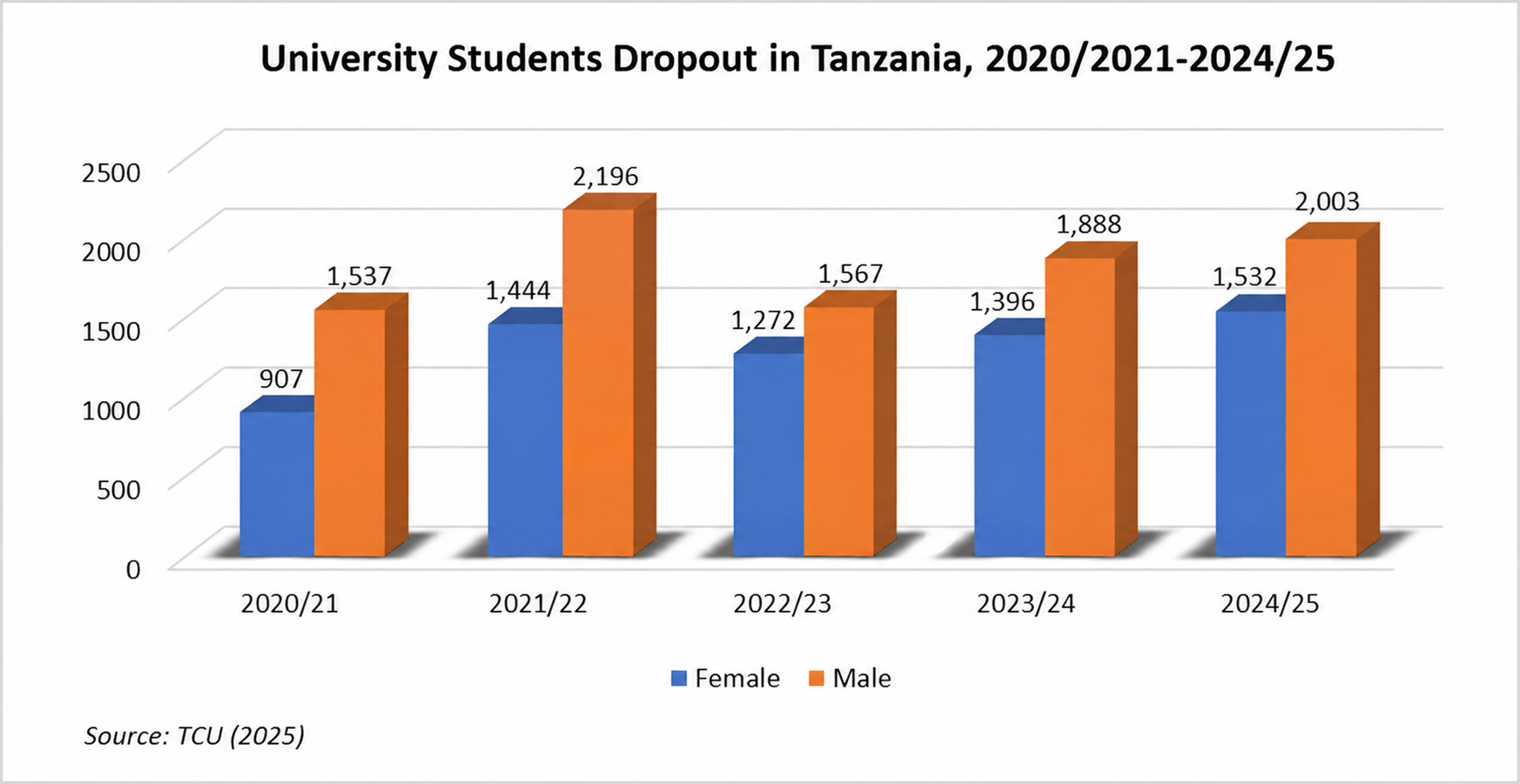
Despite ongoing efforts to improve university student support systems, undergraduate dropout remains a persistent challenge in Tanzania. According to the Tanzania Commission for Universities (TCU, 2025) Vital Statistics on University Education, dropout rates have demonstrated fluctuations with an overall increasing pattern across recent academic years. Figure 1 presents the trend of university student dropout in Tanzania from the academic year 2020/2021 to 2023/2024.
Source, TCU (2025)
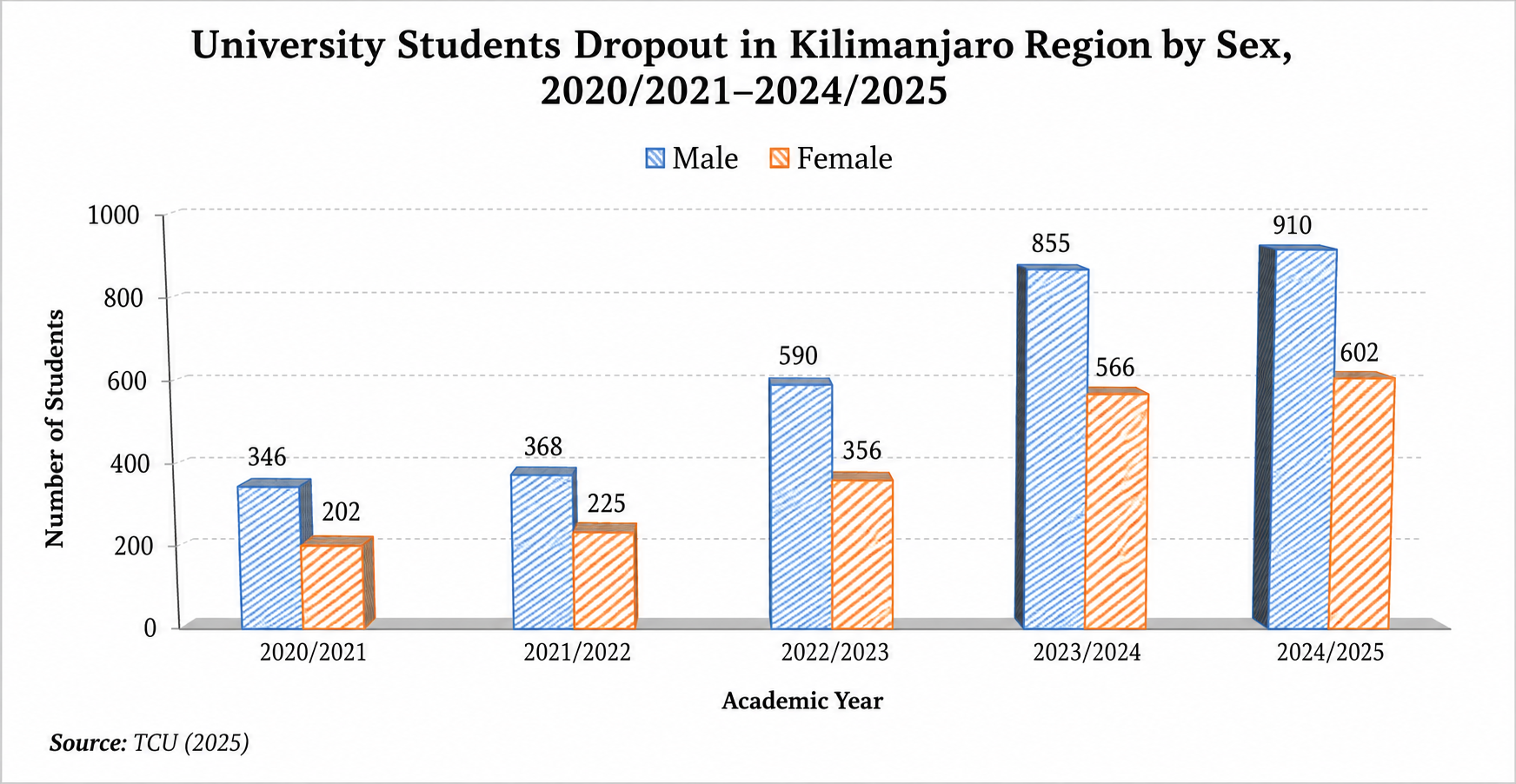
Figure 1 indicates that university student dropout in Tanzania has experienced an inconsistent but generally increasing trend during the five-year period. Male students consistently recorded higher dropout levels than female students, with the highest dropout rate occurring during the 2022/2023 academic year before declining slightly and increasing again in 2024/2025. These patterns indicate that existing interventions have not adequately addressed factors influencing student withdrawal. Therefore, examining institutional support mechanisms, particularly academic advisory services, is necessary to understand their contribution towards reducing undergraduate student dropout. The challenge of undergraduate student dropout is also evident in Kilimanjaro Region, where university dropout has increased considerably during recent academic years. Preliminary statistics presented in Figure 2 demonstrate a continuous rise in dropout among both male and female undergraduate students between 2020/2021 and 2024/2025, with male students recording comparatively higher dropout levels.
Source: Preliminary data (2025)
Figure 2 indicates that undergraduate student dropout in Kilimanjaro Region increased from 268 male and 147 female students in 2020/2021 to 855 male and 566 female students in 2024/202. This persistent increase suggests that, despite the provision of academic advisory services as required by national policy, many students continue to experience academic challenges that result in programme withdrawal. Moreover, Kilimanjaro Region is among the regions experiencing a notable increase in undergraduate student dropout while hosting several public and private universities that provide academic advisory services. These characteristics make the region an appropriate setting for examining the contribution of academic advisory services to student retention. Consequently, this situation raises questions regarding the extensiveness, accessibility, and effectiveness of academic advisory services in supporting undergraduate students' academic persistence. Therefore, this study examined the extensiveness of academic advisory services in reducing undergraduate student dropout in universities in Kilimanjaro Region, Tanzania.
2. Statement of the Problem
The increasing of undergraduate student dropout has been a persistent problem in universities in Tanzania, including those in Kilimanjaro Region. Many students discontinue their studies before completing their programmes, affecting individual career advancement and national efforts to develop skilled human resources. Student dropout is not only an academic concern but also an institutional challenge, as it reflects gaps in mechanisms designed to support students’ academic persistence (Mutalemwa, 2022). Despite universities’ efforts to provide academic advisory services, dropout remains a concern. According to TCU (2025), approximately 9%–10% of undergraduate students in Tanzania fail to complete their studies, indicating the need to examine the extent to which universities provide comprehensive academic support to students.
The persistence of undergraduate student dropout suggests possible inadequacies in the extensiveness of academic advisory services provided by universities. However, various studies including those by Lyimo (2021), Mboya and Julius (2022), and Msuya and Mlay (2023) have mainly focused on financial, socioeconomic, and academic factors influencing dropout, with limited attention given to the extent to which academic advisory services are comprehensively implemented to reduce student withdrawal. Therefore, this study examines the extensiveness of academic advisory services in reducing undergraduate student dropout in universities in Kilimanjaro Region, Tanzania.
3. Research Question
This study was guided by the one research question, which was;
To what extent do academic advisory services contribute to reducing undergraduate student dropout among universities in Kilimanjaro region, Tanzania?
4 Significance of the Study
This study provided valuable insights to key stakeholders in higher education by examining the extensiveness of academic advisory services in reducing undergraduate student dropout in universities in Kilimanjaro Region, Tanzania. University students gained a better understanding of the importance of utilizing academic advisory services, including academic guidance, programme planning, and academic progress monitoring, to enhance their academic persistence and successful completion of their studies. University management and academic advisors obtained empirical evidence on the strengths and gaps in the provision of academic advisory services, enabling them to improve the accessibility, continuity, and quality of academic advising programmes. The Tanzania Commission for Universities (TCU) benefited from the findings by obtaining evidence that informed the strengthening of policies and guidelines related to academic advisory services and student retention. Furthermore, the study contributed to the existing body of knowledge by providing empirical evidence that informed future research and policy interventions aimed at enhancing academic advisory services and reducing undergraduate student dropout in Tanzanian universities. This study contributes to Tinto’s Student Integration Theory by providing empirical evidence on the role of institutional academic support in promoting undergraduate students’ academic integration and persistence.
5. Theoretical Framework
This study was guided by Tinto’s Student Integration Theory, originally developed by Vincent Tinto (1975) and later refined in 1993. The theory posits that students’ persistence in higher education depends on the extent to which they become academically and socially integrated into the university environment (Tinto, 1993). Academic integration is promoted through institutional support mechanisms that enhance students’ engagement with learning and facilitate successful academic progression. Among these mechanisms, academic advisory services play a vital role by assisting students in course selection, programme planning, monitoring academic progress, identifying learning difficulties, and providing timely academic guidance. According to Tinto (2017), students who receive continuous and meaningful academic support are more likely to remain committed to their institutions and complete their academic programmes. Therefore, the theory provided an appropriate framework for examining the extensiveness of academic advisory services in reducing undergraduate student dropout in universities in Kilimanjaro Region, Tanzania.
Tinto’s Student Integration Theory is particularly relevant to this study because it explains that students’ persistence in higher education is largely influenced by their academic integration, which is strengthened through effective academic advisory services such as academic orientation, course planning, academic progress monitoring, early identification of academically at-risk students, and continuous academic guidance (Tinto, 1993, 2017). A major strength of the theory is its comprehensive explanation of how institutional support enhances student engagement, persistence, and programme completion (Braxton et al., 2020). However, the theory is limited because it places greater emphasis on academic and social integration while giving less attention to external factors such as financial hardship, family responsibilities, and socioeconomic conditions, and assumes that institutions have adequate capacity to provide effective support (Braxton et al., 2020; Kalinga, 2023). Despite these limitations, the theory provided a suitable framework for examining the relationship between the extensiveness of academic advisory services and the reduction of undergraduate student dropout in universities in Kilimanjaro Region, Tanzania (NACADA, 2023).
6. Review of Empirical Studies
This part critically reviews empirical studies on the extensiveness of academic advisory services in reducing undergraduate student dropout in universities in Kilimanjaro Region, Tanzania. It analyses the methodologies, findings, and critiques of the reviewed studies, while highlighting key research gaps. Moreover, this part examined the extensiveness of academic advisory services in reducing undergraduate student dropout in universities in Kilimanjaro Region, Tanzania.
6.1 The Extent to which Academic Advisory Services Contribute to Reducing Undergraduate Student Dropout among Universities
Academic advisory services are widely recognized as a central mechanism through which universities support students’ academic progression, decision-making, and persistence. Effective academic advising assists students in course selection, academic planning, monitoring progress, and addressing learning challenges, thereby strengthening engagement and reducing the likelihood of withdrawal. Empirical evidence from different global contexts demonstrates how structured academic advisory services enhance student retention, particularly among undergraduates facing academic, transitional, or institutional adjustment challenges.
In Europe, Smith and Taylor (2024) conducted a study on Academic Advising Practices and Undergraduate Retention in UK Universities. The study employed a quantitative correlational design, targeting undergraduate students from five public universities in England. A sample of 412 students was selected using stratified random sampling, and data were collected through self-administered questionnaires. The findings revealed that regular interaction with academic advisors, timely feedback, and personalized academic guidance were strongly associated with higher retention rates and improved academic confidence. The study concluded that structured academic advisory systems play a critical role in supporting undergraduate persistence. While the study provided strong evidence of the positive contribution of advising, the use of questionnaires as sole instrument for data collection compromise the validity of the study findings. The present study therefore examined the extentiveness of academic advisory services in reducing undergraduate student dropout within the context of universities in Kilimanjaro Region, Tanzania, using both questionnaires and interview guides to obtain quantitative and qualitative evidence.
In Asia, Chen and Zong (2023) conducted a study on Academic Advising and Student Persistence in Chinese Public Universities. The study adopted a mixed-methods design, involving a survey of 356 undergraduate students and follow-up interviews with 18 academic advisors. Participants were selected using purposive sampling, and data were collected through questionnaires and semi-structured interviews. Findings indicated that students who received consistent academic advising demonstrated clearer academic goals, improved course completion, and stronger commitment to their programs. The study concluded that academic advising enhances student persistence by strengthening academic clarity and institutional attachment. Although the study acknowledged the importance of advising quality, variation in students’ access to advisory services across universities received to enhance retention remained less analytical emphasis. The present study extends this line of inquiry by focused on the extent access to academic advisory services and its relationship with dropout reduction among undergraduates.
In West Africa, Adebayo and Ogunleye (2022) conducted a study titled Influence of Academic Advising on Undergraduate Retaining in Nigerian Universities. The study employed a descriptive survey design, targeting undergraduate students in three federal universities in southwestern Nigeria. A sample of 280 students was selected through simple random sampling, and data were collected using structured questionnaires. The findings showed that students who frequently consulted academic advisors reported better academic adjustment, timely resolution of academic challenges, and increased likelihood of continuing their studies. The study concluded that academic advisory services contribute meaningfully to reducing undergraduate dropout. Nonetheless, the study focused primarily on students’ perceptions of advising effectiveness, with less attention given to measuring institutional availability and consistency of advisory services. The present study responds to this gap by examined the extent of academic advisory service provision and its contribution to dropout reduction.
In East Africa, Mugisha and Nkurunziza (2023) conducted a study on academic advising services and student retention in public universities in Uganda using a cross-sectional survey design. The study targeted undergraduate students from two public universities, with a sample of 310 respondents selected through multistage sampling, and data collected using questionnaires and document review. Findings indicated that academic advising helped students navigate academic regulations, manage course loads, and improve academic performance, which contributed to higher retention levels. The study concluded that effective academic advisory services strengthen undergraduate persistence. However, the study relied mainly on students’ perceptions, which limited detailed understanding of how academic advising practices are implemented and experienced at institutional level. The present study addressed this aspect by examining the extent and effectiveness of academic advisory services in reducing undergraduate dropout in universities in Kilimanjaro Region.
In Tanzania, Mushi and Komba (2022) conducted a study titled Role of Academic Advising in Enhancing Undergraduate Graduations in Tanzanian Public Universities. The study employed a mixed-methods design, targeting undergraduate students and academic staff from two public universities. A sample of 240 students was selected using stratified sampling, while academic advisors were selected through purposive sampling. Data were collected using questionnaires and interviews. The findings indicated that academic advising contributed to improved academic planning, early identification of learning difficulties, and increased student confidence, which supported continued enrolment. The study concluded that academic advisory services play an important role in reducing undergraduate dropout in the Tanzanian context. However, the study emphasized advisory practices without quantitatively examining the extent of service accessibility across universities. The present study advanced this effort by measuring the extent of academic advisory service provision and its contribution to reducing undergraduate dropout among universities in the Kilimanjaro Region.
7. Demonstration of the Research Gaps
A review of empirical studies showed growing interest in the role of academic advisory services in enhancing undergraduate student retention. However, several gaps remained. Regarding the knowledge gap, studies by Smith and Taylor (2024), Chen and Zong (2023), Adebayo and Ogunleye (2022), Mugisha and Nkurunziza (2023), and Mushi and Komba (2022) focused mainly on the effectiveness of academic advising, with limited attention to the extent of academic advisory service provision in reducing undergraduate student dropout. Methodologically, most studies relied primarily on quantitative surveys or students’ perceptions, providing limited evidence from multiple stakeholder perspectives. Contextually, the studies were conducted in the United Kingdom, China, Nigeria, Uganda, and selected Tanzanian universities, whose institutional settings differ from universities in Kilimanjaro Region. Therefore, this study addressed these knowledge, methodological, and contextual gaps by examining the extent to which academic advisory services contribute to reducing undergraduate student dropout among universities in Kilimanjaro Region, Tanzania.
8. Research Methodology
The study employed a convergent research design under a mixed-methods research approach to collect quantitative and qualitative data concurrently for a comprehensive understanding of Academic Advisory Services to Reducing Undergraduate Student Dropout among Universities (Creswell & Creswell, 2023). The target population comprised 15,902 undergraduate students, 3 Deans of Students, 21 Heads of Departments, 3 university counsellors, and 3 loan officers, making a total of 15,935 participants. Using criterion purposive sampling, two fully fledged universities were selected for inclusion in the study. For the qualitative component, the selection criterion required respondents to hold positions as Heads of the relevant units responsible for student support services. Accordingly, 2 Deans of Students, 12 Heads of Departments, 2 university counsellors, and 2 loan officers were purposively selected based on their positions and direct involvement in providing or managing academic advisory and student support services. For the quantitative component, proportionate stratified sampling was used to select 309 undergraduate university students from the sampled universities. Data collection instruments included questionnaires for Undergraduate University Students and interview guides for deans of students, heads of department, University Counsellors and Loan Officers. All data collection instruments validated by research experts from the Faculty of Education at MWECAU. A pilot study was conducted in one university. The reliability of the questionnaires was established using Cronbach’s Alpha Technique, which yielded values of 0.865 for Undergraduate University Students, confirming acceptable reliability (Okendo et al., 2020). Trustworthiness of qualitative data was established through peer debriefing, and triangulation. Quantitative data were analyzed using descriptive statistics with the aid of SPSS version 27. Qualitative data from interviews guide were analyzed thematically through familiarisation, coding, theme generation, theme review, theme definition and naming, and final write-up (Creswell & Creswell, 2018). Ethical considerations were observed, including obtaining research clearance, informed consent, confidentiality, anonymity, and acknowledgement of data sources.
8. Results and discussion
This section presents the findings on the extensiveness of academic advisory services in reducing undergraduate student dropout in universities in Kilimanjaro Region, Tanzania. To achieve a comprehensive understanding, this study employed data triangulation, integrating quantitative data from University Undergraduate Students questionnaires (𝑛=283) with qualitative insights generated through interviews with deans of students, heads of department, University Counsellors and Loan Officers. Data were collected using a five-point Likert scale: 1 = Very Low Extent (VLE), 2 = Low Extent (LE), 3 = Moderate Extent (ME), 4 = High Extent (HE), and 5 = Very High Extent (VHE). Frequencies (F), percentages (%), and mean scores were used to present the findings. Following Joshi et al. (2015), Very Low Extent and Low Extent were combined as low extent, while High Extent and Very High Extent were combined as great extent. Moderate Extent was treated independently. Following Warmbrod (2024), mean scores were interpreted as follows: 1.00–1.89 (very low extent) indicates that academic advisory services contribute very little to reducing undergraduate student dropout; 1.90–2.69 (low extent) indicates a limited contribution; 2.70–3.49 (moderate extent) indicates a moderate contribution; 3.50–4.29 (great extent) indicates a substantial contribution; and 4.30–5.00 (very great extent) indicates a very strong contribution to reducing undergraduate student dropout. The study also adopted Taherdoost’s (2019) percentage scale, where ≤19% represents an extremely minority, 20–39% minority, 40–59% a moderate proportion, 60–79% a majority, and 80–100% a very large majority. A detailed summary of the findings is presented in Table 1
| Statements | VLE | LE | ME | HE | VHE | Mean | |||||
| f | % | f | % | f | % | f | % | f | % | ||
| Guidance from my academic advisor on academic planning helps me remain enrolled in my university programme | 18 | 6.4 | 28 | 9.9 | 86 | 30.4 | 101 | 35.7 | 50 | 17.7 | 3.57 |
| My academic advisor supports me in selecting appropriate courses that help me complete my academic programme successfully | 15 | 5.3 | 31 | 11.0 | 82 | 29.0 | 106 | 37.5 | 49 | 17.3 | 3.61 |
| My academic advisor monitors my academic progress that strengthens my commitment to continue with studies | 58 | 20.5 | 91 | 32.2 | 98 | 34.6 | 27 | 9.5 | 9 | 3.2 | 2.34 |
| Timely academic intervention from my academic advisor reduces my intention to withdraw from academic programme | 73 | 25.8 | 102 | 36.0 | 76 | 26.9 | 24 | 8.5 | 8 | 2.8 | 2.17 |
| My academic advisor provides mentorship support that helps me overcome academic challenges that interrupt my studies | 91 | 32.2 | 112 | 39.6 | 59 | 20.8 | 16 | 5.7 | 5 | 1.8 | 1.98 |
| My academic advisor assists me with course registration, supporting my progression from one academic level to another | 12 | 4.2 | 20 | 7.1 | 78 | 27.6 | 116 | 41.0 | 57 | 20.1 | 3.74 |
| Guidance from my academic advisor on managing academic workload encourages my regular participation in academic activities | 24 | 8.5 | 52 | 18.4 | 121 | 42.8 | 68 | 24.0 | 18 | 6.4 | 3.01 |
| My academic advisor provides information on learning resources that enhances my engagement in academic activities | 35 | 12.4 | 74 | 26.1 | 118 | 41.7 | 43 | 15.2 | 13 | 4.6 | 2.77 |
| My academic advisor provides study skills support that strengthens my ability to continue with my academic programme | 132 | 46.6 | 103 | 36.4 | 36 | 12.7 | 9 | 3.2 | 3 | 1.1 | 1.59 |
| Follow-up support from my academic advisor enhances my commitment to complete my degree programme | 83 | 29.3 | 113 | 39.9 | 61 | 21.6 | 18 | 6.4 | 8 | 2.8 | 2.03 |
| Grand mean | 2.68 |
Source: Field Data (2025) Key: 1. VLE = Very Low Extent, 2. LE = Low Extent, 3.ME = Moderate Extent, 4. HE = High Extent, 5.VHE = Very High Extent, f = Frequency, % = Percentage.
Data in Table 1 indicate that a moderate proportion (53.4%) of undergraduate students rated that the guidance from their academic advisor on academic planning helps them remain enrolled in their university programmes to the high extent. Conversely, extremely minority (16.3%) rated it at a low extent, while minority (30.4%) expressed moderate extent. The mean score of 3.57 indicates that academic planning guidance contributes to a high extent in supporting students’ retention. This suggests that academic advisors play an important role in helping students organize their academic activities and maintain continuity in their programmes. Nevertheless, the presence of moderate and low-extent responses indicates variations in students’ access to and experiences with academic planning support. During a face-to-face interview, Head of Department 1 explained:
Academic planning is one of the first services we provide to our students from the beginning of each academic year. We guide them on course sequencing, programme requirements, and strategies for balancing their academic workload. Students who regularly seek academic advice rarely encounter unnecessary delays in their studies because they understand what is expected of them. However, not all students attend advisory sessions or seek assistance until they experience serious academic problems. This limits the effectiveness of the guidance provided (HoD 1, Interview, 08 May 2026).
Similarly, Dean of Students 1 stated:
Many students who remain in their programmes have benefited from proper academic guidance provided through their departments. Academic advisors help students understand university regulations, graduation requirements, and available academic support services. Nevertheless, some students fail to utilize these opportunities due to poor attendance at advisory meetings or lack of awareness about the importance of academic planning (Dean of Students 1, Interview, 28 May 2026).
The views indicate that academic planning guidance contributes to students' retention by enabling them to understand programme requirements, organize their studies, and make informed academic decisions throughout their academic journey. However, the interviews also reveal that the effectiveness of this service is constrained by inconsistent student participation in advisory sessions and delayed consultation with academic advisors. Many students seek guidance only after encountering academic difficulties, reducing the preventive role of academic planning. The evidence suggests that although academic planning is widely recognized as an important retention strategy, its effectiveness depends on students' active engagement and the regular accessibility of advisory services. The findings are in line with Smith and Taylor (2024), who reported that personalized academic advising significantly improved undergraduate student retention in UK universities. Likewise, the present study found that most students regarded academic planning as essential for remaining enrolled in their programmes. Tinto's Student Integration Theory (1993; 2017) explains this finding by asserting that students who receive continuous academic guidance become better integrated into the academic environment, thereby increasing their likelihood of persisting to graduation.
Data in Table 1 show that moderate proportion (54.8%) of undergraduate students rated that the support from academic advisors in selecting appropriate courses helps them complete their academic programmes successfully to the high extent. Conversely, extremely minority (16.3%) rated it at a low extent, while minority (29.0%) expressed moderate extent. The mean score of 3.61 indicates that course selection support contributes to a high extent in promoting successful programme completion. This suggests that academic advisors assist students in making appropriate academic decisions that facilitate programme continuity. Nevertheless, differences in students’ responses reflect variations in the availability and effectiveness of course selection guidance. During the interview, Head of Department 3 explained:
Course selection is among the most important responsibilities of academic advisors. We help students choose courses according to prerequisite requirements and their academic progression. This minimizes mistakes such as registering for inappropriate courses or delaying graduation because of missing compulsory units. However, some students register independently without consulting their advisors, and this sometimes creates academic complications (HoD 3, Interview, 12 May 2026).
Likewise, Head of Department 8 remarked:
Students who consult their academic advisors during course registration usually complete their studies smoothly because they receive accurate academic direction. We review their previous performance before approving their selections. The challenge is that a few students only seek advice after registration problems have already occurred, making it difficult to correct all mistakes immediately (HoD 8, Interview, 19 May 2026).
The interview accounts demonstrate that course selection guidance enables students to register appropriate courses, comply with prerequisite requirements, and avoid unnecessary delays in programme completion. Academic advisors play an important role in reviewing students' academic records before approving course registration, thereby supporting continuous academic progression. Nevertheless, the interviews reveal that some students bypass advisory consultations and register courses independently, resulting in registration errors and delayed academic progression. This suggest that while course selection guidance is an effective academic advisory service, its contribution to reducing student dropout depends on consistent consultation between students and their academic advisors. The findings are consistent with Chen and Zong (2023), who found that academic advising improved course completion and students' commitment to their programmes in Chinese universities. Similarly, interview participants explained that academic advisors assist students in selecting appropriate courses and complying with prerequisite requirements, thereby minimizing registration errors and delays in graduation.
Data in Table 1 reveal that moderate proportion (52.7%) of undergraduate students rated the statement that monitoring of academic progress strengthened their commitment to continue with studies to a low extent. In contrast, minority (34.6%) rated this aspect at a moderate extent, while extremely minority (12.7%) rated it at a high extent. The mean score of 2.34 indicates that academic progress monitoring contributes to a low extent in strengthening students’ persistence. This implies that monitoring practices by academic advisors were not sufficiently extensive to identify students’ academic challenges and provide timely support. The variation in responses indicates differences in the implementation of academic progress monitoring across universities. During a face-to-face interview, Head of Department 10 explained:
Although we are expected to monitor students' academic progress regularly, this responsibility has become difficult because each advisor is assigned many students. Most follow-up occurs only after examination results have been released or when students experience academic probation. Consequently, continuous monitoring is not always achieved, and some struggling students remain unidentified until their performance has already deteriorated (HoD 10, Interview, 21 May 2026).
Similarly, University Counsellor 2 observed:
Many students who eventually seek counselling report that no one had followed up on their declining academic performance during the early stages. Academic monitoring would allow universities to identify students experiencing academic stress before they consider withdrawing from their programmes. Unfortunately, coordination between academic advisors and counselling services is not always consistent (University Counsellor 2, Interview, 27 May 2026).
The qualitative evidence indicate that monitoring students' academic progress is limited by heavy academic workloads, large advisor-to-student ratios, and inadequate coordination between academic advisors and student support units. As a result, academic follow-up is often undertaken only after poor examination results or academic probation rather than through continuous monitoring that identifies learning difficulties at an early stage. This reactive approach limits opportunities for timely academic intervention and increases the likelihood that struggling students remain unsupported until their academic performance has substantially deteriorated. The evidence suggests that strengthening systematic academic monitoring and improving collaboration among student support services would enhance the effectiveness of academic advisory services in reducing undergraduate student dropout. The finding are contrasts with Mugisha and Nkurunziza (2023), who found that continuous academic monitoring improved student retention in Ugandan universities. In contrast, respondents in the present study indicated that heavy workloads and large advisor-to-student ratios limited regular monitoring of students' academic progress.
Data in Table 1 indicate that a majority (61.8%) of undergraduate students rated the statement that timely academic intervention from their academic advisors reduces their intention to withdraw from academic programmes to the low extent. Conversely, minority (26.9%) rated this practice at a moderate extent, while extremely minority (11.3%) rated it at a high extent and very high extent. The mean score of 2.17 indicates that timely academic intervention contributes to a low extent in reducing undergraduate student dropout. This suggests that academic interventions provided to students experiencing difficulties are not sufficiently proactive or extensive. The differences in responses indicate that some students benefit from intervention services, while others receive limited support. During a face-to-face interview, Head of Department 6 explained:
Whenever students experience poor academic performance or personal difficulties, we try to intervene by inviting them for academic discussions and advising them on possible solutions. However, because of the large number of students under each academic advisor, some cases are identified quite late. By the time we reach some students, they have already lost motivation, deferred their studies, or even initiated withdrawal procedures. Early identification remains one of our biggest challenges (HoD 6, Interview, 15 May 2026).
Similarly, University Counsellor 1 remarked:
Students who come for counselling indicate that they struggled academically for several months before anyone from their department contacted them. If academic advisors and lecturers could identify vulnerable students much earlier and refer them for counselling, many withdrawal cases could be prevented. Unfortunately, intervention is often reactive rather than preventive (University Counsellor 1, Interview, 11 June 2026).
The qualitative evidence underscores the importance of prompt academic intervention in identifying students experiencing learning difficulties before they disengage from their studies. Participants consistently acknowledged that early academic guidance and referral mechanisms strengthen students' ability to cope with academic challenges and sustain their enrolment. However, the findings also point to institutional constraints, particularly the large number of students assigned to individual academic advisors, which delays the identification of students at risk of dropping out. Consequently, intervention efforts tend to be reactive rather than preventive, reducing their overall effectiveness in supporting student retention. The finding that timely academic intervention contributes to a low extent to reducing undergraduate student dropout contrasts with Mushi and Komba (2022), who found that early academic intervention enabled universities to identify students experiencing learning difficulties and improve programme retention. In contrast, respondents in the present study indicated that academic intervention often occurs after students have already experienced serious academic challenges.
Data in Table 1 show that a majority (71.8%) of undergraduate students rated the mentorship support from academic advisors helps them overcome academic challenges to the low extent. Conversely, 20.8% rated this aspect at a moderate extent, while extremely minority (7.5%) rated it at a high extent and very high extent. The mean score of 1.98 indicates that mentorship support contributes to a low extent in reducing undergraduate student dropout. This suggests that mentorship services are either inadequately provided or insufficiently utilized to address students’ academic challenges. The variation in responses indicates differences in students’ exposure to mentorship opportunities. During the interview,
Head of Department 7 explained:
Formal mentorship programmes are still not well established in our department. Most academic advisors concentrate on course registration and academic issues, while personal mentorship receives less attention because of workload and limited time. As a result, many students receive academic advice but lack continuous mentorship that could help them cope with academic and personal challenges (HoD 7, Interview, 18 May 2026).
Likewise, Dean of Students 2 stated:
Mentorship is essential for helping students adjust to university life, particularly first-year students. However, structured mentorship programmes are not consistently implemented across all faculties. Some departments have active mentors who regularly meet students, whereas others depend entirely on individual academic advisors whose responsibilities are already overwhelming. Consequently, many students do not receive adequate mentorship support (Dean of Students 2, Interview, 08 June 2026).
The perspectives shared by the respondents illustrate that mentorship extends beyond academic advice by providing emotional encouragement, motivation, and personal guidance that enable students to overcome obstacles encountered during their university education. Despite recognising these benefits, participants indicated that mentorship activities are not systematically embedded within departmental practices because academic advisors are often overwhelmed by competing administrative and teaching responsibilities. As a result, many students have limited opportunities to establish sustained mentoring relationships, thereby weakening the potential of mentorship services to minimise undergraduate student dropout. The finding are contrasts with Adebayo and Ogunleye (2022), who reported that continuous academic advising and mentoring improved students' academic adjustment and persistence in Nigerian universities. However, respondents in the current study explained that formal mentorship programmes are inconsistently implemented because academic advisors face heavy workloads and multiple responsibilities. Tinto's Student Integration Theory suggests that meaningful interactions between students and institutional support systems strengthen academic integration. Consequently, inadequate mentorship limits students' opportunities to receive continuous guidance, thereby weakening their persistence in university studies
Data in Table 1 indicate that a majority (61.1%) of undergraduate students rated the assistance from academic advisors with course registration supports their progression from one academic level to another to the high extent. Conversely, extremely minority (11.3%) rated this service at a low extent, while minority (27.6%) expressed moderate extent. The mean score of 3.74 indicates that course registration assistance contributes to a high extent in supporting students’ academic progression. This suggests that academic advisors effectively assist students in addressing registration-related challenges that could interrupt their studies. Despite this, moderate and low responses indicate that access to registration support is not experienced equally by all students. During a face-to-face interview, Head of Department 11 explained:
Course registration is one of the advisory services that functions quite effectively because every student must obtain academic approval before registration is finalized. Academic advisors verify whether students have selected the correct courses, satisfied prerequisite requirements, and maintained the appropriate study load. This process minimizes registration errors that could delay students' progression to the next academic level (HoD 11, Interview, 26 May 2026).
Similarly, Loan Officer 1 commented:
From our experience, proper course registration is also important for students receiving government loans because registration confirms their enrolment status and eligibility for financial support. Students who receive timely assistance during registration rarely experience delays in accessing loans or continuing with their studies. Nevertheless, a few students report late registration because they delayed consulting their academic advisors (Loan Officer 1, Interview, 01 June 2026).
Evidence obtained from the interviews highlights course registration assistance as one of the strongest components of academic advisory services within the universities. Through reviewing students' academic records, verifying prerequisite requirements, and confirming appropriate course selections, academic advisors help students avoid registration errors that could interrupt their academic progression. In addition, respondents observed that accurate registration facilitates students' access to institutional services, including financial support, thereby reinforcing continuity in their studies. Even so, this indicate that these benefits are not fully realised when students fail to consult their advisors before registration or postpone the registration process until deadlines have nearly elapsed. The finding are consistent with Chen and Zong (2023), who found that academic advising improved students' academic progression through appropriate course planning.
Data in Table 1 reveal that moderate portion (42.8%) of undergraduate students rated guidance from academic advisors on managing academic workload at a moderate extent. In comparison, minority (30.4%) rated it at a high extent, while 26.9% rated it at a low extent. The mean score of 3.01 indicates that workload management guidance contributes to a moderate extent in reducing undergraduate student dropout. This suggests that academic advisors provide some support in helping students manage academic demands, although the service requires further strengthening to benefit more students. During a face-to-face interview, Head of Department 5 explained:
Students, especially those in their first and second years, struggle to balance lectures, assignments, continuous assessments, and personal responsibilities. As academic advisors, we encourage them to prepare study timetables and prioritize academic tasks according to deadlines. Those who follow this guidance generally participate more actively in lectures and submit assignments on time. However, some students rarely seek advice until they become overwhelmed by academic demands (HoD 5, Interview, 25 May 2026).
Similarly, Dean of Students 1 remarked:
Managing academic workload is an area where many students require continuous support. Although departments provide academic advice, students differ in how they utilize the guidance. Some successfully organize their studies, while others continue experiencing stress because they fail to seek assistance early or implement the recommendations provided (Dean of Students 1, Interview, 28 May 2026).
Narratives provided by the respondents portray workload management guidance as an important strategy for helping students organize their academic responsibilities and remain actively engaged in learning activities. The respondents acknowledged that students who receive and apply such guidance tend to participate more consistently in lectures, coursework, and other academic requirements. At the same time, the interviews indicate that the effectiveness of workload management support depends largely on students' willingness to seek advice and implement the recommendations offered by academic advisors. The finding that guidance on managing academic workload contributes to a moderate extent to reducing undergraduate student dropout is in line with Smith and Taylor (2024), who found that academic advising helped students organize their academic responsibilities and strengthened their academic confidence. Similarly, respondents in the present study noted that workload management guidance enables students to prioritize assignments and participate more actively in learning activities. Nevertheless, they observed that some students seek advice only after becoming overwhelmed by academic demands.
Data in Table 1 show that moderate portion (41.7%) of undergraduate students rated the information on learning resources provided by academic advisors enhances their engagement in academic activities to the moderate extent. Conversely, minority (38.5%) rated this service at a low extent, while minority (19.8%) rated it at a high extent. The mean score of 2.77 indicates that provision of learning resource information contributes to a moderate extent in reducing undergraduate student dropout. This suggests that students receive some information about available academic resources, but the service is not sufficiently extensive to support all students consistently. The variation in responses indicates differences in students’ access to information about learning resources. During a face-to-face interview, Head of Department 5 explained:
Students, especially those in their first and second years, struggle to balance lectures, assignments, continuous assessments, and personal responsibilities. As academic advisors, we encourage them to prepare study timetables and prioritize academic tasks according to deadlines. Those who follow this guidance generally participate more actively in lectures and submit assignments on time. However, some students rarely seek advice until they become overwhelmed by academic demands (HoD 5, Interview, 25 May 2026).
Similarly, Dean of Students 1 remarked:
Managing academic workload is an area where many students require continuous support. Although departments provide academic advice, students differ in how they utilize the guidance. Some successfully organize their studies, while others continue experiencing stress because they fail to seek assistance early or implement the recommendations provided (Dean of Students 1, Interview, 28 May 2026).
Narratives provided by the respondents portray workload management guidance as an important strategy for helping students organize their academic responsibilities and remain actively engaged in learning activities. The respondents acknowledged that students who receive and apply such guidance tend to participate more consistently in lectures, coursework, and other academic requirements. At the same time, the interviews indicate that the effectiveness of workload management support depends largely on students' willingness to seek advice and implement the recommendations offered by academic advisors. The finding is consistent with Mugisha and Nkurunziza (2023), who found that academic advising improved students' academic performance by helping them utilize institutional learning resources.
Data in Table 1 indicate that a very high majority (83.0%) of undergraduate students rated the study skills support from academic advisors strengthens their ability to continue with academic programmes to the low extent. Conversely, extremely minority (12.7%) rated this aspect at a moderate extent, while extremely minority (4.3%) rated it at a high extent and very high extent. The mean score of 1.59 indicates that study skills support contributes to a very low extent in reducing undergraduate student dropout. This implies that study skills development services are limited within academic advisory programmes. The differences in responses suggest inadequate provision and unequal access to study skills support among students. During a face-to-face interview, Head of Department 12 explained:
Study skills training is not regularly incorporated into departmental academic advisory activities. Most advisors focus on course registration and academic regulations because of limited time. Students who need assistance with note-taking, examination preparation, or effective study techniques often receive support only when they specifically request it or when serious academic problems have already emerged (HoD 12, Interview, 12 June 2026).
Similarly, University Counsellor 1 observed:
Students who come for counselling lack effective study habits, time-management skills, and examination strategies. These issues contribute to poor academic performance and frustration. If structured study skills programmes were integrated into academic advisory services from the beginning of university education, many students would develop stronger learning habits and remain committed to their studies (University Counsellor 1, Interview, 11 June 2026).
Accounts from the respondents portray study skills support as one of the least developed components of academic advisory services within the participating universities. Although participants recognized that competencies such as time management, examination preparation, and effective learning strategies are fundamental to academic success, they acknowledged that these services are not routinely provided to all students. Instead, assistance is often offered only after academic difficulties become evident. Such gaps in the delivery of study skills support help explain why the quantitative findings recorded the lowest mean score among all academic advisory services, indicating a very limited contribution to reducing undergraduate student dropout. The findings are contrasts with Chen and Zong (2023), who found that academic advising strengthened students' academic competence and commitment through continuous academic guidance. In the present study, respondents explained that study skills training is rarely integrated into academic advisory programmes and is often provided only after students experience academic difficulties.
Data in Table 1 reveal that a majority (69.2%) of undergraduate students rated the follow-up support from academic advisors enhances their commitment to complete their degree programmes to the low extent. Conversely, minority (21.6%) rated this practice at a moderate extent, while extremely minority (9.2%) rated it at a high extent. The mean score of 2.03 indicates that follow-up support contributes to a low extent in reducing undergraduate student dropout. This suggests that continuous monitoring and communication between academic advisors and students are insufficient. The variation in responses reflects differences in the frequency and effectiveness of follow-up practices across universities. During the interview, Head of Department 2 remarked:
Follow-up with students after academic advising is not conducted as consistently as we would like. Once students receive advice, many academic advisors assume they will implement the recommendations independently. Unfortunately, without regular follow-up meetings, it becomes difficult to determine whether students have resolved their academic challenges or require additional support (HoD 2, Interview, 11 May 2026).
Likewise, Loan Officer 2 commented:
Students who experience delays in financial support sometimes require continuous follow-up from both academic departments and the loans office. Where communication between academic advisors and support units is strong, students are assisted more effectively. However, limited coordination means that some students continue facing challenges without receiving adequate follow-up until their academic progress has already been affected (Loan Officer 2, Interview, 02 June 2026).
The experiences shared by the respondents highlight continuous follow-up as a critical element of effective academic advising because it enables universities to monitor students' progress after initial guidance has been provided. Participants observed that sustained communication allows academic advisors to identify unresolved challenges and provide additional support before students disengage from their studies. Nevertheless, the evidence points to weaknesses in routine follow-up practices, largely arising from heavy workloads and limited coordination among university support units. These shortcomings reduce the continuity of academic advisory services and help account for the low extent to which follow-up support was perceived to contribute to reducing undergraduate student dropout. The finding are contrasting with Smith and Taylor (2024), who found that continuous interaction between academic advisors and students’ significantly enhanced undergraduate retention. In contrast, respondents in the present study indicated that regular follow-up is constrained by heavy workloads and limited coordination among university support units.
Generally, the quantitative findings revealed that academic advisory services contributed to a low extent in reducing undergraduate student dropout in universities in Kilimanjaro Region. While academic planning, course selection, and course registration assistance were rated to a high extent, most advisory services, including academic progress monitoring, timely academic intervention, mentorship, study skills support, follow-up support, workload management, and provision of learning resource information, were rated from low to moderate extent. Qualitative findings showed that universities had established academic advisory structures that supported students through academic planning, course selection, and registration. However, their effectiveness was constrained by high advisor-to-student ratios, heavy workloads, inconsistent student participation in advisory sessions, weak coordination among support units, limited mentorship and study skills programmes, delayed interventions, and inadequate follow-up mechanisms. Integrating both sets of findings indicates that although academic advisory services are available and provide important support for students' academic progression, their implementation remains uneven and insufficiently comprehensive to substantially reduce undergraduate student dropout. Consequently, strengthening continuous academic monitoring, early intervention, mentorship, study skills development, and systematic follow-up is essential for improving undergraduate student retention in universities in Kilimanjaro Region, Tanzania..
9. Conclusion
Academic advisory services contribute to a low extent in reducing undergraduate student dropout in universities in Kilimanjaro Region, Tanzania. While academic planning, course selection, and course registration assistance positively support students' academic progression and retention, key advisory services such as academic progress monitoring, timely intervention, mentorship, study skills support, and follow-up guidance are not implemented extensively enough to effectively address students' academic challenges. Consequently, although academic advisory services exist within the universities, their implementation remains inconsistent and insufficient to maximize undergraduate student retention. Universities in the Kilimanjaro Region provide academic advisory services, but their extensiveness in reducing undergraduate student dropout remains limited.
10. Recommendation for Action
Universities in Kilimanjaro Region should strengthen the implementation of academic advisory services by institutionalizing regular academic progress monitoring, timely academic intervention, structured mentorship programmes, study skills training, and continuous follow-up of students. University management should also reduce academic advisor workloads by maintaining manageable advisor-to-student ratios and providing periodic capacity-building programmes for academic advisors.
References
- Adebayo, T., & Ogunleye, S. (2022). Influence of academic advising on undergraduate retaining in Nigerian universities. Nigerian Journal of Educational Research, 24(3), 112–130. DOI ↗ Google Scholar ↗
- Braxton, J. M., Doyle, W. R., Hartley, H. V., Hirschy, A. S., Jones, W. A., & McLendon, M. K. (2020). Rethinking college student retention. Jossey-Bass. DOI ↗ Google Scholar ↗
- Chen, L., & Zong, Y. (2023). Academic advising and student persistence in Chinese public universities. Asia-Pacific Journal of Education, 43(2), 101–120. DOI ↗ Google Scholar ↗
- Commission for University Education Kenya. (2023). Higher education quality assurance and student support services report. Nairobi, Kenya: Author. Google Scholar ↗
- Creswell, J. W., & Creswell, J. D. (2018). Research design: Qualitative, quantitative, and mixed methods approaches (5th ed.). SAGE Publications. DOI ↗ Google Scholar ↗
- Creswell, J. W., & Creswell, J. D. (2023). Research design: Qualitative, quantitative, and mixed methods approaches (6th ed.). Sage Publications. Google Scholar ↗
- Khan, A., & Samad, A. (2022). Economic challenges and dropout rates in Nigerian universities: A qualitative study. Journal of Higher Education in Africa, 14(2), 45–61. Google Scholar ↗
- Lyimo, M. (2021). Socioeconomic factors influencing university dropout in Tanzania. Tanzania Journal of Education and Development, 5(1), 23–38. Google Scholar ↗
- Mboya, F., & Julius, J. (2022). Financial challenges and student retention in Tanzanian universities. East African Journal of Education, 8(3), 87–104. Google Scholar ↗
- Miconi, D., Wahab, M., & Hassan, R. (2023). Faculty engagement and student dropout in Egyptian universities. International Journal of Educational Research, 115, 101–117. Google Scholar ↗
- Msuya, E., & Mlay, K. (2023). Factors contributing to university dropout in Tanzania: A case study. African Journal of Higher Education Studies, 9(1), 56–73. Google Scholar ↗
- Mugisha, R., & Nkurunziza, D. (2023). Academic advising service and student retention in public universities in Uganda. Uganda Journal of Higher Education Research, 7(2), 22–44. Google Scholar ↗
- Mushi, H., & Komba, T. (2022). Role of academic advising in enhancing undergraduate graduations in Tanzanian public universities. Tanzanian Journal of Academic Support, 6(1), 19–38. DOI ↗ Google Scholar ↗
- Mutalemwa, D. (2022). The impact of dropout on socioeconomic outcomes in Tanzania. Tanzanian Journal of Social Sciences, 11(4), 112–129. Google Scholar ↗
- National Academic Advising Association. (2023). Academic advising core values and principles. NACADA. https://nacada.ksu.edu Google Scholar ↗
- National Student Clearinghouse. (2023). Six-year college graduation rates in the United States. https://nscresearchcenter.org Google Scholar ↗
- National Universities Commission. (2022). Nigerian university system statistical digest. National Universities Commission. Google Scholar ↗
- Nguyen, T., & Adelusi, B. (2024). The role of student support services in promoting academic success: A global perspective. Journal of Higher Education Policy and Management, 46(1), 12–29. Google Scholar ↗
- Okendo, J., Chacha, D., & Wambura, G. (2020). Ethical guidelines for social research: Protecting participants' confidentiality and privacy. Journal of Social Research Ethics, 7(3), 45-58. DOI ↗ Google Scholar ↗
- Organisation for Economic Co-operation and Development (OECD). (2023). Education at a glance 2023: OECD indicators. OECD Publishing. Google Scholar ↗
- Smith, J., & Taylor, R. (2024). Academic advising practices and undergraduate retention in UK universities. British Journal of Educational Guidance, 30(1), 55–77. Google Scholar ↗
- Tanzania Commission for Universities (TCU). (2019). Guidelines for student support services in Tanzanian universities. Dodoma, Tanzania: Author. DOI ↗ Google Scholar ↗
- Tanzania Commission for Universities (TCU). (2025). Projected university enrolment and staffing data. Dodoma, Tanzania: Author. Google Scholar ↗
- Tinto, V. (1975). Dropout from higher education: A theoretical synthesis of recent research. Review of Educational Research, 45(1), 89–125. https://doi.org/10.3102/0034654 3045001089 Google Scholar ↗
- Tinto, V. (1993). Leaving college: Rethinking the causes and cures of student attrition (2nd ed.). University of Chicago Press. Google Scholar ↗
- Tinto, V. (2017). Through the eyes of students. Journal of College Student Retention: Research, Theory & Practice, 19(3), 254–269. https://doi.org/10.1177/ 1521025 115621917 Google Scholar ↗
- Tinto, V. (2023). Student retention and success in higher education. Routledge. Google Scholar ↗
- UNESCO. (2022). Global education monitoring report 2022: Inclusion and education. https://unesdoc.unesco.org Google Scholar ↗
- United Nations Educational, Scientific and Cultural Organization. (2015). Education 2030: Incheon Declaration and Framework for Action for the implementation of Sustainable Development Goal 4. UNESCO. Google Scholar ↗
- World Bank. (2021). Higher education dropout rates: Causes and policy responses. Washington, DC: World Bank. Google Scholar ↗