Abstract
Safety silence can prevent organizations from identifying hazards before they escalate into serious incidents, making it particularly important in high-risk industries such as mining. Drawing on Conservation of Resources theory, this study examines whether exploitative leadership contributes to safety silence through interpersonal conflict with the leader and whether psychological safety weakens this relationship. Data were collected from 450 employees in Ghana’s mining industry using a three-wave survey design and analyzed with partial least squares structural equation modeling (PLS-SEM). The findings show that exploitative leadership is positively related to safety silence and interpersonal conflict with the leader. Interpersonal conflict is also positively related to safety silence and partially mediates the relationship between exploitative leadership and safety silence. Psychological safety weakens the positive relationship between interpersonal conflict and safety silence. The study contributes to research on destructive leadership and safety communication by identifying a relational mechanism and an important boundary condition. Practically, the findings highlight the value of reducing exploitative supervisory behavior and strengthening psychologically safe work environments.
Keywords
Exploitative leadership interpersonal conflict with the leader psychological safety safety silence.
1. Introduction
Workplace safety depends not only on regulations, technologies, and formal safety systems, but also on employees’ willingness to communicate hazards, unsafe practices, and emerging risks before they result in harm (Obasi & Benson, 2025). This is particularly important in safety-critical industries such as mining, where employees often work close to operational hazards and may possess safety-relevant information that is not immediately visible to managers (Haas et al., 2020; Yang et al., 2021). Yet employees do not always communicate what they know (Sert & Mert, 2026). Safety silence, which involves withholding safety-related concerns or information, may prevent organizations from identifying and addressing hazards in a timely manner (Manapragada & Bruk-lee, 2016). Understanding the conditions that foster such withholding is therefore an important concern for workplace safety research.
Leadership is central to this issue because leaders shape the social environment in which employees decide whether communicating concerns is worthwhile or risky (Naji et al., 2022; Ruben & Gigliotti, 2016). Much of the safety leadership literature has emphasized constructive leadership approaches, including transformational, supportive, and safety-oriented leadership, and their role in promoting desirable safety behaviors (Bazzoli & Curcuruto, 2021; Cui & Mo, 2025; Ghasemi et al., 2025). Although these works have advanced understanding of how leaders facilitate workplace safety, it provides a less complete account of how destructive leadership may inhibit safety-related communication (Mullen et al., 2018). Exploitative leadership is particularly relevant in this regard because it reflects leaders’ pursuit of personal interests through the instrumental use of followers, often at the expense of employees’ needs and interests (Schmid et al., 2019). Such self-serving treatment may strain leader–employee relationships and make employees increasingly guarded about communicating sensitive information (Tsai, 2026; Z. Wang et al., 2024).
Emerging research shows that exploitative leadership can undermine safety voice, with interpersonal conflict with the leader playing an important explanatory role (Ye et al., 2026). Although this research suggests that employees may withdraw discretionary safety communication when confronted with exploitative leadership, its empirical focus remains on the reduction of safety voice. This leaves safety silence as a distinct withholding response less understood. Safety voice and safety silence are related but conceptually distinct (Huang et al., 2024). Whereas voice concerns the expression of safety-related concerns, suggestions, or ideas (Mathisen & Tjora, 2023), silence entails withholding safety-relevant information that an employee could otherwise communicate (Ansori & Widyanti, 2021). Thus, existing evidence that exploitative leadership suppresses safety voice raises, but does not resolve, the question of whether exploitative leadership also fosters safety silence and whether interpersonal conflict with the leader helps explain this withholding response.
Beyond understanding this mechanism, it is also important to consider why interpersonal conflict with the leader may not invariably result in safety silence. We identify psychological safety as a relevant boundary condition because it reflects employees’ perceptions that they can express concerns and engage in interpersonal risk-taking without undue fear of negative consequences (Edmondson, 1999). Guided by conservation of resources (COR) theory (Hobfoll et al., 2018), the study examines interpersonal conflict with the leader as a mechanism connecting exploitative leadership with safety silence and psychological safety as a condition that may constrain the conflict–silence relationship. Against this background, the study asks: How does exploitative leadership contribute to safety silence through interpersonal conflict with the leader, and to what extent does psychological safety weaken the relationship between interpersonal conflict with the leader and safety silence?
The study examines these relationships among employees in Ghana’s mining industry, where workplace safety remains a significant organizational concern. Despite continuing efforts to strengthen safety management, evidence from Ghanaian mines shows that accident occurrence and severity are influenced not only by technical conditions but also by organizational and leadership-related factors (Joe-Asare et al., 2023). This makes the sector an important context for examining the behavioral side of workplace safety, particularly how employees respond to adverse leadership experiences and whether such experiences influence their willingness to communicate safety-related concerns.
Against this backdrop, the study makes three contributions. First, it extends research on exploitative leadership and safety communication by examining safety silence as a distinct employee response rather than focusing solely on reduced safety voice. Second, it examines interpersonal conflict with the leader as a relational mechanism through which exploitative leadership may foster safety silence. Third, it considers psychological safety as an individual-level boundary condition that may explain variation in the extent to which interpersonal conflict with the leader translates into the withholding of safety-related information. Together, these contributions seek to deepen understanding of how destructive leadership can disrupt safety communication in a safety-critical work environment.
2.1 Theoretical background and hypothesis development2.1.1 Conservation of Resources (COR) theory
Conservation of resources (COR) theory was developed by Hobfoll (1989) as a resource-based explanation of stress and human behavior. The theory proposes that individuals are motivated to obtain, retain, protect, and build resources that they value, and that stress arises when these resources are threatened, lost, or insufficiently recovered following resource investment (Hobfoll, 2011). Resources may include personal, social, psychological, and material assets that enable individuals to cope with demands and pursue valued goals (Halbesleben et al., 2014). A central proposition of COR theory is that resource loss is more salient than equivalent resource gain. Consequently, individuals are particularly motivated to protect themselves from circumstances that threaten resources they already possess (Hobfoll et al., 2016). The theory further proposes that individuals invest resources to protect against future losses, recover from previous losses, and acquire additional resources. When resources become strained or depleted, employees may therefore adopt defensive or protective responses intended to limit further loss (Hobfoll et al., 2018). This emphasis on resource preservation makes COR theory particularly useful for understanding employee behavior in adverse workplace relationships, where repeated demands and negative interpersonal experiences may threaten valued emotional, psychological, and relational resources (Ye et al., 2022; Zhang et al., 2026). Figure 1 presents the theoretical model of the study.
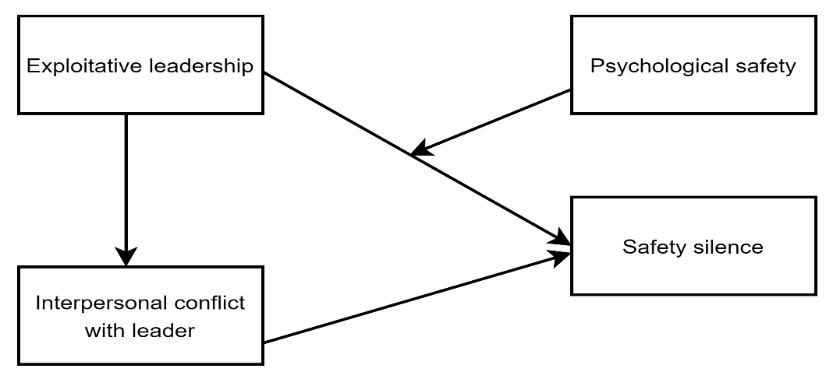
2.1.2 Exploitative leadership and safety silence.
Exploitative leaders often place excessive demands on employees, appropriate credit for their efforts, manipulate work relationships for personal benefit, and limit opportunities that do not serve their own interests (Lyu et al., 2023; Verdorfer & Schmid, 2024). Repeated exposure to such self-serving treatment can make employees perceive interactions with the leader as costly and potentially disadvantageous (Zhang et al., 2025). In such circumstances, employees may become more cautious about volunteering information, particularly when doing so requires them to raise problems, question existing practices, or draw attention to issues that may be unwelcome (Abdulmuhsin et al., 2021). Safety-related concerns may be especially susceptible to such withholding because communicating them can require employees to invest additional effort and expose themselves to further interpersonal demands.
This argument is consistent with Conservation of Resources theory, which holds that individuals seek to protect valued resources when those resources are threatened or depleted (Hobfoll et al., 2018). Exploitative treatment can consume employees’ emotional, psychological, and relational resources, thereby increasing their motivation to avoid further resource expenditure (Abdulmuhsin et al., 2021). From this perspective, safety silence may represent a protective response through which employees conserve remaining resources by withholding concerns that could expose them to additional demands or unfavorable treatment from the leader (Tsai, 2026). Thus, as employees experience greater exploitative leadership, they may become increasingly inclined to withhold safety-relevant information. We therefore hypothesize that:
H1: Exploitative leadership is positively associated with safety silence.
2.1.3 Exploitative leadership and interpersonal conflict with leader.
Interpersonal conflict refers to disagreement, tension, and negative affect that arise between individuals in the course of their interactions (Barki & Hartwick, 2004). When this occurs within the leader–employee relationship, it signals a deterioration in the quality of that relationship and may be expressed through friction, irritation, hostility, and recurring disagreement (Saikrishna, 2025; Usman et al., 2026). The relational nature of exploitative leadership makes such conflict particularly likely. Employees who repeatedly experience excessive demands, appropriation of their efforts, manipulation, or decisions that consistently privilege the leader’s interests may begin to view the relationship as antagonistic rather than supportive (Guo et al., 2024; Majeed et al., 2023). Such experiences can generate resentment and frustration, weaken mutual regard, and make everyday interactions with the leader increasingly contentious (Feng et al., 2022). In this sense, interpersonal conflict represents a proximal relational consequence of exploitative treatment because the employee is not merely exposed to an unfavorable leadership style, but to repeated exchanges that can undermine the quality of the dyadic relationship itself (Ye et al., 2026).
This reasoning is consistent with COR theory, which recognizes social and relational resources as important resources employees seek to preserve (Hobfoll et al., 1990). Exploitative treatment threatens these resources by weakening trust, support, and the perceived quality of the leader–employee relationship (Bajaba & Basaad, 2025). As these relational resources deteriorate, tension between the employee and the leader may intensify (Pircher Verdorfer et al., 2024). We therefore expect exploitative leadership to be associated with greater interpersonal conflict with the leader. Against this backdrop, we hypothesize that:
H2: Exploitative leadership is positively associated with interpersonal conflict with leader.
2.1.4 Interpersonal conflict with leader and safety silence.
COR theory suggests that employees become protective of their remaining resources when workplace interactions are persistently demanding or draining (Hobfoll et al., 2018). Interpersonal conflict with the leader represents such a condition because recurring tension, hostility, and disagreement can consume emotional energy, and attention (Kundi et al., 2023). When these interactions become costly, employees may seek to reduce further exposure to situations that could intensify the strain (Somaraju et al., 2022).
One way of doing so is through safety silence. Employees who anticipate that communicating a safety concern will prolong disagreement or trigger another difficult interaction with the leader may choose to withhold the information altogether (Hubbart, 2024). Silence, in this context, becomes a form of interpersonal avoidance that allows employees to minimize additional strain and preserve depleted resources (Wang et al., 2022). Thus, the consequences of leader-directed conflict may extend beyond relationship quality to the suppression of safety-relevant information.
H3: Interpersonal conflict is positively associated with safety silence.
2.1.5 Mediating role of interpersonal conflict with leader.
The consequences of exploitative leadership may extend beyond employees’ immediate reactions to self-serving leader behavior (Lyu et al., 2023). Because leadership unfolds through repeated interactions, exploitative treatment can gradually alter the nature of the relationship employees have with their leaders. What begins as exposure to self-interested leadership may consequently develop into a more adversarial relational environment characterized by tension and strained exchanges (Guo et al., 2024; Usman et al., 2026). Interpersonal conflict with the leader therefore represents a proximal relational pathway through which exploitative leadership can shape employees’ subsequent workplace responses.
This relational pathway is particularly relevant to safety silence. Rather than viewing employees’ withholding of safety information solely as a direct reaction to exploitative treatment, we suggest that the deterioration of the leader–employee relationship helps transmit this effect. As exploitative behavior gives rise to conflictual interactions (Verdorfer & Schmid, 2024), employees may become increasingly inclined to disengage from communication with the leader and withhold safety-related information that could require further interaction. In this way, interpersonal conflict provides the link between the leadership experience and the employee’s decision to remain silent about safety concerns. Viewed through the lens of COR theory, relational strain generated by exploitative leadership may intensify resource pressures and encourage employees to limit further resource-demanding interactions. (Elahi et al., 2024; Zhao et al., 2025). We therefore hypothesize that:
H4: Interpersonal conflict with leader mediates the positive relationship between exploitative leadership and safety silence.
2.1.6 Moderating role of psychological safety.
Interpersonal conflict with the leader may not invariably result in safety silence because employees differ in the extent to which they perceive it as safe to express concerns in the workplace. Where the leader–employee relationship is strained, raising safety-related issues may be perceived as carrying additional interpersonal risk (Ye et al., 2026). Psychological safety becomes particularly relevant in such circumstances because it can reduce employees’ apprehension about the consequences of communicating concerns, even when the relationship with the leader is conflictual (Huerta et al., 2024; Joo et al., 2023).
Accordingly, psychological safety may weaken the extent to which interpersonal conflict translates into safety silence. Employees who perceive greater psychological safety may be less inclined to respond to conflict by withholding safety-relevant information, because the perceived costs associated with speaking up are comparatively lower (Sert & Mert, 2026). From a COR perspective, psychological safety can also function as a protective resource that reduces the need to conserve resources through silence (Aslam et al., 2026; Kassandrinou et al., 2023). Evidence from mining research further supports the role of psychological safety as a meaningful moderator of employee safety-related outcomes (Quansah et al., 2023). We therefore hypothesize that:
H5: Psychological safety moderates the relationship between interpersonal conflict with leader and safety silence, such that the positive relationship is weaker when psychological safety climate is high.
3. Methodology
3.1 Population and procedure
The study population comprised employees working in Ghana’s mining industry. Data were collected from employees of selected mining companies located in the Western, Ashanti, and Ahafo Regions, three important mining areas in Ghana with substantial large-scale gold-mining activity. These regions were considered appropriate for the study because of the concentration of mining operations and the safety-sensitive nature of work performed within the sector. Official industry records identify major producing mines across these locations, including operations in Tarkwa, Obuasi, and Ahafo (Ghana Chamber of Mines, 2025).
A three-wave survey design was adopted to create temporal separation among the focal variables and reduce potential common method bias. Participation was voluntary, and respondents were assured that the information provided would be used strictly for academic purposes and treated confidentially. To enable responses to be matched across the different survey waves while preserving anonymity, respondents were assigned unique identification codes. At Time 1, respondents provided demographic information and assessed the exploitative leadership behaviors of their immediate supervisors as well as their perceptions of psychological safety. At Time 2, the same employees assessed interpersonal conflict with their immediate leaders. At Time 3, respondents reported their safety silence. A time interval of three weeks was maintained between successive waves of data collection.
Overall, 600 questionnaires were distributed across the participating mining organizations. After matching responses across the survey waves and removing questionnaires with substantial missing information or unmatched responses, 450 valid questionnaires were retained for the final analysis. This represents an effective response rate of 75%. Participation was restricted to employees who had worked with their current immediate supervisor for a sufficient period to provide informed assessments of the supervisor’s behavior and their relationship with that supervisor.
For the final sample, 68.2% of respondents were male and 31.8% were female. Regarding age, 6.7% were between 18 and 25 years, 33.6% were between 26 and 35 years, 33.1% were between 36 and 45 years, 19.3% were between 46 and 55 years, and 7.3% were aged 56 years and above. In terms of education, 8.9% had senior high school or equivalent qualifications, 16.7% held diploma certificates, 54.2% had bachelor’s degrees, 17.3% held master’s degrees, and 2.9% had doctoral degrees. Regarding marital status, 35.6% were single, 57.1% were married, 4.9% were divorced or separated, and 2.4% were widowed. With respect to organizational tenure, 9.1% had worked in their current organization for less than one year, 26.9% had between one and three years of service, 32.2% had worked for four to six years, 20.2% had between seven and ten years of tenure, and 11.6% had worked in the organization for more than ten years.
3.2 Measures
All constructs adapted from prior studies were measured using a five-point Likert scale ranging from 1 = strongly disagree to 5 = strongly agree. The survey instrument was developed from established measures in prior research, with minor contextual adjustments made to ensure their suitability for employees in the mining industry. Before the main data collection, the questionnaire was subjected to preliminary evaluation. A panel of researchers and practitioners familiar with workplace safety, leadership, and mining operations examined the instrument for clarity, relevance, and appropriateness to the study setting. Their feedback was used to refine the wording of selected items and improve the overall structure of the questionnaire. The revised instrument was then pretested with a small group of mining employees who were not included in the final sample. This exercise helped identify statements that could be misunderstood or interpreted ambiguously, leading to further minor revisions prior to the main survey. The questionnaire was administered in English, consistent with the language commonly used for formal workplace communication and documentation within Ghanaian mining industry.
Exploitative leadership (Time 1). Exploitative leadership was measured using the 15-item scale developed by Schmid et al. (2019). The scale captures leaders’ self-serving and exploitative treatment of employees. An item such as “My leader uses my work for his or her personal benefit” was included.
Psychological safety (Time 1). Psychological safety was assessed using the seven-item scale developed by Edmondson (1999). The scale captures employees’ perceptions of whether interpersonal risk-taking is safe within the workplace. An item such as “People can bring up problems and tough issues in this company” was included.
Interpersonal conflict with the leader (Time 2). Interpersonal conflict with the leader was measured using the four-item Interpersonal Conflict at Work Scale developed by Spector & Jex, (1998) with the items framed around interactions with the immediate leader. Unlike the other constructs, which were rated from 1 = strongly disagree to 5 = strongly agree, interpersonal conflict was assessed using a frequency scale ranging from 1 = never to 5 = very often. A sample item is, “How often do you get into arguments with your leader at work?”
Safety silence (Time 3). Safety silence was measured using the five-item employee silence scale developed by Tangirala & Ramanujam (2008). The items capture employees’ withholding of concerns and information relating to workplace safety. An item such as “I remain silent when I have concerns about safety at work” was included.
Control variables. Gender, age, and education were included as control variables. These variables were measured at Time 1 and controlled for in the analysis to account for possible demographic differences in employees’ safety-related communication behavior.
3.3 Analytical technique
Data were analyzed using partial least squares structural equation modeling (PLS-SEM). PLS-SEM was considered appropriate because the study examines a relatively complex model involving mediation and moderation and places emphasis on explaining and predicting relationships among the focal constructs (Hair et al., 2020; Sarstedt et al., 2022). The analysis followed a two-stage procedure. First, the measurement model was evaluated to establish the adequacy of the study constructs. Second, the structural model was assessed to examine the hypothesized and exploratory pathways. Statistical significance was determined through bootstrapping with 5,000 resamples, as recommended for PLS-SEM estimation (Hair et al., 2020).
4. Results
4.1 Measurement model
The measurement properties of the constructs were evaluated using standardized factor loadings, Cronbach’s alpha, composite reliability, and average variance extracted and validity (see Table 1). The standardized factor loadings ranged from 0.735 to 0.897, with all indicators exceeding the recommended minimum of 0.70, indicating satisfactory indicator reliability. Internal consistency was also supported, with Cronbach’s alpha values ranging from 0.863 to 0.961 and composite reliability values ranging from 0.906 to 0.965 (Hair et al., 2020). These values were above the recommended threshold of 0.70, demonstrating strong reliability across the constructs. Convergent validity was established through the average variance extracted, which ranged from 0.649 to 0.720. Since all AVE values exceeded 0.50, the constructs demonstrated adequate convergence of their respective indicators (Fornell & Larcker, 1981).
Table 1 Model assessment
| Constructs and indicators | Factor loadings (λ) | Cronbach’s α | Composite Reliability (CR) | AVE | VIF |
| Exploitative leadership | 0.961 | 0.965 | 0.649 | ||
| EXPL1 | 0.810 | 2.265 | |||
| EXPL2 | 0.785 | 2.475 | |||
| EXPL3 | 0.854 | 3.122 | |||
| EXPL4 | 0.783 | 2.452 | |||
| EXPL5 | 0.757 | 2.194 | |||
| EXPL6 | 0.805 | 2.580 | |||
| EXPL7 | 0.790 | 2.441 | |||
| EXPL8 | 0.820 | 2.774 | |||
| EXPL9 | 0.735 | 2.400 | |||
| EXPL10 | 0.768 | 2.400 | |||
| EXPL11 | 0.784 | 2.380 | |||
| EXPL12 | 0.781 | 2.001 | |||
| EXPL13 | 0.881 | 2.911 | |||
| EXPL14 | 0.876 | 2.112 | |||
| EXPL15 | 0.835 | 2.232 | |||
| Psychological safety | 0.916 | 0.933 | 0.665 | ||
| PSO1 | 0.861 | 2.655 | |||
| PSO2 | 0.771 | 2.014 | |||
| PSO3 | 0.888 | 2.929 | |||
| PSO4 | 0.853 | 2.656 | |||
| PSO5 | 0.767 | 1.985 | |||
| PSO6 | 0.795 | 2.161 | |||
| PSO7 | 0.764 | 1.988 | |||
| Interpersonal conflict with leader | 0.863 | 0.906 | 0.707 | ||
| ITCL1 | 0.824 | 1.987 | |||
| ITCL2 | 0.896 | 2.313 | |||
| ITCL3 | 0.839 | 2.046 | |||
| ITCL4 | 0.800 | 1.892 | |||
| Safety silence | 0.904 | 0.928 | 0.720 | ||
| SFS1 | 0.878 | 2.676 | |||
| SFS2 | 0.789 | 2.058 | |||
| SFS3 | 0.775 | 1.978 | |||
| SFS4 | 0.897 | 2.865 | |||
| SFS5 | 0.894 | 2.830 |
Discriminant validity was assessed using the Fornell–Larcker criterion and the heterotrait–monotrait ratio (HTMT). As reported in Table 2, the square root of the AVE for each construct was greater than its correlations with the other constructs, satisfying the suggested threshold (Fornell & Larcker, 1981). The HTMT values ranged from 0.329 to 0.666, with all values remaining below the recommended threshold of 0.85 (Henseler et al., 2015). These results indicate that the constructs were empirically distinct from one another and provide adequate evidence of discriminant validity.
| Constructs | EXPL | PSO | ITCL | SFS |
| Fornell-Lacker Criterion | ||||
| EXPL | 0.806 | |||
| PSO | 0.309 | 0.815 | ||
| ITCL | 0.597 | 0.340 | 0.841 | |
| SFS | 0.546 | 0.400 | 0.588 | 0.849 |
| HTMT Criterion | ||||
| EXPL | ||||
| PSO | 0.329 | |||
| ITCL | 0.652 | 0.382 | ||
| SFS | 0.585 | 0.439 | 0.666 |
Note. EXPL: Exploitative leadership; PSO: Psychological ownership; ITCL: Interpersonal conflict with leader; SFS: Safety silence. AVE square root values are bolded
4.1.1 Multicollinearity and bias
Three approaches were used to minimize and assess the potential influence of common method bias (CMB). First, the study adopted a three-wave design in which the focal variables were measured at different points in time, while participant anonymity was also assured. This temporal separation helped reduce the possibility that the observed relationships were driven by common method effects. Again, Harman’s single-factor test was conducted by entering all measurement items into an exploratory factor analysis. The first unrotated factor accounted for 32.89% of the total variance, which was below the 50% threshold commonly used to indicate substantial common method variance (Podsakoff et al., 2003).
Third, variance inflation factor (VIF) values were examined to assess potential multicollinearity among the study variables. VIF can also provide an additional indication of common method bias, with Kock (2017) suggesting that values below 3.3 indicate that CMB is unlikely to be a serious concern. The results showed that the relevant VIF values remained below the recommended threshold, providing further evidence that common method bias was not a significant issue in the study (see Table 1).
4.2 Hypothesis testing
Before testing the hypothesized relationships, the structural model was examined in terms of model fit, explanatory power, predictive relevance, and effect size. The model demonstrated a good overall fit, with χ²/df = 1.086, CFI = 0.996, TLI = 0.996, RMSEA = 0.014, and SRMR = 0.029, indicating that the specified model adequately represented the observed data. The explanatory power of the model was assessed using the coefficient of determination (R²). The model explained 36.7% of the variance in interpersonal conflict with the leader (ITCL) and 47.2% of the variance in safety silence (SFS). These results indicate that the predictors accounted for a meaningful proportion of variance in both endogenous constructs. Predictive relevance was further assessed using Q² values. The Q² values were 0.351 for ITCL and 0.454 for SFS. Since both values were above zero, the model demonstrated satisfactory predictive relevance for the endogenous constructs (Geisser, 1975).
Finally, effect sizes were evaluated using f² (Cohen, 1988). The effect of exploitative leadership on interpersonal conflict with the leader was (f² =0.555), indicating a large effect. The effects of exploitative leadership on safety silence (f² = 0.089), psychological safety on safety silence (f² = 0.069), and the interaction between interpersonal conflict and psychological safety (f² = 0.051) were small, while the effect of interpersonal conflict with the leader on safety silence (f² = 0.148) approached a medium effect. These results show that exploitative leadership had its strongest contribution to interpersonal conflict, while the remaining predictors made smaller but meaningful contributions to explaining safety silence.
The structural model results provided support for all five hypotheses. As shown in Table 3, Exploitative leadership had a positive and significant effect on safety silence (β = 0.548, t = 15.348, p < .001), supporting H1. Exploitative leadership also had a positive and significant effect on interpersonal conflict with the leader (β = 0.593, t = 17.608, p < .001), providing support for H2. In addition, interpersonal conflict with the leader was positively associated with safety silence (β = 0.360, t = 7.720, p < .001), supporting H3. The mediation analysis further showed that the indirect effect of exploitative leadership on safety silence through interpersonal conflict with the leader was positive and significant (β = 0.214, t = 6.973, p < .001, 95% CI [0.155, 0.275]). Since the confidence interval did not include zero, H4 was supported. The direct effect of exploitative leadership on safety silence also remained significant (β = 0.272, t = 6.086, p < .001), indicating partial mediation.
Finally, the interaction between interpersonal conflict with the leader and psychological safety was negative and significant (β = -0.166, t = -5.135, p < .001). This result indicates that psychological safety weakens the positive relationship between interpersonal conflict with the leader and safety silence, thereby supporting H5.
| Hypothesis | Relationship | Path (β) | T- statistics | P-value | Remarks |
| Direct effects | |||||
| H1 | EXPL → SFS | 0.548 | 15.348 | <.001 | Supported |
| H2 | EXPL → ITCL | 0.593 | 17.608 | <.001 | Supported |
| H2 | ITCL→ SFS | 0.360 | 7.720 | <.001 | Supported |
| Indirect effect | |||||
| H4 | EXPL→ITCL→SFS | 0.214 | 6.973 | <.001 | Supported |
| Moderating effect | |||||
| H5 | ITCL x POS→ SFS | -0.166 | -5.135 | <.001 | Supported |
Note. EXPL: Exploitative leadership; PSO: Psychological ownership; ITCL: Interpersonal conflict with leader; SFS: Safety silence. Significant at T-statistics >1.96; ***p<0.001
5. Discussion
The findings indicate that exploitative leadership is associated with greater safety silence among mining employees. This suggests that the consequences of exploitative leadership extend into the safety domain, where employees may become less willing to communicate information that could help identify or prevent workplace hazards. This complements prior research showing that exploitative leadership can suppress constructive employee behavior and safety-related communication (Lyu et al., 2023; Verdorfer & Schmid, 2024; Ye et al., 2026). Importantly, the result points to safety silence as a distinct behavioral consequence of destructive leadership rather than merely the absence of safety voice.
The results further show that exploitative leadership is strongly related to interpersonal conflict with the leader, while such conflict is itself associated with greater safety silence. Together, these findings highlight the importance of the relational consequences of exploitative leadership. Self-serving leader behavior appears capable of damaging the quality of leader–employee interactions, creating a context in which communication becomes increasingly difficult. This is consistent with research linking exploitative leadership with relational strain and interpersonal conflict (Guo et al., 2024; Majeed et al., 2023; Ye et al., 2026). The association between conflict and silence is especially consequential in mining because strained supervisory relationships may affect whether safety-relevant information reaches those in a position to respond to it.
The mediation result provides a more nuanced explanation of this process. Interpersonal conflict accounted for part, but not all, of the relationship between exploitative leadership and safety silence. This suggests that exploitative leadership can foster silence through deterioration in the employee–leader relationship, while additional mechanisms may also be involved. The persistence of the direct effect is therefore theoretically informative because it indicates that interpersonal conflict represents an important relational pathway rather than a complete explanation of why employees withhold safety information.
Psychological safety also emerged as an important boundary condition. The association between interpersonal conflict and safety silence was weaker among employees reporting higher psychological safety. This suggests that conflict with a leader does not necessarily translate into the same level of withholding across employees. Even where the supervisory relationship is strained, perceptions that concerns can be expressed without severe interpersonal consequences appear to reduce the tendency toward silence. This finding is consistent with research emphasizing psychological safety as an important condition for employee communication and safety-related behavior(Huerta et al., 2024; Joo et al., 2023; Quansah et al., 2023).
6. Conclusion
Given the safety-critical nature of mining, understanding why employees withhold safety-related information is essential for preventing hazards from escalating into serious incidents. Through the lens of COR theory, this study found that exploitative leadership increases both safety silence and interpersonal conflict with the leader, while interpersonal conflict further contributes to employees’ tendency to remain silent about safety concerns. The findings also show that interpersonal conflict partially explains how exploitative leadership translates into safety silence, indicating that exploitative leadership operates through both direct and relational pathways. Importantly, psychological safety weakens the positive relationship between interpersonal conflict and safety silence, suggesting that employees who perceive greater interpersonal safety are less likely to respond to conflict by withholding safety information. Taken together, these findings deepen understanding of how destructive leadership, relational strain, and psychological safety jointly shape safety communication in the mining context and provide a basis for further research in other safety-critical work environments.
6.1. Theoretical implications
This study offers several theoretical contributions. First, it extends exploitative leadership research by directing attention to safety silence as a distinct form of employee withholding. Much of the existing work on destructive leadership and safety communication has focused on whether employees speak up less, particularly through safety voice. However, reduced voice and deliberate silence are not conceptually identical. By positioning safety silence as an outcome in its own right, the study broadens understanding of how exploitative leadership can influence employee communication and highlights the need to distinguish between the absence of expression and the intentional withholding of safety-relevant information.
Second, the study advances understanding of the relational processes through which exploitative leadership operates. Rather than treating exploitative leadership as having only a direct behavioral consequence, the model places interpersonal conflict with the leader at the center of the explanatory process. This shifts attention from the leader’s behavior alone to what that behavior does to the dyadic relationship. In this sense, the study complements emerging work linking exploitative leadership with interpersonal conflict (e.g., Ye et al., 2026) by showing the theoretical importance of relational deterioration for understanding subsequent employee communication behavior.
Third, the study extends the application of COR theory to destructive leadership and safety communication. COR theory is often used to explain employee reactions to resource loss or depletion (Hobfoll et al., 2018). The present model develops this logic further by showing how resource threats may unfold through a relational sequence. Exploitative treatment can undermine valued social and relational resources, deteriorated relationships can create additional interpersonal demands, and employees may consequently adopt behaviors aimed at limiting further exposure (Bajaba & Basaad, 2025; Pircher Verdorfer et al., 2024). This interpretation positions safety silence as part of a broader resource-preservation process rather than merely as a passive communication failure.
Finally, the study introduces a contingency perspective by incorporating psychological safety as a boundary condition. This is theoretically important because it challenges any assumption that adverse leader–employee relationships will inevitably produce the same behavioral response. Psychological safety changes the interpersonal context in which conflict is experienced and interpreted, making it possible to understand why employees facing similar levels of relational strain may respond differently. In doing so, the study connects COR theory with psychological safety research (Edmondson, 1999) and suggests that the availability of psychologically safe conditions can shape whether resource-threatening interpersonal experiences translate into defensive withholding. This adds greater precision to explanations of employee silence by specifying not only the mechanism through which it may arise, but also the conditions under which that mechanism is more or less consequential.
6.2 Practical implications
The findings provide important guidance for mining organizations seeking to strengthen safety communication. First, management’s attention should extend beyond technical safety systems to the conduct of supervisors, since exploitative leadership can discourage employees from sharing safety-relevant information. Leadership selection, appraisal, and development should therefore include clear expectations regarding respectful treatment, fair use of employee effort, and responsible supervisory conduct. Organizations should also establish mechanisms through which employees can report problematic supervisory behavior without having to rely solely on the leader involved.
Again, organizations should treat interpersonal conflict between employees and supervisors as a potential safety concern rather than merely a relationship issue. Persistent tension with a leader may restrict the flow of information needed to identify and address hazards. Conflict-management training, accessible grievance procedures, and early intervention mechanisms can help prevent such relational problems from undermining safety communication.
Furthermore, greater attention should be given to strengthening psychological safety. Employees should feel able to raise hazards, question unsafe practices, and discuss difficult safety issues without fear of embarrassment, retaliation, or negative treatment. This requires supervisors to respond constructively to concerns and organizations to provide credible reporting channels, including alternatives where employees are uncomfortable approaching their immediate leader directly.
6.3 Limitations and future research
Despite its contributions, this study has several limitations that warrant future attention. First, although the three-wave design provided temporal separation among the study variables, all data were obtained from employees. Relying on a single source may introduce common source bias and limits the extent to which the findings capture both sides of the leader–employee relationship. Future research could adopt a dyadic design by collecting data from both employees and their immediate leaders. Such an approach would provide multiple perspectives on leadership behavior, interpersonal relationships, and safety-related responses, thereby offering a more comprehensive assessment of the proposed relationships.
Second, the study was conducted among mining employees in the Western, Ashanti, and Ahafo Regions of Ghana. Although these regions represent important mining areas, the findings may not be fully generalizable to employees in other geographical settings, national contexts, or safety-critical industries where leadership practices and safety communication norms may differ. Replication across different mining environments and industries would help establish the broader applicability of the proposed model.
Third, safety silence was measured using an established employee silence scale whose items were contextualized to workplace safety. Although the measure demonstrated acceptable properties within the measurement model, future research could undertake more extensive validation of safety silence as a distinct construct across different occupational settings. Psychological safety was also examined at the individual level. Future studies could explore whether team-level psychological safety produces comparable or additional effects.
References
- Abdulmuhsin, A. A., Zaker, R. A., & Asad, M. M. (2021). How exploitative leadership influences on knowledge management processes: the moderating role of organisational citizenship behaviour. International Journal of Organizational Analysis, 29(3), 529–561. DOI ↗ Google Scholar ↗
- Ansori, N., & Widyanti, A. (2021). The Role of Safety Silence Motives to Safety Communication and Safety Participation in Different Sectors of Small and Medium Enterprises Investigation Results on Two Kinds of Industries in Indonesia. Safety and Health at Work, 12(2), 192–200. DOI ↗ Google Scholar ↗
- Aslam, M. Y., Jaffery, H., & Zafar, H. A. (2026). Breaking the Silence: The Effects of Psychological Burnout and Psychological Safety on Employee Voice with the Moderating Role of Resilience. The Critical Review of Social Sciences Studies, 4(1), 1777–1790. DOI ↗ Google Scholar ↗
- Bajaba, S., & Basaad, S. (2025). Safeguarding Well‐Being Under Exploitative Leaders: The Buffering Effects of Follower Strategies on Perceived Injustice. Stress and Health, 41(6), e70127. DOI ↗ Google Scholar ↗
- Barki, H., & Hartwick, J. (2004). Conceptualizing the construct of interpersonal conflict. International Journal of Conflict Management, 15(3), 216–244. DOI ↗ Google Scholar ↗
- Bazzoli, A., & Curcuruto, M. (2021). Safety leadership and safety voices: exploring the mediation role of proactive motivations. Journal of Risk Research, 24(11), 1368–1387. DOI ↗ Google Scholar ↗
- Cohen, J. (1988). Statistical power analysis for the behavioral sciences. routledge. DOI ↗ Google Scholar ↗
- Cui, L., & Mo, J. (2025). How does supportive leadership impact the safety behaviors of the new generation of construction workers? Behavioral Sciences, 15(2), 110. DOI ↗ Google Scholar ↗
- Edmondson, A. (1999). Psychological safety and learning behavior in work teams. Administrative Science Quarterly, 44(2), 350–383. DOI ↗ Google Scholar ↗
- Elahi, N. S., Bajwa, S. U., Rasheed, M. A., & Nisar, Q. A. (2024). Interplay between exploitative leadership, knowledge hoarding, core self-evaluation, and psychological capital. Current Psychology, 43(23), 20790–20804. DOI ↗ Google Scholar ↗
- Feng, Y., Ayub, A., Fatima, T., Irfan, S., & Sarmad, M. (2022). I cannot be creative due to my exploitative leader! A moderated mediation interplay of leader–member exchange quality and knowledge hiding. Journal of Organizational Change Management, 35(3), 558–579. DOI ↗ Google Scholar ↗
- Fornell, C., & Larcker, D. F. (1981). Evaluating structural equation models with unobservable variables and measurement error. Journal of Marketing Research, 18(1), 39–50. DOI ↗ Google Scholar ↗
- Geisser, S. (1975). The predictive sample reuse method with applications. Journal of the American Statistical Association, 70(350), 320–328. DOI ↗ Google Scholar ↗
- Ghana Chamber of Mines. (2025). Performance of the Mining Industry in 2023. DOI ↗ Google Scholar ↗
- Ghasemi, F., Mahdinia, M., & Doosti-Irani, A. (2025). Safety-specific transformational leadership and safety outcomes at workplaces: a scoping review study. BMC Public Health, 25(1), 2723. DOI ↗ Google Scholar ↗
- Guo, L., Luo, J., & Cheng, K. (2024). Exploitative leadership and counterproductive work behavior: a discrete emotions approach. Personnel Review, 53(2), 353–374. DOI ↗ Google Scholar ↗
- Haas, E. J., Demich, B., & McGuire, J. (2020). Learning from workers’ near-miss reports to improve organizational management. Mining, Metallurgy & Exploration, 37(3), 873–885. DOI ↗ Google Scholar ↗
- Hair Jr, J. F., Howard, M. C., & Nitzl, C. (2020). Assessing measurement model quality in PLS-SEM using confirmatory composite analysis. Journal of Business Research, 109, 101–110. DOI ↗ Google Scholar ↗
- Halbesleben, J. R. B., Neveu, J.-P., Paustian-Underdahl, S. C., & Westman, M. (2014). Getting to the “COR” understanding the role of resources in conservation of resources theory. Journal of Management, 40(5), 1334–1364. DOI ↗ Google Scholar ↗
- Henseler, J., Ringle, C. M., & Sarstedt, M. (2015). A new criterion for assessing discriminant validity in variance-based structural equation modeling. Journal of the Academy of Marketing Science, 43(1), 115–135. DOI ↗ Google Scholar ↗
- Hobfoll, S. E. (1989). Conservation of resources: A new attempt at conceptualizing stress. American Psychologist, 44(3), 513. DOI ↗ Google Scholar ↗
- Hobfoll, S. E. (2011). Conservation of resources theory: Its implication for stress, health, and resilience. The Oxford Handbook of Stress, Health, and Coping, 127, 147. DOI ↗ Google Scholar ↗
- Hobfoll, S. E., Freedy, J., Lane, C., & Geller, P. (1990). Conservation of social resources: Social support resource theory. Journal of Social and Personal Relationships, 7(4), 465–478. DOI ↗ Google Scholar ↗
- Hobfoll, S. E., Halbesleben, J., Neveu, J.-P., & Westman, M. (2018). Conservation of resources in the organizational context: The reality of resources and their consequences. Annual Review of Organizational Psychology and Organizational Behavior, 5, 103–128. DOI ↗ Google Scholar ↗
- Hobfoll, S. E., Tirone, V., Holmgreen, L., & Gerhart, J. (2016). Conservation of resources theory applied to major stress. In Stress: Concepts, cognition, emotion, and behavior (pp. 65–71). Elsevier. DOI ↗ Google Scholar ↗
- Huang, X., Wilkinson, A., & Barry, M. (2024). The role of contextual voice efficacy on employee voice and silence. Human Resource Management Journal, 34(4), 960–974. DOI ↗ Google Scholar ↗
- Hubbart, J. A. (2024). Understanding and mitigating leadership fear-based behaviors on employee and organizational success. Administrative Sciences, 14(9), 225. DOI ↗ Google Scholar ↗
- Huerta, M. V., Sajadi, S., Schibelius, L., Ryan, O. J., & Fisher, M. (2024). An exploration of psychological safety and conflict in first‐year engineering student teams. Journal of Engineering Education, 113(3), 635–666. DOI ↗ Google Scholar ↗
- Joe-Asare, T., Stemn, E., & Amegbey, N. (2023). Causal and contributing factors of accidents in the Ghanaian mining industry. Safety Science, 159, 106036. DOI ↗ Google Scholar ↗
- Joo, B.-K., Yoon, S. K., & Galbraith, D. (2023). The effects of organizational trust and empowering leadership on group conflict: psychological safety as a mediator. Organization Management Journal, 20(1), 4–16. DOI ↗ Google Scholar ↗
- Kassandrinou, M., Lainidi, O., Mouratidis, C., & Montgomery, A. (2023). Employee silence, job burnout and job engagement among teachers: the mediational role of psychological safety. Health Psychology and Behavioral Medicine, 11(1), 2213302. DOI ↗ Google Scholar ↗
- Kundi, Y. M., Badar, K., Sarfraz, M., & Ashraf, N. (2023). Interpersonal conflict as a barrier to task performance: the mediating role of workplace deviance and the moderating role of emotional intelligence. International Journal of Conflict Management, 34(1), 104–124. DOI ↗ Google Scholar ↗
- Lyu, Y., Wu, L.-Z., Ye, Y., Kwan, H. K., & Chen, Y. (2023). Rebellion under exploitation: How and when exploitative leadership evokes employees’ workplace deviance. Journal of Business Ethics, 185(3), 483–498. DOI ↗ Google Scholar ↗
- Majeed, M., Fatima, T., & Irshad, M. (2023). A wolf in sheep’s clothing: The perils of exploitative leadership. European Journal of Social Psychology, 53(6), 1216–1230. DOI ↗ Google Scholar ↗
- Manapragada, A., & Bruk-lee, V. (2016). Staying silent about safety issues : Conceptualizing and measuring safety silence motives. Accident Analysis and Prevention, 91, 144–156. DOI ↗ Google Scholar ↗
- Mathisen, G. E., & Tjora, T. (2023). Safety voice climate: A psychometric evaluation and validation. Journal of Safety Research, 86, 174–184. DOI ↗ Google Scholar ↗
- Mullen, J., Fiset, J., & Rhéaume, A. (2018). Destructive forms of leadership: The effects of abusive supervision and incivility on employee health and safety. Leadership & Organization Development Journal, 39(8), 946–961. DOI ↗ Google Scholar ↗
- Naji, G. M. A., Isha, A. S. N., Alazzani, A., Brough, P., Saleem, M. S., Mohyaldinn, M. E., & Alzoraiki, M. (2022). Do leadership, organizational communication, and work environment impact employees’ psychosocial hazards in the oil and gas industry? International Journal of Environmental Research and Public Health, 19(8), 4432. DOI ↗ Google Scholar ↗
- Obasi, I. C., & Benson, C. (2025). The impact of digitalization and information and communication technology on the nature and organization of work and the emerging challenges for occupational safety and health. International Journal of Environmental Research and Public Health, 22(3), 362. DOI ↗ Google Scholar ↗
- Pircher Verdorfer, A., Belschak, F., & Bobbio, A. (2024). Felt or thought: Distinct mechanisms underlying exploitative leadership and abusive supervision. Journal of Business Ethics, 192(2), 363–383. DOI ↗ Google Scholar ↗
- Quansah, P. E., Zhu, Y., & Guo, M. (2023). Assessing the effects of safety leadership , employee engagement , and psychological safety on safety performance. Journal of Safety Research, 86, 226–244. DOI ↗ Google Scholar ↗
- Ruben, B. D., & Gigliotti, R. A. (2016). Leadership as social influence: An expanded view of leadership communication theory and practice. Journal of Leadership & Organizational Studies, 23(4), 467–479. DOI ↗ Google Scholar ↗
- Saikrishna, M. B. (2025). Managing interpersonal workplace conflict: a configurational approach. International Journal of Conflict Management, 36(5), 943–972. DOI ↗ Google Scholar ↗
- Sarstedt, M., Hair, J. F., Pick, M., Liengaard, B. D., Radomir, L., & Ringle, C. M. (2022). Progress in partial least squares structural equation modeling use in marketing research in the last decade. Psychology & Marketing, 39(5), 1035–1064. DOI ↗ Google Scholar ↗
- Schmid, E. A., Pircher Verdorfer, A., & Peus, C. (2019). Shedding light on leaders’ self-interest: Theory and measurement of exploitative leadership. Journal of Management, 45(4), 1401–1433. DOI ↗ Google Scholar ↗
- Sert, Ö., & Mert, İ. S. (2026). Silent Weak Signals in Port Operations: Ethical Leadership, Psychological Safety and Reporting Climate in Safety‐Critical Terminals. Journal of Contingencies and Crisis Management, 34(3), e70207. DOI ↗ Google Scholar ↗
- Somaraju, A. V, Griffin, D. J., Olenick, J., Chang, C.-H. D., & Kozlowski, S. W. J. (2022). The dynamic nature of interpersonal conflict and psychological strain in extreme work settings. Journal of Occupational Health Psychology, 27(1), 53. DOI ↗ Google Scholar ↗
- Spector, P. E., & Jex, S. M. (1998). Development of four self-report measures of job stressors and strain: interpersonal conflict at work scale, organizational constraints scale, quantitative workload inventory, and physical symptoms inventory. Journal of Occupational Health Psychology, 3(4), 356. DOI ↗ Google Scholar ↗
- Tangirala, S., & Ramanujam, R. (2008). Employee silence on critical work issues: The cross level effects of procedural justice climate. Personnel Psychology, 61(1), 37–68. DOI ↗ Google Scholar ↗
- Tsai, H.-Y. (2026). The Relationship Between Exploitative Leadership on Contextual Performance and Silence Behavior: The Mediating Role of Organizational Frustration and Moderating Role of Stressor Appraisals. Human Performance, 39(3), 171–188. DOI ↗ Google Scholar ↗
- Usman, M., Cheng, J., Ghani, U., Dar, N., & Sun, X. (2026). From frustration to workplace conflict: examining supervisor job demands, downward bullying and the role of personality and power dynamics. International Journal of Conflict Management, 37(3), 527–552. DOI ↗ Google Scholar ↗
- Verdorfer, A. P., & Schmid, E. (2024). At the cost of others: The concept of exploitative leadership. In Research handbook on destructive leadership (pp. 115–131). Edward Elgar Publishing. DOI ↗ Google Scholar ↗
- Wang, X., Guo, Y., & Duan, J. (2022). When does commitment backfire: Linking employee continuance commitment to silence behavior. European Review of Applied Psychology, 72(6), 100797. DOI ↗ Google Scholar ↗
- Wang, Z., Ren, S., Chadee, D., & Chen, Y. (2024). Employee ethical silence under exploitative leadership: The roles of work meaningfulness and moral potency. Journal of Business Ethics, 190(1), 59–76. DOI ↗ Google Scholar ↗
- Yang, L., Birhane, G. E., Zhu, J., & Geng, J. (2021). Mining employees safety and the application of information technology in coal mining. Frontiers in Public Health, 9, 709987. DOI ↗ Google Scholar ↗
- Ye, C., He, B., & Sun, X. (2022). Subordinates’ negative workplace gossip leads to supervisor abuse: based on the conservation of resources theory. Chinese Management Studies, 16(2), 315–333. DOI ↗ Google Scholar ↗
- Ye, X., Jiang, J., Wang, Z., & Cai, S. (2026). The impact of exploitative leadership on safety voice : A moderated mediation model. Safety Science, 194(September 2025), 107043. DOI ↗ Google Scholar ↗
- Zhang, K., Chen, C., Zha, N., Xu, H., Wu, C., Zhang, J., Wang, Y., & Lang, H. (2026). From Stress to Safety: The Chain Mediating Role of Cognitive Reappraisal and Work Engagement in the Influence of Nurses’ Work Stress on Safety Behavior. Journal of Nursing Management, 2026(1), 7814780. DOI ↗ Google Scholar ↗
- Zhang, X., Wang, Z., Jiang, X., & Xu, F. (2025). The cost of exploitative leadership: How self-control depletion and organizational support shape employee outcomes. Frontiers in Psychology, 16, 1701529. DOI ↗ Google Scholar ↗
- Zhao, L., Bao, S., Jolly, P. M., & Su, Y. (2025). Understanding the role of exploitative leadership in inhibiting service innovative behavior: a moderated mediation model. International Journal of Contemporary Hospitality Management, 37(2), 380–398. DOI ↗ Google Scholar ↗