Abstract
This study examined the impact of project management on customer satisfaction in the telecommunication sector, using Africell Sierra Leone as a case study. The study was motivated by the need to understand how effective project management practices contribute to improved service quality, customer experience, and organizational performance in the telecommunications industry. A quantitative research approach and case study design were adopted. Data were collected using structured questionnaires administered to 50 respondents, comprising 20 Africell customers and 30 staff members. A total of 49 completed questionnaires were returned and analyzed using frequencies, percentages, tables, and charts. The study was guided by five objectives: assessing customer satisfaction, examining the influence of project management practices on service quality and customer satisfaction, evaluating the relationship between project management effectiveness and customer satisfaction, identifying challenges affecting customer-focused projects, and recommending strategies for improvement. The findings revealed that customers generally had a positive perception of Africell’s services, particularly network quality, internet services, and customer care. The study also found that effective project management practices contribute to improved service quality, project implementation, and customer satisfaction. Reliable network performance, fast internet speed, and effective service delivery were identified as important factors influencing customer satisfaction. However, poor communication, delayed decision-making, inadequate planning, and limited staff capacity were identified as key challenges affecting project implementation and customer satisfaction. The study concludes that effective project management is important for enhancing customer satisfaction and maintaining competitiveness in the telecommunications sector. It recommends strengthening project monitoring and evaluation, improving communication and staff capacity, investing in network infrastructure and modern technologies, enhancing customer feedback management systems, and ensuring adequate resource allocation to improve project performance and customer satisfaction at Africell Sierra Leone.
Keywords
Project Management Customer satisfaction Telecommunication industry Organizational performance Network quality Internet services Africell-SL
1. Introduction
In today's increasingly dynamic and competitive business environment, organizations across sectors are under constant pressure to adapt, innovate, and deliver value more efficiently. One of the most effective ways to achieve these strategic objectives is through the successful execution of projects. A project, by definition, is a temporary endeavor undertaken to create a unique product, service, or result (PMI, 2017). Project management, therefore, refers to the application of knowledge, skills, tools, and techniques to project activities to meet specific requirements (PMI, 2017).
The discipline of project management has developed considerably over time. Although project-based work has existed for centuries, modern project management emerged in the mid-twentieth century, driven by the need for structured planning, coordination, and control in complex engineering and military initiatives. Foundational methodologies such as the Program Evaluation and Review Technique (PERT) and the Critical Path Method (CPM) introduced systematic approaches to scheduling, resource allocation, and risk management (Kerzner, 2017; Meredith & Mantel, 2014). The establishment of the Project Management Institute (PMI) and the development of the PMBOK Guide further standardized practices across industries by defining core process groups and knowledge areas essential for project success.
Similarly, the UK Government's Office of Government Commerce (OGC) introduced the PRINCE methodology in the late 1980s, which later evolved into PRINCE2 (Projects in Controlled Environments). This methodology emphasized a controlled and repeatable project environment and gained widespread adoption, particularly in public sector projects (AXELOS, 2017).
Against this background, it is important to examine the role of project management in enhancing organizational performance and customer satisfaction from both global and local perspectives.
In Sierra Leone, the telecommunications sector plays a vital role in promoting economic growth, social development, and digital transformation. The sector has experienced significant expansion over the past two decades, driven by increasing mobile phone penetration, internet usage, and digital financial services. Telecommunications companies have invested in projects aimed at expanding network coverage, improving internet connectivity, introducing innovative digital products, and enhancing customer service to meet the growing expectations of subscribers.
Among the leading operators, Africell Sierra Leone has played a significant role in providing communication and mobile financial services to customers across the country. To remain competitive, the company continuously implements customer-focused projects, including network upgrades, digital platforms, mobile money services, customer service improvements, and technological innovations designed to enhance service quality and customer satisfaction.
However, the success of these initiatives depends largely on the effectiveness of project management practices. Poorly managed projects may result in implementation delays, cost overruns, service interruptions, and customer dissatisfaction, while effectively managed projects can contribute to improved service quality, efficient resource utilization, timely project delivery, and stronger customer loyalty.
Therefore, effective project management is essential for telecommunications companies such as Africell - Sierra Leone to successfully implement projects and respond to changing customer needs. Understanding the impact of project management practices on customer satisfaction is important for improving project performance, service delivery, and customer experience within Sierra Leone's telecommunications sector. The findings of this study are expected to provide useful insights for improving project management practices, service delivery, and customer satisfaction within the telecommunications sector.
1.1 Problem Statement
Despite Africell Sierra Leone's continuous investment in service innovation and customer-focused initiatives, achieving high levels of customer satisfaction remains a significant challenge. Projects such as network upgrades and mobile money enhancements are complex and require effective coordination, resource management, and timely execution.
While Africell implements various project management practices and methodologies, the extent to which these practices contribute to improved customer satisfaction is not clearly established. Project delays, service disruptions, or poor implementation can negatively affect customer perceptions and satisfaction levels.
Furthermore, there is limited empirical evidence within the Sierra Leonean context examining the relationship between project management effectiveness and customer satisfaction in the telecommunications industry. Key issues include whether effective project management contributes to higher customer satisfaction, how project outcomes influence service quality and customer retention, and which challenges affect the successful implementation of customer-focused projects.
The absence of sufficient evidence on these issues creates challenges for effective decision-making and project implementation. Without understanding how project management influences customer satisfaction, telecommunications companies may experience inefficient project execution, reduced service quality, and increased customer dissatisfaction.
This study therefore seeks to examine the impact of project management practices on customer satisfaction at Africell Sierra Leone, with the aim of identifying key factors, challenges, and strategies for improving project performance and customer satisfaction.
This study is justified by the increasing importance of customer satisfaction as a key source of competitive advantage in the telecommunications industry. As telecommunications companies continue to invest heavily in projects aimed at improving service delivery, digital innovation, and customer engagement, the success of these initiatives depends largely on effective project management practices. Understanding how project management influences customer satisfaction is therefore essential for ensuring that such investments achieve their intended outcomes.
From an organizational perspective, the study provides useful insights for Africell Sierra Leone by examining how project management practices can be improved to enhance customer satisfaction. The findings may assist the organization in aligning project implementation with customer expectations, improving service quality, and strengthening customer retention strategies.
In terms of practical relevance, the study offers context-specific recommendations that may be useful to other telecommunications companies operating in similar emerging markets. These insights can support evidence-based decision-making and help organizations improve operational efficiency, resource utilization, and service delivery through effective project management.
Furthermore, the study may contribute to capacity building within the telecommunications sector by providing information that can support project management training, professional development, and organizational improvement. It provides a basis for strengthening project management practices that can contribute to sustainable improvements in customer satisfaction and organizational performance.
1.2 Goal and Objectives
The goal of this study is to examine how project management practices contribute to customer satisfaction within the telecommunications sector, with specific reference to Africell Sierra Leone.
The following objectives are pertinent to this study: (a) To assess the current level of customer satisfaction among subscribers of Africell Sierra Leone. (b) To examine the influence of project management practices on customer satisfaction, service quality, and customer retention at Africell Sierra Leone. (c) To identify key challenges affecting the successful implementation of customer-focused projects at Africell Sierra Leone. (d) To recommend practical strategies to improve project management practices and enhance customer satisfaction at Africell Sierra Leone.
2. Literature Review
In highly competitive telecommunications markets, customer satisfaction is a key determinant of customer loyalty, retention, and organizational performance. Customers are more likely to remain loyal to service providers that consistently deliver reliable, responsive, and high-quality services, while dissatisfaction may encourage them to switch to competing providers (Turel & Serenko, 2006; Anderson et al., 1994). For companies such as Africell Sierra Leone, effective project management is therefore essential for supporting service delivery, maintaining a competitive advantage, and sustaining long-term customer loyalty.
Several project management practices have been identified as essential contributors to project success and customer satisfaction. Effective implementation of these practices enables organizations to deliver projects that meet stakeholder expectations while achieving the desired quality, cost, and time objectives (Project Management Institute [PMI], 2021; Kerzner, 2022).
According to Kerzner (2022), effective project planning improves coordination among project teams and enhances the likelihood of delivering projects successfully.
Existing empirical literature provides evidence that effective project management practices can contribute to improved service quality, customer satisfaction, and customer retention, particularly in the telecommunications and ICT sectors. Practices such as project planning, communication, human resource management, risk management, quality control, and monitoring are associated with successful project implementation and improved service outcomes.
Level of Customer Satisfaction in the Telecommunication Sector
Customer satisfaction is defined as the degree to which customers’ expectations of a product or service are met or exceeded by actual performance. It reflects customers’ perceptions and experiences regarding the quality and value of services received (Kotler & Keller, 2016; Oliver, 2014).
Customer satisfaction is particularly important in the telecommunication sector because subscribers have numerous alternatives and can easily switch service providers when dissatisfied. High customer satisfaction contributes to customer loyalty, positive word-of-mouth, increased market share, and profitability (Anderson, Fornell, & Lehmann, 1994; Zeithaml, Bitner, & Gremler, 2018). Factors influencing customer satisfaction include service quality, network reliability, and responsiveness to complaints, pricing fairness, customer support effectiveness, accessibility of services, and the timely delivery of promised services (Parasuraman, Zeithaml, & Berry, 1988; Turel & Serenko, 2006).
The telecommunications sector is characterized by intense competition, rapid technological advancements, evolving customer expectations, and continuous innovation. To remain competitive, telecommunication companies continuously undertake projects aimed at enhancing service delivery, improving operational efficiency, and meeting changing customer demands (Kotler & Keller, 2016; Zeithaml et al., 2018).
Abdullah et al. (2022) investigated the factors that predict customer satisfaction in the telecommunications sector. Using quantitative survey data and regression analysis, the study found that assurance and empathy were among the strongest predictors of customer satisfaction, while demographic variables had limited influence. The study emphasized that improvements in service quality can enhance customer satisfaction and contributes to customer loyalty and retention.
Samosir et al. (2021 examined how project performance influences customer satisfaction. Using a quantitative survey design and regression analysis, the study identified schedule control, cost management, human resource management, and risk management as important determinants of customer satisfaction. The findings revealed that human resource management had a particularly strong influence, indicating that effective project teams and coordination contribute to positive customer outcomes.
Kerzner et al. (2020) studied the relationship between structured project management practices and customer satisfaction. The study found that effective project planning, monitoring, and control contribute to successful project delivery and improved customer satisfaction. The study further emphasized that customer satisfaction can serve as an important indicator of project success.
In the telecommunications context, Owusu-Kyei et al. (2023) examined the role of quality management practices in customer satisfaction. Using SERVQUAL-based quantitative survey analysis, the study found that Total Quality Management significantly improves service quality and customer satisfaction. The findings suggest that effective management practices can contribute to improved service delivery and customer satisfaction.
Similarly, Ziarmal et al. (2025), who examined the relationship between service quality and customer satisfaction came out with the findings which indicated that service quality dimensions such as reliability, responsiveness, and network performance significantly influence customer satisfaction. These findings demonstrate the importance of effective planning and implementation of network and service quality improvement initiatives in achieving better customer outcomes.
Service quality refers to customers' overall evaluation of the excellence and superiority of services provided by an organization (Parasuraman et al., 1988; Zeithaml et al., 2018). It has consistently been identified as one of the strongest determinants of customer satisfaction because customers compare their expectations with their actual service experiences (Grönroos, 1984).
High service quality improves customers' perceptions of the organization, strengthens customer trust, promotes customer loyalty, and enhances long-term relationships between telecommunication companies and their subscribers (Zeithaml et al., 2018; Kotler & Keller, 2016).
Odunlami et al. (2022), studied the relationship between service delivery, customer satisfaction, and customer loyalty in the telecommunications sector. Using a quantitative research design and survey data from telecommunications subscribers, the study employed regression analysis to examine the relationships among the variables. The findings indicated that efficient and reliable service delivery has a significant positive effect on customer satisfaction and customer loyalty. However, network instability and service interruptions negatively affected customer experiences. These findings highlight the importance of effective project planning, implementation, and maintenance in supporting consistent service delivery.
Furthermore, Oduro et al. (2018), determined the factors influencing customer satisfaction among telecommunications users. Using a quantitative research approach and structured questionnaires, the study analyzed the relationship between service quality, customer expectations, and customer satisfaction. The findings indicated that perceived service quality, customer expectations, and relationship management were important determinants of customer satisfaction. The study further showed that differences between expected and delivered services can result in lower satisfaction levels.
Ahmed et al. (2019), studied the relationship between project management processes and service quality in telecommunications projects. Using a quantitative research approach and Structural Equation Modelling (SEM), the study analyzed data collected from project stakeholders and service users. The findings showed that effective communication management and quality planning positively influence service delivery, which subsequently improves customer satisfaction. The study therefore highlights the importance of communication and quality management in successful telecommunications project implementation.
A study by Khan et al. (2020), on service quality, customer satisfaction and retention in mobile telecommunications revealed that service quality has a strong positive effect on customer satisfaction, while customer satisfaction significantly influences customer retention. Customer satisfaction was identified as an important link between service quality and customer retention.
These findings suggest that effective project management aimed at improving network quality and service delivery can indirectly contribute to customer retention.
Furthermore, Rahman et al. (2019) examined the effect of communication management on customer satisfaction in service-oriented projects. The findings indicated that effective communication during project implementation improves transparency, manages stakeholder expectations, and contributes to higher customer satisfaction. The findings emphasize the importance of communication in ensuring that project activities and service delivery remain aligned with customer expectations.
Overall, the empirical literature indicates that project management practices such as planning, communication, human resource management, risk management, monitoring, and quality control can contribute to improved project performance and service quality. Improved service quality, in turn, enhances customer satisfaction and can contribute to customer retention. However, the strength and nature of these relationships vary across different telecommunications and organizational contexts. These findings provide an empirical basis for examining how project management practices influence customer satisfaction, service quality, and customer retention at Africell Sierra Leone.
2.2 Relationship between Project Management Effectiveness and Customer Satisfaction in the Telecommunication Sector
The relationship between project management effectiveness and customer satisfaction in the telecommunications sector has attracted increasing scholarly attention. Existing studies indicate that effective project planning, execution, monitoring, communication, risk management, and stakeholder involvement can contribute to successful project outcomes, improved service delivery, and higher customer satisfaction.
Hussein (2018), investigated how project management practices influence project success and customer outcomes. His findings revealed that effective project planning, risk management, and stakeholder involvement significantly enhance project success. The study further established that successful project delivery is associated with higher levels of customer satisfaction. These findings demonstrate the importance of effective project management in achieving project outcomes that meet customer expectations.
Alabar and Agbo (2014), studied the relationship between service delivery and customer satisfaction in the mobile telecommunications sector. Using a quantitative research design, the authors collected data from mobile subscribers and applied correlation analysis. The findings revealed a positive relationship between effective service delivery and customer satisfaction, indicating that improvements in operational processes can enhance customer experiences.
Saeed et al. (2013 examined the factors influencing customer satisfaction in the telecommunications industry. Their findings identified service quality, pricing, and responsiveness as major determinants of customer satisfaction. The study demonstrates that efficient service delivery processes are important for achieving positive customer satisfaction outcomes.
Mensah et al. (2021), examined the relationship between service quality and customer satisfaction in Telecommunications. Using a quantitative research design, the study applied Structural Equation Modelling (SEM) to survey data collected from telecommunications customers. The findings showed that service quality has a significant positive effect on customer satisfaction. The study further emphasized the importance of efficient operational processes in maintaining high levels of customer satisfaction.
Overall, the reviewed studies demonstrate a positive relationship between effective project management and customer satisfaction. Effective planning, communication, risk management, stakeholder involvement, monitoring, and quality control contribute to successful project implementation and improved service delivery. Improved service delivery, in turn, enhances customer satisfaction. These findings provide an empirical basis for evaluating the relationship between project management effectiveness and customer satisfaction at Africell Sierra Leone.
2.3 Key Challenges Affecting the Successful Implementation of Customer-Focused Projects
The successful implementation of customer-focused projects in the telecommunication sector is often hindered by multiple managerial, technical, financial, and environmental challenges. Existing literature highlights that these challenges can significantly affect project outcomes, service quality, and ultimately customer satisfaction. Common challenges identified in previous studies include poor communication, inadequate stakeholder coordination, regulatory constraints, technological complexity, weak risk management, limited resources, poor planning, and ineffective project governance.
Agumagu et al. (December 2025), examined the persistent problem of complexity in managing international telecommunication projects across diverse cultural, regulatory, and operational environments. The study identified communication barriers, cultural differences, regulatory constraints, infrastructure disparities, and financial risks as major challenges affecting project execution. These factors were found to contribute to project delays, misunderstandings among stakeholders, and reduced overall project effectiveness. The study concluded that addressing these challenges requires adaptive communication strategies, strong stakeholder engagement, and context-sensitive project management practices to enhance project success and service delivery outcomes in international telecom environments.
Castro et al. (June 2007), in their study titled “Project Management Best Practices Implementation: Critical Issues in Telecommunication Companies,” explored the critical barriers that limit the successful adoption of standardized project management practices and how these barriers affect project performance in telecom environments. The findings revealed that a lack of alignment between project management practices and overall organizational strategy significantly hinders project effectiveness. In addition, the absence of robust performance measurement systems was found to weaken monitoring and control processes, ultimately reducing the success rate of project implementation. The study concluded that for telecom companies to achieve effective project outcomes and improved service delivery, project management practices must be strategically aligned with organizational goals and supported by strong performance measurement frameworks.
3. Methodology
3.1 Study Area
The study was conducted at Africell Sierra Leone’s Administrative Head Office located at Wilberforce, Freetown, Sierra Leone. Africell offers various services, including voice calls, internet data, mobile money (Afrimoney), and other value-added services to subscribers across the country.
The Administrative Head Office at Wilberforce was selected as the study area because it is the central location where most of the company’s administrative and operational activities are coordinated and managed. The office comprises various departments and units that contribute to the planning, implementation, monitoring, and evaluation of the company’s projects and service delivery activities. These include departments responsible for customer care, sales and marketing, finance, administration, human resources, logistics, technical and engineering operations, research and intelligence, branding and media, and other business functions.
Africell was selected as the case study because the company continuously implements customer-focused projects, such as network upgrades, digital service improvements, customer care initiatives, and technological innovations aimed at improving service quality and customer satisfaction. These projects provide an appropriate context for examining the relationship between project management practices and customer satisfaction.
The study therefore focused on selected staff and customers associated with Africell to obtain information on project planning, risk management, stakeholder engagement, resource allocation, project monitoring and control, service quality, customer satisfaction, and customer retention. The location provided access to staff from different departments whose roles and experiences were relevant to understanding how project management practices influence customer satisfaction.
3.2 Research Design
This study adopted a descriptive case study research design using a quantitative approach. The descriptive design was appropriate because it enabled the researchers to measure the existing level of customer satisfaction, assess project management practices, examine service quality and customer retention, and identify challenges affecting customer-focused projects at Africell Sierra Leone.
3.3 Population of the Study
The target population consisted of Africell subscribers and employees involved in customer service delivery, project implementation, and related operational activities. Subscribers were included because they are the direct users and beneficiaries of Africell services and customer-focused projects. Staff members were included because they are involved in or have knowledge of project planning, implementation, monitoring, and service improvement initiatives.
3.4 Sampling Technique
The study employed a combination of purposive and convenience sampling techniques.
Purposive sampling was used to select Africell staff members who were directly involved in project implementation, customer service, technical operations, and other relevant departments. This ensured that respondents had appropriate knowledge of project management practices and customer-focused initiatives.
Convenience sampling was used to select Africell subscribers who were accessible and willing to participate in the study. This approach was suitable due to time and resource limitations while enabling the researcher to obtain responses from customers who had experience using Africell services.
3.4.1 Sample Size
The sample size consisted of 50 respondents, comprising 20 Africell subscribers and 30 Africell staff members. The sample size was determined based on the scope and objectives of the study, accessibility of respondents, available time and resources, and the need to obtain relevant information from both customers and employees of Africell Sierra Leone.
3.5 Data Collection Instruments
The main instrument used for data collection was a structured questionnaire. The questionnaire contained mainly closed-ended questions designed to generate measurable responses. The questionnaires were administered through face-to-face distribution. Respondents were informed about the purpose of the study, and confidentiality of their responses was assured.
The researcher collected completed questionnaires within the agreed period and reviewed them for completeness before coding and analysis. A total of 50 questionnaires were administered, of which 49 were returned and considered valid for analysis.
| Respondent Category | Number of Questionnaires Distributed | Number of Questionnaires Returned | Response Rate in Percentage (%) |
| Africell Customers | 20 | 20 | 100% |
| Staff of Africell | 30 | 29 | 97% |
| Total | 50 | 49 | 98% |
3.6 Data Analysis
The data collected were coded, organized, and analyzed using SPSS. To address the third research objective, Pearson Product-Moment Correlation analysis was used to examine the relationship between project management effectiveness and customer satisfaction.
The statistical significance of the relationship was assessed at the 0.05 significance level. A p-value less than 0.05 indicate a statistically significant relationship; while a p-value greater than 0.05 indicates that the relationship is not statistically significant.
The results of the correlation analysis were used to determine whether there was a statistically significant relationship between project management effectiveness and customer satisfaction at Africell Sierra Leone.
4. Discussion Of Results
4.3 Demographic Characteristics of Respondents
4.3.1 Gender Distribution
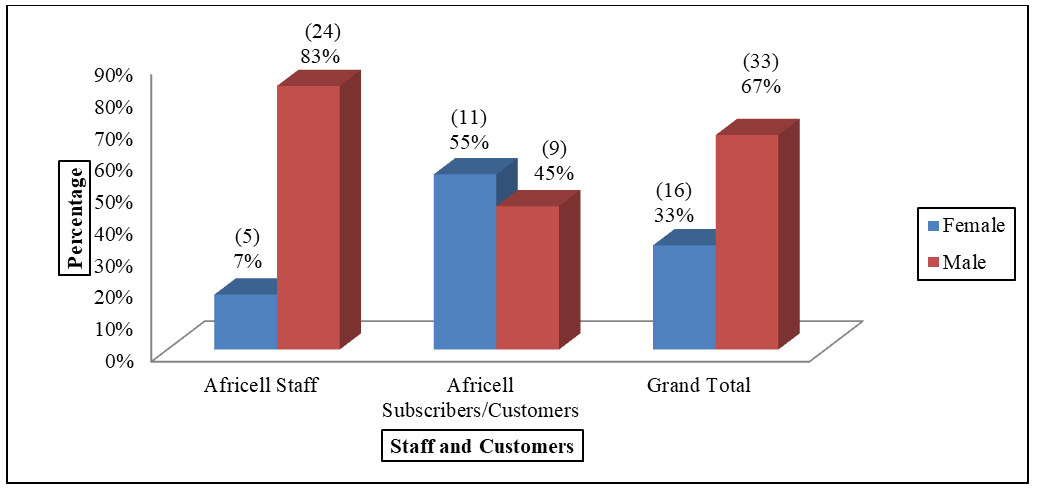
Figure 1 shows the gender distribution of Africell staff and customers. Out of the 49 respondents who participated in the study, 33 (67%) are male, while 16 (33%) are female. Among the Africell staff, 24 (83%) are male and 5 (17%) are female, indicating that staff working for Africell are predominantly male. In contrast, customer comprised 11 (55%) females and 9 (45%) males, showing a slight female dominance among customers. The higher representation of male staff may be attributed to workforce composition and the dominance of male employees in some of the departments included in the study. The slight female dominance among customers may be due to the selection of available customers during the data collection period and their willingness to participate.
4.3.2 Age Distribution
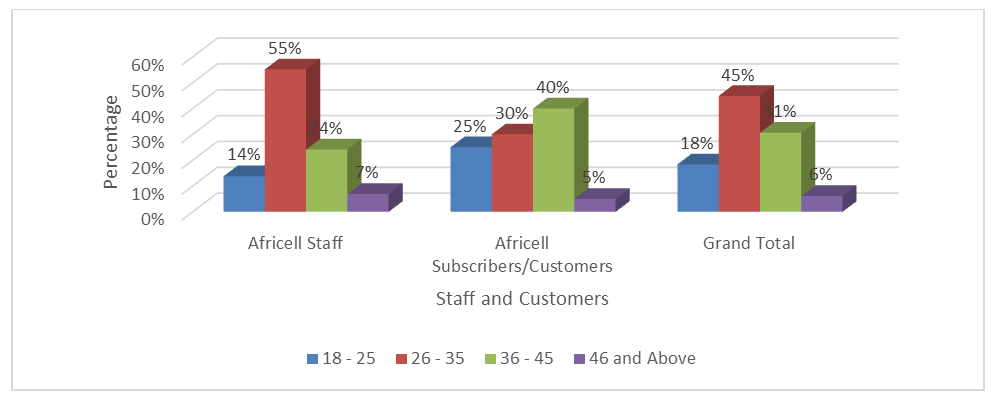
Fig. 2 shows that 45% of staff and customers range between 26–35 years, followed by 31% of those whose ages fall between 36–45 years, 15 (31%). Staff and customers aged 18–25 years accounted for 18% while 6% are aged 46 years and above. Overall, the findings indicate that respondents are predominantly young and middle-aged adults, representing the economically active population. The dominance of staff and customers aged 26–35 years may be attributed to their higher availability and participation during data collection, as well as their active involvement in employment and technology use.
4.3.3 Marital Status
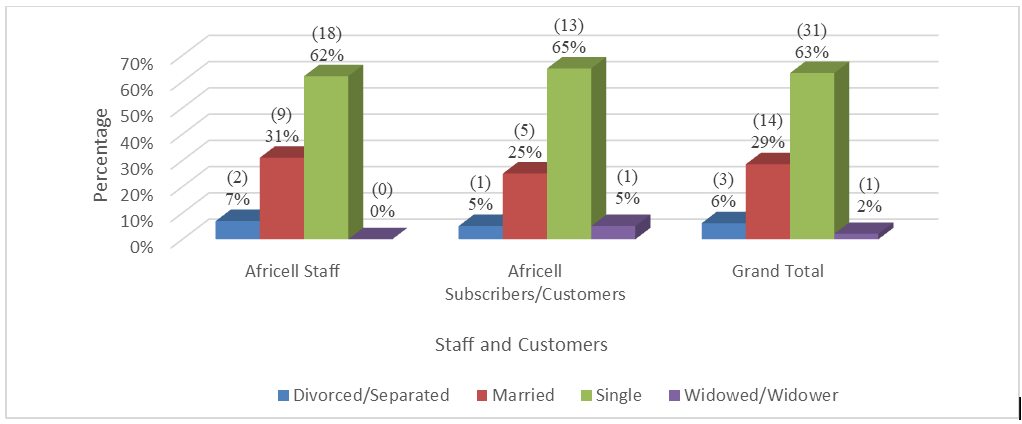
Fig. 3 shows that 63% of staff and customers are single, followed by 29% who are married. Staff and customers who are divorced or separated accounted for 6%, while only 2% are widows. The findings indicate that unmarried staff and customers constituted the largest proportion of participants in the study. This may be attributed to their greater availability and willingness to participate during the data collection period. The lower representation of married, divorced, separated, and widowed staff and customers may be due to their smaller presence within the selected sample.
4.3.4 Educational Level
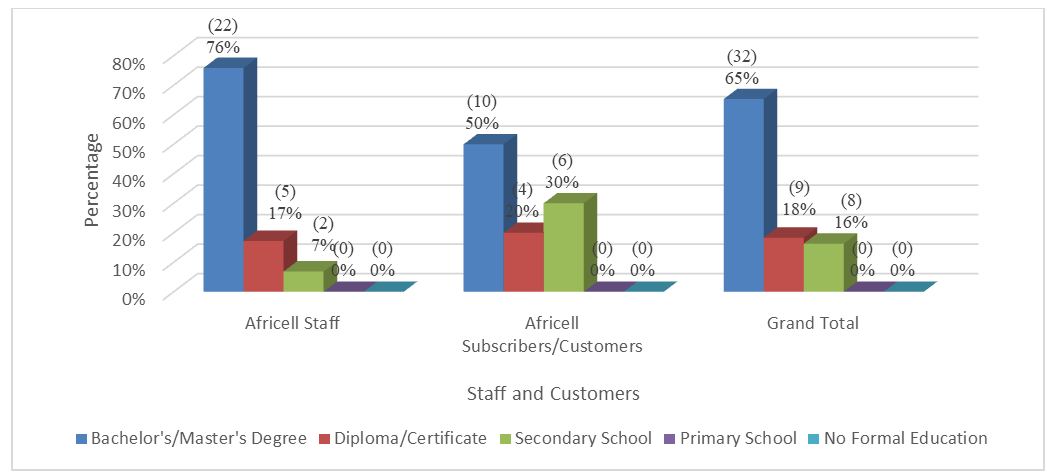
Fig. 4 shows that 76% of Africell staff have Bachelor's or Master's degrees, compared to 50% of the customers. Overall, the findings indicate that most staff and customers had attained tertiary education, and the high proportion of staff with Bachelor's or Master's degrees may reflect the educational requirements of the telecommunication sector.
4.3.5 Occupation
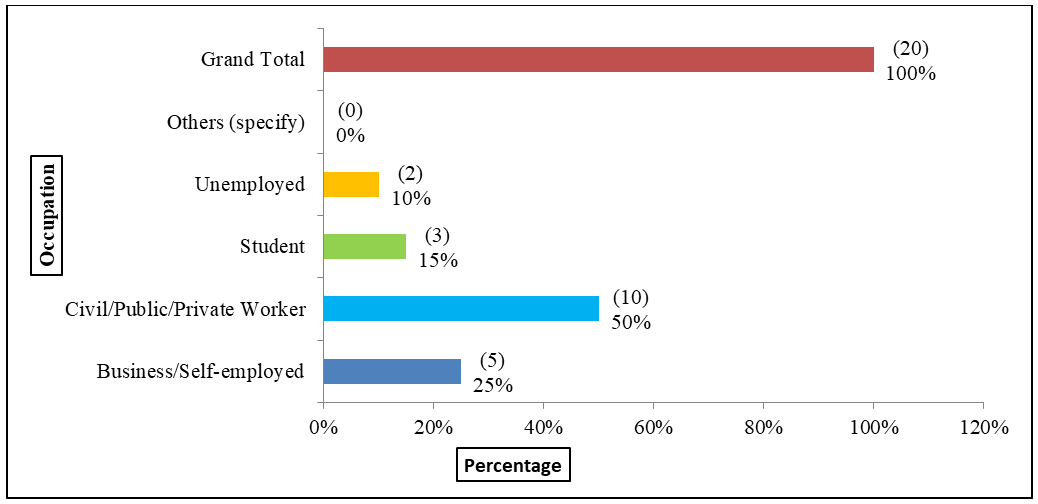
Fig. 5 show that 50% of the customers are public, or private sector workers, making this the largest occupational group. This was followed by 25% of business/self-employed customers and 15% students, and 10% unemployed customers.
4.4 Assessment of the Current Level of Customer Satisfaction among Customers
The study shows that 100% of the participants are active Africell subscribers with firsthand experience of the company’s services. The finding may be attributed to the study’s inclusion criteria, which required customers to be current Africell users, ensuring that they could provide relevant information for assessing customer satisfaction and service quality.
Furthermore, the results of an assessment done on the length of time customers of Africell have been using Africell services is presented in Figure 4.8.
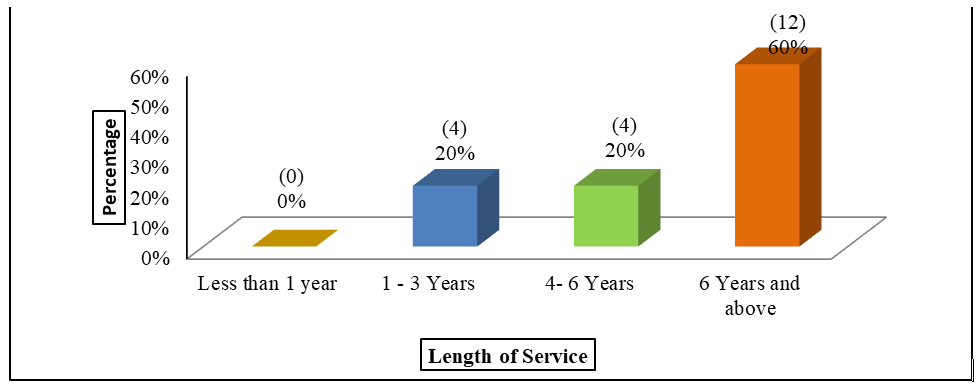
Fig. 6 reveals that 60% of customers have been using Africell services for 6 years and above, while 20% had used the services for 1–3 years and another 20% for 4–6 years.
A prone into the reasons for using Africell network is presented in Figure 4.7
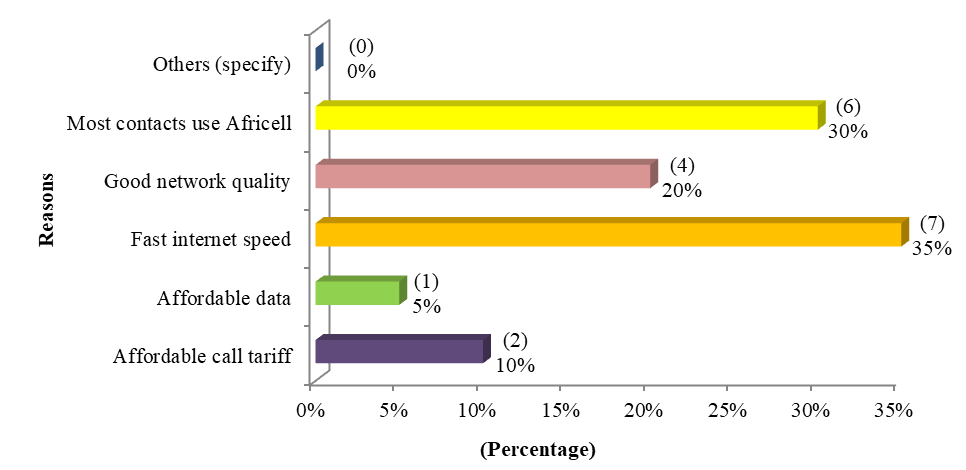
Fig. 7 shows that fast internet speed is the main reason customers used the Africell network. The finding is consistent with Mohammed Andavar et al. (2022), who found that network reliability and service performance significantly influence customer satisfaction. Similarly, Adeyemi et al. (2020) and Boateng et al. (2021) reported that network quality, connectivity, and service delivery are important factors affecting customers’ preference and continued use of telecommunication services.
The serve used most by customers is the internet data which account for 70% of users’ satisfaction follow by voice calls with 30% as presented in Figure 4.10
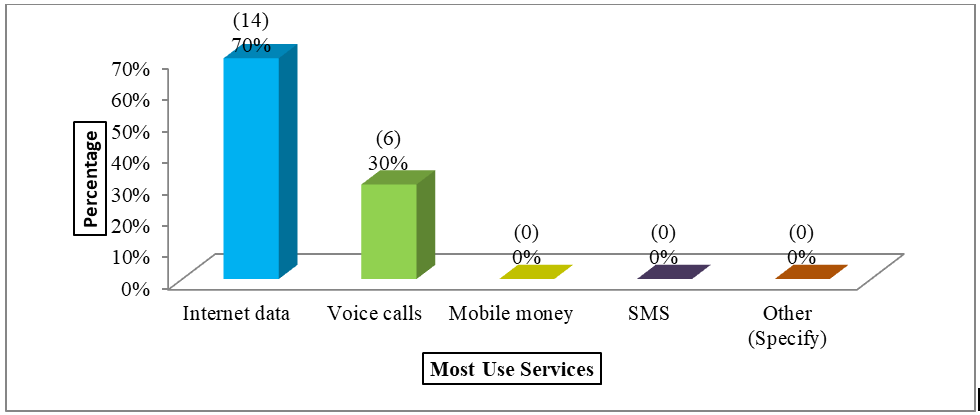
Fig. 8 shows that Internet data is the most frequently used Africell service, with 14 customer customers (70%) indicating it as their primary service. This is followed by voice calls, which were selected by 6 (30%). None of the customers identified mobile money, SMS, or other services as their primary service. The findings indicate that internet data is the dominant service used by Africell customers, suggesting that subscribers rely primarily on the network for internet connectivity. This underscores the importance of providing fast, reliable, and affordable data services to maintain high levels of customer satisfaction.
The findings are consistent with Boateng et al. (2021), who reported that mobile internet has become the primary telecommunications service influencing customer satisfaction and customer loyalty. Similarly, Ncube et al. (2022) found that the widespread adoption of smartphones and digital applications has significantly increased customer demand for mobile data services over traditional voice services. In addition, Adeyemi et al. (2020) observed that customers increasingly evaluate telecommunications providers based on the quality, speed, and reliability of their internet services rather than voice communication alone.
Therefore, the findings suggest that Africell should continue investing in network expansion, high-speed internet infrastructure, and affordable data packages to meet growing customer demand, enhance customer satisfaction, and strengthen its competitive position in the telecommunications industry.
4.5 Influence of Project Management Practices on Customer Satisfaction
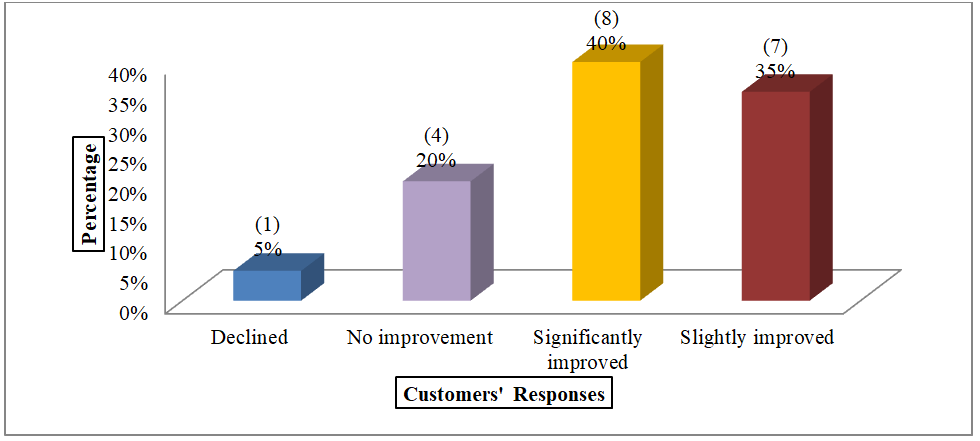
Fig. 9 shows that 40% of customers indicated that Africell's projects had significantly improved the quality of services they received, while 35% reported a slight improvement. However, 20% of subscribers perceived no improvement, and 5% believed that service quality had declined. The findings indicate that Africell's projects have contributed to improvements in service quality, resulting in positive perceptions among the majority of customers. However, the 20% who perceived no improvement and the 5% who reported a decline suggest that the benefits of these projects may not have been experienced equally by all customers. This highlights the need for continued efforts to improve service quality and ensure consistent service delivery across all areas.
The findings are consistent with Kerzner et al. (2020) who found out that effective project planning, monitoring, and control improve project delivery outcomes, which subsequently enhance service quality and customer satisfaction. In addition, the findings agree with Owusu-Kyei et al. (2023 which revealed that improved service quality significantly enhances customer satisfaction.
4.6 Evaluating the relationship between project management effectiveness and customer satisfaction in the telecommunication sector, with specific reference to Africell Sierra Leone.
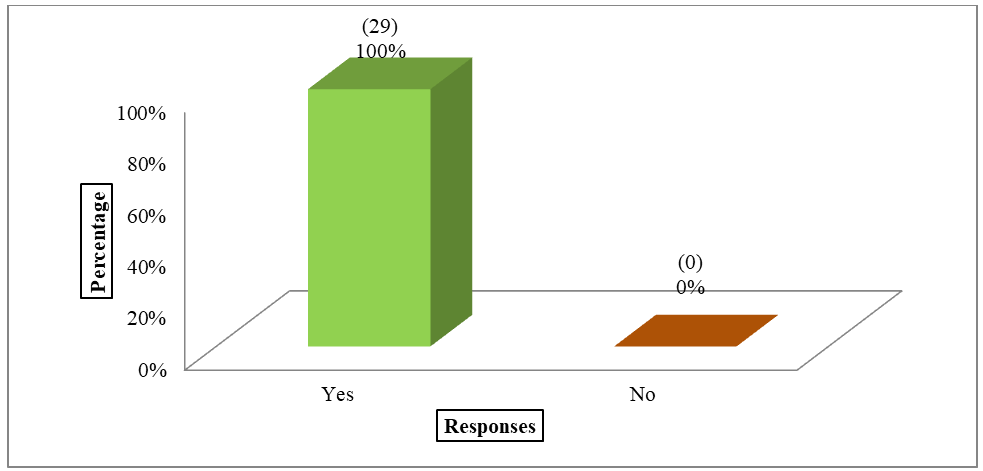
The results of the investigation of Africells staff’s perceptions as to whether effective project management improves customers’ satisfaction are presented in Figure 4.12. The findings show a unanimous view among staff that effective project management contributes to improved customer satisfaction. The result can be explained by the fact that staff members recognize the importance of effective project management in ensuring successful project implementation, improved service delivery, and better customer experiences. Their unanimous response suggests that they perceive project management practices as essential for achieving customer satisfaction within Africell.
The findings are consistent with Hussein (2018) who examined the influence of project management practices on project success and customer outcomes and found that effective planning, risk management, and stakeholder involvement enhance project success and customer satisfaction. Similarly, Oladipo and Irefin (2020), examined the relationship between project management effectiveness, service delivery, and customer satisfaction and found that effective project planning and execution improve service quality and customer satisfaction in the Telecommunication Industry.
4.7 Identifying key challenges affecting the successful implementation of customer-focused projects at Africell Sierra Leone
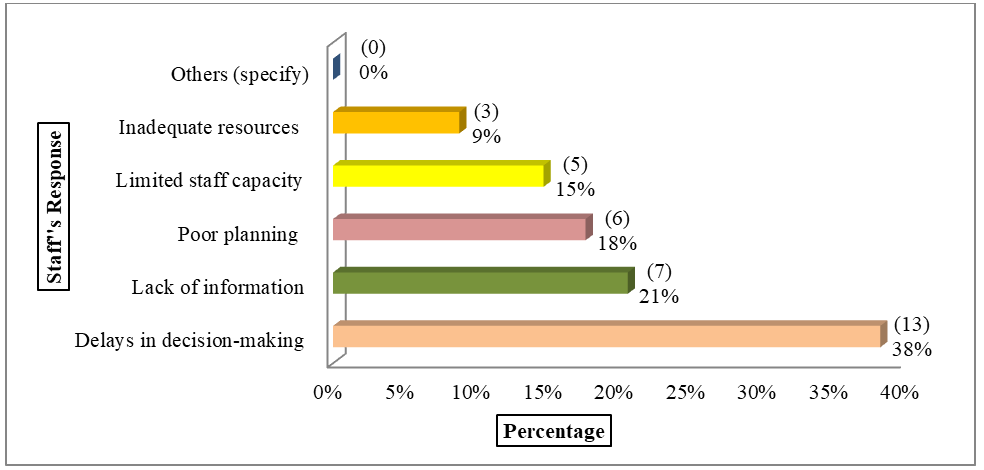
(Note: Multiple responses were allowed; therefore, frequencies represent the number of responses rather than respondents)
Results of findings from the assessment on the key challenges affecting the implementation of customer-focused projects at Africell Sierra Leone indicates delays in decision-making, lack of information, and poor planning as the key challenges presented in Figure 4.13.
The findings align with Haftom and Medhen (2019), in their Addis Ababa University study on Ethio Telecom expansion projects, whose objective was to assess project management practices and the challenges affecting telecom project implementation. The study found that weak communication systems, poor coordination, and inadequate planning significantly hinder project success, directly supporting the present findings on delays in decision-making, poor planning, and information gaps.
The results of the effect of the identified challenges on customer satisfaction based on the perspective of Africell SL Staff are presented in Figure 4.14.
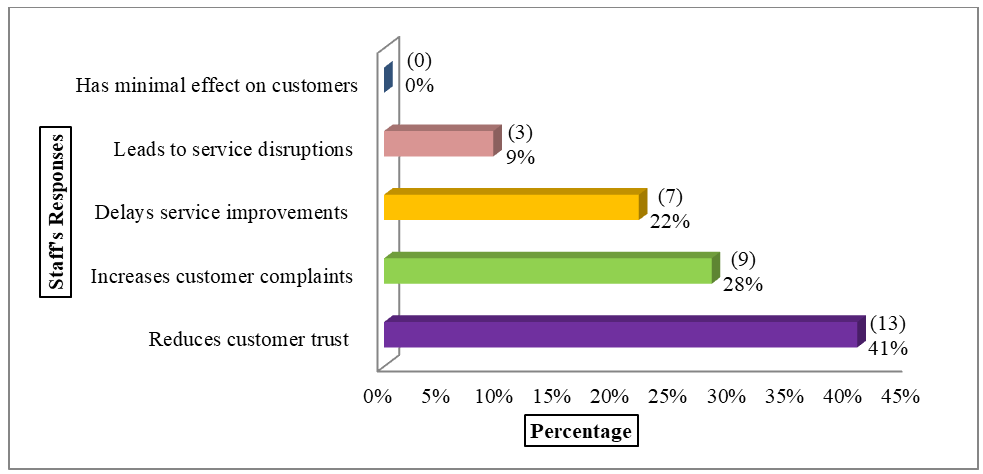
Note: Multiple responses were allowed; therefore, frequencies represent the number of responses rather than respondents.
Fig. 12 shows that reduced customer trust was the most frequently reported effect, followed by increased customer complaints, and delayed service improvements. This indicates that effectively addressing project implementation challenges is essential for maintaining customer satisfaction and loyalty.
The findings are consistent with Gebreyesus et al. (2024) who revealed that inefficient project execution and poor stakeholder coordination negatively affect service delivery outcomes and customer satisfaction. Similarly, Mohsin et al. (2026), in their study found that weak governance and poor coordination reduce stakeholder confidence and project effectiveness, supporting the present finding that project-related challenges reduce customer trust and negatively affect customer satisfaction.
4.8 Key Strategies to Improve Project Management Practices and Enhance Customer Satisfaction in the Tele-Communication Sector in Sierra Leone.
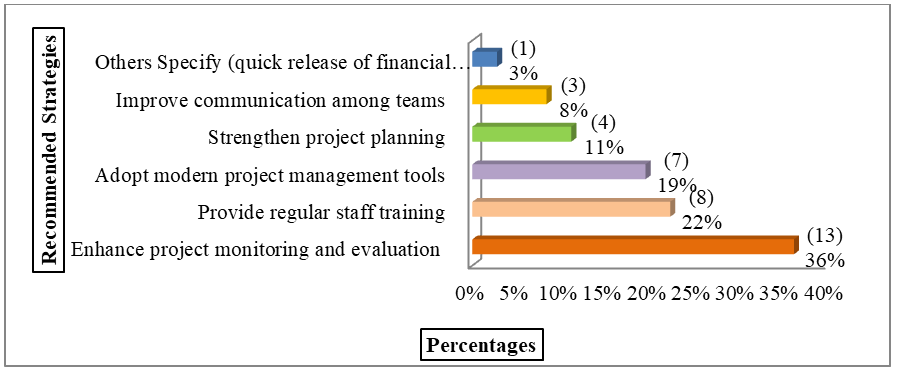
The findings presented in Fig. 13 indicate that improving project monitoring and evaluation, staff training, and the use of modern project management tools are the key strategies for enhancing project management practices at Africell Sierra Leone.
5. Conclusions And Recommendations
5.1 Conclusions
Based on the findings of the study, it is concluded that project management has a significant positive influence on customer satisfaction in the Tele-Communication sector.
In the case of Africell-SL, the study found that the overall level of customer satisfaction is generally high, with most subscribers expressing satisfaction with the company's services, particularly internet connectivity, network quality, customer care services, and value-added services. However, concerns regarding call tariffs and occasional service interruptions indicate that there is still room for improvement.
The findings further reveal that effective project management practices contribute significantly to customer satisfaction by enhancing service quality and operational performance. Effective project planning, communication, monitoring and evaluation, coordination, and efficient resource utilization support the successful implementation of projects, resulting in improved service delivery and better customer experiences.
The study also establishes a strong positive relationship between project management effectiveness and customer satisfaction. Successful project implementation improves service reliability, enhances customer confidence, and promotes customer loyalty, while ineffective project management leads to reduced service quality, increased customer complaints, and lower customer satisfaction.
Furthermore, the study concludes that several factors hinder the successful implementation of customer-focused projects at Africell Sierra Leone. These include delayed decision-making, poor communication, inadequate planning, limited staff capacity, and inadequate resource allocation. These challenges reduce project efficiency, delay service improvements, and negatively affect customers' perceptions of the company's services.
Overall, the study concludes that strengthening project management practices is essential for improving service delivery, enhancing customer satisfaction, and sustaining Africell Sierra Leone's competitiveness in the telecommunications industry. Greater emphasis on effective planning, stakeholder engagement, resource management, monitoring and evaluation, and continuous service improvement will enable the company to deliver projects that meet customer expectations while supporting long-term customer loyalty and organizational performance.
5.3 Recommendations
Based on the findings and conclusions of the study, the following recommendations are made:
Africell Sierra Leone should strengthen its project monitoring and evaluation systems to ensure that projects are implemented according to planned objectives, timelines, budgets, and quality standards. Regular monitoring will enable management to identify and address project challenges promptly.
The company should improve communication and coordination among project teams and management to facilitate timely decision-making, efficient information sharing, and successful implementation of customer-focused projects.
Regular training and capacity-building Programme should be organized for employees involved in project management, technical operations, and customer service to enhance their knowledge, skills, and overall performance.
Africell SL should continue investing in network infrastructure and modern technologies to improve internet speed, strengthen network reliability, reduce call drops, and enhance the overall quality of service provided to customers.
The company should strengthen its customer feedback management system by providing accessible channels through which customers can submit complaints and suggestions. Customer feedback should be regularly analyzed and used to support continuous service improvement.
Management should improve project planning and ensure the timely allocation of financial, technical, and human resources required for project implementation. Adequate resource allocation will reduce project delays, improve efficiency, and increase the likelihood of successful project completion.
References
- Abdullah, N. N., Prabhu, M., & Othman, M. B. (2022). Service quality dimensions and customer satisfaction in the telecom sector: Evidence from Kurdistan. International Journal of Business Studies. DOI ↗ Google Scholar ↗
- Agumagu, E. R., Ekine, E. U., & Uwaezuoke, E. (2025). The challenges of managing international telecom projects across diverse cultural contexts and how to overcome them. International Journal of Social Sciences and Management Research. DOI ↗ Google Scholar ↗
- Ahmed, A., Khan, M. A., & Shah, S. A. (2019). Project management practices and their impact on service quality in telecom projects. Journal of Service Science. Google Scholar ↗
- Alabar, T., & Agbo, S. (2014). Service quality and customer satisfaction in the Nigerian mobile telecommunications industry. Journal of Marketing and Consumer Research. DOI ↗ Google Scholar ↗
- Anderson, E. W., Fornell, C., & Lehmann, D. R. (1994). Customer satisfaction, market share, and profitability: Findings from Sweden. Journal of Marketing, 58(3), 53–66. Google Scholar ↗
- AXELOS. (2017). Managing successful projects with PRINCE2 (6th ed.). The Stationery Office. Google Scholar ↗
- Castro, H. G., & Carvalho, M. M. (2007). Project management best practices implementation: Critical issues in telecommunication companies. International Journal of Project Management. Google Scholar ↗
- Kerzner, H. (2020). The impact of project management practices on project success and customer satisfaction. International Journal of Project Management. DOI ↗ Google Scholar ↗
- Kerzner, H. (2022). Project management: A systems approach to planning, scheduling, and controlling (13th ed.). John Wiley & Sons. DOI ↗ Google Scholar ↗
- Khan, M., Zia, M. H., & Bashir, A. (2020). Service quality, customer satisfaction and retention in mobile telecommunications. Journal of Marketing Analytics. Google Scholar ↗
- Kotler, P., & Keller, K. L. (2016). Marketing management (15th ed.). Pearson. DOI ↗ Google Scholar ↗
- Kumar, S., & Phrommathed, P. (2005). Improving manufacturing performance through Lean Six Sigma. International Journal of Productivity and Performance Management. Google Scholar ↗
- Mensah, J., Mensah, I. K., & Acquah, H. E. (2021). Examining the relationship between service quality and customer satisfaction in telecommunications. Cogent Business & Management, 8(1). Google Scholar ↗
- Meredith, J. R., & Mantel, S. J., Jr. (2014). Project management: A managerial approach (8th ed.). John Wiley & Sons. Google Scholar ↗
- Odunlami, S. A., & Oludipe, E. O. (2022). Telecommunication service delivery and customer loyalty: A study of telecom subscribers in Lagos and Ogun States, Nigeria. Nigeria Journal of Business Administration, 19(2), 56–69. Google Scholar ↗
- Oduro, E., Boachie-Mensah, F. O., & Agyapong, G. K. Q. (2018). Determinants of customer satisfaction in the telecommunication industry in Ghana: A study of MTN Ghana Limited. International Journal of Marketing Studies, 10(3), 101–117. Google Scholar ↗
- Owusu-Kyei, M., Kong, Y., Owusu Akomeah, M., & Owusu Afriyie, S. (2023). Assessing the influence of total quality management on customer satisfaction in the telecom industry: A TQM–SERVQUAL perspective. Google Scholar ↗
- Parasuraman, A., Zeithaml, V. A., & Berry, L. L. (1988). SERVQUAL: A multiple-item scale for measuring consumer perceptions of service quality. Journal of Retailing, 64(1), 12–40. Google Scholar ↗
- Project Management Institute (PMI). (2021). A guide to the project management body of knowledge (PMBOK® guide) (7th ed.) and the standard for project management. Project Management Institute. Google Scholar ↗
- Rahman, M., Hossain, M. A., & Islam, M. S. (2019). The role of project communication management in enhancing customer satisfaction. International Journal of Business Research. DOI ↗ Google Scholar ↗
- Saeed, R., Lodhi, R. N., Mehmood, A., Ishfaque, U., Dustgeer, F., Sami, A., Mahmood, Z., & Ahmad, M. (2013). Factors affecting customer satisfaction in the telecom sector of Pakistan. Middle-East Journal of Scientific Research, 16(11), 1516–1522. Google Scholar ↗
- Samosir, J. M., Syamil, A., & Heriyati, P. (2021). The impact of project performance on customer satisfaction. Turkish Journal of Computer and Mathematics Education (TURCOMAT), 12(3), 5658–5668. Google Scholar ↗
- Turel, O., & Serenko, A. (2006). Satisfaction with mobile services in Canada: An empirical investigation. Telecommunications Policy, 30(5–6), 314–331. Google Scholar ↗
- Zeithaml, V. A., Bitner, M. J., & Gremler, D. D. (2018). Services marketing: Integrating customer focus across the firm (7th ed.). McGraw-Hill Education. Google Scholar ↗