Abstract
Commercial income-generating activities (CIGAs) are increasingly recognised as an alternative source of institutional revenue for strengthening financial sustainability in public agricultural and livestock training institutes. This study examined the extent to which CIGAs contribute to the financial sustainability of five public Agricultural and Livestock Training Institutes (ALTIs) in Tanzania's Northern Zone. Anchored in the Resource-Based View theory (1991), the study adopted a pragmatic paradigm and a convergent mixed-methods design. The target population comprised 130 individuals, from which 107 respondents were selected, including principals, accountants, management committee members, and Students’ Government members. Data were collected through questionnaires, interviews, observation, and document analysis. Quantitative data were analysed using descriptive statistics with SPSS Version 27, while qualitative data were analysed thematically following Braun and Clarke’s (2006) six-phase approach. The findings revealed that CIGAs made a limited contribution to institutional financial sustainability. This was attributed to discontinued or underutilised activities, inadequate processing facilities, outdated or non-functional machinery, limited production capacity, and insufficient reinvestment of generated revenue. The study concludes that existing CIGAs do not generate adequate financial resources to meaningfully support the financial sustainability of public ALTIs. It recommends that the Ministry of Agriculture and the Livestock Training Agency (LITA) establish a mandatory mechanism requiring institutes to reinvest a minimum proportion of net CIGA revenue into the respective income-generating activities, with priority given to underperforming areas.
Keywords
Commercial Income-Generating Activities Financial Sustainability Agricultural and Livestock Training Institutes Contribution
1. Introduction
Commercial income-generating activities (IGAs) refer to revenue-generating ventures undertaken by public institutions such as production, processing, and service-based enterprises that supplement statutory funding allocations (Bisogno et al., 2017). Financial sustainability, in turn, describes an institution's capacity to maintain its core operations, service delivery, and long-term viability while meeting its financial obligations without excessive dependence on a single funding source, most notably government financing. In contrast, this capacity is relevant to institutions generally; it is of particular concern to public institutions because they rely heavily on government allocations (Bisogno et al., 2017). International agencies such as the World Bank and the African Union Commission recognise IGAs as a mechanism through which public training institutions can reduce fiscal vulnerability and reinvest surplus revenue into infrastructure and service delivery (World Bank, 2023; African Union Commission [AUC], 2025). The relationship between the two variables is therefore one in which the scale, consistency, and profitability of IGAs are expected to determine the degree to which an institution can reduce dependence on government transfers and sustain its operations. Indicators commonly used to assess this relationship include the share of internally generated revenue in total institutional income, revenue growth over time, the cost-recovery and net profit margins of income-generating units, and the extent to which surplus revenue is reinvested into core operations.
The establishment of IGAs in public training institutions is closely linked to a broader, decades-long shift in public financing away from full government subvention. Facing recurring fiscal constraints, many governments progressively reduced direct budgetary support to training and higher-education institutions, prompting these institutions to develop alternative income streams to substitute for, or supplement, diminishing state funding (Bisogno et al., 2017). In most cases, IGAs were not an original design feature of public training systems. However, they emerged later as an institutional response to funding shortfalls and underfunded maintenance budgets, introduced to help sustain practical training facilities such as workshops, farms, and laboratories that government allocations alone could not adequately support.
At the global level, this shift has generated a substantial body of evidence on whether revenue diversification and IGAs actually deliver the intended financial benefits. In Malaysia, public universities have pursued alternative revenue sources but still face heavy dependence on government funding, revenue volatility, and, in some cases, financial deficits despite these efforts (Mamat et al., 2023). In Kenya, recent evidence similarly shows that the effect of revenue diversification on financial sustainability varies according to how sustainability is measured, with a positive effect under one financial ratio but a negative effect under another (Kimathi & Irungu, 2024). These findings raise an important issue: the presence of IGAs or diversified revenue portfolios does not, by itself, guarantee improved financial sustainability, and their actual contribution depends on how effectively they are managed and measured (Jaafar et al., 2023; Kimathi & Irungu, 2024).
In Africa, the African Union's Continental TVET Strategy 2025–2034 identifies sustainable finance as a major pillar for technical and vocational education and training (TVET) systems, calling for improved resource mobilization, stronger partnerships, and diversification of financing options, while acknowledging that financing for TVET remains insufficient and unsustainable in many African countries (AUC, 2025). Regionally, the World Bank-supported East Africa Skills for Transformation and Regional Integration Project (EASTRIP) seeks to strengthen public TVET institutions in Ethiopia, Kenya, and Tanzania through improved training quality, infrastructure, and industry linkages (World Bank, 2023, 2025). However, these regional initiatives focus primarily on strengthening institutional capacity and financing systems in general, rather than generating direct evidence on how commercial IGAs perform within agricultural and livestock training institutions, leaving an important empirical question: whether such institutions convert their productive resources into sustainable financial returns.
In Tanzania, national policy reinforces this issue. The Tanzania Development Vision 2050 identifies agriculture as a transformative sector and emphasizes productivity, value addition, and revenue generation as components of national economic transformation (United Republic of Tanzania URT, 2025), a direction also reflected in the strategic planning of the country's agricultural research system (Tanzania Agricultural Research Institute [TARI], 2025). Under this policy environment, public Agricultural and Livestock Training Institutes (ALTIs) are expected to operationalize IGAs such as livestock production, dairy processing, feed production, and agro-processing as a mechanism for institutional revenue generation, with responsibility for their planning and management resting with institutional leadership, principally principals, accountants, and management committees.
Public Agricultural and Livestock Training Institutes (ALTIs) in Tanzania's Northern Zone use commercial income-generating activities (IGAs) to strengthen their financial position and reduce dependence on government funding. However, these activities contribute little despite the availability of substantial institutional resources. Despite these Institutional mandates and available resources, public agricultural training Institutions still face financial and operational challenges. Mafuru (2021) reported that agricultural training institutes under the Ministry of Agriculture faced shortages of farm machinery required for production, harvesting, and value addition, constraining the implementation of competency-based training. The institutes possess large areas of land, livestock, and agro-processing facilities that can support income generation. For example, institutional assets were valued at TZS 136.13 billion. Yet, asset management weaknesses were reported, including a lack of a clear maintenance plan and unutilized and uncleared imprest amounting to TZS 223.74 million (CAG, 2025). Despite these resources, limited evidence exists on the extent to which commercial IGAs contribute to the financial sustainability of public ALTIs. Therefore, this study investigated the extent to which commercial income-generating activities contribute to the financial sustainability of the public Agricultural and Livestock Training Institutes in Tanzania's Northern Zone.
2. Statement of the Problem
The financial sustainability of public Agricultural and Livestock Training Institutes (ALTIs) in Tanzania’s Northern Zone remains a challenge, as they cannot sustain themselves from internal sources, despite the presence of commercial income-generating activities (IGAs) aimed at reducing dependence on government funding. Despite productive agricultural and livestock resources and an increasingly supportive national policy environment reflected in the Tanzania Development Vision 2050's emphasis on agricultural commercialization and value addition, Evidence from the Controller and Auditor General's (CAG) 2024/25 report points to continuing weaknesses in the utilization and management of public resources nationally, including idle imprest balances exceeding Sh. 223 million, a hive-making workshop valued at approximately Sh. 145 million that had remained idle since 2022, assets valued at Sh. 3.54 billion without adequate maintenance plans, and uncollected non-tax revenue amounting to Sh. 147.99 billion across government entities (CAG, 2025).
Existing Tanzanian studies have examined financial sustainability with a focus on parent-teacher platforms (Kiure et al., 2023) and community involvement (Onesmo et al., 2021; Kitigwa & Onyango, 2023). None of these studies examined commercial IGAs in public agricultural and livestock training institutions. Therefore, this study investigated the extent to which commercial IGAs contribute to the financial sustainability of public ALTIs in Tanzania's Northern Zone.
3. Research Question
The following research question guided this study:
To what extent do commercial income-generating activities contribute to the financial sustainability of public agricultural and livestock training institutes in Tanzania's Northern Zone?
4. Significance of the Study
This study contributes to the application of the Resource-Based View (RBV) and Resource Dependency Theory (RDT) by examining how public Agricultural and Livestock Training Institutes (ALTIs) can utilize institutional resources and commercial income-generating activities to diversify revenue and strengthen financial sustainability. In addition, the study provides empirical evidence on the contribution of commercial income-generating activities to the financial sustainability of public ALTIs, thereby addressing a contextual and sectoral gap in existing research, which has largely focused on revenue diversification and income-generating activities in universities, secondary schools, and other organizations. The findings also extend understanding of how commercial activities function within agricultural and livestock training institutions, particularly in the Tanzanian context. Furthermore, the study provides evidence to inform the Ministry of Agriculture and the Ministry of Livestock and Fisheries in developing policies and institutional mechanisms to strengthen commercial income-generating activities, improve revenue utilization and retention, and promote reinvestment of internally generated revenue. Such evidence may support efforts to enhance institutional financial sustainability and reduce excessive dependence on government financing.
5. Theoretical Framework
This study employed Jay Barney's Resource-Based View (RBV), which holds that an institution's sustainable competitive advantage and performance are achieved through the strategic use of internal resources rather than solely through external market conditions. Barney developed the theory in 1991, and it is grounded in four key resource attributes: value, rarity, inimitability, and non-substitutability (VRIN) (Barney, 1991). These attributes emphasize that a resource contributes to sustained advantage when it enables an institution to exploit opportunities or neutralize threats, is not widely possessed by other institutions, cannot be easily replicated, and cannot be substituted by an alternative resource. The value principle underscores converting institutional assets such as land, livestock, and technical infrastructure into productive, revenue-generating ventures. In contrast, the rarity and inimitability principles emphasize that other institutions do not easily replicate specialized processing facilities, technical know-how, and established market relationships. The non-substitutability principle focuses on ensuring that no alternative resource can achieve the same commercial and training-related outcomes.
The theory assumes that institutional performance is a continuous outcome of how effectively those responsible identify, develop, and deploy available resources (Peteraf, 1993). In this regard, commercial income-generating activities function as key instruments through which institutions convert land, livestock, and technical infrastructure into measurable financial contributions through continuous investment, maintenance, and strategic management. The theory further emphasizes that financial sustainability is achieved by deliberately developing dairy processing, value-added product sales, and practical training facilities as strategic resources that reduce dependence on government funding. Therefore, RBV provides a strong analytical lens for examining how institutional resources are converted into commercial income-generating activities to enhance the financial sustainability of public agricultural and livestock training institutes in Tanzania's Northern Zone
6. Review of Empirical Studies
Commercial activities, value-added processing, manufacturing, and production-based ventures are the most capital-intensive income-generating activities available to training institutes, converting raw agricultural output into higher-margin products. This review traces how commercial ventures have been shown to affect institutional financial sustainability, moving from global evidence in higher education, through African and East African contexts, down to Tanzania and the Northern Zone specifically.
Jaafar et al. (2023) examined the effect of revenue diversification, including commercial ventures, on the financial sustainability of 20 Malaysian public universities. Using a panel data approach, the study used the Herfindahl-Hirschman Index to measure diversification and Return on Assets and Net Profit Margin as sustainability proxies; it found that revenue diversification significantly affected financial sustainability, supporting resource dependency theory's claim that institutions reliant on a single funding stream face greater financial risk. This study informs the current study on how revenue diversification can be measured and linked to financial sustainability using panel data and standardized indices; however, it pays limited attention to institutions operating under Tanzania's regulatory and funding structure, and there is insufficient evidence on agricultural commercial ventures such as processing or manufacturing, which the sampled universities did not undertake. The current study therefore adopts a convergent design focused specifically on agricultural and livestock training institutes, enabling a more comprehensive examination of how commercial value-added ventures contribute to the financial sustainability of public agricultural and livestock training institutes in Tanzania's Northern Zone.
Ngcobo et al. (2024) investigated staff perceptions of revenue sourcing, including commercial ventures and consultancy services, at a university of technology in South Africa. Using a quantitative questionnaire administered to academic and non-academic staff, the study found that the university's existing revenue structure was diversified but still perceived as inadequate, with low research output and infrastructural constraints identified as key barriers to expanding commercial income. This study informs the current study on the barriers that staff perceive as limiting commercial income expansion; however, it relies on staff perceptions rather than measured financial outcomes, and there is insufficient evidence on land-based processing and manufacturing ventures, since a university of technology's commercial activities (consultancy, short courses) differ substantially from those relevant to agricultural institutes. These findings highlight the need for the current study to measure actual financial outcomes of commercial IGAs rather than perceptions alone, enabling a more comprehensive examination of the extent to which value-added agricultural ventures contribute to the financial sustainability of public agricultural and livestock training institutes in Tanzania's Northern Zone.
Kimathi and Irungu (2024) examined the effect of revenue diversification on the financial sustainability of public universities in Kenya, sampling 22 of 41 public universities and using secondary panel data from the Office of the Auditor-General covering the 2018/2019 to 2020/2021 financial years. The study found that revenue diversification had a significant positive effect on financial sustainability when measured using a sustainability ratio, though a negative effect when measured using a gearing ratio, and recommended that institutions close revenue-generating units whose marginal costs exceed marginal revenues. This study informs the current study on how sustainability ratios and gearing ratios can produce contrasting conclusions about the effect of revenue diversification; however, it relies entirely on secondary audited data without capturing the operational and managerial dynamics behind commercial unit performance, and there is insufficient evidence on agriculture-specific commercial ventures such as processing or manufacturing units. This prompted the current study to combine both financial and operational data through a convergent mixed-methods design, enabling a more comprehensive examination of the extent to which commercial IGAs contribute to the financial sustainability of public agricultural and livestock training institutes in Tanzania's Northern Zone.
Mang'ana et al. (2023) examined the effect of financial management practices on the performance of 427 agricultural small and medium enterprises across three regions of Tanzania. Using a cross-sectional survey design and Structural Equation Modeling with Smart PLS 4, the study found that working capital management and financing management practices significantly and positively influenced both financial and organizational performance, while accounting and capital budgeting practices had an insignificant influence. This study informs the current study on the financial management practices, particularly working capital and financing management, that significantly influence the performance of agriculture-based enterprises; however, it focused on privately owned agri-SMEs rather than publicly owned training institutions, and there is insufficient evidence on institution-run commercial ventures such as dairy processing or feed milling. The current study therefore focuses on publicly owned agricultural and livestock training institutes, examining the extent to which their institutionally managed commercial ventures contribute to financial sustainability in Tanzania's Northern Zone.
Kanire et al. (2024) examined how commercial dairy farms could be operationalized to strengthen Tanzania's dairy processing industry, drawing on qualitative insights from 23 dairy sector stakeholders alongside bibliometric analysis, and explicitly identifying Livestock Training Institutes as part of the value chain linking commercial dairy production to processing capacity. Using SWOT-TOWS analysis and a business model canvas, the study found that underutilized processing capacity and weak farm-to-processor linkages were central constraints. It proposed eco-commercial dairy farm models as a strategy to close the supply gap. This study informs the current study on the structural constraints, such as underutilized processing capacity and weak farm-to-processor linkages, that limit commercial dairy operations within the value chain that includes Livestock Training Institutes; however, it examined the dairy value chain broadly rather than the specific financial contribution of commercial units to individual training institutes' budgets, and there is insufficient evidence quantifying the revenue or profit margins such units generate. The current study directly measures the extent of financial contribution from commercial ventures, including dairy processing, feed mill manufacturing, agro-processing, and hatchery operations, to the financial sustainability of the five public agricultural and livestock training institutes in Tanzania's Northern Zone.
7. Demonstration of Research Gaps
A review of empirical studies demonstrates growing scholarly interest in revenue diversification and commercial income-generating activities as strategies for institutional financial sustainability. Despite these valuable contributions, several gaps remain. Regarding the knowledge gap, studies such as Jaafar et al. (2023) and Ngcobo et al. (2024) focused on general revenue diversification and consultancy income, providing limited evidence on production-based commercial ventures such as dairy processing, feed milling, and value-added processing. Regarding the methodological gap, studies such as Ngcobo et al. (2024) and Kimathi and Irungu (2024) relied solely on secondary audited data or staff perceptions, limiting methodological triangulation and the depth of evidence generated. Concerning the contextual gap, studies such as Jaafar et al. (2023) and Ngcobo et al. (2024) were conducted in Malaysia and South Africa, upper-middle-income economies whose funding structures and institutional resourcing differ from Tanzania's. Therefore, this study addressed these gaps by examining the extent to which commercial income-generating activities contribute to financial sustainability in Tanzania's public Agricultural and Livestock Training Institutes, using a convergent mixed-methods design.
8. Methodology
This study was guided by the pragmatic worldview, which allows researchers to combine quantitative and qualitative methods as needed to effectively address the research question, rather than adhering strictly to one paradigm (Creswell & Creswell, 2023). Guided by this worldview, the study adopted a convergent mixed-methods design, involving the concurrent collection and analysis of quantitative and qualitative data to enable comparison and integration of findings (Creswell & Creswell, 2023). The study was conducted in the public Agricultural and Livestock Training Institutes (ALTIs) of Tanzania's Northern Zone. The target population comprised 130 individuals, including 5 principals, 5 accountants, 55 management committee members, and 65 student government members. From the target population, 4 principals and 4 accountants were selected through criterion purposive sampling based on their relevant roles and experience in managing the institutes and commercial income-generating activities; 44 management committee members and 55 student government members were selected using census sampling, for a total sample of 107 respondents. The study collected data using a questionnaire, an interview guide, an observation guide, and a document analysis guide. Instrument validity was established through expert review by three specialists from Mwenge Catholic University (MWECAU), who assessed the instruments' relevance and clarity and recommended modifications to align them with the research objectives.
The study pilot-tested the instruments in one institute, involving 1 principal, 1 accountant, 13 management committee members, and 15 student government members. The institute involved in the pilot test was excluded from the actual study. Reliability of the Likert-scale items in the management committee questionnaire was assessed using Cronbach's alpha in SPSS version 27, yielding a coefficient of 0.849, indicating good internal consistency (Cohen et al., 2018). For the student government questionnaire, the dichotomous (Yes/No) items were assessed using the Kuder-Richardson 20 (KR-20) formula, yielding a coefficient of 0.840. In contrast, the Likert-scale sections (Sections E–F) were assessed using Cronbach's alpha, yielding coefficients of 0.848, both indicating acceptable internal consistency. The trustworthiness of the qualitative data was supported by triangulation and peer debriefing to establish credibility and dependability. Quantitative data were analyzed using descriptive statistics, whereby frequencies, percentages, and mean scores were presented in a table, while qualitative data were analyzed thematically following Braun and Clarke's (2006) six-phase approach: transcribing raw field data, coding, generating themes, interrelating themes, interpreting their meaning, and discussing the findings. The study considered ethical considerations, including research permits obtained from Mwenge Catholic University (MWECAU). The study adhered to the ethical principles of the Declaration of Helsinki, the Belmont Report, the IFAC Code of Ethics, and COSTECH research ethics guidelines, with informed consent, voluntary participation, and confidentiality maintained throughout.
9. Findings and Discussion
9. Findings and Discussion
The study examined the extent to which commercial income-generating activities (CIGAs) contribute to the financial sustainability of public agricultural and livestock training institutes in the Northern Zone, Tanzania. Data were collected through a questionnaire administered to members of the institutes' management committees, complemented by interviews with the institutes' principals and accountants, a questionnaire administered to student government representatives, an observation guide completed at each institute, and an analysis of institutional documents (strategic and business plans, standard operating procedures, project inventories, financial statements, and audit and performance reports). A five-point Likert scale was used for the management committee's quantitative analysis, with 1 = Very Small Extent (VSE), 2 = Small Extent (SE), 3 = Moderate Extent (ME), 4 = Large Extent (LE), and 5 = Very Large Extent (VLE); f represents frequency and % represents percentage. A mean score above 3 for each item indicates that commercial income-generating activities (CIGAs) successfully enhance the institute's financial sustainability; a mean score below 3 indicates that CIGAs do not contribute to financial sustainability (Chyung & Hutchinson, 2023). The percentage interpretation was adapted from Taherdoost (2019), whereby 0%–20% = extreme minority, 21%–40% = minority, 41%–60% = majority, 61%–80% = high majority, and 81%–100% = extreme majority. The student government questionnaire used a simple Yes/No response format (n = 54) and was also interpreted using the Taherdoost (2019) percentage scale. Table 1 summarizes the management committees' responses, and Table 2 summarizes the student government questionnaire responses. This discussion focuses on items 1, 5, 7, and 9, each examined individually below and triangulated across all five data sources: the management committee questionnaire, principal and accountant interviews, the student government questionnaire, the observation guide, and the document analysis.
| VSE | SE | ME | LE | VLE | ||||||||
|---|---|---|---|---|---|---|---|---|---|---|---|---|
| Sn | Statements | f | % | f | % | f | % | f | % | f | % | M |
| 1 | Dairy processing contributes to the institute's financial sustainability. | 15 | 38.5 | 8 | 20.5 | 5 | 12.8 | 9 | 23.1 | 2 | 5.1 | 2.36 |
| 2 | Feed mill manufacturing contributes to the institute's financial sustainability. | 16 | 41.0 | 13 | 33.3 | 9 | 23.1 | 1 | 2.6 | 0 | 0.0 | 1.87 |
| 3 | Agro-processing and milling contribute to the institute's financial sustainability. | 16 | 41.0 | 13 | 33.3 | 10 | 25.6 | 0 | 0.0 | 0 | 0.0 | 1.85 |
| 4 | Hatchery operations contribute to the institute's financial sustainability. | 30 | 76.9 | 6 | 15.4 | 1 | 2.6 | 0 | 0.0 | 2 | 5.1 | 1.41 |
| 5 | Sales of value-added commercial products contribute to the institute's financial sustainability. | 17 | 43.6 | 9 | 23.1 | 10 | 25.6 | 3 | 7.7 | 0 | 0.0 | 1.97 |
| 6 | Commercial income-generating activities have improved living and learning conditions at the institute (e.g., new furniture, equipment, renovated buildings). | 14 | 35.9 | 9 | 23.1 | 12 | 30.8 | 4 | 10.3 | 0 | 0.0 | 2.15 |
| 7 | Commercial income-generating activities have strengthened the institute's practical training facilities (e.g., quality livestock, functional laboratories, productive units). | 14 | 35.9 | 13 | 33.3 | 9 | 23.1 | 3 | 7.7 | 0 | 0.0 | 2.03 |
| 8 | Decisions on commercial income-generating activities are made transparently and involve relevant stakeholders. | 10 | 25.6 | 13 | 33.3 | 12 | 30.8 | 4 | 10.3 | 0 | 0.0 | 2.26 |
| 9 | Commercial income-generating activities have reduced the institute's dependency on government funding and supported consistent service delivery. | 16 | 41.0 | 9 | 23.1 | 7 | 17.9 | 7 | 17.9 | 0 | 0.0 | 2.13 |
| 10 | Overall, commercial income-generating activities strengthen the institute's financial sustainability. | 13 | 33.3 | 12 | 30.8 | 12 | 30.8 | 1 | 2.6 | 1 | 2.6 | 2.10 |
| GRAND MEAN | 2.01 |
Source: Field Data (2026).
Key: 1 VSE = Very Small Extent, 2 SE = Small Extent, 3 ME = Moderate Extent, 4 LE = Large Extent, 5 VLE = Very Large Extent, f = Frequency, % = Percentage, M = Mean.
Data in Table 1 show that most of the management committee (59.0%) perceived dairy processing as contributing to the financial sustainability of their institute to a very small or small extent. In contrast, a minority (28.2%) rated the contribution as large or very large, while an even smaller minority (12.8%) rated it as moderate. The item recorded a mean score of 2.36, indicating that dairy processing is not successful in contributing to the institute's financial sustainability. This implies that management committee members did not consider dairy processing to be a strong driver of institutional financial sustainability.
Data in Table 1 show that a high majority of the management committee (66.7%) rated the sale of value-added commercial products as contributing to financial sustainability to a very small and small extent. In contrast, a minority (7.7%) rated the contribution as a large extent, while an extreme minority (25.6%) rated it as a moderate extent. The item recorded a mean score of 2.36, indicating that the sale of value-added commercial products is not contributing to financial sustainability.
Furthermore, Data in Table 1 show that commercial income-generating activities were perceived as having limited success in strengthening practical training facilities such as quality livestock, functional laboratories, and productive units. This was reflected in the management committee's responses, where a large majority (69.2%) perceived the activities as strengthening these facilities to a very small or small extent. In comparison, a minority (23.1%) rated the extent as moderate, whereas an extreme minority (7.7%) rated it as large. The item recorded a mean score of 2.03, indicating that commercial income-generating activities are not successful in strengthening practical training facilities. This suggests that, in management committee members' view, revenue from commercial activities has not been substantially reinvested in strengthening the practical infrastructure needed for training.
Data in Table 1 indicate that a large majority of management committee members (64.1%) perceived commercial income-generating activities as having reduced the institute's dependency on government funding and supported consistent service delivery to a very small extent. Notably, an extreme minority (17.9%) rated it as a moderate extent, and another extreme minority (17.9%) rated it as a large extent. The item recorded a mean score of 2.13, indicating that commercial income-generating activities have not reduced the institute's dependency on government funding and support for consistent service delivery.
| Sn | Statements | Yes | No | ||
|---|---|---|---|---|---|
| f | % | f | % | ||
| i. | The institute is involved in dairy processing (e.g., milk, yogurt, cheese). | 33 | 61.1 | 21 | 38.9 |
| ii. | The institute operates a feed mill for manufacturing animal feed. | 25 | 46.3 | 29 | 53.7 |
| iii. | The institute is involved in agro-processing or milling of crop produce. | 29 | 53.7 | 25 | 46.3 |
| iv | The institute operates hatchery activities for poultry or fish production. | 9 | 16.7 | 45 | 83.3 |
| v. | The institute sells processed or value-added products to outside buyers. | 39 | 72.2 | 15 | 27.8 |
| vi. | Income from commercial activities has been used to improve furniture, equipment, or buildings at the institute. | 35 | 64.8 | 19 | 35.2 |
| vii. | Income from commercial activities has been used to improve training facilities such as livestock, laboratories, or production units. | 32 | 59.3 | 22 | 40.7 |
| viii. | Students are involved in decisions about commercial income-generating activities. | 19 | 35.2 | 35 | 64.8 |
| ix. | Commercial income-generating activities have helped reduce the institute's dependence on government funding. | 24 | 44.4 | 30 | 55.6 |
| x. | Commercial income-generating activities have helped the institute keep its services running smoothly. | 28 | 51.9 | 26 | 48.1 |
Source: Field Data (2026).
Nevertheless, Table 2 shows that a large majority of student government (61.1%) affirmed that their institute is involved in dairy processing (for example, milk, yogurt, cheese), while a minority of 38.9% said it was not involved in dairy processing. The contrasting perception implies that dairy processing activities are likely limited in value addition, resulting in minimal financial returns despite institutional engagement. Products such as milk, yogurt, and cheese may be produced without sufficient processing, packaging, or branding to enhance their market value. This lack of value addition reduces potential revenue and weakens dairy processing's contribution to financial sustainability.
Conversely, data in Table 2 indicate that a large majority of student government members (72.2%) rated Yes that their institutions sell value-added commercial products. In comparison, a minority (27.8%) rated No that their institutions do not engage in the sale of value-added commercial products. This suggests that student government members generally recognize the operationalization of value-added product sales. However, the discrepancy between management committee and student government perceptions reflects limited student exposure to the commercialization process, potentially underscored by weaknesses in pricing, marketing, or market access strategies. These findings underscore the importance of integrating students across the entire value chain, from production to sales, as their active involvement could contribute to institutional financial sustainability.
Even so, Data in Table 2 show that the majority of students' government (59.3%) rated Yes, that income from commercial activities had been used to improve training facilities such as livestock, laboratories, or production units. In comparison, a minority of students' government (40.7%) rated No, that income from commercial activities had not been used to improve training facilities such as livestock, laboratories, or production units. The disparity in perceptions between management committee members and student government implies that commercial income-generating activities contribute to improving practical training facilities, but the contribution remains limited. While students observed some improvements, management perceived the overall level of investment as insufficient to substantially strengthen training facilities.
In contrast, Table 2 shows that a majority of the student government (44.4%) rated Yes that commercial income-generating activities had helped reduce the institute's dependence on government funding and support consistent service delivery. In comparison, the majority of the student government (55.6%) rated No that commercial income-generating activities had not helped reduce the institute's dependence on government funding and support consistent service delivery, because the student government has not been exposed to real data and sources of the institution's funding, unlike what the management committee already knows. The findings imply that commercial income-generating activities have not reduced the institute’s dependence on government funding or ensured consistent service delivery; this shows that the scale and profitability of these activities remain too limited to strengthen financial independence.
In line with the management committee and student government, the researcher sought input from the Principals and Accountants.
During an interview, Principal 2 revealed that dairy processing was not currently being practiced at the institute by saying:
We used to have processing activities, but for the past two to three years we have not been running them. We are, however, planning to resume processing of our horticultural produce, for example, processing tomatoes into products such as jam and chili sauce, as well as processing milk. Nevertheless, we are not doing this now, so I cannot say it currently contributes to our income (Face-to-face interview with Principal 2, August 31, 2026).
Similarly, Principal 5 added this.
Honestly, we are not really a business-oriented institution. We use these activities mainly as a training ground for our students, so that they learn how to keep livestock commercially by the time they graduate. For example, a student is taught how to raise an animal that can bring profit, considering feed and treatment costs against income from selling produce like milk. After selling the milk, we deduct our operating costs, and what remains as profit is really very minimal, almost negligible (Face-to-face interview with Principal, 5 August 26,2026).
The principals' views imply that dairy processing and related enterprises are not being fully utilized as viable income-generating activities in the institutions, either due to discontinued operations or a deliberate prioritization of educational objectives over commercial gain. It suggests that even where processing activities exist, they are structured primarily as training platforms for students rather than profit-oriented ventures, resulting in minimal financial returns.
In addition, during an interview with Accountant 2 had this to say:
In our institute, we depend heavily on milk as our main commercial activity. However, even with this dependence, we still produce very little because, at the moment, we only have two cows that are actually being milked, and this is not enough to sustain any meaningful level of production. As a result, the little milk we get is not enough to meet both our internal consumption needs and the demand from outside customers (Face-to-face interview with accountant, 2 August 31, 2026).
Also, Accountant 3 disclosed that:
Even though dairy processing is one of the few value-added activities we carry out, producing fresh milk, cultured milk, cheese, and butter from our agricultural products, its contribution to our institute’s commercial income remains low, at only about 20%. (Face-to-face interview with accountant, 2 August 28, 2026).
The accountant and principals indicate that dairy processing remains underutilized as a revenue-generating strategy across the institutions studied. This is attributed to discontinued operations, a predominantly pedagogical rather than commercial orientation, and constrained production capacity arising from limited herd sizes.
In addition, the researcher reviewed audit and performance reports of commercial income-generating activities at the institutes to examine the extent to which dairy processing contributes to institutional financial sustainability. The analysis of operating cost and revenue records for the dairy unit revealed low turnover, indicating limited income generation from the activity. Institutional budget records further showed that revenue from dairy processing and related commercial activities constituted only a marginal share of the institute’s own-source revenue. These records therefore suggest that dairy processing was generating limited financial returns and had not yet become a substantial source of institutional income (DAoI 5, August 26, 2026).
Qualitative information from accountants and principals, together with analysis of audit and performance reports, shows that dairy processing within the institutes is not functioning as a strong and sustainable income-generating activity. Instead, it is largely positioned as a training exercise for students, with commercial objectives taking a secondary role. Small herd sizes and limited operational investment constrain production capacity, resulting in low output that cannot meet institutional or market demand. Even where value addition is attempted, the financial contribution remains marginal, accounting for only a small share of institutional revenue.
The quantitative and qualitative findings suggest that dairy processing in the institutes is a weak and unreliable income source. Operations are often discontinued or focused mainly on student training rather than commercial gain, leaving the units unable to generate meaningful revenue. This implies that dairy processing contributes only marginally to financial sustainability and cannot be considered a dependable income-generating strategy. This finding coincides with Ngcobo et al. (2024), who identified infrastructural constraints as a key barrier limiting the expansion of commercial income-generating activities within a South African university of technology, a pattern mirrored in the facility and capacity limitations reported by principals and accountants in the present study. This is further consistent with the Resource-Based View (Barney, 1991), which holds that organizational resources generate value only when effectively utilized to produce economic benefit. Accordingly, the mere presence of livestock, dairy infrastructure, and processing knowledge does not guarantee financial sustainability unless these resources are consistently activated and managed through commercially oriented value-added activities.
To cross-check the information, the researcher further triangulated data by conducting a face-to-face interview with the Principal and Accountant, alongside observation and reviewing documents.
During an interview with the Accountant 5 had this to say:
As for processing activities, I can say these also contribute a great deal, because we produce items such as yogurt and curdled milk. This is where we take raw produce from the farm and add value by turning it into yogurt and curdled milk. On the farm side, we sell one liter of fresh milk for TZS 1,200. However, once that same liter is processed into curdled milk or yogurt, it can generate up to TZS 4,000 for curdled milk and up to TZS 5,000 for yogurt (face-to-face interview with Accountant 5 on August 26, 2026).
However, Accountant 2 expressed a related but slightly different view:
Honestly, when it comes to value-added commercial products, we do not really have much to show. Apart from agriculture, milk is basically the only thing we sell, and even that is raw milk; we do not process it into anything further. So, beyond farm and crop-based produce, we do not have value-added products contributing to our income at all (Face-to-face interview with Accountant 2 on August 31, 2026).
Similarly, Accountant 4 said that:
As for value-added commercial products, I would say their contribution is very minimal, almost insignificant, and inconsistent because it depends on seasonal factors. Nevertheless, more specifically, when it comes to actual value addition, such as milling raw produce into flour or processing paddy into rice, we are not doing this at all. We do have the machinery, but it is outdated and not functioning, so we are not producing any value-added products from it. In short, that potential income is completely untapped (face-to-face interview with Accountant 4 on August 27, 2026).
These accounts from the accountants suggest that value addition is not uniformly adopted across institutes, but is shaped by each institute's capacity to process raw produce. Where such capacity exists and is used, value addition generates markedly higher returns than selling raw produce alone; where it does not, whether because processing is not undertaken or because available machinery has fallen into disrepair.
Furthermore, Principal 2 explained this during the interview:
Currently, we do not have any value-added commercial products in place. We previously carried out some processing activities, but these have been inactive for the past two to three years. We stopped mainly because we lacked proper facilities, particularly a food science laboratory, which resulted in poor product quality. We also currently lack raw milk for processing because our cows are pregnant and have yet to calve (face-to-face interview with Principal 2 on August 31, 2026).
Correspondingly, Principal 4 said:
As an institute, we do not typically produce value-added agricultural products. Our commercial activities are limited to offering milling machine services and manufacturing furniture through our carpentry unit for nearby schools and the district. While these are valuable income sources, they do not constitute value-added agro-processing in the strict sense (face-to-face interview with Principal 4 on August 26, 2026).
The interview responses from the principals and accountant indicate that value-added commercial products are not being implemented in line with established guidelines, limiting their contribution to financial sustainability. This reveals a disconnect between policy guidelines and actual practice at the institutional level.
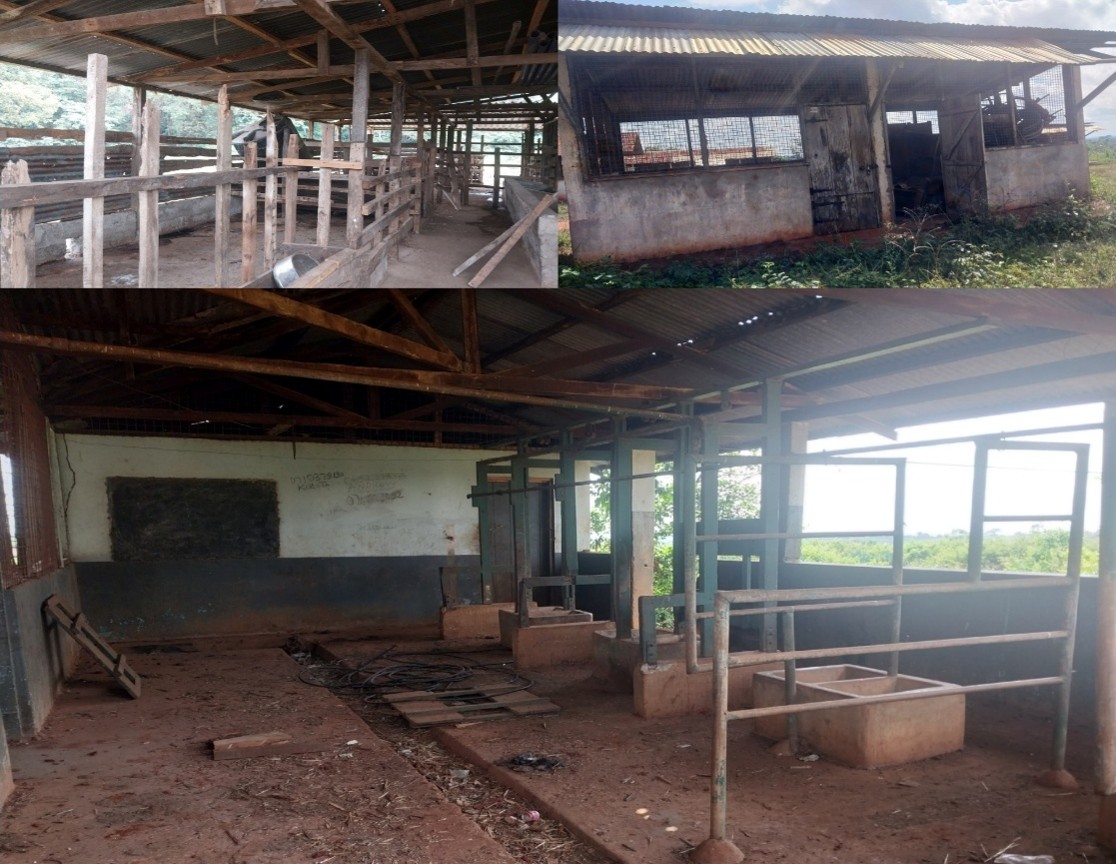
Also, the researcher conducted an observation of commercial income-generating activities in the institute to observe the livestock production infrastructure that generates raw produce, which helps in the sale of value-added commercial products, as illustrated in Figure 1
Source: Researcher (2026)
Figure 1 illustrates that the cow sheds lack livestock capable of producing milk, which serves as raw material for value-added commercial product processing. The absence of dairy cattle may be attributed to the high operational costs of maintaining livestock, which limits institutions' capacity to sustain the raw produce base needed for value-addition activities.
Qualitative information from the principal accountant and observations of the item of Sale of value-added commercial products collectively indicate that value-added commercial product processing remains largely underdeveloped, mainly due to inadequate facilities, high operational costs, and limited raw produce availability.
Quantitative and qualitative findings under this item indicate that the sale of value-added commercial products did not successfully enhance institutional financial sustainability. The findings show that value addition through processing was practiced inconsistently in some institutions, particularly by processing fresh milk into yogurt and curdled milk. In contrast, most institutions sold agricultural produce in its raw form or had discontinued processing activities. This limited and inconsistent value addition restricted the sector's capacity to generate a reliable stream of institutional income. This finding concurs with Kanire et al. (2024), who reported that underutilized processing capacity and weak linkages between production and processing constrained value addition within Tanzania’s dairy value chain. This finding is also consistent with the Resource-Based View (Barney, 1991), which emphasizes that organizational resources generate value when effectively utilized to create economic benefits. Thus, the presence of livestock, agricultural produce, and processing facilities alone does not assure financial sustainability unless these resources are adequately utilized through sustained value-added commercial activities.
In accordance with the management committee and student government, the researcher sought input from the Principal and Accountant.
During an interview, Principal 2 revealed that commercial income-generating activities have not strengthened practical training facilities at the institute:
The main challenge we face is inadequate facilities; we do not have a properly equipped food science laboratory, which affects the quality of the products we produce and limits students’ opportunities for practical learning. We also lack some essential equipment, materials, and other resources required to support effective practical training (Face-to-face interview with Principal 2 on August 31, 2026).
Similarly, Principal 4 said that:
Our institute has old practical training facilities, such as agro-milling machines, which have been used for a long time and have not been improved or upgraded. One reason is that commercial activities at our institute bring in only a small amount of income, which is not enough to make major improvements to these facilities. As a result, we continue using old machines and equipment, even though they are important for practical training (Face-to-face interview with Principal 4 on August 27, 2026).
The principals' views imply that commercial income-generating activities have made a limited contribution to strengthening practical training facilities. The reported lack of adequately equipped laboratories, essential training resources, and modern agro-milling equipment indicates that the income generated from commercial activities is insufficient to support substantial investment in the improvement and upgrading of training infrastructure. Consequently, institutions continue to operate with inadequate and outdated facilities.
In addition, Accountant 4 ascertained that:
We do have the machinery, but most of the machines are outdated and no longer suitable for effective practical training. Some of them have been in use for many years and have not been upgraded or replaced. So even though machinery is available at the institute, most of it is currently not being used for practical training because it cannot adequately meet the needs of modern training and production activities (Face-to-face interview with Accountant 4 on August 27, 2026).
Similarly, Accountant 3 had this to say;
The income we get from dairy processing and other farm products contributes about 30% of the institute’s total income. This contribution is still relatively small, and it is not enough to significantly support the improvement and maintenance of practical training facilities (Face-to-face interview with Accountant 3 on August 28, 2026).
The accountants' views imply that the limited income generated from commercial activities has not been sufficient to substantially improve practical training facilities such as livestock, laboratories, and production units. The continued use of outdated and non-functional machinery suggests that commercial revenues have either been insufficient or have not been adequately reinvested in practical training infrastructure.
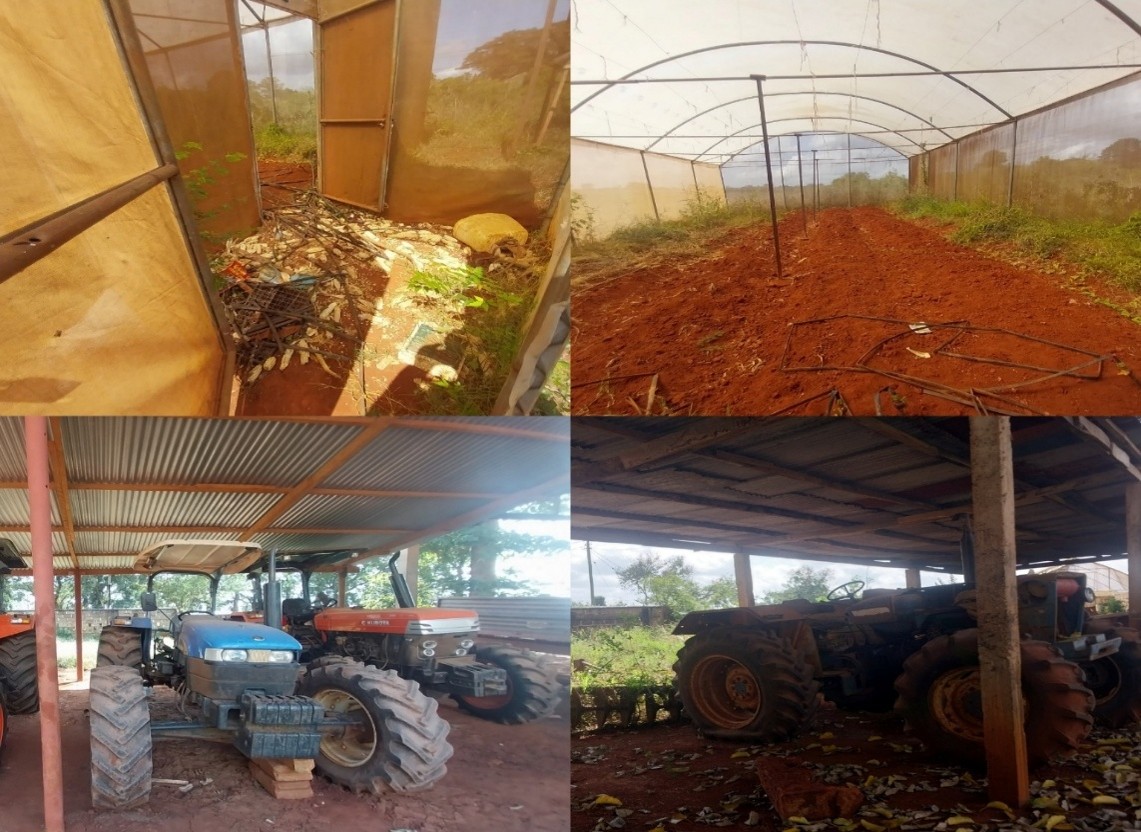
Furthermore, the researcher directly observed the institutes’ commercial income-generating activities to observe the condition and availability of practical training facilities, including livestock, laboratories, and production units, as shown in Figure 2.
Source: Researcher (2026)
Figure 2 illustrates that the institute’s practical training facilities, particularly the greenhouses and agricultural machinery, are either poorly maintained or underutilized. The limited crop activities in the greenhouses and the idle tractors indicate that these facilities are not being fully utilized for practical training and production activities. This may be attributed to limited reinvestment of income generated from commercial activities in maintaining, upgrading, and replacing practical training facilities, thereby constraining institutions’ capacity to provide effective hands-on training and sustain productive learning activities.
The qualitative information from principals, accountants, and observations of practical training facilities collectively indicates that commercial income-generating activities have made a limited contribution to strengthening practical training infrastructure. The findings reveal that inadequate and outdated facilities, limited availability of essential equipment, and insufficient reinvestment of commercial income constrain the improvement, maintenance, and modernization of laboratories, livestock facilities, production units, and agricultural machinery.
Quantitative and qualitative findings under this item indicate that commercial income-generating activities have contributed only limitedly to strengthening practical training facilities. Training infrastructure remains inadequate, including poorly equipped laboratories, outdated and non-functional machinery, limited essential training resources, and underutilized production facilities. The findings further suggest that the income generated from commercial activities has not been sufficient or adequately reinvested to support the maintenance, upgrading, and modernization of practical training facilities. Consequently, limited financial contributions and reinvestment of commercial income constrain institutions' capacity to sustain adequate facilities for effective practical and hands-on training. This finding is consistent with Ngcobo et al. (2024), who identified infrastructural constraints and low commercial output as key barriers limiting institutions’ capacity to expand and modernize their operational capabilities, a pattern reflected in the present study through aging and poorly maintained training equipment. It also aligns with Mang’ana et al. (2023), who found that weak financing and capital budgeting practices constrained the performance of agriculture-based enterprises, suggesting that beyond revenue generation, effective management and strategic reinvestment of commercial income are critical for strengthening institutional capacity.
In compliance with the management committee and students' government, the researcher sought input from the Principal and Accountant.
During an interview, Accountant 5 revealed that commercial income-generating activities had not helped reduce the institute's dependence on government funding and support consistent service delivery:
I would say that farm-related commercial income contributes about 20% of the total income. The income is also seasonal and does not come in consistently throughout the year. For example, hostel income depends on when farmers come for training, while rental income depends on the number of people using the services at a particular time. The same applies to machine-hiring services and other similar activities (Face-to-face interview with Accountant 5 on August 26, 2026).
Similarly, Accountant 2 said;
Right now, the main activities that bring us income are selling milk and tree seedlings. We have not yet expanded into many other income-generating activities, so our sources of income are still limited. These activities contribute only about 10% of the institute’s income. Because we depend on only a few activities, the income we get is not enough to reduce our dependence on government funding or to support our services and daily activities throughout the year (Face-to-face interview with Accountant 2 on August 31, 2026).
The views from the accountants indicate that commercial income-generating activities make a limited contribution to institutional financing. The 10% contribution, seasonal income, and limited range of commercial activities show that the institutions do not have a stable source of income from these activities. As a result, the income generated is not enough to reduce dependence on government funding or support consistent service delivery throughout the year.
Furthermore, during an interview, Principal 3 explained that.
For a long time, our institute has depended mainly on funds from the Ministry, including OC, to run our daily activities. The income we get from commercial activities is still small and not regular, so it cannot cover most of our important needs. We therefore continue to depend on government funding to support our operations and provide services throughout the year (Face-to-face interview with Principal 3 on August 28, 2026).
Similarly, Principal 2 added that;
Most of our daily operations and service delivery still depend largely on government funding. Income from commercial activities is not enough to meet operational needs, so government support remains essential for the institute to continue running its activities throughout the year (Face-to-face interview with Principal 2 on August 31, 2026).
The principals' views imply that small and irregular income from commercial activities is not enough to cover the institutes’ daily costs and support their services throughout the year. Therefore, the institutes still depend heavily on government funding, showing that commercial activities have not yet generated enough income to make the institutes more financially independent and sustainable.
Also, in analyzing the budget and audit report, the researcher found compelling evidence of continued dependence on government funding. Budget records consistently show that income from commercial activities represents only a marginal share of total institutional revenue, underscoring their limited capacity to sustain daily operations. Audit findings further highlight systemic weaknesses, including idle assets, produce spoilage, funding shortfalls, and persistent debt burdens, all of which diminish the effectiveness of income-generating ventures. Collectively, these results demonstrate that income-generating activities are not producing sufficient or reliable income streams, thereby reinforcing government funding as the primary and more stable source for service delivery and institutional sustainability. (DAoI 5, August 26, 2026).
The Qualitative findings show that commercial income-generating activities currently provide only additional income to the institutions, not enough to replace government funding as stated in policy and legal frameworks; there is strong evidence that Agricultural and Livestock Training Institutes are expected to reduce dependence on government financing through commercial income-generating activities. For MATIs, the National Agriculture Policy promotes commercialization of institutional assets through production and consultancy units engaged in seed multiplication, crop production, agro-processing, soil testing, machinery hire, and extension services, with internally generated revenues reinvested in institutional operations and development. Similarly, the National Livestock Policy and the Executive Agencies Act, Cap. 245 provide LITA with the mandate to mobilize and retain internally generated revenue through livestock production, hatcheries, dairy processing, breeding, laboratory services, consultancy, and specialized training. Collectively, these policy and legal provisions demonstrate that government funding is intended to be complemented by internally generated revenues, positioning commercial income-generating activities as an important mechanism for institutional financial self-reliance and sustainability. Nevertheless, institutions still depend mainly on government funding because it is more reliable and stable for supporting their daily operations and services. Therefore, unless these commercial activities are expanded, made more consistent, and managed better financially, the institutions are unlikely to significantly reduce their dependence on government funding.
The quantitative and qualitative findings show that commercial income-generating activities have not reduced the institutions’ dependence on government funding or provided a consistent income source for service delivery. The main challenges include low, seasonal, and irregular income from these activities, limited own-source revenue, and poor use of resources, such as idle assets, spoiled products, and outstanding debts. These challenges show that the current scale and management of commercial activities are not sufficient to replace government funding. Therefore, the institutes continue to depend heavily on government funding as their main and most reliable source of income for daily operations and service delivery.
This finding is consistent with Kimathi and Irungu (2024), who noted that income-generating units that produce only small returns do not contribute significantly to institutional financial sustainability. They recommended reviewing or discontinuing activities whose costs exceed their benefits. This concern is also reflected in the present study, where idle assets and product spoilage were identified as sources of financial losses. Similarly, the finding agrees with Jaafar et al. (2023), who argued from a resource dependency perspective that institutions relying on a limited and undiversified income base are more financially vulnerable. This is evident in the present study, as the institutes continue to depend heavily on government funding despite having various commercial income-generating activities.
Overall, the study found that commercial income-generating activities (CIGAs) contributed little to the financial sustainability of public agricultural and livestock training institutes in the Northern Zone, Tanzania, as indicated by the grand mean of 2.01. Although the institutes engaged in activities such as dairy processing, value-added product sales, and other commercial ventures, their contribution to institutional income, improved learning and living conditions, strengthened practical training facilities, and reduced dependence on government funding remained limited. This limited contribution stemmed from discontinued or underutilized activities, small herd sizes, inadequate processing facilities, outdated or non-functional machinery, limited production capacity, seasonal income, and insufficient reinvestment of commercial revenues. Consequently, CIGAs have remained a supplementary and inconsistent source of institutional income rather than a viable mechanism for achieving financial self-reliance, leaving the institutes substantially dependent on government funding. Unless these operational, infrastructural, production, and reinvestment constraints are systematically addressed, CIGAs are unlikely to contribute substantially to the long-term financial sustainability of public agricultural and livestock training institutes.
10. Conclusion of the Study
Based on the findings, the study concluded that commercial income-generating activities (CIGAs) in public agricultural and livestock training institutes in the Northern Zone, Tanzania, are not generating sufficient financial support that contributes to institutional financial sustainability to a low extent. The institutes engage in various commercial activities, but their financial returns remain limited due to inadequate production capacity, underutilized and discontinued ventures, small herd sizes, inadequate processing facilities, outdated or non-functional machinery, seasonal income, and insufficient reinvestment of commercial revenues. Consequently, CIGAs have not adequately fulfilled their intended role of strengthening financial sustainability, and the institutes continue to depend substantially on government funding to meet their financial needs.
11. Recommendation for Further Action
Based on the conclusion, the study recommends that the Ministry of Agriculture and the Ministry of Livestock and Fisheries, through the management of public Agricultural and Livestock Training Institutes (ALTIs), establish a mandatory CIGA reinvestment and performance-management mechanism. Under this mechanism, each institute should allocate a defined minimum proportion of annual net revenue from commercial income-generating activities to improving the specific activities that generate the revenue. Priority should be given to replacing or repairing outdated machinery, improving processing facilities, expanding productive assets such as livestock herds, and strengthening other activities with potential to generate sustainable income. Institute principals and accountants should prepare annual CIGA performance and reinvestment plans and report progress through mid-year and annual financial reports. Priority should initially be given to underperforming activities, particularly hatcheries, agro-processing, dairy processing, and feed milling, based on their revenue performance and operational constraints. This mechanism would address the major constraints identified by the study and enable CIGAs to progressively move from small, inconsistent income sources to productive, sustainable, and reliable institutional revenue, reducing dependence on government funding.
References
- African Union Commission. (2025). African continental TVET strategy 2025–2034: Sustainable development, social justice, and employability for all. DOI ↗ Google Scholar ↗
- American Psychological Association. (2020). Publication manual of the American Psychological Association (7th ed.). doi.org Google Scholar ↗
- Barney, J. (1991). Firm resources and sustained competitive advantage. Journal of Management, 17(1), 99–120. doi.org DOI ↗ Google Scholar ↗
- Braun, V., & Clarke, V. (2006). Using thematic analysis in psychology. Qualitative Research in Psychology, 3(2), 77–101. doi.org Google Scholar ↗
- Cohen, L., Manion, L., & Morrison, K. (2018). Research methods in education (8th ed.). Routledge. DOI ↗ Google Scholar ↗
- Committee of Sponsoring Organizations of the Treadway Commission. (2013). Internal control—Integrated framework. Google Scholar ↗
- Controller and Auditor General. (2025). Recent audit findings for the 2024/25 financial year. National Audit Office of Tanzania. Google Scholar ↗
- Creswell, J. W., & Creswell, J. D. (2023). Research design: Qualitative, quantitative, and mixed methods approaches (6th ed.). SAGE Publications. Google Scholar ↗
- Dawadi, S., Shrestha, S., & Giri, R. A. (2021). Mixed-methods research: A discussion on its types, challenges, and criticisms. Journal of Practical Studies in Education, 2(2), 25–36. doi.org Google Scholar ↗
- International Federation of Accountants. (2021). International code of ethics for professional accountants (including international independence standards). Google Scholar ↗
- Kanire, G., Msuya, C., & Alphonce, R. (2024). Operationalizing commercial dairy farms to strengthen dairy processing industries in Tanzania. Tanzania Journal of Agricultural Sciences, 23(1), 45–58. Google Scholar ↗
- Kimathi, B. K., & Irungu, A. M. (2024). Revenue diversification on financial sustainability of public universities in Kenya. Journal of Finance and Accounting, 4(3), 31–41. doi.org Google Scholar ↗
- Kiure, J., Lyamtane, E., & Ogoti, E. (2023). Contribution of Parents-Teachers Platform’s fundraising strategy to enhance financial sustainability of public secondary schools in Moshi District Council, Tanzania. International Journal of Innovative Research & Development, 12(8), 48–56. DOI ↗ Google Scholar ↗
- Kraaijenbrink, J., Spender, J. C., & Groen, A. J. (2010). The resource-based view: A review and assessment of its critiques. Journal of Management, 36(1), 349–372. doi.org Google Scholar ↗
- Lincoln, Y. S., & Guba, E. G. (1985). Naturalistic inquiry. SAGE Publications. Google Scholar ↗
- Living, M., & Kaganga, F. (2022). School-based income-generating activities in Moshi public secondary schools. Mwenge Catholic University. Google Scholar ↗
- Mang’ana, R., Msuya, C., & Alphonce, R. (2023). Effect of financial management practices on the performance of agricultural small and medium enterprises in Tanzania. Business Education Journal, 9(2), 112–126. Google Scholar ↗
- Ngcobo, S., Mokoena, S., & Ndlovu, T. (2024). Staff perceptions of revenue sourcing at a university of technology in South South Africa. South African Journal of Higher Education, 38(2), 143–161. Google Scholar ↗
- Njau, L. K., Lyamtane, E., & Ogoti, E. (2022). Conceivable challenges heads of schools face in managing school-based income-generating activities among public secondary schools in Kilimanjaro Region, Tanzania. International Journal of Education, Learning and Development, 10(9), 1–18. DOI ↗ Google Scholar ↗
- Peteraf, M. A. (1993). The cornerstones of competitive advantage: A resource-based view. Strategic Management Journal, 14(3), 179–191. doi.org Google Scholar ↗
- Taherdoost, H. (2019). What is the best response scale for survey and questionnaire design? Review of different lengths of rating scale/attitude scale/Likert scale. International Journal of Academic Research in Management, 8(1), 1–10. Google Scholar ↗
- Tanzania Commission for Science and Technology. (2021). National research ethics guidelines. Google Scholar ↗
- United Republic of Tanzania. (1997). Executive Agencies Act, Cap. 245. Government Printer. Google Scholar ↗
- United Republic of Tanzania. (2013). National agriculture policy 2013. Ministry of Agriculture. Google Scholar ↗
- United Republic of Tanzania. (2025). Tanzania development vision 2050 (Dira 2050). Government Printer. Google Scholar ↗
- World Bank. (2023). East Africa Skills for Transformation and Regional Integration Project (EASTRIP): Project overview. World Bank Group. Google Scholar ↗
- World Medical Association. (2013). World Medical Association Declaration of Helsinki: Ethical principles for medical research involving human subjects. JAMA, 310(20), 2191–2194. DOI ↗ Google Scholar ↗