Abstract
Operational innovation is increasingly recognized as a key source of competitiveness in commercial banking, particularly in emerging markets undergoing digital transformation. This study investigates the determinants of operational innovation at KienlongBank from a capability-based perspective. Specifically, it examines the effects of operational process capability, technological capability, human capability, and management model capability on operational innovation, and subsequently assesses its impact on service quality and customer experience.Survey data were collected from 198 employees and middle managers directly involved in operational activities. The data were analyzed using reliability testing, exploratory factor analysis, and multiple regression analysis. The results show that all four internal capabilities positively and significantly influence operational innovation, with management model capability exerting the strongest effect.The findings highlight the importance of governance and structural alignment in embedding innovation within operational systems. This study contributes empirical evidence from a medium-sized commercial bank in an emerging economy and offers practical implications for sustainable operational transformation.
Keywords
Operational Innovation Management Capability Technological Capability Process Capability Commercial Bank.
1. Introduction
In the era of digital transformation and increasing global competition, commercial banks are under unprecedented pressure to enhance operational efficiency, service quality, and customer experience while maintaining risk control and regulatory compliance. The rapid development of financial technologies (Fintech), platform-based competition, and evolving customer expectations have fundamentally reshaped the banking landscape. In this context, innovation is no longer limited to product development but increasingly embedded in operational management systems that determine service delivery performance and organizational adaptability.
Operational management plays a pivotal role in translating strategic intent into daily execution within commercial banks. It directly influences processing time, cost efficiency, service consistency, risk mitigation, and ultimately customer satisfaction. Traditional operational models characterized by rigid procedures, silo coordination, and manual processes are becoming increasingly inadequate in responding to digital banking ecosystems. Consequently, innovation in operational management has emerged as a strategic imperative rather than a discretionary improvement initiative.
From a theoretical perspective, innovation has been conceptualized as a core driver of organizational growth and competitiveness ([12]; [7]). Innovation management theory further emphasizes that innovation must be systematically governed through organizational structure, leadership, strategic alignment, and capability development [14]. Meanwhile, the Resource-Based View (RBV) suggests that sustainable competitive advantage stems from effectively leveraging valuable, rare, inimitable, and non-substitutable internal resources, including human capital, technological infrastructure, and managerial capabilities [1]. These theoretical lenses collectively imply that operational innovation should be examined as an integrated system encompassing processes, technology, human capabilities, and managerial coordination.
Empirical studies in banking and service industries have examined various components of this system. Prior research has explored process reengineering and operational redesign [4], service quality and customer experience ([8]; [15]), and the relationship between innovation and operational efficiency in commercial banks [5]. Domestic studies in Vietnam have similarly highlighted the roles of digital transformation, process improvement, and human resource capability in enhancing banking performance. However, these studies often examine innovation components in isolation rather than developing an integrated model that captures the systemic interaction among operational processes, technology, people, and management models.
More importantly, limited empirical attention has been paid to medium-sized joint-stock commercial banks in emerging markets. Compared with large state-owned or multinational banks, medium-sized banks face distinct constraints in terms of financial resources, technological infrastructure, and managerial capacity. Their innovation pathways may therefore differ substantially. In Vietnam, although digital banking transformation is accelerating, research focusing specifically on operational innovation models within medium-sized joint-stock commercial banks remains scarce.
KienlongBank represents a typical case of a medium-sized joint-stock commercial bank operating in a highly competitive and rapidly digitalizing environment. Understanding how internal capabilities influence innovation in operational management within such a context offers both theoretical and managerial relevance. Yet, no empirical study to date has developed and tested a comprehensive operational innovation model tailored to this category of bank.
To address these gaps, this study aims to develop and empirically test an integrated research model identifying key factors influencing innovation in operational management at KienlongBank. Specifically, the study examines four core determinants: (1) operational process capability, (2) technological capability, (3) human capability and organizational learning, and (4) management model and coordination capability.
Furthermore, the study investigates how innovation in operational management contributes to service quality and customer experience outcomes. This research makes three primary contributions. First, it contributes theoretically by integrating Schumpeterian innovation theory, innovation management theory, and RBV into a unified analytical framework explaining operational innovation in banking. Second, it contributes empirically by providing evidence from a medium-sized commercial bank in an emerging market context—an underexplored research setting in innovation literature. Third, it contributes managerially by identifying the relative importance of managerial structure, technology, process design, and human capability in driving operational innovation, thereby offering actionable insights for banking executives navigating digital transformation.
The remainder of this paper is structured as follows. Section 2 reviews the relevant literature and develops research hypotheses. Section 3 presents the research methodology and measurement design. Section 4 reports empirical findings. Section 5 discusses theoretical and managerial implications. Finally, Section 6 concludes with limitations and future research directions.
2. Literature Review
2.1 Theoretical Foundations
Innovation Theory: Innovation theory, rooted in Schumpeter’s seminal work (1934, 1942), conceptualizes innovation as new combinations of resources that drive economic growth and organizational competitiveness. Innovation extends beyond product development to include process innovation, organizational innovation, and managerial transformation. In banking, innovation in operational management reflects process redesign, workflow digitalization, and structural reconfiguration aimed at enhancing value creation. The OECD’s Oslo Manual (2018) further classifies innovation into product, process, organizational, and marketing innovation. Operational innovation in banking aligns primarily with process and organizational innovation, emphasizing internal efficiency, service reliability, and adaptability to technological shifts. These perspectives collectively highlight that innovation in operational management is systemic and capability-driven rather than episodic.Innovation Management Theory: Innovation management theory posits that innovation must be strategically orchestrated through organizational structure, leadership alignment, and capability development (Tidd & Bessant, 2018). Innovation outcomes depend not only on creative ideas but also on governance mechanisms, cross-functional coordination, and implementation capacity. In the context of commercial banks, innovation management manifests through leadership commitment, interdepartmental integration, agile decision-making, and performance monitoring systems. Without managerial alignment, innovation initiatives in operations often remain fragmented or symbolic. Thus, managerial capability functions as an institutional enabler of operational innovation.Resource-Based View (RBV): The Resource-Based View (Barney, 1991) explains sustained competitive advantage through valuable, rare, inimitable, and non-substitutable internal resources. For banks, these resources include technological infrastructure, skilled employees, organizational routines, and data-driven management systems. Operational innovation can be interpreted as a dynamic capability that reconfigures internal resources to improve efficiency and customer value. Technological systems enhance automation and risk control; human capital facilitates problem-solving and adaptation; managerial structures ensure alignment and execution. Hence, operational innovation emerges from the strategic integration of organizational resources.2.2 Operational Innovation in Banking
Operational innovation refers to systematic improvements in internal processes, service workflows, technological integration, and coordination mechanisms that enhance performance outcomes. In banking, operational innovation typically includes: Process reengineering and workflow optimization; Digitalization and automation of transactions; Cross-functional coordination mechanisms; Data-driven operational decision-making [4].
Empirical research indicates that operational innovation significantly influences operational efficiency, cost reduction, and service quality [5]. Moreover, innovation in operational systems strengthens customer experience by improving speed, reliability, and service consistency [15].
However, prior studies often focus on individual dimensions (e.g., digitalization or process redesign) rather than integrating process capability, technology capability, human capability, and managerial capability into a unified model.
2.3 Determinants of Innovation in Operational Management
Process capability refers to the extent to which operational procedures are standardized, integrated, flexible, and continuously improved. Process reengineering theory emphasizes that organizations must redesign workflows around value creation rather than functional silos [4]. In banking, well-structured processes reduce redundancy, enhance transparency, and provide a foundation for innovation implementation. Standardized yet flexible procedures create conditions for experimentation and continuous improvement. Therefore:
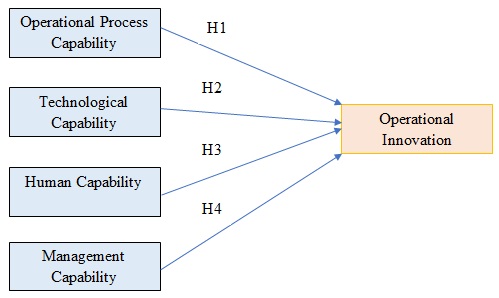
H1: Operational process capability positively influences innovation in operational management.
Technological capability reflects an organization’s ability to deploy, integrate, and leverage digital systems to support operations. According to dynamic capability theory [13], technological adaptation enables organizations to sense opportunities and reconfigure resources effectively. In commercial banking, technological capability includes automation, core banking systems, digital platforms, and analytics integration. Rather than mere IT investment, technological capability represents organizational competence in utilizing technology to improve workflow and service delivery.
H2: Technological capability positively influences innovation in operational management.
Human capability encompasses employee adaptability, learning orientation, and engagement in improvement initiatives. Amabile (1996) emphasizes that creativity at the individual level constitutes the foundation of organizational innovation. In banking operations, frontline employees and operational managers are critical agents of change. Their expertise and willingness to participate in innovation initiatives determine implementation success. RBV further supports the notion that human capital represents a core strategic resource.Accordingly:
H3: Human capability positively influences innovation in operational management.
Management model capability refers to leadership support, coordination mechanisms, decision-making speed, and data-based governance structures. Innovation management theory suggests that leadership and organizational structure significantly influence innovation outcomes. Empirical studies show that managerial alignment, cross-unit collaboration, and decentralized decision-making enhance innovation performance. In operational settings, strong leadership commitment and flexible governance systems facilitate rapid adaptation. Therefore:
H4: Management Capability positively influences innovation in operational management.
2.4 Research model
The research model is grounded in the Resource-Based View and innovation management theory, conceptualizing operational innovation as the outcome of coordinated internal capabilities. Specifically, four independent variables—operational process capability, technological capability, human capability, and management model capability—are hypothesized to have direct positive effects on operational innovation. In turn, operational innovation is proposed to enhance service quality and customer experience. The model emphasizes the integrative role of governance and organizational structures in aligning processes, technology, and human resources to drive innovation at the operational level within commercial banking.
3. Methodology
3.1 Research Design
This study adopts a quantitative research design to empirically test the proposed conceptual framework examining determinants of innovation in operational management. A cross-sectional survey approach was employed to collect primary data from employees and middle-level managers working within KienlongBank. Given that the study aims to assess perceptions of internal capabilities (process, technology, human, and managerial capabilities) and their impact on operational innovation, a survey-based method is appropriate for capturing organizational-level constructs through aggregated individual responses.
The research framework positions operational innovation as a mediating construct influenced by internal capabilities and affecting service quality and customer experience outcomes.
3.2 Sampling and Data Collection
Sample: The target participant comprises employees, specialists, and middle managers directly involved in operational activities at KienlongBank, including staff at the Head Office and branch/transaction offices. These respondents were selected because they participate in operational processes, interact with technological systems, and are familiar with managerial coordination mechanisms, thereby possessing sufficient knowledge to evaluate operational innovation practices. Participation was voluntary, and respondents were informed that the data would be used exclusively for academic purposes. No personally identifiable information was collected.
Sampling Method: A combination of convenience and purposive sampling was employed. Questionnaires were distributed through internal communication channels and online platforms, while purposive criteria ensured that only respondents directly engaged in operational activities were included. This approach is appropriate for organizational-level research where access to a complete sampling frame is limited.
Sample Size and Data Collection: A total of 210 questionnaires were distributed, of which 198 valid responses were retained after screening, yielding a response rate of 94.3%. The final sample size satisfies the minimum requirement for multivariate analysis, as recommended by Hair et al. (2010), with at least five observations per measurement item. Data were collected from 1st November to 6th December in 2025, using both online (Google Forms) and direct distribution methods.
3.3 Measurement Development
All constructs were measured using multi-item scales adapted from established literature and adjusted to the banking context. Items were measured using a five-point Likert scale ranging from 1 (strongly disagree) to 5 (strongly agree).
Operational process Capability (OC): Measured using five items reflecting process clarity, standardization, interdepartmental integration, flexibility, and continuous improvement orientation. The construct is grounded in process reengineering theory [4].
Technological Capability (TC): Measured using five items capturing automation support, reduction of manual tasks, service quality control, digital integration, and enhancement of customer experience. The construct reflects dynamic capability and digital transformation perspectives.
Human Capability (HC): Measured using five items assessing adaptability, innovation engagement, training support, learning orientation, and employee contribution to improvement initiatives. This construct draws on RBV and organizational creativity literature.
Management Capability (MC): Measured using five items capturing leadership support, flexibility of governance mechanisms, inter-unit coordination, speed of decision-making, and data-driven management practices.
Innovation Operational (IO): Measured using five items assessing the extent of process improvement, managerial innovation, digital integration, and continuous innovation implementation within operational management.
3.4 Data Analysis Procedure
Data were analyzed using SPSS software through a structured multi-step procedure, including reliability assessment, exploratory factor analysis, and multiple regression analysis.
Reliability Analysis: Internal consistency of the measurement scales was evaluated using Cronbach’s Alpha. Following established guidelines, constructs were considered reliable if Cronbach’s Alpha exceeded 0.70 and corrected item–total correlations were above 0.30. Only scales meeting these criteria were retained for further analysis.
Exploratory Factor Analysis (EFA) was conducted using Principal Component Analysis with Varimax rotation to examine the underlying factor structure of the constructs. Factor retention was based on the following criteria: KMO ≥ 0.50, significant Bartlett’s Test of Sphericity (p < 0.05), eigenvalues ≥ 1, factor loadings ≥ 0.50, and total variance explained ≥ 50%. EFA was performed separately for independent and dependent variables.
Regression Analysis: Multiple linear regression analysis was employed to test hypotheses H1–H4. Operational innovation was specified as the dependent variable, while operational process capability, technological capability, human capability, and management model capability were included as independent variables. Model adequacy was evaluated using R², adjusted R², F-statistics, and significance levels. Multicollinearity was assessed using the Variance Inflation Factor (VIF).
Validity and Bias Control: Construct validity was preliminarily assessed through factor loadings and cross-loading examination during EFA. To reduce common method bias, procedural remedies were applied, including assuring respondent anonymity, logically separating measurement sections, and minimizing ambiguity in questionnaire items. Harman’s single-factor test was conducted to assess potential common method variance.
4. Results
4.1 Descriptive Statistics
The final sample consisted of 198 valid responses collected from employees and middle-level managers at KienlongBank.
| Characteristics | Category | Frequency | Percentage (%) |
| Gender | Male | 95 | 48.0 |
| Female | 103 | 52.0 | |
| Age | Under 30 | 63 | 31.8 |
| 30–40 | 81 | 40.9 | |
| Above 40 | 54 | 27.3 | |
| Education Level | Bachelor’s degree | 168 | 84.8 |
| Postgraduate | 30 | 15.2 | |
| Position | Operational staff / Specialist | 135 | 68.2 |
| Middle manager | 63 | 31.8 | |
| Working Experience | Under 5 years | 58 | 29.3 |
| 5–10 years | 79 | 39.9 | |
| Over 10 years | 61 | 30.8 |
In terms of gender distribution, 52.0% of respondents were female and 48.0% were male, reflecting the typical workforce composition in the banking sector. The majority of respondents (40.9%) were between 30 and 40 years old, followed by employees under 30 years old (31.8%) and above 40 years old (27.3%). Regarding education level, 84.8% held a bachelor’s degree and 15.2% possessed postgraduate qualifications. Operational staff and specialists accounted for 68.2% of the sample, while 31.8% were middle managers. This composition ensures that the dataset captures both operational and managerial perspectives on innovation practices. Mean values of the constructs ranged from 3.62 to 4.05, indicating a moderately high perception of operational innovation and internal capabilities. Standard deviations were within acceptable ranges (< 1), suggesting no extreme dispersion.
4.2 Measurement Model Assessment
4.2.1 Reliability Analysis
The reliability analysis indicates that all measurement constructs demonstrate satisfactory internal consistency. As shown in Table 2, Cronbach’s Alpha coefficients for Operational Process Capability (α = 0.83), Technological Capability (α = 0.85), Human Capability (α = 0.81), Management Model Capability (α = 0.84), and Operational Innovation (α = 0.86) all exceed the recommended threshold of 0.70. Additionally, corrected item–total correlations for all observed variables are greater than 0.30, further confirming the adequacy of the scales. These results provide strong evidence that the measurement instruments are reliable and suitable for subsequent statistical analyses.
| Construct | Item | Factor Loading | Cronbach’s Alpha |
| Operational ProcessCapability (OC) | OC1 | 0.781 | 0.83 |
| OC2 | 0.804 | ||
| OC3 | 0.756 | ||
| OC4 | 0.768 | ||
| Technological Capability (TC) | CN1 | 0.812 | 0.85 |
| CN2 | 0.835 | ||
| CN3 | 0.774 | ||
| CN4 | 0.789 | ||
| Human Capability (HC) | HC1 | 0.742 | 0.81 |
| HC2 | 0.768 | ||
| HC3 | 0.751 | ||
| HC4 | 0.734 | ||
| Management Capability (MC) | MC1 | 0.823 | 0.84 |
| MC2 | 0.807 | ||
| MC3 | 0.781 | ||
| MC4 | 0.769 | ||
| Operational Innovation (OI) | OI1 | 0.845 | 0.86 |
| OI 2 | 0.832 | ||
| OI 3 | 0.801 | ||
| OI 4 | 0.776 |
4.2.2 Exploratory Factor Analysis
An exploratory factor analysis (EFA) was conducted to examine the underlying structure of the measurement scales. The Kaiser–Meyer–Olkin (KMO) measure of sampling adequacy reached 0.842, indicating that the dataset was appropriate for factor analysis. In addition, Bartlett’s Test of Sphericity was statistically significant (χ² = 1865.432, p < 0.001), confirming the presence of sufficient correlations among the observed variables.
The analysis extracted four factors corresponding to Operational Process Capability (QT), Technological Capability (CN), Human Capability (NG), and Management Model Capability (QL), each with eigenvalues greater than 1. The cumulative variance explained by these four factors was 65.30%, exceeding the commonly accepted threshold of 50%, thereby demonstrating satisfactory explanatory power.
All factor loadings were above 0.70, and no substantial cross-loadings were detected. These results indicate strong convergent validity and acceptable discriminant validity at the exploratory stage, supporting the adequacy of the measurement structure for subsequent regression analysis.
4.3 Structural Model Results
To test hypotheses H1 through H4, multiple linear regression analysis was employed to examine the effects of operational process capability, technological capability, human capability, and management model capability on operational innovation.
4.3.1 Model Fit
The regression analysis yielded robust model fit statistics. The multiple correlation coefficient (R) was 0.790, indicating a strong relationship between the independent variables and operational innovation. The coefficient of determination (R²) was 0.624, while the adjusted R² was 0.620, suggesting that approximately 62.0% of the variance in operational innovation (DM) is explained by the four explanatory variables included in the model.
The overall model was statistically significant, as evidenced by an F-statistic of 68.732 (p < 0.001). This confirms that the independent variables jointly contribute to explaining variations in operational innovation. Furthermore, the Durbin–Watson statistic was 1.987, which is close to the benchmark value of 2, indicating no serious autocorrelation issues in the residuals. These results demonstrate that the regression model is statistically sound and suitable for hypothesis testing.
4.3.2 Hypothesis Testing
The regression results presented in Table 3 provide empirical support for hypotheses H1 through H4. All four independent variables exert statistically significant and positive effects on operational innovation.
| Hypothesis | Relationship | Standardized β | t-value | p-value | Result |
| H1 | Operational Process Capability → Operational Innovation | 0.280 | 4.656 | 0.000 | Supported |
| H2 | Technological Capability → Operational Innovation | 0.310 | 5.469 | 0.000 | Supported |
| H3 | Human Capability → Operational Innovation | 0.220 | 3.531 | 0.001 | Supported |
| H4 | Management Model Capability → Operational Innovation | 0.350 | 6.158 | 0.000 | Supported |
First, H1 proposed that Operational Process Capability positively influences operational innovation. The findings confirm this relationship (β = 0.280, p < 0.001). This indicates that standardized, integrated, and continuously improved operational processes create a structural foundation that facilitates innovation. Well-designed workflows reduce inefficiencies and enhance flexibility, thereby enabling innovation initiatives to be embedded into daily operations.
Second, H2 examined the effect of Technological Capability on operational innovation. The results show a significant positive impact (β = 0.310, p < 0.001). This suggests that digital infrastructure, system integration, and technological readiness play a crucial enabling role in operational transformation. Technology not only enhances automation and data processing capacity but also supports real-time decision-making and cross-functional coordination, thereby accelerating innovation implementation.
Third, H3 posited that Human Capability positively affects operational innovation. The hypothesis is supported (β = 0.220, p < 0.01), although the standardized coefficient is lower compared to other predictors. This implies that employee competencies, skills, and adaptability contribute meaningfully to innovation, but their impact may be contingent upon supportive managerial structures and technological systems. In structured banking environments, individual creativity alone may not be sufficient without systemic alignment.
Fourth, H4 proposed that Management Model Capability positively influences operational innovation. The empirical evidence strongly supports this hypothesis (β = 0.350, p < 0.001), with this variable exhibiting the largest standardized coefficient among all predictors. This finding highlights the pivotal role of governance mechanisms, leadership alignment, performance management systems, and organizational coordination in institutionalizing innovation. It suggests that innovation in operational management is fundamentally driven by managerial architecture rather than isolated technological or human factors.
Overall, the findings indicate that while all four capabilities significantly contribute to operational innovation, institutional and managerial structures exert the most substantial influence. This reinforces the view that sustainable innovation in banking operations requires systemic governance alignment in addition to technological and human resource development.
5. Discussion
5.1 Theoretical Interpretation of Findings
The empirical results confirm that operational process capability, technological capability, human capability, and management model capability all positively influence innovation in operational management. Among these factors, management model capability exerts the strongest effect, followed by technological capability, operational process capability, and human capability. These findings offer important theoretical insights.
First, the dominant influence of management model capability reinforces innovation management theory, which emphasizes leadership alignment, governance structure, and coordination mechanisms as core enablers of innovation implementation [14]. While process and technology provide structural foundations, it is managerial capability that institutionalizes innovation and ensures systemic execution. This supports the argument that innovation outcomes are not solely resource-driven but governance-mediated.
Second, the strong impact of technological capability aligns with dynamic capability theory [13]. In the context of digital banking transformation, technological systems serve as both enablers and accelerators of operational innovation. However, the fact that technology ranks second rather than first suggests that digital infrastructure alone does not guarantee innovation unless supported by managerial direction and organizational coordination.
Third, operational process capability significantly influences innovation, supporting process reengineering theory [4]. Standardized and integrated workflows create structural conditions that allow innovation initiatives to be embedded within operational routines. This finding highlights the dual role of process discipline and flexibility in facilitating innovation.
Fourth, although human capability shows the lowest standardized effect among the four determinants, its influence remains statistically significant. This confirms the Resource-Based View [1], which identifies human capital as a strategic asset. However, the relatively lower coefficient suggests that in structured banking environments, individual creativity may be constrained unless supported by systemic managerial and technological infrastructures.
Collectively, these findings validate the integrated framework proposed in this study and confirm that operational innovation emerges from the interaction of institutional, technological, procedural, and human capabilities rather than from isolated drivers.
5.2 Contributions to Theory
Building upon the empirical support for H1–H4, this study makes three key theoretical contributions. First, by demonstrating that management model capability exerts the strongest influence on operational innovation, followed by technological, process, and human capabilities, the study integrates Schumpeterian innovation theory, innovation management theory, and the Resource-Based View into a coherent capability-based framework. The findings confirm that innovation in banking operations is not driven by isolated resources but by coordinated internal capabilities embedded within governance structures.
Second, the results extend innovation literature from a strategic or product-oriented focus to the operational level. The significant effects of process and technological capabilities (H1 and H2) highlight that sustainable competitiveness depends on innovation embedded within daily operational routines rather than solely on digital transformation strategy.
Third, by providing evidence from a medium-sized commercial bank in an emerging market, the study enriches contextual understanding of innovation dynamics. The dominant role of management model capability (H4) suggests that governance mechanisms are particularly critical in resource-constrained and institutionally evolving environments.
5.3 Managerial Implications
The findings offer several practical implications for banking managers. Given that management model capability shows the strongest impact on operational innovation, banks should prioritize strengthening leadership alignment, cross-functional coordination, and data-driven governance systems. Innovation must be institutionalized through formal structures rather than relying solely on individual initiatives.
The significant effects of technological capability (H2) indicate that digital investments should emphasize system integration, automation, and analytics rather than mere infrastructure expansion. Similarly, the positive impact of operational process capability (H1) suggests that banks should maintain standardized, yet flexible processes supported by continuous improvement mechanisms.
Although human capability (H3) exhibits the lowest relative coefficient, it remains statistically significant. Therefore, training, incentive systems, and innovation-oriented cultural initiatives are still essential to sustain operational transformation.
5.4 Limitations and Future Research
Despite its contributions, this study has several limitations. The cross-sectional design limits causal inference, suggesting that longitudinal research could better capture dynamic innovation processes. The focus on a single bank restricts generalizability; future studies should conduct comparative analyses across institutions or countries. Additionally, the use of multiple regression may be complemented by Structural Equation Modeling to explore mediating or moderating effects. Finally, external environmental factors such as regulatory pressure and competitive intensity were not incorporated, and their inclusion could enhance the explanatory power of future models.
6. Conclusion
This study highlights operational innovation as a critical foundation for sustainable competitiveness in commercial banking. By adopting a capability-based perspective, the research demonstrates that innovation in operational management emerges from the coordinated alignment of governance structures, technological systems, processes, and human resources. The findings emphasize that managerial architecture plays a central role in orchestrating internal capabilities and embedding innovation into daily operations. Rather than viewing innovation as a standalone technological initiative, the study underscores its systemic and institutional nature. Overall, the research contributes to a deeper understanding of how banks in emerging markets can strengthen their operational resilience and long-term performance through structured and integrated innovation efforts.
Acknowledgements: The authors gratefully acknowledge the generous support provided by the Banking Academy of Vietnam.
References
- Barney, J. B. (1991). Firm resources and sustained competitive advantage. Journal of Management, 17(1), 99–120. DOI ↗ Google Scholar ↗
- Eisenhardt, K. M., & Martin, J. A. (2000). Dynamic capabilities: What are they? Strategic Management Journal, 21(10–11), 1105–1121. DOI ↗ Google Scholar ↗
- Grönroos, C. (1984). A service quality model and its marketing implications. European Journal of Marketing, 18(4), 36–44. DOI ↗ Google Scholar ↗
- Hammer, M., & Champy, J. (1993). Reengineering the corporation: A manifesto for business revolution. Harper Business. DOI ↗ Google Scholar ↗
- Kesto, D. A., & Aregawi, G. A. (2021). Innovation and operational efficiency in commercial banks. International Journal of Innovation and Economic Development, 7(3), 28–38. DOI ↗ Google Scholar ↗
- Meyer, C., & Schwager, A. (2007). Understanding customer experience. Harvard Business Review, 85(2), 116–126. DOI ↗ Google Scholar ↗
- OECD. (2018). Oslo manual 2018: Guidelines for collecting, reporting and using data on innovation (4th ed.). OECD Publishing. DOI ↗ Google Scholar ↗
- Parasuraman, A., Zeithaml, V. A., & Berry, L. L. (1988). SERVQUAL: A multiple-item scale for measuring consumer perceptions of service quality. Journal of Retailing, 64(1), 12–40. DOI ↗ Google Scholar ↗
- Penrose, E. T. (1959). The theory of the growth of the firm. Wiley. DOI ↗ Google Scholar ↗
- Peteraf, M. A., & Barney, J. B. (2003). Unraveling the resource-based tangle. Managerial and Decision Economics, 24(4), 309–323. DOI ↗ Google Scholar ↗
- Saunders, M., Lewis, P., & Thornhill, A. (2012). Research methods for business students (6th ed.). Pearson. DOI ↗ Google Scholar ↗
- Schumpeter, J. A. (1934). The theory of economic development. Harvard University Press. DOI ↗ Google Scholar ↗
- Teece, D. J. (2010). Business models, business strategy and innovation. Long Range Planning, 43(2–3), 172–194. DOI ↗ Google Scholar ↗
- Tidd, J., & Bessant, J. (2018). Managing innovation: Integrating technological, market and organizational change (6th ed.). Wiley. DOI ↗ Google Scholar ↗
- Verhoef, P. C., Lemon, K. N., Parasuraman, A., Roggeveen, A., Tsiros, M., & Schlesinger, L. A. (2009). Customer experience creation: Determinants, dynamics and management strategies. Journal of Retailing, 85(1), 31–41. DOI ↗ Google Scholar ↗