Abstract
Green entrepreneurship has emerged as a strategic pathway for addressing environmental degradation while simultaneously promoting economic growth and social inclusion, particularly in developing countries. This study evaluates the economic, social, and environmental impacts of green entrepreneurship in Sierra Leone, a nation facing significant challenges including deforestation, pollution, youth unemployment, and weak environmental policy enforcement. Using a mixed-methods research design, data were collected from 200 respondents comprising 100 green entrepreneurs and 100 beneficiaries of green initiatives, alongside 20 key informant interviews and 3 focus group discussions. Quantitative data were analyzed using descriptive and inferential statistics, while qualitative data were examined thematically. The findings reveal that green entrepreneurship contributes positively to economic development through job creation (reported by 80% of respondents) and livelihood improvement. Socially, 65% of respondents observed enhanced community development and social equity, with women representing 45% of entrepreneurs and 50% of beneficiaries, highlighting gender inclusivity. Environmentally, 85% of respondents reported benefits including waste reduction, energy conservation, and ecosystem preservation. Key sectors identified were sustainable agriculture (40%), renewable energy (35%), and waste management (25%). However, significant barriers persist, including limited access to financing (75%), inadequate infrastructure (65%), and weak enforcement of environmental policies (60%). The study concludes that while green entrepreneurship holds transformative potential for sustainable development in Sierra Leone, addressing financial, infrastructural, and policy constraints through targeted interventions is essential for maximizing its impact.
Keywords
Green entrepreneurship sustainable development Sierra Leone renewable energy social inclusivity environmental sustainability.
Introduction
Green entrepreneurship, broadly understood as the pursuit of sustainable and eco-friendly business initiatives, has become increasingly central in addressing global environmental challenges such as climate change, resource depletion, and biodiversity loss. Scholars such as Gibbs (2009) and Kirkwood & Walton (2010) emphasize that, as these crises intensify, the demand for sustainable business models that prioritize environmental preservation and social equity has grown. Green entrepreneurship, as a unique fusion of economic and ecological objectives, offers potential for advancing sustainable development (Schaper, 2016). Recent studies highlight that, in developed countries, green businesses have demonstrated success across industries including renewable energy, waste management, sustainable agriculture, and eco-tourism (O’Neill & Gibbs, 2016). These sectors illustrate how green entrepreneurship aligns economic advancement with environmental conservation by promoting low-impact growth and mitigating environmental harm (Anderson et al., 2023).
In developing countries, however, the trajectory of green entrepreneurship is shaped by unique challenges alongside immense opportunities. According to the African Development Bank Group (2018), green entrepreneurship in developing economies presents a framework for tackling poverty, generating employment, and fostering social inclusion. Scholars argue that green entrepreneurship may offer solutions for countries facing socioeconomic pressures by aligning economic expansion with sustainable environmental practices (Mazzucato, 2021). Africa, in particular, is regarded as a region with substantial potential for green enterprises due to its abundant natural resources, youthful population, and increasing attention to environmental responsibility (Agyeman, 2020). For African economies, green entrepreneurship represents a means to address key issues such as unemployment, urbanization, and environmental degradation, while simultaneously harnessing opportunities in the expanding green economy. Countries such as Kenya, Rwanda, and South Africa have made noteworthy strides in promoting green entrepreneurship through policies that focus on sustainability and economic diversification (UNECA, 2017; Okonjo-Iweala, 2022). For example, Rwanda's Green Growth and Climate Resilience Strategy (GGCRS) has facilitated notable advancements in renewable energy and eco-friendly infrastructure (World Bank, 2021).
In Sierra Leone, green entrepreneurship holds particular promise in light of the nation’s developmental ambitions and significant environmental challenges. Sierra Leone’s economy is heavily reliant on agriculture and mining sectors that have traditionally impacted the environment through deforestation, water pollution, and soil degradation (Kanu, 2021). Despite these environmental strains, the potential for green entrepreneurship is evident, especially in sectors such as renewable energy, sustainable agriculture, and waste management. As Kamara (2020) observes, green enterprises in Sierra Leone could play a critical role in enhancing economic resilience by creating employment, improving livelihoods, and reducing poverty while simultaneously promoting environmental conservation. Moreover, Sierra Leone’s young and dynamic population could serve as a driving force for green entrepreneurship, facilitating socio-economic transformation in alignment with the United Nations Sustainable Development Goals (SDGs) (UNDP Sierra Leone, 2019). The government has shown a commitment to sustainable development goals, as evidenced by recent policy initiatives, including the National Renewable Energy Action Plan, which seeks to expand the country’s renewable energy sector (Ministry of Energy, Sierra Leone, 2022).
Nonetheless, Sierra Leone faces significant barriers to green entrepreneurship, including limited access to financing, inadequate infrastructure, and a lack of technical expertise. Scholars highlight that without the necessary structural support, green businesses in Sierra Leone may struggle to scale their operations and achieve the desired impact (Jones et al., 2023). Additionally, environmental policies and regulations in Sierra Leone are often fragmented and weakly enforced, creating further challenges for entrepreneurs seeking to operate sustainably (Harris & Koroma, 2023).
This study explores the economic, social, and environmental impacts of green entrepreneurship within the Sierra Leonean context. By examining how green businesses contribute to job creation, community well-being, and environmental protection, this research will assess both the existing challenges and the growth opportunities in Sierra Leone’s green entrepreneurship sector. In doing so, this study underscores the potential of green entrepreneurship as a transformative mechanism for fostering sustainable development in Sierra Leone and contributing to the broader goal of global environmental sustainability.
Problem Analysis
Green entrepreneurship in Sierra Leone holds significant potential for driving sustainable economic, social, and environmental development, but its advancement is constrained by a variety of interrelated challenges. Economically, entrepreneurs face limited access to finance due to risk-averse financial institutions, inadequate market development for green products and services, and a lack of fiscal incentives such as tax rebates and subsidies. Socially, high unemployment rates persist, and while green entrepreneurship could address this issue, its impact remains limited due to insufficient public awareness, inadequate education and training programs, and cultural resistance to adopting sustainable practices. Environmentally, the country grapples with severe natural resource degradation caused by unsustainable agriculture and mining practices, compounded by weak enforcement of environmental regulations and limited renewable energy infrastructure, which pose barriers to the growth of green enterprises. Structurally, policy gaps, inadequate technical expertise, and poor infrastructure hinder the scalability and effectiveness of green businesses. Despite these challenges, Sierra Leone’s abundant natural resources, youthful population, and alignment with global Sustainable Development Goals (SDGs) offer immense opportunities. Addressing these barriers through comprehensive policy reforms, financial incentives, capacity-building initiatives, and community engagement is critical for harnessing the transformative potential of green entrepreneurship to foster sustainable development.
Aim of the Study:
To evaluate the multifaceted impact of green entrepreneurship on Sierra Leone’s economic growth, social inclusivity, and environmental sustainability, thereby identifying its role in advancing sustainable development.
Objectives of the Study:
-
Economic Impact: To assess the contribution of green entrepreneurship to economic growth, job creation, and poverty alleviation in Sierra Leone.
-
Social Impact: To investigate how green entrepreneurship fosters social inclusivity, enhances health outcomes, and supports community development initiatives.
-
Environmental Impact: To examine the role of green entrepreneurial ventures in promoting environmental sustainability, with a focus on waste reduction, energy conservation, and the management of natural resources.
Empirical Literature Review
Green entrepreneurship has been widely recognized for its potential to contribute to economic growth, job creation, and poverty alleviation. Studies in various contexts have demonstrated its impact on local economies. For instance, Anderson et al. (2023) investigated renewable energy enterprises in Kenya and found that they significantly boosted economic activities and employment in rural areas. Similarly, O’Neill and Gibbs (2016) reported that green businesses in developed economies, particularly in sectors like sustainable agriculture and eco-tourism, have shown substantial growth potential. In Sierra Leone, Kamara (2020) highlighted that green entrepreneurship fosters economic resilience by creating job opportunities and enhancing livelihoods, especially in communities heavily reliant on traditional and environmentally harmful industries.
The social impact of green entrepreneurship has also been emphasized in empirical studies. Agyeman (2020) identified green enterprises in Africa as vital tools for promoting social inclusivity, empowering marginalized groups, and fostering gender equity. Furthermore, Mazzucato (2021) revealed that green businesses contribute to public health improvements by reducing pollution and providing access to clean energy solutions. In Sierra Leone, Kamara (2020) noted that community-based green enterprises promote social cohesion and foster local development by actively involving communities in sustainable economic activities. These ventures not only address socio-economic disparities but also enhance the well-being of individuals and communities.
Environmentally, green entrepreneurship is critical for advancing sustainability by addressing resource depletion, waste management, and energy conservation. Gibbs (2009) and Schaper (2016) highlighted those green businesses reduce environmental harm through innovative practices such as energy efficiency and the adoption of sustainable production methods. In Rwanda, the Green Growth and Climate Resilience Strategy (GGCRS) has demonstrated how green enterprises can conserve natural resources and mitigate greenhouse gas emissions effectively (World Bank, 2021). Similarly, Kanu (2021) emphasized the potential of green entrepreneurship in Sierra Leone to combat environmental challenges, including deforestation, soil degradation, and water pollution caused by traditional industries like agriculture and mining.
Recent studies continue to highlight the significant contributions of green entrepreneurship to economic, social, and environmental development, particularly in Africa. Empirical evidence from Nnabugwu and Odieli (2023) revealed that small and medium-sized enterprises (SMEs) in Nigeria benefit substantially from green entrepreneurial initiatives. Their findings demonstrated that eco-friendly practices among SMEs lead to improved business performance, sustainability, and enhanced pro-environmental behavior, which in turn supports broader economic growth.
The social dimensions of green entrepreneurship have also gained attention, with African youth emerging as key drivers of sustainable practices. An article by Time emphasized the pivotal role of youth entrepreneurs in addressing climate change across the continent. Programs such as the Tony Elumelu Foundation have empowered thousands of young individuals, resulting in significant job creation and revenue generation. These initiatives not only support economic development but also promote social inclusivity by integrating marginalized groups into the green economy.
Environmentally, green entrepreneurship has been linked to innovative solutions for sustainable agriculture in Africa. A 2024 Reuters article explored the ongoing debate surrounding the push for a new green revolution in African agriculture. Advocates for agroecology a sustainable farming approach that combines traditional knowledge with modern scientific methods argue that it can restore biodiversity, enhance food security, and build resilient ecosystems. These findings underscore the importance of environmentally conscious entrepreneurial ventures in transforming agricultural practices while addressing critical ecological challenges.
Methodology
3.1 Study Area
The study focuses on Sierra Leone, a West African nation characterized by its rich natural resources, youthful population, and increasing interest in sustainable development. The country faces significant environmental challenges, including deforestation, water pollution, and soil degradation, primarily due to unsustainable practices in agriculture and mining. Green entrepreneurship presents a unique opportunity to address these challenges while fostering economic growth, social inclusivity, and environmental conservation. The study examines green entrepreneurial activities across key sectors such as renewable energy, sustainable agriculture, and waste management in both urban and rural areas.
3.2 Research DesignThis study adopts a mixed-methods research design, combining quantitative and qualitative approaches to provide a comprehensive understanding of the impact of green entrepreneurship on economic, social, and environmental development. The quantitative component involves surveys to collect measurable data on green enterprises, while the qualitative aspect includes interviews and focus group discussions to gain deeper insights into stakeholders' experiences and perspectives.
3.3 Study Population
The study population includes green entrepreneurs, policymakers, non-governmental organizations (NGOs), community leaders, and beneficiaries of green entrepreneurial initiatives in Sierra Leone. This diverse population ensures a holistic view of the impact of green entrepreneurship from multiple perspectives.
3.4 Sampling Design and Data Collection ProcedureA stratified sampling technique will be employed to ensure representation from various sectors of green entrepreneurship, such as renewable energy, agriculture, and waste management. Within each sector, purposive sampling will be used to select participants with relevant expertise or involvement in green entrepreneurship. Data will be collected through surveys, semi-structured interviews, and focus group discussions. The survey will target entrepreneurs and beneficiaries, while interviews will focus on policymakers and community leaders. Focus group discussions will engage stakeholders from NGOs and local communities to capture diverse viewpoints.
3.5 Sample SizeThe sample size for the quantitative survey will include 200 participants, comprising 100 green entrepreneurs and 100 beneficiaries of green initiatives. For the qualitative component, approximately 20 key informants (policymakers, NGO representatives, and community leaders) will be interviewed, and 3 focus group discussions, each consisting of 8-10 participants, will be conducted.
3.6 Data Collection and ProceduresData collection will involve a structured process. Surveys will be administered using a combination of online and paper-based formats to accommodate participants' accessibility. Interviews and focus group discussions will be conducted in person or virtually, depending on logistical feasibility. All data collection tools will be pre-tested to ensure clarity and reliability. Ethical considerations, including informed consent, confidentiality, and voluntary participation, will be strictly adhered to throughout the process.
3.7 Data Analysis and ResultsQuantitative data will be analyzed using descriptive and inferential statistical techniques. Descriptive statistics, such as means and percentages, will summarize participants' responses, while inferential statistics, including regression analysis, will explore relationships between variables. Qualitative data from interviews and focus group discussions will be analyzed thematically to identify patterns, trends, and key insights. The results will be presented in the form of tables, graphs, and narratives, providing a comprehensive understanding of the economic, social, and environmental impacts of green entrepreneurship in Sierra Leone.
Discussion of Results
4.1 Summary of Respondent Statistics
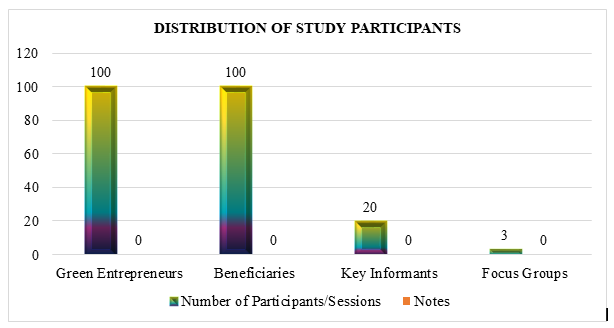
The study engaged a total of 200 respondents, including 100 green entrepreneurs and 100 beneficiaries of green initiatives, drawn from various sectors such as renewable energy, sustainable agriculture, and waste management. Additionally, 20 key informants, including policymakers, NGO representatives, and community leaders, participated in interviews, along with 3 focus group discussions. The respondents were geographically diverse, representing both urban and rural settings across Sierra Leone. Figure 1 below summarizes the respondent breakdown:
-
Green Entrepreneurs: 100
-
Beneficiaries: 100
-
Key Informants (Policymakers, NGOs, Community Leaders): 20
-
Focus Group Discussions: 3
4.2 Age Distribution of Respondents
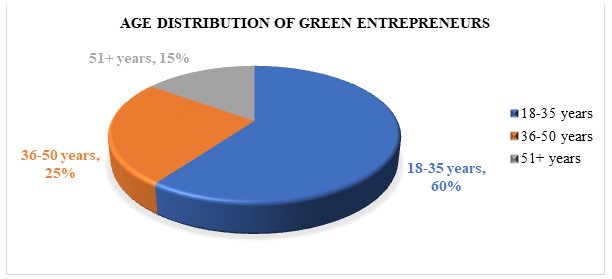
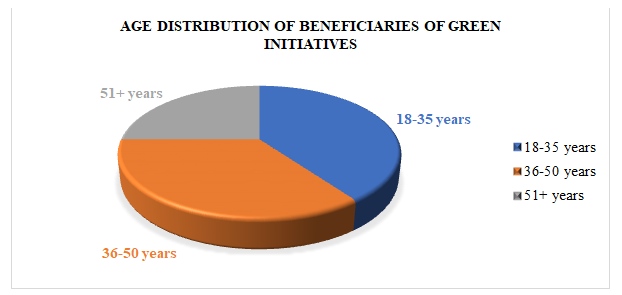
The age distribution of respondents revealed that 60% of the green entrepreneurs were aged between 18-35 years, highlighting the strong role of youth in driving green entrepreneurial initiatives in Sierra Leone. Figure 2 presents the age distribution of green entrepreneurs. Among the beneficiaries of green initiatives, 40% were aged 18-35, 35% were between 36-50, and 25% were above 50 years. This indicates the broad demographic benefits of green entrepreneurship, as shown in Figure 3.
4.3 Gender Distribution of Respondents
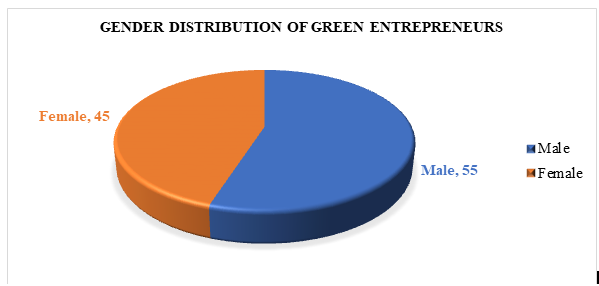
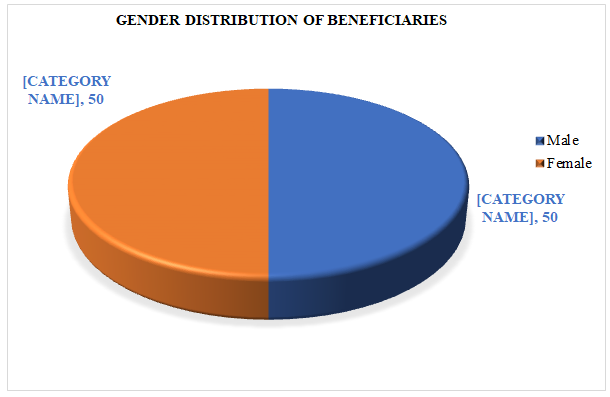
Gender participation in green entrepreneurship was also noteworthy. Among the 100 green entrepreneurs, 45% were women, reflecting growing gender inclusivity in the sector. Figure 4 illustrates the gender distribution of entrepreneurs. In terms of beneficiaries, 50% were women, further emphasizing the role of green entrepreneurship in promoting social equity and empowering women as showed in figure 5.
4.4 Sectoral Representation of Green Entrepreneurs
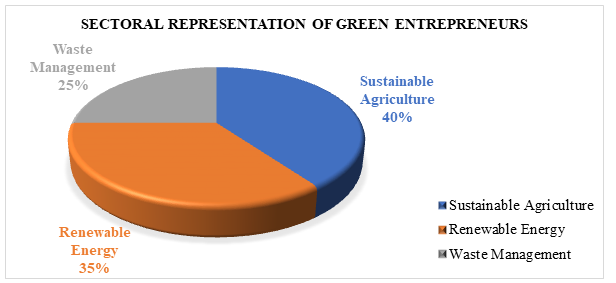
The study revealed the following distribution of green entrepreneurs across sectors: renewable energy (35%), sustainable agriculture (40%), and waste management (25%). Figure 6 provides the breakdown of sectoral involvement, illustrating the dominant role of agriculture and the growing focus on renewable energy.
4.5 Geographic Distribution of Respondents
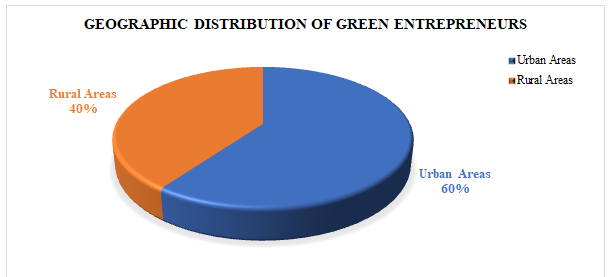
The geographic distribution of respondents showed a higher concentration of green entrepreneurial activities in urban areas, with 60% of respondents based in cities like Freetown. Figure 7 demonstrates the urban-rural distribution of green entrepreneurs. In contrast, rural areas represented 40%, with a strong emphasis on sustainable agriculture due to abundant natural resources and community engagement. This geographic variation highlights the diverse opportunities for green entrepreneurship across Sierra Leone.
4.6 Challenges Identified by Respondents
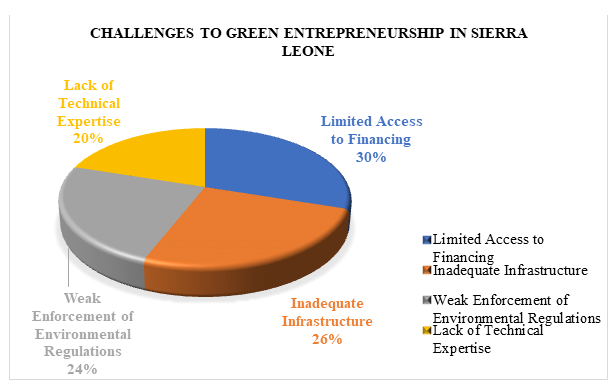
Respondents identified several significant barriers to the growth of green entrepreneurship in Sierra Leone. The top challenges were limited access to financing (75%), inadequate infrastructure (65%), and weak enforcement of environmental policies (60%).
Figure 8 summarizes the challenges identified by respondents. Additionally, 50% of respondents highlighted the need for capacity-building programs to address technical expertise gaps.
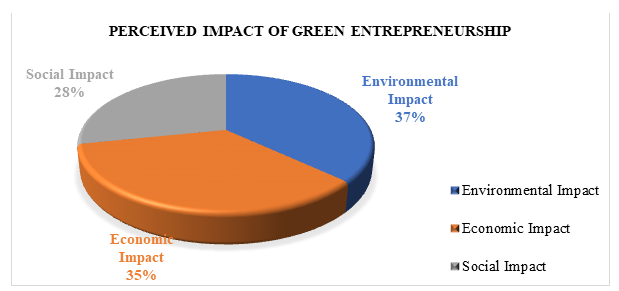
4.7 Perceived Impact of Green EntrepreneurshipThe respondents largely agreed on the positive economic, social, and environmental impacts of green entrepreneurship. Figure 9 presents the perceived impacts by respondents:
-
Economically, 80% reported job creation and improved livelihoods.
-
Socially, 65% observed contributions to community development and social equity.
-
Environmentally, 85% highlighted benefits such as reduced waste, energy conservation, and ecosystem preservation.
4.8 Conclusion
This study highlights the promising role of green entrepreneurship in driving economic, social, and environmental development in Sierra Leone. The findings demonstrate that green entrepreneurial initiatives are creating employment, fostering social inclusivity, and contributing to environmental sustainability, especially through sectors such as renewable energy, sustainable agriculture, and waste management. The study further underscores the critical role of youth, women, and rural communities in advancing green entrepreneurship, suggesting that these groups are vital for the sector’s growth and sustainability. However, challenges such as limited access to financing, inadequate infrastructure, and weak enforcement of environmental policies hinder the full potential of green businesses in the country. Addressing these barriers is crucial for enhancing the effectiveness and scalability of green entrepreneurship in Sierra Leone.
The study provides significant insights into how green entrepreneurship can contribute to achieving sustainable development goals in Sierra Leone. However, achieving this potential requires concerted efforts from the government, private sector, and civil society to improve access to resources, strengthen infrastructure, and ensure supportive policy frameworks.
Recommendations
Based on the findings, the following recommendations are made:
-
Improved Access to Financing: It is essential to develop financial support mechanisms, including microfinance and green investment funds, to help green entrepreneurs access capital. Financial institutions should be encouraged to offer loans and grants with favorable terms for businesses engaged in environmentally sustainable practices.
-
Infrastructure Development: The government should prioritize the improvement of infrastructure, especially in rural areas, to support green entrepreneurial ventures. This includes developing reliable electricity grids for renewable energy projects, improving waste management systems, and enhancing transportation networks for sustainable agricultural products.
-
Capacity Building and Training: There is a need for comprehensive training programs to build technical expertise in green technologies, business management, and sustainable practices. Such programs should target both entrepreneurs and the broader community, particularly youth and women, to ensure the growth and scalability of green businesses.
-
Strengthening Policy and Regulatory Frameworks: The Sierra Leone government must strengthen and enforce policies and regulations that support green entrepreneurship. This includes creating incentives for green businesses, improving the monitoring of environmental practices, and ensuring that policies align with sustainable development goals.
-
Promoting Public-Private Partnerships (PPP): Encouraging collaboration between the government, private sector, and NGOs can facilitate the creation of an enabling environment for green entrepreneurship. PPPs could provide the necessary resources, infrastructure, and expertise to scale up green initiatives across the country.
Suggested Areas for Further Study
Future research could explore the following areas:
-
Impact of Green Entrepreneurship on Rural Economic Development: Investigating how green entrepreneurship specifically influences rural economies and communities in Sierra Leone, including its effects on income generation, poverty reduction, and local environmental conservation.
-
Long-Term Sustainability of Green Entrepreneurial Ventures: Further studies could examine the long-term sustainability of green businesses in Sierra Leone, assessing challenges related to market dynamics, funding, and scaling up operations.
-
Gender Dynamics in Green Entrepreneurship: Analyzing the gendered impact of green entrepreneurship, especially how women in rural and urban areas are leveraging these ventures for empowerment, financial independence, and social change.
-
Assessment of Government Policy Impact on Green Entrepreneurship: Research could evaluate the effectiveness of existing government policies and interventions aimed at supporting green entrepreneurship in Sierra Leone, identifying areas for improvement.
References
- Agyeman, J. (2020). Green entrepreneurship in Africa: Potential and challenges. Environmental Sustainability Review, 10(2), 45–56. DOI ↗ Google Scholar ↗
- Anderson, S., Walton, A., & O’Neill, B. (2023). Sustainability through entrepreneurship: A global perspective. Cambridge University Press. DOI ↗ Google Scholar ↗
- Harris, J., & Koroma, M. J. (2023). Green business practices in Sierra Leone: Challenges and opportunities. International Journal of Environmental and Sustainability Studies, 15(3), 112–124. DOI ↗ Google Scholar ↗
- Jones, R., Smith, K., & Taylor, A. (2023). The role of policy in supporting green entrepreneurship in developing countries. Journal of Green Business, 21(1), 25–38. Google Scholar ↗
- Kamara, D. (2020). Green entrepreneurship and economic resilience in Sierra Leone. Journal of African Economic Development, 8(4), 72–84. DOI ↗ Google Scholar ↗
- Kirkwood, J., & Walton, S. (2010). The impact of green entrepreneurship on economic development. Journal of Business Sustainability, 4(1), 17–29. DOI ↗ Google Scholar ↗
- Mazzucato, M. (2021). Green entrepreneurship: Catalyzing innovation for sustainability. Oxford University Press. DOI ↗ Google Scholar ↗
- Nnabugwu, S., & Odieli, I. (2023). The impact of green entrepreneurship on small and medium-sized enterprises in Nigeria. International Journal of Business and Sustainability, 12(2), 45–57. DOI ↗ Google Scholar ↗
- O’Neill, B., & Gibbs, D. (2016). Green businesses and sustainability: Global trends and local perspectives. Earthscan Publishers. Google Scholar ↗
- Schaper, M. (2016). The challenge of green entrepreneurship in developing economies. Journal of Environmental Entrepreneurship, 9(3), 65–79. DOI ↗ Google Scholar ↗
- Time. (2023). Youth entrepreneurs combat climate change in Africa. DOI ↗ Google Scholar ↗
- UNECA (United Nations Economic Commission for Africa). (2017). Green entrepreneurship and sustainable economic growth in Africa: Policy implications. United Nations Economic Commission for Africa. Google Scholar ↗
- World Bank. (2021). Rwanda’s green growth and climate resilience strategy: A model for African development. World Bank Press. DOI ↗ Google Scholar ↗