Abstract
This study investigates how grassroots innovations and co-produced planning processes enable sustained development control in regularised informal settlements in rapidly urbanising secondary towns, addressing a critical gap in existing literature on how development control is negotiated and upheld beyond formal state enforcement. Employing a qualitative, embedded case study design, the research was integrated into a multi-phase informal settlement regularisation programme (2019 - 2025) across eight small towns in Mbarali District, Tanzania. Data collection combined spatial audits, participatory GIS, photovoice, focus group discussions, key informant interviews and in-depth interviews. The study addresses three interrelated research questions: how grassroots actors and planning authorities co-produce development control during and after regularisation; to what extent co-produced town planning layouts are maintained over time; and how plan amendments are negotiated within evolving socio-economic conditions. Findings show that co-produced planning processes grounded in trust, transparency and iterative community engagement resulted in high levels of spatial compliance. Of the 68,239 plots covered by 582 Town Planning Drawings, 72% remained unchanged five years after implementation. A simple grassroots innovation; six-inch iron nail markers, functioned both as physical boundary references and as collective symbols of spatial agreement, reinforcing community-led enforcement. Plan amendments were driven not by resistance to planning, but by adaptive responses to land market pressures, housing demand, and inheritance practices. The study demonstrates that participatory planning, when anchored in adaptive governance, strong local institutions and community stewardship, can transform technical planning instruments into durable, locally owned systems of development control. The Mbarali case extends co-production theory into post-planning enforcement and challenges dominant narratives that frame informal settlements as inherently ungovernable, offering scalable insights for inclusive urban governance across the Global South.
Keywords: participatory planning; co-production; development control; grassroots innovation; informal settlement regularisation; Tanzania.
Introduction
Rapid urbanisation is reshaping cities across the Global South, with informal settlements now constituting a dominant mode of urban expansion rather than a transitional anomaly. Globally, over one billion people reside in informal settlements, and this number is projected to increase as urban growth continues to outpace the capacity of formal planning and regulatory systems . While much scholarship has examined informal settlements through lenses of housing deficits, tenure insecurity and service provision, considerably less attention has been paid to how development control is practically negotiated, enforced and sustained after planning interventions; particularly in secondary and small towns experiencing rapid transformation.
Recent debates in urban governance highlight a growing disconnect between formal planning instruments and lived urban realities, especially in contexts characterised by weak enforcement capacity, fiscal constraints, and contested legitimacy of state institutions (Ivan Turok & Leanne Seeliger, 2014; [50]). Even where plans exist, implementation frequently falters, leading to what scholars describe as a persistent “plan - implementation gap” . As a result, informal land transactions, incremental construction and negotiated spatial practices continue to shape urban form, often outside formal regulatory frameworks.
In response, contemporary scholarship has increasingly turned to co-production, adaptive governance, and grassroots innovation as alternative lenses for understanding how governance actually functions in informal urban contexts ([31]; Seyfang & and Smith, 2007; [51]). These approaches recognise that urban order is not produced solely by state enforcement, but through negotiated relationships between communities, local institutions and technical professionals. However, existing studies largely focus on service delivery, upgrading or participatory plan preparation, with limited empirical attention to post-planning enforcement and everyday development control; that is, how approved layouts are upheld, contested or adapted over time.
This gap is particularly pronounced in secondary and small towns, which are absorbing a growing share of urban population growth across Sub-Saharan Africa. Compared to metropolitan cities, these towns often operate with thinner institutional capacity, fewer financial resources and limited professional planning presence, yet they remain spatially tractable and socially cohesive . Despite their strategic importance, they remain underrepresented in urban governance scholarship, which continues to privilege large cities.
In Tanzania, informal settlements account for over 70% of urban residential areas , and informal settlement regularisation has emerged as a key national strategy for addressing tenure insecurity and spatial disorder ([24]; Magina, Kyessi, & Kombe, 2020). While regularisation initiatives have expanded rapidly, evidence suggests that many schemes struggle to maintain spatial order after implementation due to weak enforcement, limited compensation for public land and minimal community involvement in post-planning governance . As a result, formal plans are often eroded through incremental amendments, encroachments, and informal reinterpretation.
Against this backdrop, this study addresses a critical gap in the literature on how development control is co-produced, enforced and adapted through grassroots practices in regularised settlements over time. Rather than treating deviations from plans as failures, the study examines how communities and local authorities negotiate spatial order in practice, using low-cost, locally embedded tools and social norms.
Empirically, the paper draws on a longitudinal, embedded case study of eight rapidly urbanising small towns in Mbarali District, Tanzania, where a participatory regularisation programme introduced a simple grassroots innovation using six-inch iron nail markers to demarcate plot boundaries and support community-led enforcement, before cadastral survey was implemented. The study is guided by three research questions (i) How are development control mechanisms co-produced between grassroots actors and planning authorities during and after informal settlement regularisation? (ii) To what extent are co-created town planning layouts maintained over time in rapidly urbanising secondary towns? And (iii) How are plan amendments negotiated in response to socio-economic and spatial pressures, and what do these processes reveal about adaptive governance? By addressing these questions, the paper contributes to urban governance scholarship in three ways. First, it extends co-production theory beyond planning and service delivery into the under-examined domain of post-planning enforcement. Second, it provides rare longitudinal evidence from secondary towns, demonstrating how adaptive governance operates in practice. Third, it challenges dominant narratives that frame informal settlements as inherently ungovernable, instead repositioning them as sites of institutional innovation with broader relevance for cities across the Global South.
Conceptual framework
2.1 Limitations of existing frameworks
Urban governance in informal settlements has been analysed primarily through regulatory planning, participatory and collaborative planning and regularisation or upgrading frameworks ([24]; [29]; Munuo, Kombe, & Msangi, 2025). Conventional regulatory planning approaches conceptualise development control as a state-led function dependent on statutory inspections, legal sanctions and institutional capacity . In informal settlements, however, these assumptions rarely hold. Weak enforcement capacity limited fiscal resources and low institutional legitimacy frequently result in a persistent gap between plans and development outcomes . Participatory and collaborative planning frameworks emphasise inclusion, deliberation and consensus-building, improving legitimacy during plan preparation. However, participation is often treated as a procedural stage rather than an ongoing governance practice. As a result, these frameworks offer limited insight into post-approval enforcement and everyday regulation . Similarly, informal settlement regularisation and upgrading frameworks focus on tenure security, legal recognition and service provision ([24]; Magina, Kyessi, & Kombe, 2020). These approaches implicitly assume that spatial order and development control will follow once legality is achieved. Empirical evidence from Sub-Saharan Africa suggests otherwise, spatial order often deteriorates after regularisation where enforcement mechanisms are not locally embedded . Together, these limitations point to a critical gap in existing scholarship on how development control is produced, enforced and renegotiated through everyday practices involving both formal and informal actors after plans are approved.
2.2 Framework construction: Integrating complementary theoretical strands
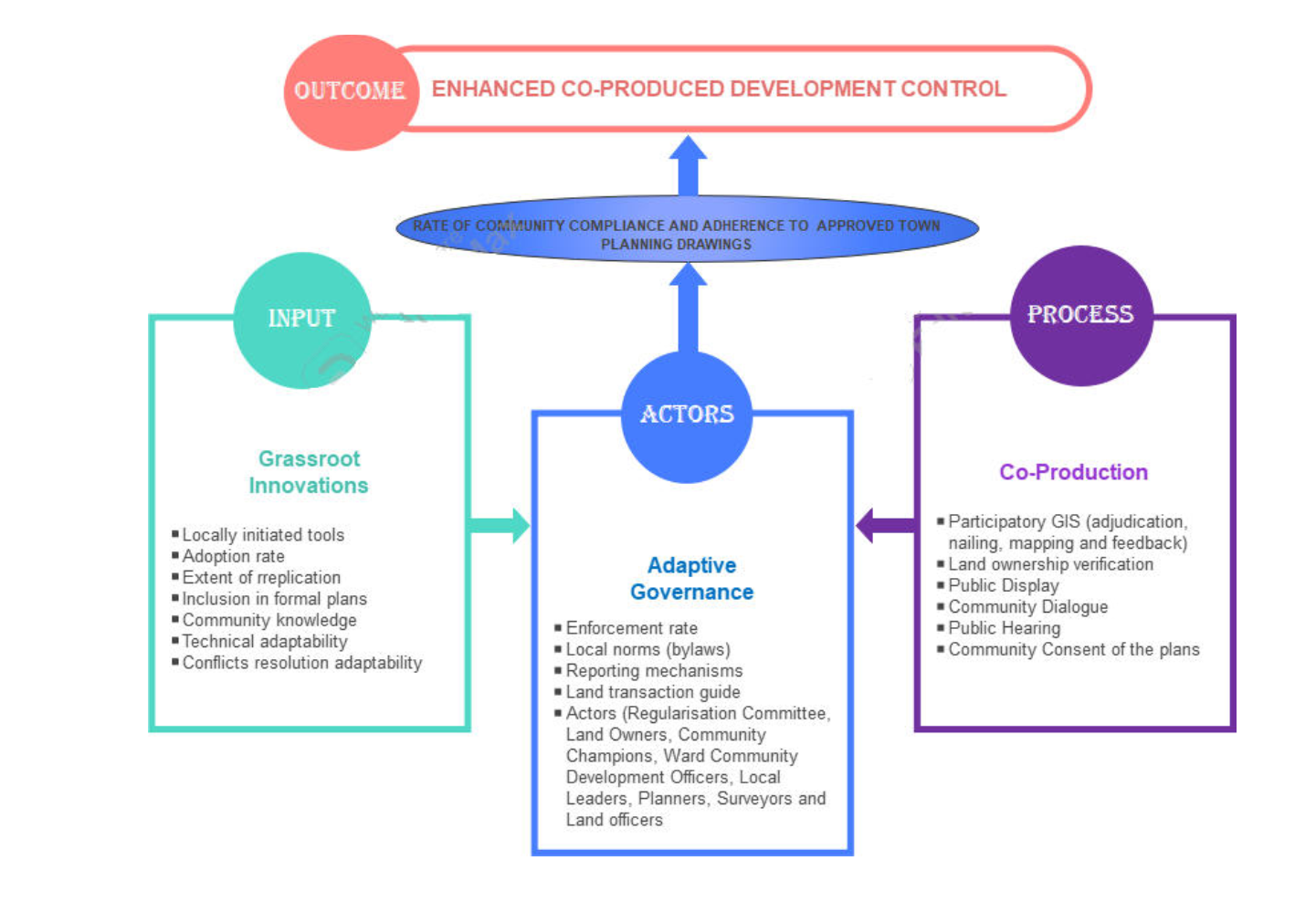
To address this gap, the study develops an integrated conceptual framework combining insights from co-production, grassroots innovation and adaptive governance. Rather than adopting a single existing model, the framework is systematically constructed from the literature and refined through empirical engagement with the Mbarali case. The framework follows a sequential logic structured around inputs, actors, processes and outcomes, reflecting how development control operates in practice rather than how it is institutionally prescribed. Each theoretical strand is selected to address a specific governance challenge identified in the literature such as weak enforcement, limited legitimacy, plan invisibility and the need for flexibility in dynamic urban contexts.
2.3 Inputs: Grassroots innovations as governance enablers
The framework begins with grassroots innovations (Figure 1, left), drawing on scholarship that conceptualises innovation as locally generated, low-cost and socially embedded responses to institutional and material constraints (Seyfang & and Smith, 2007; Smith, Fressoli, & Thomas, 2014). In informal settlements, a key governance challenge is the abstraction and invisibility of planning instruments. Town planning drawings are often technically complex and inaccessible, limiting residents’ ability to interpret and comply with them . In Mbarali, six-inch iron nail markers emerged through participatory processes as locally intelligible boundary references that translated plans into everyday spatial practice. Indicators such as adoption rate, replication, inclusion in formal plans, community knowledge and conflict-resolution adaptability capture whether such innovations gain social legitimacy and governance relevance. Within the framework, grassroots innovations function as material and symbolic anchors that stabilise co-produced agreements, reduce ambiguity and enable peer-based monitoring.
2.4 Actors and adaptive governance: Distributing regulatory authority
At the centre of the framework are actors operating within an adaptive governance system (Figure 1, centre). Adaptive governance literature emphasises flexibility, learning and polycentric arrangements in managing complex and dynamic systems (Dietz, Ostrom, & Stern, 2003; [17]). Informal settlements are shaped by rapid socio-economic change, land market pressures and incremental development, making rigid enforcement models ineffective . In Mbarali, regulatory authority is distributed across formal institutions (planners, land officers, ward and subward leaders) and informal or hybrid actors (regularisation committees, hamlet leaders and landowners). Locally embedded mechanisms such as bylaws, reporting systems and land transaction guidelines institutionalise enforcement within everyday governance practices. This arrangement addresses the governance challenge of limited state capacity by distributing responsibility across actors and scales, enabling continuous monitoring and negotiated enforcement .
2.5 Process: Co-production as the operational mechanism
The process dimension of the framework is co-production (Figure 1, right), defined as the joint provision of public goods by state and non-state actors ([31]; [36]). While co-production has been widely applied to service delivery and upgrading, this study extends it to development control and post-planning enforcement, a domain that remains under-theorised . Processes such as participatory GIS, boundary marking, public display of plans, community dialogue, hearings and consent-building are treated as governance practices rather than procedural requirements. These practices embed technical planning knowledge within community routines, enhancing legitimacy and enabling informal enforcement through social norms and peer monitoring . Co-production therefore addresses the governance challenge of low compliance by explaining why communities uphold plans even where formal sanctions are weak or absent.
2.6 Outcome pathway: Compliance, adaptation and development control
The immediate outcome of the interacting components is community compliance and adherence to approved town planning drawings (Figure 1). Compliance is conceptualised as a governance outcome shaped by boundary visibility, shared norms and collective enforcement rather than by coercion alone . The framework also recognises that informal settlements are dynamic. Plan amendments, such as boundary realignments or land-use changes, are treated as negotiated adaptations rather than failures of planning ([17]; [50]). Adaptive governance allows flexibility while maintaining overall spatial coherence. Sustained compliance combined with negotiated adaptation produces the overarching outcome of enhanced co-produced development control. This outcome directly addresses the governance challenge of post-regularisation plan erosion documented in African urban contexts .
2.7 Conceptual Contribution
This framework advances urban governance theory in three ways. First, it extends co-production beyond service delivery and plan preparation into post-planning enforcement. Second, it foregrounds grassroots innovations as central analytical components of spatial governance. Third, it operationalises adaptive governance in informal settlement regularisation, demonstrating how flexibility and control can coexist. By grounding the framework in established theory and empirical practice, the study offers a transferable analytical model for understanding development control in rapidly urbanising secondary towns across the Global South.
Methods
3.1 Research design
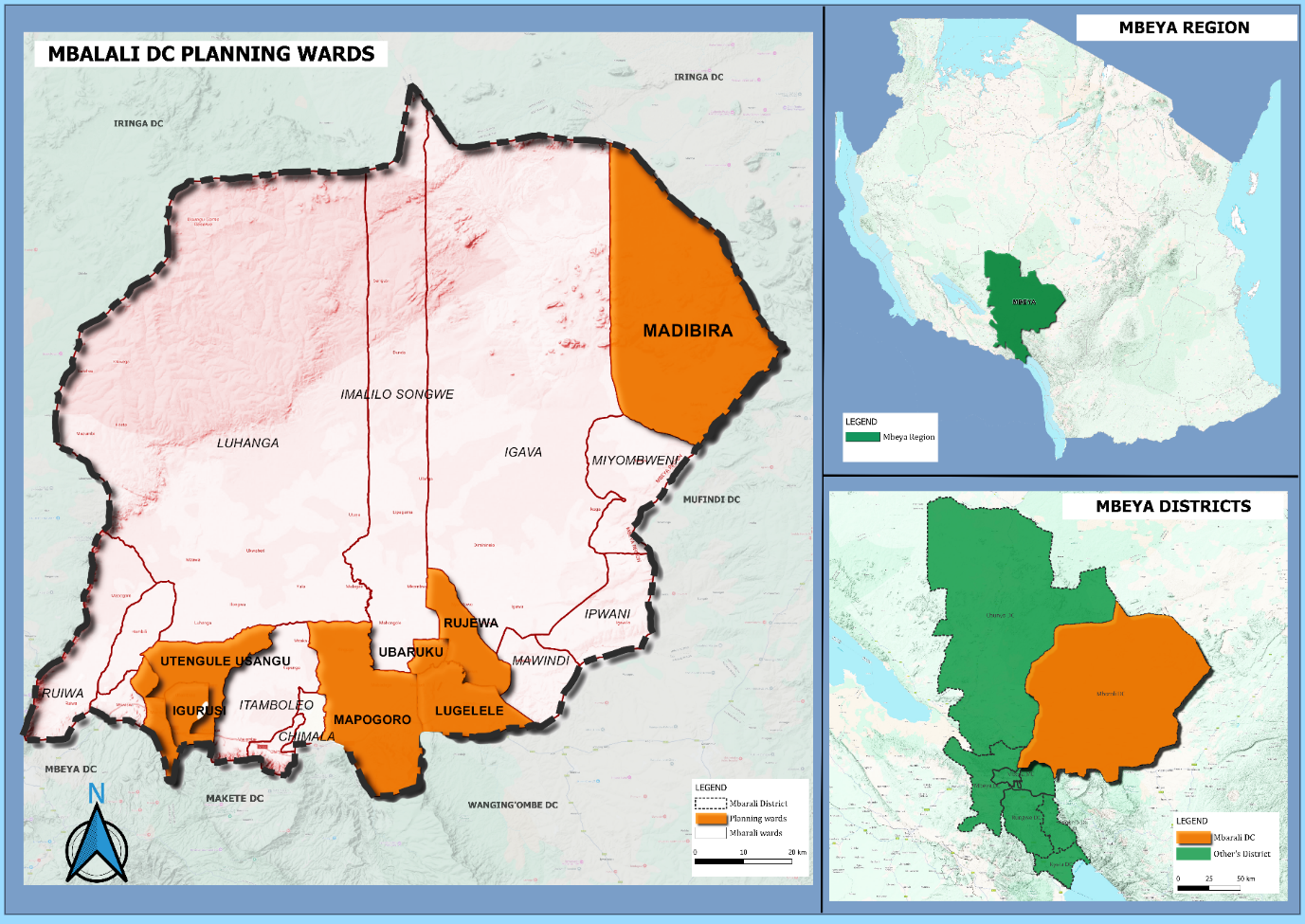
This study adopted a longitudinal, embedded case study design to examine how grassroots innovations and co-produced governance practices shape development control in regularised informal settlements. A case study approach is appropriate where the research seeks to explain how and why governance processes operate in real-world contexts, particularly where boundaries between phenomenon and context are blurred . The study is embedded within a multi-phase informal settlement regularisation programme implemented between 2019 and 2025 across eight rapidly urbanising small towns in Mbarali District, Tanzania (Figure 2). Embedding the research within an ongoing planning intervention enabled close observation of planning implementation, enforcement practices and post-approval adaptations over time; an aspect often missing in cross-sectional studies of informal settlement governance . A mixed-methods strategy was employed to capture both the spatial outcomes of development control (e.g., plan compliance and amendments) and the governance processes underpinning them. Methodological pluralism is widely recommended for studying complex urban systems where technical, institutional and social dynamics intersect .
3.2 Data requirements
To address the study’s research questions, four categories of data were required: (i) spatial compliance data to assess whether approved town planning drawings were maintained over time; (ii) governance process data to understand how enforcement, monitoring and negotiation occurred in practice; (iii) actor perspectives to capture motivations, norms and interpretations of development control; and (iv) contextual data on land markets, socio-economic change and institutional arrangements shaping plan adaptation. This combination was necessary because development control in informal settlements is both a spatial outcome and a socially negotiated process .
3.3 Data collection methods
3.3.1 Spatial audits of town planning drawings
A spatial audit was conducted across 582 approved town planning drawings (TPs) covering 68,239 plots. Spatial audits are increasingly used in planning research to objectively assess implementation fidelity and spatial change over time . Approved layouts were digitised and overlaid with cadastral survey plans and 2025 high-resolution satellite imagery to identify unchanged plots, amendments and typological variations. This method allowed systematic measurement of compliance and spatial divergence, addressing the limitation of perception-based assessments common in participatory planning studies.
3.3.2 Participatory GIS
Participatory GIS (PGIS) was employed during adjudication, boundary marking, verification, and feedback stages. PGIS is widely recognised as an effective method for integrating local knowledge with formal spatial data, particularly in informal settlements where conventional cadastral information is incomplete or contested ([6]; [40]). In this study, PGIS sessions enabled residents to validate boundaries, interpret layouts and collectively identify deviations. The approach was particularly suited to examining co-production, as it situates technical planning knowledge within community practices and deliberation .
3.3.3 Photovoice
Photovoice was used to document community interpretations of grassroots boundary markers and enforcement practices. As a participatory visual method, photovoice is effective in revealing lived experiences, symbolic meanings and everyday governance practices that may not surface through interviews alone . Participants were selected based on community trust and familiarity with local planning processes. Images and accompanying narratives provided insight into how physical markers functioned as social instruments of development control.
3.3.4 Focus Group Discussions (FGDs)
Sixteen FGDs (segregated by gender) were conducted to explore shared norms, collective enforcement mechanisms, and perceptions of compliance. FGDs are particularly suited to examining social regulation and norm formation, as they allow participants to debate, contest and co-construct meanings . Gender-segregated discussions ensured that women’s perspectives on land, inheritance, and enforcement were not overshadowed by dominant voices, addressing well-documented power asymmetries in land governance research .
3.3.5 Key Informant Interviews (KIIs)
Forty-nine KIIs were conducted with planners, land officers, ward officials and regularisation committee members. KIIs are appropriate for eliciting institutional perspectives, policy rationales and enforcement logics that are not always publicly . These interviews were essential for understanding how formal actors perceived grassroots innovations and how informal enforcement mechanisms interacted with statutory planning frameworks.
3.3.6 In-depth household interviews
In-depth interviews were conducted with 690 landowners, including both compliant and non-compliant plot holders. This comparative approach enabled examination of motivations behind adherence, negotiated deviation or amendment, moving beyond simplistic compliance/non-compliance dichotomies .
| S/N | Location (small town centres) | Number of sub centres | Number of plots regularized | Number of town planning drawings reviewed | PVGD number held | KIIs number held | Number of FGDs held | Number of In-depth Interviews held |
| 1. | Igurusi | 7 | 8790 | 59 | 5 | 7 | 3 | 140 |
| 2. | Kongolo Mswiswi | 2 | 4625 | 45 | 2 | 2 | 3 | 20 |
| 3. | Mapogoro | 8 | 4425 | 40 | 2 | 8 | 3 | 80 |
| 4. | Lugelele | 13 | 8736 | 79 | 5 | 13 | 3 | 130 |
| 5. | Rujewa | 6 | 14147 | 97 | 7 | 6 | 3 | 120 |
| 6. | Ubaruku | 7 | 19711 | 162 | 5 | 7 | 3 | 140 |
| 7. | Madibira | 4 | 5980 | 73 | 4 | 4 | 3 | 40 |
| 8. | Utengule | 2 | 1825 | 27 | 2 | 2 | 3 | 20 |
| 9. | Total | 49 | 68239 | 582 | 32 | 49 | 24 | 690 |
3.4 Data analysis
3.4.1 Spatial analysis
Spatial data were analysed using ArcGIS to calculate compliance rates, amendment frequencies and spatial clustering of changes. Descriptive spatial statistics were used to quantify plan adherence and typologies of amendment. Spatial analysis was necessary to objectively demonstrate whether co-produced planning translated into durable spatial outcomes; an aspect often asserted but rarely measured in participatory planning literature .
3.4.2 Qualitative analysis
Qualitative data from interviews, FGDs, PGIS sessions and photovoice narratives were transcribed and analysed thematically using NVivo. An inductive coding strategy was adopted to allow governance mechanisms, norms and enforcement practices to emerge from the data rather than being imposed a priori . Themes were subsequently mapped onto the conceptual framework (co-production, grassroots innovation and adaptive governance), enabling analytical integration between theory and empirical findings.
3.4.3 Triangulation
Triangulation was conducted across spatial, qualitative and participatory data to enhance analytical rigour . For example, reported enforcement practices were cross-checked against spatial compliance outcomes, and claimed plan erosion was verified through spatial audits. Such triangulation is particularly important in governance research, where discrepancies often exist between stated rules and actual practice .
3.5 Achieving theoretical and conceptual saturation
Because this study employs qualitative and mixed methods, it was essential to demonstrate theoretical saturation, the point at which additional data no longer generate new analytical insights (Guest, Bunce, & Johnson, 2006; [38]). Saturation was assessed through iterative data collection and analysis. After approximately 20 key informant interviews, governance themes (community monitoring, social norms, nail marker symbolism, negotiated amendments) began recurring; by the 12th focus group discussion, no substantively new enforcement mechanisms were identified; in-depth interviews with both compliant and amended plot holders consistently reflected the same socio-economic drivers (housing expansion, land market pressure, inheritance); and photovoice narratives repeatedly emphasised visibility, trust and collective boundary respect. Coding memos confirmed redundancy across towns, indicating that governance mechanisms were not isolated phenomena but structurally embedded patterns. This iterative process aligns with grounded theory principles, where sampling continues until conceptual categories are fully developed and no new properties emerge .
3.6 Justification for use of selected quotes
Only a limited number of quotations are presented in the results section. These are illustrative quotes, selected not for representativeness but for their clarity in expressing already-saturated themes . Quotes were selected using three criteria: they reflected themes observed across multiple towns; they were corroborated by spatial data such as compliance patterns; and they captured governance mechanisms central to the conceptual framework. The purpose of these quotations is therefore analytical illustration, not anecdotal evidence. Spatial compliance data (68,239 plots) provides quantitative grounding, while quotes contextualise mechanisms behind those patterns.
3.7Transferability and analytical generalisation
Mbarali was selected for analytical generalisation rather than statistical representativeness. he district exemplifies rapidly urbanising secondary towns with constrained enforcement capacity, a condition prevalent across Sub-Saharan Africa. As such, the observed interactions between participatory regularisation, grassroots innovation and adaptive governance therefore generate insights that extend beyond the immediate case.
3.8 Data presentation
Findings are presented through a combination of tables, maps, figures and narrative excerpts. Tables quantify compliance rates and amendment types, while maps visually demonstrate spatial congruence and divergence between approved plans and ground conditions. Visualisation is critical in spatial governance research, as it makes patterns of order, change and enforcement legible to both academic and practitioner audiences . Narrative excerpts from interviews and photovoice are used to contextualise spatial patterns, ensuring that statistical findings are grounded in lived experience.
3.9Ethical consideration
Ethical approval was obtained prior to data collection. All participants provided informed consent, and confidentiality was ensured through anonymisation. Visual data were handled sensitively to avoid identifying individuals or contested land claims, in line with ethical guidance for participatory visual research .
Findings
The findings are organised around the three research questions introduced in the introduction section and are presented through an integrated analysis of spatial audits, participatory GIS outputs, interviews, focus group discussions and photovoice narratives. This structure ensures analytical consistency between the research design, conceptual framework, and empirical evidence. Quantitative spatial results are presented alongside qualitative evidence to explain how and why observed patterns emerged.
4.1 Co-production of development control through participatory boundary marking
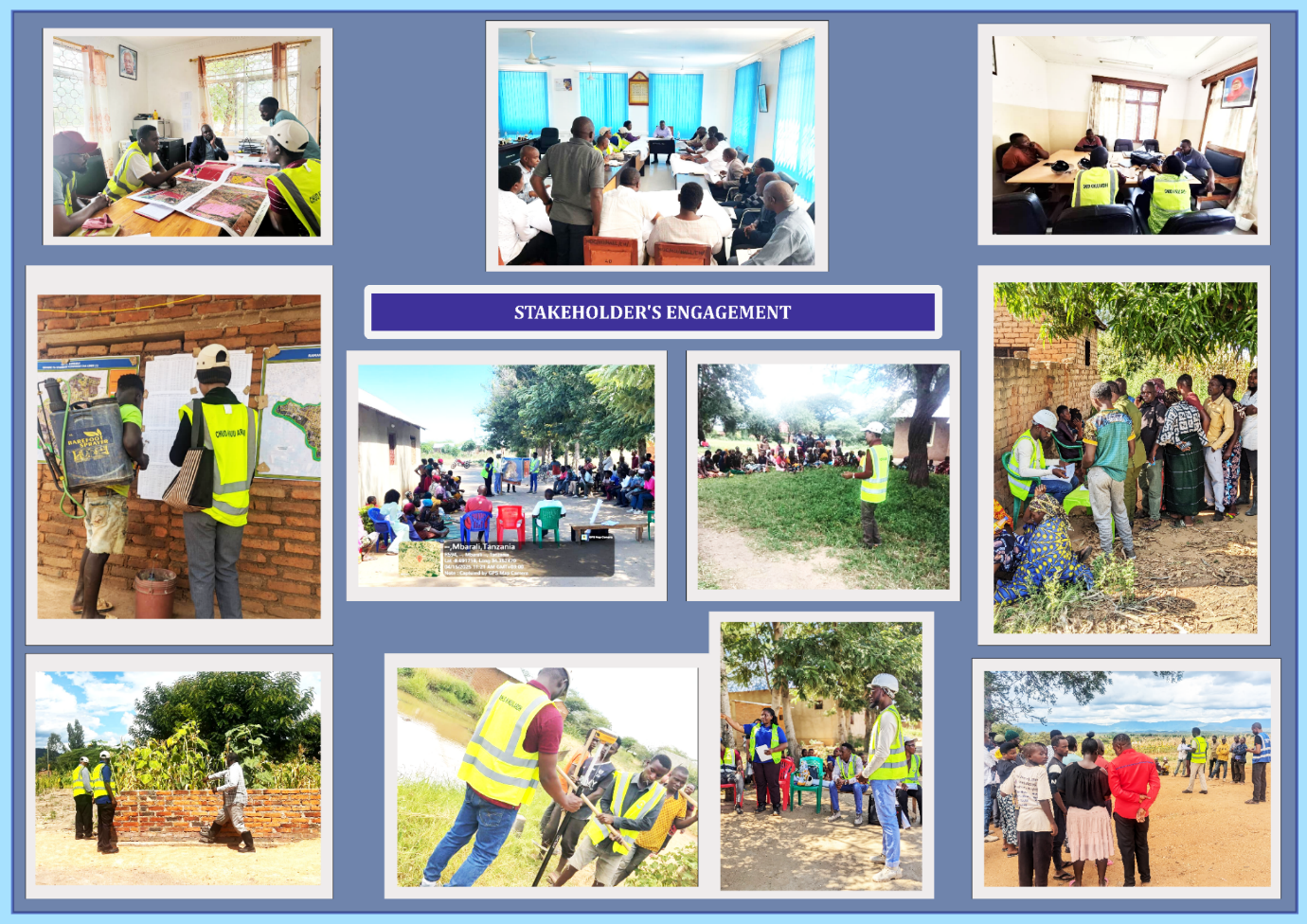
This section addresses the first research question, which examines how development control is co-produced between grassroots actors and planning authorities during and after regularisation. The findings indicate that development control in Mbarali was co-produced through participatory adjudication, boundary marking and community-based monitoring, rather than being imposed solely through formal inspection mechanisms (Figure 3). A central mechanism was the introduction of six-inch iron nail boundary markers, installed jointly by planners, surveyors, local leaders and landowners during the adjudication process. Spatially, the nail markers enabled precise physical demarcation of plot boundaries and functioned effectively as interim control instruments, particularly as formal cadastral surveying was delayed for approximately 3 - 5 years due to funding constraints. Socially, the markers became collectively recognised reference points for regulating development and mediating boundary disputes.
This co-productive process is reflected in residents’ accounts:
“The surveyors did not just bring the map. They walked with us, placed the nails together with us, read the coordinates using RTK-GPS, and explained why each boundary mattered. After that, the prepared town plan became ours. We agreed not to alter the boundaries, as we were told that any change would alter the approved town plan.”
(FGD participant, Lugelele)
Local officials similarly emphasised shared responsibility:
“We did not need to patrol every plot. Once the nails were in place, the community itself became the first line of enforcement.”
(Ward officer, Rujewa)
“When the map came out, I saw my house, the land-use type, my name, and the road I donated. Nothing was a surprise because I had agreed to everything during adjudication. Together with my neighbours, we were very happy to see our plots on the map. It felt like our plan, not something imposed on us.”
(Resident, Madibira)
These findings demonstrate that co-production extended beyond consultation into joint implementation and enforcement, supporting the conceptual framework’s positioning of co-production as the core governance process rather than a procedural stage.
4.2Persistence and enforcement of co - created town planning layouts
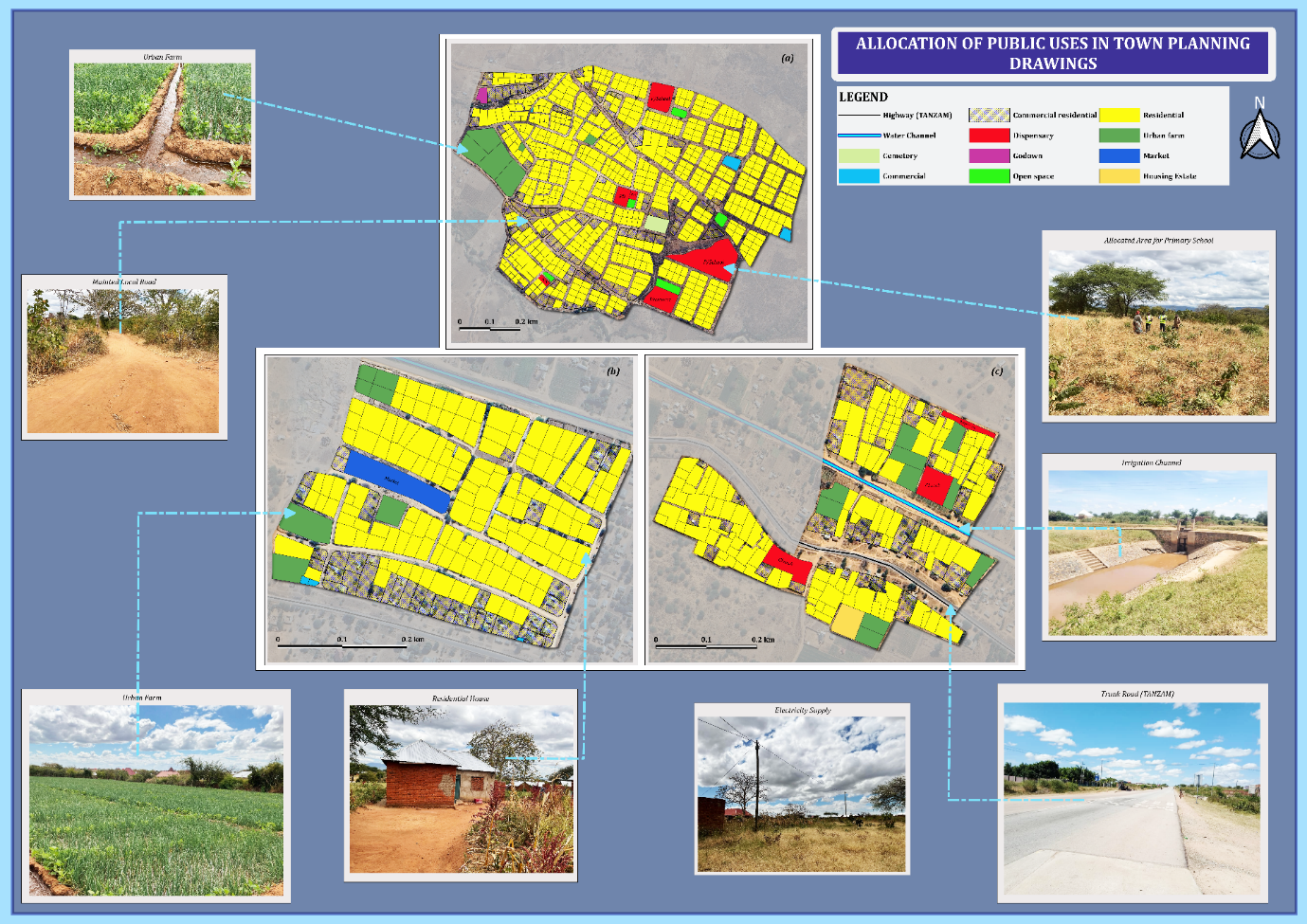
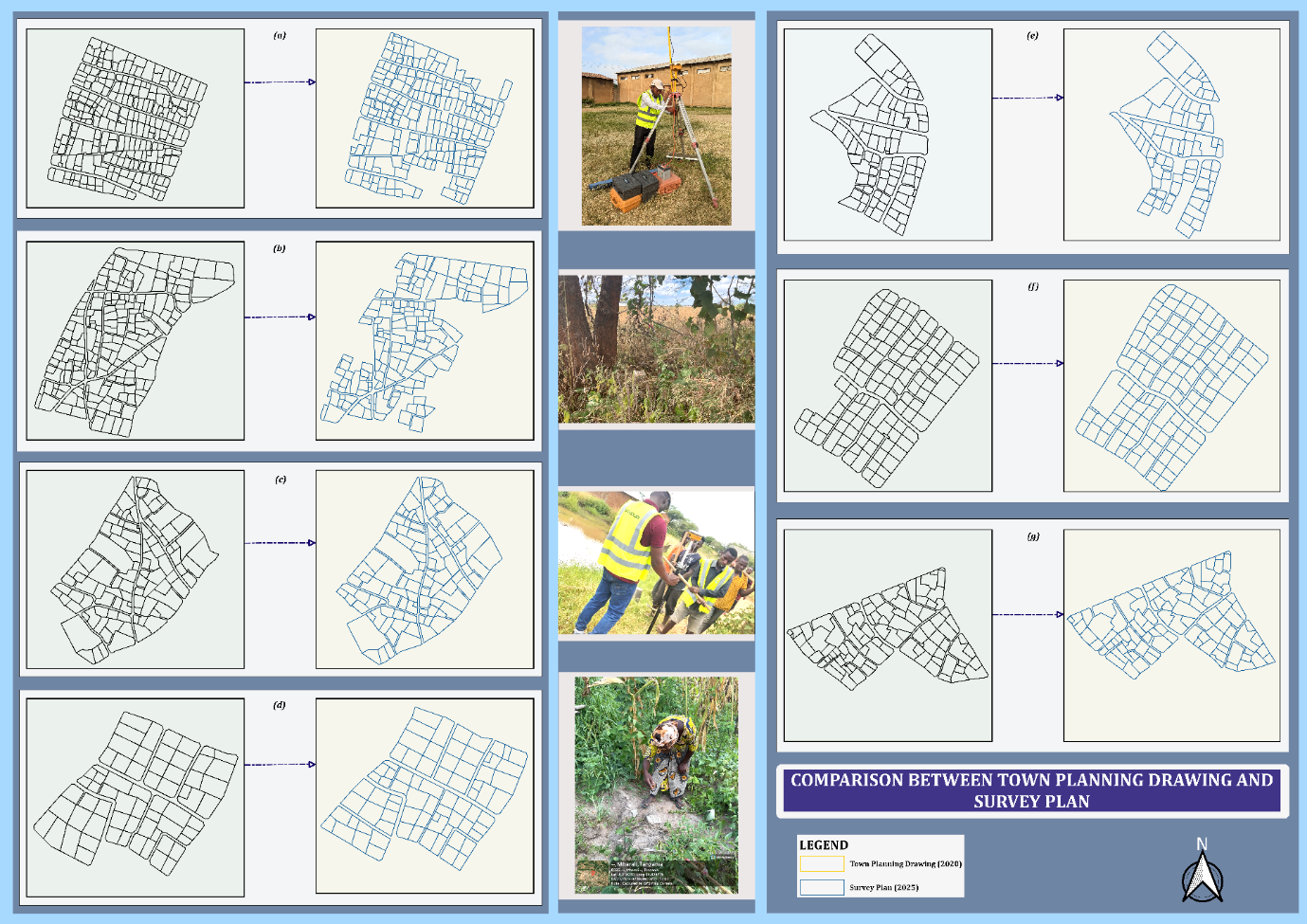
This subsection responds directly to the second research question by examining the extent to which co-created town planning layouts were maintained over time in rapidly urbanising environments. Spatial audits of 582 town planning layouts, covering 68,239 plots, reveal a high degree of plan persistence. Five years after initial implementation, 72% of plots remained unchanged, while the remaining 28% exhibited amendments of varying types and intensities. Enforcement of development control was predominantly informal and community-driven, relying on social norms, peer monitoring and collective intervention rather than formal regulatory sanctions. Participants consistently described the layouts as “our agreement”, indicating a high level of shared understanding and legitimacy. Communities actively defended road reserves, public spaces and plot boundaries, demonstrating that co-produced plans acquired normative force beyond their formal legal status. Compliance levels were highest in neighbourhoods where participatory engagement during plan preparation and implementation was most intensive (Table 2; Figure 3). This pattern underscores a strong linkage between process quality and spatial outcomes, suggesting that sustained compliance is less a function of formal enforcement capacity than of collective ownership and procedural legitimacy embedded during regularisation.
Residents frequently described compliance as a social obligation rather than a legal requirement:
“If someone tries to move a boundary, neighbours will stop them before the council even hears about it.”
(Subward Leader, MpakaniUbaruku)
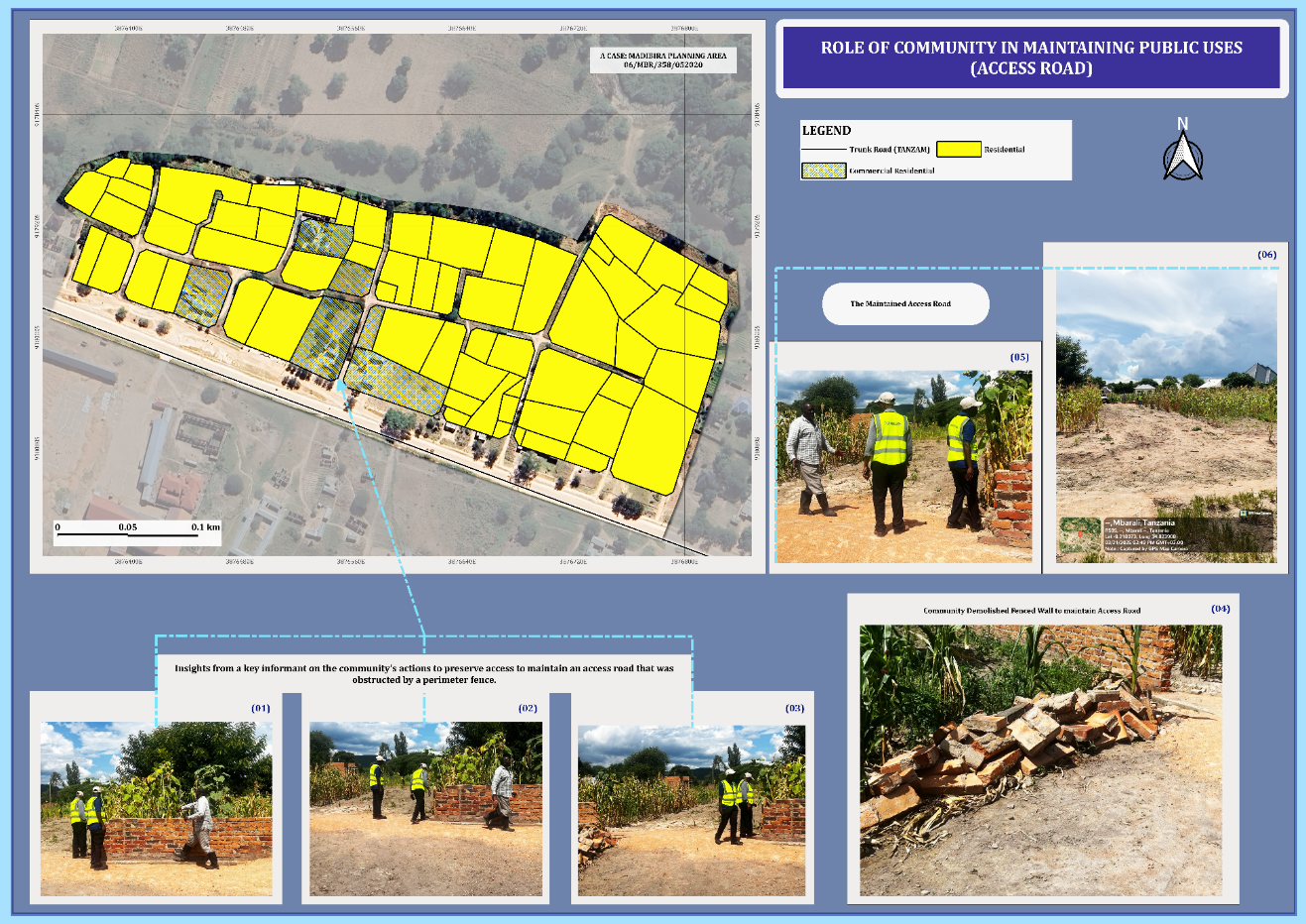
In several towns, communities actively defended public spaces and road reserves. In Madibira, for example (see Figure 4), residents collectively removed a wall obstructing a planned access road:
“That road was agreed by all of us. When one person blocked it, we removed the wall together.”
(FGD participant, Madibira)
These results confirm the framework’s outcome pathway, where visible boundaries, shared norms and collective monitoring translated co-produced plans into durable spatial order, despite limited formal enforcement capacity.
| Location (Small town centres) | Town planning drawings approved | Amendment of town planning drawings | Types of amendments / changes made to the Plans | ||||||||||||
| No. of plans | No. of plots | No. of plans (n) | % | No. of plots (n) | % | Boundaries change | Plot use | Plots subdivision | Plot merged | Typological (parallelism) | Ownership information | Reserved | Hazardous | Reviewed /complete change | |
| Igurusi | 59 | 8790 | 54 | 92 | 7371 | 84 | 538 | 305 | 469 | 289 | 3171 | 2514 | 24 | 3 | 58 |
| Kongolo Mswiswi | 45 | 4625 | 20 | 44 | 1811 | 39 | 146 | 20 | 302 | 142 | 937 | 104 | 23 | 7 | 130 |
| Mapogoro | 40 | 4425 | 13 | 33 | 432 | 10 | 21 | 15 | 193 | 7 | 17 | 16 | 32 | 11 | 120 |
| Lugelele | 79 | 8736 | 23 | 29 | 1219 | 14 | 127 | 73 | 105 | 18 | 610 | 12 | 38 | 16 | 220 |
| Rujewa | 97 | 14147 | 28 | 29 | 3460 | 24 | 83 | 96 | 952 | 22 | 551 | 454 | 29 | 326 | 947 |
| Ubaruku | 162 | 19711 | 27 | 17 | 2809 | 14 | 132 | 170 | 1141 | 260 | 158 | 721 | 66 | 18 | 143 |
| Madibira | 73 | 5980 | 36 | 49 | 1763 | 29 | 247 | 153 | 42 | 92 | 251 | 400 | 525 | 53 | 0 |
| Utengule | 27 | 1825 | 12 | 44 | 379 | 21 | 31 | 103 | 117 | 21 | 28 | 19 | 18 | 42 | 0 |
| 582 | 68239 | 213 | 19244 | 28 | 1325 | 935 | 3321 | 851 | 5723 | 4240 | 755 | 476 | 1618 | ||
| 37% | 28% | 7% | 5% | 17% | 4% | 30% | 22% | 4% | 2% | 8% |
4.3 Negotiated plan amendments and adaptive governance
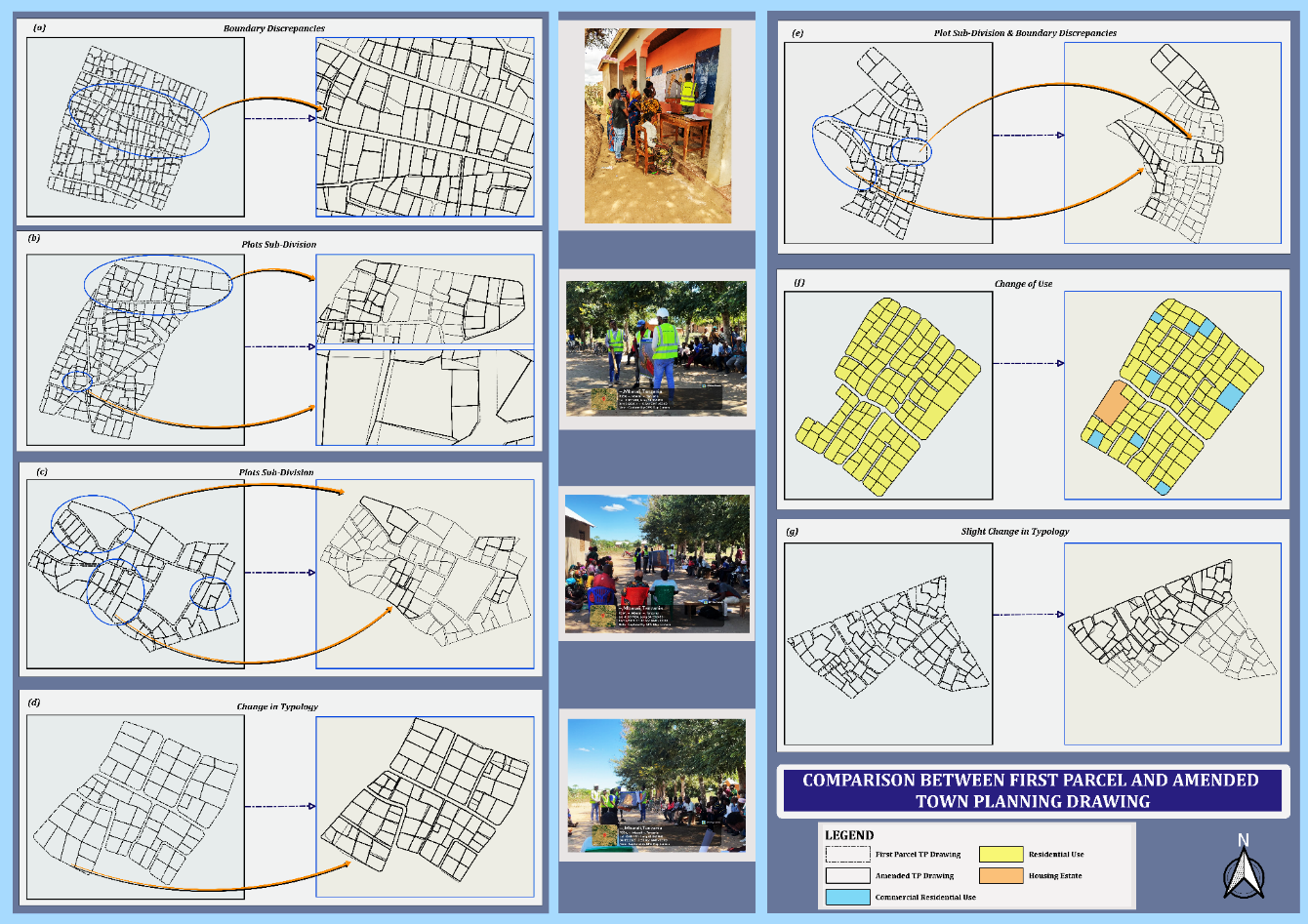
This section addresses the third research question by examining how plan amendments were negotiated in response to socio-economic and spatial pressures and what these negotiations reveal about adaptive governance. Although overall compliance remained high (Table 2; Figure 5), 28% of plots experienced some form of amendment (Figure 6), including boundary realignments, plot subdivision, land-use change and ownership updates. Crucially, these amendments did not signify rejection of planning rather, they reflected negotiated adaptation to changing socio-economic conditions (Table 3). Most amendments were minor and typological in nature (Table 2). Boundary realignments accounted for 30% of all recorded changes (5,723 cases), frequently arising during cadastral surveys to reconcile approved layouts with ground realities. Ownership updates constituted 22% of amendments (4,240 cases) and were driven by land sales, inheritance and informal transfers, underscoring the fluidity of landholding in regularised areas. Plot subdivisions represented 17% of changes (3,321 cases), particularly in Rujewa and Ubaruku, where rising demand for residential land intensified pressure on existing plots. In contrast, plot mergers (4%; 851 cases) were concentrated in Mapogoro and Kongolo Mswiswi, primarily to enable agricultural consolidation or commercial expansion. Changes in land use (5%; 976 cases) and conversion of reserved land (4%; 842 cases) were most pronounced in Madibira, where housing demand led to negotiated reallocation of some green spaces.
As one resident explained:
“With my six children growing up, I had no choice but to use part of the land initially designated for farming to expand our home…”
Hazard-related adjustments accounted for 2% of amendments (476 cases), mainly in flood - prone areas in Rujewa, and were aimed at reducing exposure to environmental risks. Spatial analysis indicates that amendments clustered around growth corridors, markets and transport nodes, highlighting the responsiveness of co-created plans to evolving land-market dynamics. Qualitative evidence further confirms that most changes were deliberated within community forums and where feasible, formalised through planning authorities, reinforcing the negotiated nature of adaptation.
A landowner in Ubaruku explained:
“My children grew up and we needed more land for houses. We discussed it with neighbours and leaders, and the planner adjusted the boundary without destroying the whole layout.”
Similarly, a focus group participant in Mabadaga narrated:
“The planners changed the plan so we could have a better marketplace. In return, we agreed to move our small shops to make one large market. They also surveyed our old market as a commercial area where we relocated our shops, so we didn’t lose everything.”
Planning officials corroborated this adaptive approach:
“We treated the plan as a guide, not a punishment. If change was necessary, it had to be agreed by the residents and process documented.”
(District Planner, Mbarali)
These findings refine the adaptive governance component of the conceptual framework. Plan amendments were neither ad hoc nor chaotic; instead, they were normatively regulated, preserving overall spatial coherence while accommodating demographic growth, livelihood needs and environmental risk.
| Location (Small Town Centres) | Number of plot owners interviewed (N) | Rapid urban growth (comply with new land uses and population) | Changes in land market (motivate subdivision and selling) | Increased housing needs (urban farms to residential) | Investment attractions (godowns, industries) | Increased accessibility to services | Economic opportunities | Changing land ownership | |||||||
| n | (%) | n | (%) | n | (%) | n | (%) | n | (%) | n | (%) | n | (%) | ||
| Igurusi | 140 | 15 | 0.11 | 37 | 0.26 | 33 | 0.24 | 4 | 0.03 | 7 | 0.05 | 12 | 0.09 | 32 | 0.23 |
| Kongolo Mswiswi | 20 | 5 | 0.25 | 3 | 0.15 | 2 | 0.10 | 5 | 0.25 | 2 | 0.10 | 2 | 0.10 | 1 | 0.05 |
| Mapogoro | 80 | 9 | 0.11 | 15 | 0.19 | 4 | 0.05 | 33 | 0.41 | 2 | 0.03 | 14 | 0.18 | 3 | 0.04 |
| Lugelele | 130 | 8 | 0.06 | 28 | 0.22 | 21 | 0.16 | 18 | 0.14 | 12 | 0.09 | 36 | 0.28 | 7 | 0.05 |
| Rujewa | 120 | 17 | 0.14 | 24 | 0.20 | 41 | 0.34 | 18 | 0.15 | 4 | 0.03 | 11 | 0.09 | 5 | 0.04 |
| Ubaruku | 140 | 29 | 0.21 | 47 | 0.34 | 21 | 0.15 | 25 | 0.18 | 8 | 0.06 | 7 | 0.05 | 3 | 0.02 |
| Madibira | 40 | 3 | 0.08 | 21 | 0.53 | 5 | 0.13 | 3 | 0.08 | 2 | 0.05 | 4 | 0.10 | 2 | 0.05 |
| Utengule | 20 | 1 | 0.05 | 3 | 0.15 | 2 | 0.10 | 2 | 0.10 | 5 | 0.25 | 5 | 0.25 | 2 | 0.10 |
| Overall | 690 | 87 | 0.13 | 178 | 0.26 | 129 | 0.19 | 108 | 0.16 | 42 | 0.06 | 91 | 0.13 | 55 | 0.08 |
4.4 Linking empirical evidence to the conceptual framework
The empirical results provide strong support for the conceptual framework proposed in Section 2.0, while also refining its assumptions.
4.4.1 Grassroots innovation as a foundational input (Supported)
Results strongly support the framework’s positioning of grassroots innovation as a foundational input. Nail markers functioned as both material and symbolic tools, making abstract plans visible and enforceable. Their widespread acceptance confirms the framework’s assumption that low-cost, socially embedded innovations can stabilise development control where formal survey infrastructure is absent.
4.4.2 Co-production as the core governance process (supported)
Evidence from participatory GIS, boundary marking, and community enforcement validates the framework’s treatment of co-production as the central operational mechanism. Development control was neither purely government - led nor informally imposed but jointly enacted through shared routines and negotiated authority, precisely as theorised.
4.4.3 Adaptive governance and negotiated flexibility (refined, not challenged)
Results refine rather than challenge the adaptive governance component. While the framework anticipated negotiated amendments, empirical evidence shows that adaptability was more structured and normatively regulated than initially assumed. Amendments were socially sanctioned and procedurally channelled, indicating a higher degree of institutionalisation of adaptive practices.
4.4.4 Outcome pathway: from compliance to co-produced development control (confirmed)
High compliance rates and sustained spatial order confirm the framework’s outcome pathway. Development control emerged as a co-produced equilibrium, maintained through legitimacy, visibility and social enforcement rather than coercion. Generally, the results support all core elements of the conceptual framework, while adding empirical nuance to adaptive governance processes. The framework is therefore validated as a robust analytical tool for understanding development control in informal settlements, particularly in secondary town contexts.
In overall, the findings demonstrate that development control in Mbarali was neither state imposed nor informally eroded. Instead, it emerged as a co-produced and adaptive governance outcome, anchored in participatory processes, grassroots innovation and social norms. The combination of quantitative spatial evidence and qualitatively saturated narratives provides robust support for the study’s theoretical claims.
Discussion
This study contributes to contemporary debates on informal-settlement governance by demonstrating how development control can be sustained through co-produced, adaptive and socially embedded mechanisms in rapidly urbanising secondary towns. While earlier literature has highlighted the limits of local authorities - led enforcement in informal contexts , more recent studies increasingly emphasise hybrid governance arrangements that combine formal regulation with community-based practices ([2]; I. Turok & L. Seeliger, 2014; [51]). The Mbarali case provides rare longitudinal empirical evidence of how such arrangements operate in practice.
5.1 Co-production beyond plan preparation
Recent scholarship has expanded the concept of co-production beyond service delivery to include planning and governance processes . However, empirical work on post-planning enforcement remains limited. This study extends these debates by showing that co-production in Mbarali did not end with plan approval but continued through boundary marking, monitoring, dispute resolution and negotiated enforcement. This finding aligns with recent arguments that effective urban governance in informal contexts depends on continuous interaction rather than episodic participation (Bryson, Crosby, & Stone, 2015; [51]). The observed community-led enforcement practices resonate with Joshi and Moore’s notion of institutionalised co-production and with newer work highlighting how legitimacy and everyday practices can substitute for formal sanctions where state capacity is weak .
5.2 Grassroots innovation and the materiality of governance
Recent urban governance literature has increasingly recognised the role of material artefacts in shaping institutional outcomes ([33]; Smith, Fressoli, & Thomas, 2014). The nail markers in Mbarali exemplify how low-cost, grassroots innovations can translate abstract planning rules into visible and enforceable spatial references. This finding complements recent studies that emphasise the importance of “infrastructures of visibility” in informal settlements, where formal maps and regulations are often inaccessible or mistrusted . By functioning simultaneously as technical markers and symbols of collective agreement, the nail markers reinforced social norms around compliance. This supports recent calls to integrate socio-material perspectives into planning theory, recognising that governance is enacted not only through institutions but also through everyday objects and practices .
5.3 Adaptive governance and negotiated flexibility
Contemporary debates on adaptive governance emphasise the need for flexibility in managing dynamic urban systems ([17]; I. Turok & L. Seeliger, 2014). In Mbarali, plan amendments were not indicative of regulatory failure but reflected negotiated responses to housing demand, land market pressures and livelihood change. This aligns with recent African urban studies that argue for treating plans as living documents rather than rigid blueprints . Importantly, the findings nuance adaptive governance theory by showing that flexibility in Mbarali was normatively regulated. Amendments were socially sanctioned and procedurally channelled, preventing the erosion of overall spatial order. This challenges binary framings of compliance versus informality and supports emerging perspectives that see informality as a mode of governance rather than its absence .
5.4 Implications for secondary towns in the global south
Recent literature increasingly highlights the strategic importance of secondary and small towns in Africa’s urban transition . The Mbarali case demonstrates that such towns are not merely sites of planning failure but can serve as laboratories for institutional innovation. The combination of social cohesion, spatial tractability and participatory regularisation created conditions for durable development control; conditions that may be harder to achieve in large metropolitan areas.
Conclusion
This study advances understanding of development control in regularised informal settlements by showing how spatial order can be sustained through co-produced and adaptive governance arrangements in rapidly urbanising secondary towns. Drawing on longitudinal spatial and qualitative evidence from Mbarali District, the analysis demonstrates that development control is not simply a function of formal regulation, but an outcome of negotiated practices embedded in everyday community life. The findings highlight the importance of extending planning analysis beyond plan preparation to encompass post-implementation governance. In Mbarali, development control emerged through the interaction of participatory regularisation processes, locally embedded enforcement practices and material innovations that rendered planning instruments visible and actionable on the ground. Rather than undermining planning authority, these arrangements strengthened legitimacy and accountability in contexts where formal enforcement capacity is limited. The study also shows that spatial change in regularised informal settlements does not necessarily signal planning failure. Negotiated plan amendments functioned as adaptive responses to evolving socio-economic conditions, allowing flexibility while preserving overall spatial coherence. This challenges rigid interpretations of compliance and reframes informality as a mode of governance characterised by ongoing negotiation rather than regulatory absence.
Conceptually, the study extends co-production theory into the under - examined domain of post-planning enforcement, demonstrating how governance is sustained through continuous interaction rather than episodic participation. It further foregrounds grassroots innovation as a critical, yet often overlooked component of spatial regulation, and empirically operationalises adaptive governance in informal settlement contexts. Practically, the findings suggest that development control in secondary towns can be strengthened by investing in participatory implementation, socially legible boundary-making tools and institutional arrangements that accommodate negotiated change. These insights are particularly relevant for planning systems across the Global South, where informal urbanisation and constrained enforcement capacity remain persistent challenges. By repositioning informal settlements as sites of institutional experimentation rather than governance failure, this study contributes to a growing body of scholarship that calls for more inclusive, flexible and context-responsive approaches to urban planning and land governance.
Declaration of competing interest
The author declares that there is no known competing financial interests or personal relationships that could have appeared to influence the work reported in this paper.
Acknowledgements
The author gratefully acknowledges the management of Ardhi University for granting permission to the School of Spatial Planning and Social Science (SSPSS) and the School School of Earth Sciences, Real Estate, Business and Informatics (SERBI) to lead the implementation of this land regularisation initiative. Appreciation is extended to the residents of the eight small towns who generously participated in the study, as well as to the planners, land surveyors, and land officers from Mbarali District Council, the Mbeya Regional Lands Office, and the Ministry of Lands, MLHHSD, whose insights during interviews enriched the research. Special thanks go to the technical team from Ardhi University for their collaboration and commitment throughout the project’s implementation.
Data Availability
The datasets generated and analysed during this study are not publicly available due to confidentiality agreements with participants but may be obtained from the corresponding author upon reasonable request.
10.0 Funding
This study was supported through multiple phases of funding. The initial phase was self-financed by local residents in Mbarali. Subsequent phases received funding from the Ministry of Lands, Housing and Human Settlements Development through the KKK programme and the Land Tenure Improvement Programme (LTIP). The inception phase was also funded by the Tanzania Education Authority (TEA) through the Skills Development Fund (SDF) granted to Ardhi University for the 2018–2019 implementation period. Ardhi University sustained project activities during periods when external funding was unavailable.
References
- Agarwal, B. (2001). Participatory Exclusions, Community Forestry, and Gender: An Analysis for South Asia and a Conceptual Framework. World Development, 29(10), 1623-1648. DOI ↗ Google Scholar ↗
- Alem, G., Namangaya, A., Greiving, S., & Kombe, W. J. (2022). Planning Cities in Africa-Current Issues and Future Prospects of Urban Governance and Planning: An Introduction. In (pp. 1-9). DOI ↗ Google Scholar ↗
- Baxter, P., & Jack, S. (2008). Qualitative case study methodology: Study design and implementation for novice researchers. The Qualitative Report, 13(4), 544-559. DOI ↗ Google Scholar ↗
- Bradley, Q. (2020). The politics of co-production: participation, power and transformation. Critical Policy Studies, 14(4), 444-460. DOI ↗ Google Scholar ↗
- Braun, V., & Clarke, V. (2006). Using thematic analysis in psychology. Qualitative Research in Psychology, 3(2), 77-101. DOI ↗ Google Scholar ↗
- Brown, G., & Kyttä, M. (2014). Key issues and research priorities for public participation GIS (PPGIS): A synthesis based on empirical research. Applied Geography, 46, 122-136. DOI ↗ Google Scholar ↗
- Bryson, J. M., Crosby, B. C., & Stone, M. M. (2015). Designing and Implementing Cross-Sector Collaborations: Needed and Challenging. Public Administration Review, 75(5), 647-663. DOI ↗ Google Scholar ↗
- Catalani, C., & Minkler, M. (2010). Photovoice: A Review of the Literature in Health and Public Health. Health Education & Behavior, 37(3), 424 - 451. DOI ↗ Google Scholar ↗
- Charmaz, K. (2014). Constructing grounded theory (2nd ed.). Sage Publications. DOI ↗ Google Scholar ↗
- Corden, A., & Sainsbury, R. (2006). Using verbatim quotations in reporting qualitative social research: Researchers’ views. University of York. DOI ↗ Google Scholar ↗
- Creswell, J. W., & Plano Clark, V. L. (2018). Designing and conducting mixed methods research (3rd ed.). CA: SAGE Publications. DOI ↗ Google Scholar ↗
- Denzin, N. K. (1978). The research act: A theoretical introduction to sociological methods (2nd ed.). McGraw-Hill. DOI ↗ Google Scholar ↗
- Dietz, T., Ostrom, E., & Stern, P. C. (2003). The Struggle to Govern the Commons. Science, 302(5652), 1907-1912. DOI ↗ Google Scholar ↗
- Ellickson, R. C. (1991). Order without Law: How Neighbors Settle Disputes. Harvard University Press. DOI ↗ Google Scholar ↗
- Elwood, S. (2006). Negotiating Knowledge Production: The Everyday Inclusions, Exclusions, and Contradictions of Participatory GIS Research∗. The Professional Geographer, 58(2), 197-208. DOI ↗ Google Scholar ↗
- Fenton, P., & Gustafsson, S. (2017). Moving from high-level words to local action governance for urban sustainability in municipalities. Current Opinion in Environmental Sustainability, 26-27, 129-133. DOI ↗ Google Scholar ↗
- Folke, C., Hahn, T., Olsson, P., & Norberg, J. (2005). Adaptive governance of social-ecological systems. Annual Review of Environment and Resources, 30(Volume 30, 2005), 441-473. DOI ↗ Google Scholar ↗
- Guest, G., Bunce, A., & Johnson, L. (2006). How Many Interviews Are Enough? An Experiment with Data Saturation and Variability. Field Methods, 18(1), 59-82. DOI ↗ Google Scholar ↗
- Healey, P. (1997). Collaborative Planning: Shaping Places in Fragmented Societies. Macmillan Press. DOI ↗ Google Scholar ↗
- Huang, C. Y., Namangaya, A., Lugakingira, M. G. W., & Cantada, I. D. (2018). Translating Plans to Development: The Implementation of Land Use Plans in Tanzania’s Secondary Cities. DOI ↗ Google Scholar ↗
- Huchzermeyer, M. (2011). Cities with “Slums”: From Informal Settlement Eradication to a Right to the City in Africa. University of Cape Town Press. DOI ↗ Google Scholar ↗
- Innes, J. E., & Booher, D. E. (2004). Reframing public participation: Strategies for the 21st century. Planning Theory & Practice, 5(4), 419-436. DOI ↗ Google Scholar ↗
- Joshi, A., & Moore, M. (2004). Institutionalised Co-Production: Unorthodox Public Service Delivery in Challenging Environments. The Journal of Development Studies, 40, 31-49. DOI ↗ Google Scholar ↗
- Kironde, J. M. L. (2006). The Regulatory Framework, Unplanned Development and Urban Poverty: Findings from Dar es Salaam, Tanzania. Land Use Policy, 23, 460-472. DOI ↗ Google Scholar ↗
- Kombe, W. J., & Kreibich, W. (2006). Governance of Informal Urbanisation in Tanzania. Mkuki na Nyota Publishers. DOI ↗ Google Scholar ↗
- Kvale, S., & Brinkmann, S. (2015). InterViews: Learning the craft of qualitative research interviewing (3rd ed.). CA: Sage Publications. DOI ↗ Google Scholar ↗
- Lupala, J. M. (2021). The capacity of urban local authorities in regularizing informal settlements in Tanzania Journal of Urban and Landscape Planning(6), 13. DOI ↗ Google Scholar ↗
- MacEachren, A. M., & Kraak, M.-J. (2001). Research Challenges in Geovisualization. Cartography and Geographic Information Science, 28(1), 3-12. DOI ↗ Google Scholar ↗
- Magigi, W., & Majani, B. B. K. (2006). Community involvement in land regularization for informal settlements in Tanzania: A strategy for enhancing security of tenure in residential neighborhoods. Habitat International 30, 1066-1081. DOI ↗ Google Scholar ↗
- Magina, F. B., Kyessi, A., & Kombe, W. (2020). The Urban Land Nexus– Challenges and Opportunities of Regularising Informal Settlements: The Case Studies of Dar es Salaam and Mwanza in Tanzania. Journal of African Real Estate Research, 5(1), 32-54. DOI ↗ Google Scholar ↗
- Mitlin, D. (2008). With and beyond the state co-production as a route to political influence, power and transformation for grassroots organizations. Environment & Urbanization, 20(2), 339-360. DOI ↗ Google Scholar ↗
- Morgan, D. L. (1997). Focus groups as qualitative research (2nd ed.). CA: Sage Publications. DOI ↗ Google Scholar ↗
- Mulgan, G. (2006). The Process of Social Innovation. Innovations: Technology, Governance, Globalization, 1(2), 145-162. DOI ↗ Google Scholar ↗
- Munuo, N. A., Kombe, J. W., & Msangi, D. E. (2025). The Regulatory frameworks for regularized settlements in global south countries: a review. African Journal on Land Policy and Geospatial Sciences 8(3), 2654-2664. DOI ↗ Google Scholar ↗
- Ostrom, E. (1990). Governing the commons: The evolution of institutions for collective action. Cambridge University Press. DOI ↗ Google Scholar ↗
- Ostrom, E. (1996). Crossing the great divide: Coproduction, synergy, and development. World Development, 24(6), 1073-1087. DOI ↗ Google Scholar ↗
- Roy, A. (2009). Why India Cannot Plan Its Cities: Informality, Insurgence and the Idiom of Urbanization. Planning Theory, 8(1), 76-87. DOI ↗ Google Scholar ↗
- Saunders, B., Sim, J., Kingstone, T., Baker, S., Waterfield, J., Bartlam, B., Burroughs, H., & Jinks, C. (2018). Saturation in qualitative research: exploring its conceptualization and operationalization. Quality & Quantity, 52(4), 1893-1907. DOI ↗ Google Scholar ↗
- Seyfang, G., & and Smith, A. (2007). Grassroots innovations for sustainable development: Towards a new research and policy agenda. Environmental Politics, 16(4), 584-603. DOI ↗ Google Scholar ↗
- Sieber, R. (2006). Public Participation Geographic Information Systems: A Literature Review and Framework. Annals of the Association of American Geographers, 96(3), 491-507. DOI ↗ Google Scholar ↗
- Smith, A., Fressoli, M., & Thomas, H. (2014). Grassroots innovation movements: challenges and contributions. Journal of Cleaner Production, 63, 114-124. DOI ↗ Google Scholar ↗
- Stake, R. E. (1995). The Art of Case Study Research. Sage Publications. DOI ↗ Google Scholar ↗
- Terdoo, F. (2024). Assessing the role of participatory planning approach in enhancing informal settlements upgrading in low income regions. Discover Global Society, 2. DOI ↗ Google Scholar ↗
- Turok, I., & Seeliger, L. (2014). Adaptive governance and urban resilience: The case of Cape Town. Environment and Urbanization, 26(2), 488-502. DOI ↗ Google Scholar ↗
- Turok, I., & Seeliger, L. (2014). Averting a Downward Spiral: Building Resilience in Informal Urban Settlements through Adaptive Governance. Environment and Urbanization, 26. DOI ↗ Google Scholar ↗
- UN-Habitat. (2020). World Cities Report 2020: The Value of Sustainable Urbanization. DOI ↗ Google Scholar ↗
- UN-Habitat. (2024). World Cities Report 2024: Cities and Climate Action. DOI ↗ Google Scholar ↗
- Wang, C., & Burris, M. A. (1997). Photovoice: Concept, Methodology, and Use for Participatory Needs Assessment. Health Education & Behavior, 24(3), 369-387. DOI ↗ Google Scholar ↗
- Wang, C. C., & Redwood-Jones, Y. A. (2001). Photovoice Ethics: Perspectives from Flint Photovoice. Health Education & Behavior, 28(5), 560-572. DOI ↗ Google Scholar ↗
- Watson, V. (2009). ‘The planned city sweeps the poor away…’: Urban planning and 21st century urbanisation. Progress in Planning, 72(3), 151-193. DOI ↗ Google Scholar ↗
- Watson, V. (2014). Co-production and collaboration in planning – The difference. Planning Theory & Practice, 15(1), 62-76. DOI ↗ Google Scholar ↗
- Yin, R. K. (2018). Case Study Research and Applications: Design and Methods (6th ed.). Sage Publications. DOI ↗ Google Scholar ↗