Abstract
Tanzania is constructing an electrified Standard Gauge Railway (SGR) to modernise its ageing metre-gauge network and expand regional connectivity. Spanning over 2,560 km, the SGR will link Dar es Salaam with Mwanza, Kigali (Rwanda), and Musongati (Burundi), enhancing the flow of goods and people across East and Central Africa. While most studies emphasise urban transit nodes, this paper examines the SGR through the lens of corridor urbanism, focusing on its spatial and economic role in unlocking rural resource frontiers and reshaping emerging corridor towns. Using Tanzania Railways Corporation (TRC) planning documents, technical reports, spatial analysis, interviews, and participant observation, the study explores how stations in rural regions including Pwani, Morogoro Rural, Dodoma Rural, Singida, Tabora, Shinyanga, and Kigoma catalyse agricultural commercialisation, land-use change, settlement transformation, and informal market development. The findings reveal that the SGR is catalysing a multi-scalar restructuring of Tanzania’s spatial economy. Major stations such as Dar es Salaam, Dodoma, and Mwanza are consolidating as growth poles through densification and mixed-use development, while medium nodes like Isaka and Shinyanga are emerging as logistics and service hubs. Minor stations such as Kilosa and Itigi are undergoing peri-urban expansion, ribbon development, and agrarian-to-mixed-use transitions, often driven by land speculation. Marshalling yards including Ruvu and Fela are evolving into specialised industrial and freight nodes. Collectively, these processes are integrating underutilised agricultural, mineral, and ecological frontiers into national and regional markets, but also generating risks of fragmented urbanisation, unregulated sprawl, and uneven benefit distribution. The paper argues for coordinated planning interventions that embed transit-oriented development (TOD) within broader corridor governance, safeguard productive and logistics land, and align national infrastructure investments with local development strategies to ensure inclusive and sustainable outcomes.
Keywords
Tanzania Standard Gauge Railway (SGR) Corridor urbanism rural resource frontiers transit oriented development (TOD) Rail-induced development Rural-urban linkage
1. Introduction
The expansion of large-scale rail infrastructure has historically reshaped economic geographies by unlocking new spatial linkages, integrating regional economies and catalysing settlements transformation (Atack, Bateman, Haines, & Margo, 2009; Jedwab & Moradi, 2015). In Sub-Saharan Africa, the revival of railway infrastructure has gained momentum under continental frameworks such as the African Union's Agenda 2063 and the Africa Integrated High-Speed Railway Network (AIHSRN) (AUDA-NEPAD, 2020). These initiatives envision rail infrastructure not merely as transport corridors, but as transformative spatial and economic forces capable of reconfiguring development trajectories, enabling cross-border trade and fostering inclusive growth (Bekele-Thomas, 2024; Portugal-Perez & Wilson, 2012; World Bank, 2019).
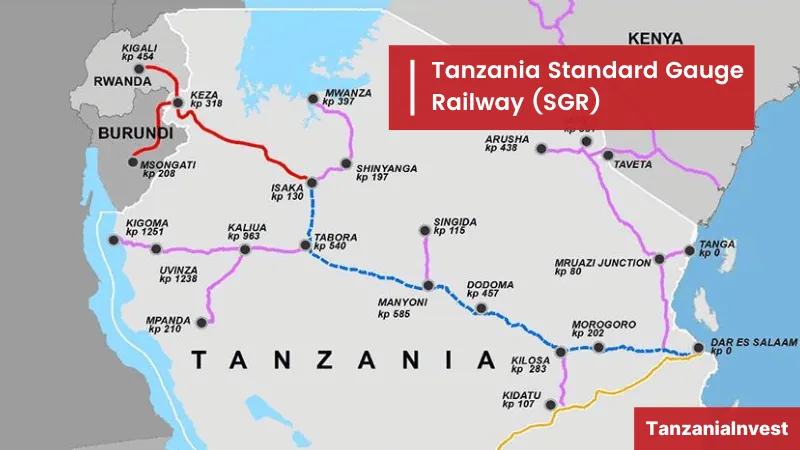
Tanzania’s investment in an electrified Standard Gauge Railway (SGR) has been identified in national development strategies and regional agendas as a flagship project within Africa’s shift towards modern transport corridors (AfDB, 2021; UNECA, 2020; World Bank, 2019). With over 2,560 kilometres of track planned, the SGR connects the port of Dar es Salaam with inland cities such as Morogoro, Dodoma, Tabora and Mwanza, while extending cross-border linkages to Rwanda, Burundi, and potentially the Democratic Republic of Congo (Figure 1). By replacing the outdated metre-gauge line, the SGR is expected to unlock the East African Community’s central corridor, rich in agricultural, mineral, livestock, forest and lake resources, with a modern, high-capacity rail system (World Bank, 2021).
Most existing studies and policy discourse have emphasised the SGR’s potential to improve international trade, decongest roads, stimulate development around the stations and enhance connectivity (Mhlanga & Makochekanwa, 2020). However, less scholarly and policy attention has been directed towards the transformative potential of the SGR in rural and peri-urban regions along the corridor. These areas, historically marked by physical isolation and limited market access, are framed in recent development plans as strategic frontiers for economic expansion (AfDB, 2022; URT, 2021; World Bank, 2019). They are often endowed with underexploited agricultural, mineral and ecological resources; which are increasingly being integrated into national and global economic circuits through new rail linkages (AfDB, 2022; URT, 2021).
Importantly, railways are not passive conduits of movement but active agents of spatial transformation that reconfigure landscapes, economies, and settlement systems (Rodrigue, 2020; World Bank, 2019). The arrival of the SGR is already triggering what may be termed “resource frontier urbanisation” a process whereby previously remote or underutilised areas experience intensified land-use change, informal economic activities, settlement densification, and integration into regional circuits (Bryceson, Bradbury, & Bradbury, 2008; Zoomers, 2010). Emerging evidence suggests that the SGR is catalysing the formation of new growth poles around station nodes, repositioning rural towns as hubs of logistics, trade and agro-industrial development (AfDB, 2022; Mwenda, 2023). The corridor is also attracting in-migration, producing ribbon-like expansion, consolidation of settlement clusters, and rural–urban continuums, echoing experiences along the Addis Ababa – Djibouti line (Alemayehu, 2021; Bekele & Kjosavik, 2016).
Yet these dynamics are not without challenges. Without coordinated spatial planning, SGR-induced transformations risk leading to fragmented urbanisation, speculative land markets, displacement and ecological stress (UN-Habitat, 2014; Watson, 2016). Weak institutional coordination between national and sub-national levels, coupled with the absence of integrated land-use frameworks, undermines long-term sustainability (P. Healey, 1997; Kombe & Kreibich, 2006). Moreover, deficits in complementary infrastructure such as feeder roads, energy, water and sanitation limit inclusive development potential of emerging growth nodes (AfDB, 2022; World Bank, 2019). Left unaddressed, these issues may exacerbate socio-spatial inequalities and entrench uneven development rather than enabling balanced regional transformation (Parnell & Pieterse, 2014).
In this context, urban and regional planning becomes critical. Coordinating transport infrastructure with spatial planning can help ensure equitable, productive and sustainable development along the SGR corridor. Strategic frameworks must align national investment with localised development strategies, anticipate land-use dynamics at station precincts and embed participatory governance to strengthen community agency and intergovernmental coordination (Mchome & Nzoya, 2022; UN-Habitat, 2014). By doing so, rural station nodes can evolve into resilient and vibrant hubs that reinforce Tanzania’s broader development aspirations.
This paper seeks to fill a critical research and policy gap; the lack of planning-oriented studies that examine the rural and peri-urban implications of large-scale rail infrastructure. Existing discourse remains largely city-centric, privileging metropolitan outcomes while overlooking the transformations unfolding in rural hinterlands (Dodson, 2017 ; Schindler & Kanai, 2021). By shifting the analytical lens to the rural dimension, the study explores how the SGR is mobilising agricultural, mineral and ecological resources, reshaping land-use and settlement dynamics, and how planning systems can guide these changes towards inclusive and sustainable outcomes. In doing so, the paper repositions rail not only as an engine of growth but as a potential lever for spatial equity and integrated territorial development.
2. Literature Review and Conceptual Framework
Transport infrastructure has long been recognised as a catalyst for regional integration, market expansion, and economic modernisation (Banister & Berechman, 2001; World Bank, 2019). Railways, in particular, have historically reconfigured settlement systems by creating new linkages, reducing costs, and stimulating frontier development (Atack et al., 2009; Jedwab & Moradi, 2015). Contemporary African examples such as Ethiopia’s Addis Ababa–Djibouti line and Kenya’s Standard Gauge Railway (SGR); demonstrate how rail investments can reduce logistics costs, improve trade efficiency and reshape land markets (Calas, 2020; Kamau & Fashoyin, 2021).
Yet, much of this literature remains city-centric, emphasising metropolitan growth and connectivity while overlooking rural and peri-urban regions traversed by such corridors (Dodson, 2017 ; Schindler & Kanai, 2021). This bias obscures how large-scale infrastructure may reconfigure rural landscapes mobilising agricultural, mineral and ecological resources, restructuring settlement patterns and opening new economic frontiers (Zoomers, 2010). Addressing this gap requires a planning-oriented approach attentive to rural and spatial dynamics.
In Tanzania, the government and the Tanzania Railways Corporation (TRC) have articulated ambitions for the SGR to function as a development corridor, with strategies calling for integrated catchment planning, value capture, and spatial integration with local frameworks (AfDB, 2022; URT, 2021). However, implementation remains uneven. Weak vertical coordination between national and sub-national levels, combined with limited integration of land-use and transport planning, constrains the ability to align rail investments with local development realities. These shortcomings highlight the need for spatial models that are both nationally strategic and locally responsive.
One possible framework is Transit-Oriented Development (TOD), which emphasises compact, mixed-use development clustered around transit nodes (Cervero & Murakami, 2009). Widely applied in urban contexts, TOD principles have rarely been extended to rural or peri-urban settings. Existing studies suggest that SGR stations in Tanzania lack integrated design features that could channel development and avoid unplanned sprawl (Mchome & Nzoya, 2023). Extending TOD concepts into rural contexts offers an opportunity to guide spontaneous settlement expansion, mitigate fragmentation, and foster functional rural–urban integration.
Complementing TOD, recent scholarship on corridor urbanism emphasises how mega-infrastructure projects reshape extraction, production, and settlement logics across entire territories (Enns & Bersaglio, 2020). Rail corridors frequently activate resource frontiers by attracting investment in agriculture, mining, forestry, and trade, while simultaneously creating speculative land markets and reconfiguring settlement hierarchies (Zoomers, 2010). This phenomenon, which we term “resource frontier urbanisation”, is highly relevant for Tanzania’s SGR, where villages are evolving into intermediary trade hubs and small towns, reinforcing a rural–urban continuum.
Taken together, TOD and corridor urbanism provide the conceptual lens for this study. The framework emphasises how improved accessibility from the SGR reshapes mobility flows and strengthens rural–urban linkages, particularly in marginalised areas. This accessibility stimulates land-use change (subdivision, speculation, settlement expansion) and activates resource frontiers (commercial agriculture, mineral extraction, informal markets). Over time, these dynamics foster the emergence of new growth poles along the corridor. However, without deliberate governance, they risk producing fragmented landscapes, deepening inequalities, and unsustainable growth (Kombe & Kreibich, 2006; Watson, 2016).
Planning institutions therefore play a critical mediating role. Effective interventions such as zoning, land readjustment, development control and participatory governance are essential to align national infrastructure with local development trajectories (P. Healey, 2007). The framework positions planning not merely as a regulatory tool, but as the lever that determines whether the SGR becomes a driver of inclusive, sustainable transformation or entrenches uneven development.
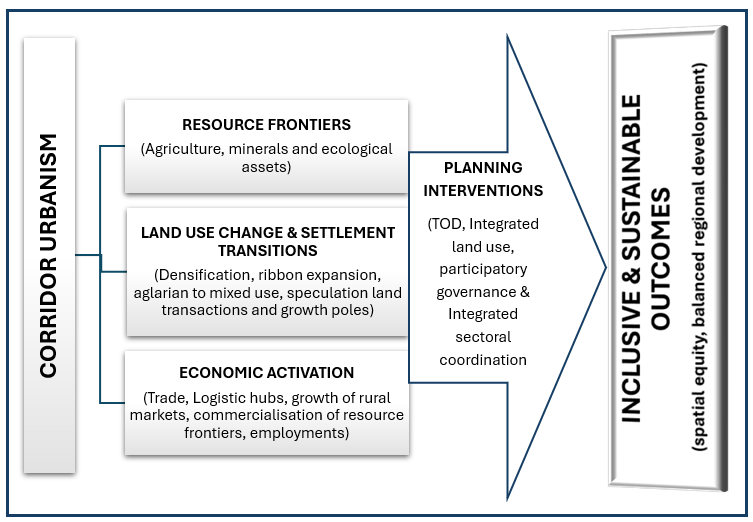
The relationships underpinning this framework are illustrated in Figure 2. The framework integrates Corridor Urbanism and Transit-Oriented Development (TOD) to demonstrate how Tanzania’s Standard Gauge Railway (SGR) induces rural and regional transformation. Rail-led connectivity activates resource frontiers by unlocking agricultural, mineral, and ecological assets. It simultaneously drives land-use change and settlement transitions, including densification, ribbon expansion, agrarian-to-mixed-use conversions, and speculative land transactions, while also stimulating economic activation through trade, logistics hubs, rural markets, and the commercialisation of resource frontiers. These dynamics create opportunities but also risks of fragmentation and inequality if left unmanaged. Planning and governance interventions including TOD, integrated land-use strategies, participatory governance, and inter-sectoral coordination are therefore critical to align these transformations with Tanzania’s development goals. The ultimate aim is to secure inclusive and sustainable outcomes, ensuring spatial equity and balanced regional development.
4. Methodology
This study adopts a qualitative, multi-scalar approach to capture how the SGR is reshaping Tanzania’s spatial and socio-economic landscape. The multi-scalar lens allows examination of processes operating at the local scale (settlements and station areas), the regional scale (corridor and inter-city dynamics), and the national scale (integration with planning and policy frameworks). This enables a nuanced understanding of how infrastructure-led change is experienced within communities, how it reorganises regional development trajectories, and how it aligns with national planning objectives. Through this lenss, the stations were arranges in a hierarchy of functions / settlement scale (Table 1)
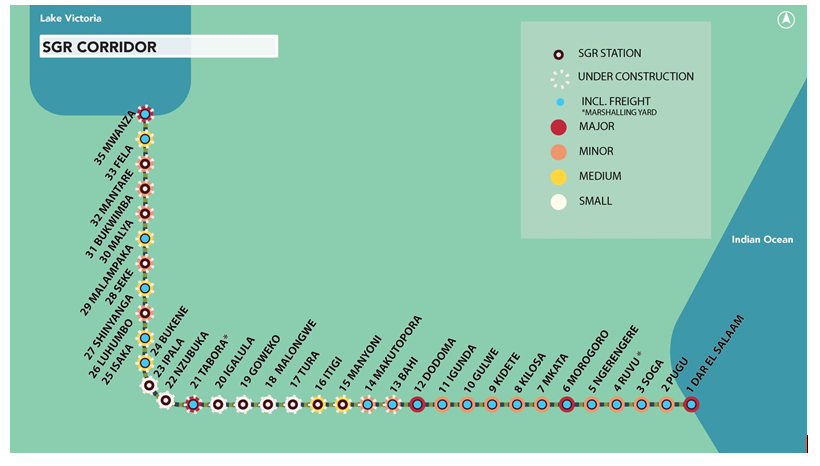
The research covers the full extent of the Tanzanian SGR corridor, running from Dar es Salaam (Station 0) to Mwanza (Figure 1). Along this corridor, 34 stations have been designated, including three marshalling yards at Kwala (Ruvu), Tabora and Fela (Figure 3). Stations are categorised into major, medium and minor (Figure 2) based on their size, function and strategic location (Table 1). Major stations such as Dar es Salaam, Morogoro, Dodoma, Tabora and Mwanza serve both freight and passenger operations and are embedded in significant urban and regional centres. Medium and minor stations facilitate local mobility and rural–urban linkages, supporting the redistribution of economic activities. Marshalling yards, strategically positioned near ports and border gateways, are designed for large-scale freight handling and future intermodal logistics expansion. For instance, the Kwala Yard connects directly to Dar es Salaam and Tanga ports, while the Fela and Tabora yards strengthen inland freight operations and cross-border trade. This typology provides the analytical framework for examining how rail infrastructure interacts with surrounding settlements, land-use transitions and emerging growth poles. Of the 34 stations, 23 accommodate both passenger and freight traffic, while 11 are reserved for passengers only (Figure 2; Table 3).
The study triangulates evidence from multiple qualitative sources (Project appraisal and design, ESIA reports, Scoping studies and RAP reports). Document analysis involved a systematic review of technical and policy documents (specifically the Human Settlements Development Policy, 2002, Land Policy, 1995 and Urban Planning Space Standards, 2018). Complementary materials included approved master plans, detailed planning schemes and institutional reports; all received from the Local Government Authorities (LGAs) in which the SGR corridor is constructed. These plans were examined for their alignment with SGR-driven transformations. Academic literature, policy briefs, and media coverage provided additional insights into broader debates on corridor urbanism and infrastructure-led development. Semi-structured interviews were conducted in selected major and medium station towns, including Dar es Salaam, Morogoro, Dodoma, Shinyanga, Tabora and Mwanza. Respondents included local government planners, service providers (for water, energy and roads), private sector actors and community leaders, whose perspectives provided valuable insights into planning responses, emerging opportunities and perceived risks. Field visits and participant observation further in 12 stations enriched the analysis by documenting evolving land-use patterns, informal economic activities and community responses to the railway, with particular attention to speculative land transactions, change of land uses, densification and the consolidation of rural service centres.
The analysis focused on the interaction between rail infrastructure and three domains derived from the conceptual framework. First, resource frontiers were assessed to understand how agricultural, mineral and ecological assets are mobilised and commercialised through improved accessibility. Second, land-use change and settlement transitions were examined to capture the dynamics of densification, ribbon expansion, agrarian-to-mixed-use transitions and speculative land markets. Third, economic activation was analysed in relation to how trade flows, logistics hubs and rural markets are stimulated, and how employment opportunities emerge along the corridor. By integrating documentary evidence, stakeholder insights and field observations, the study constructs an evidence-based narrative of the SGR’s transformative role. In doing so, it foregrounds the importance of planning interventions including land-use regulation, growth pole planning and corridor governance to ensure that the outcomes of SGR-led development are inclusive and sustainable rather than speculative and exclusionary.
| LOT | Name of Station | ER | Spatial Typology of the station | |
|---|---|---|---|---|
| Type of Station | Area | |||
| Lot 1 and 2 | Dar Es Salaam | Major (Passenger + Freight) | 15,000 m2 | Metropolitan Gateway: A national and international hub integrating port, airport, and highway networks; the primary entry/exit point for global trade and passenger flows. |
| Pugu | Minor (Passenger + Freight) | 5,000 m2 | Peri-Urban Growth Interface: Located within the urban fringe of Dar es Salaam, this station mediates between city expansion and surrounding rural landscapes, with potential for industrial and logistics sprawl. | |
| Soga | Minor (Passenger + Freight) | 1,000 m2 | Hinterland Connector: Functions as a transitional node linking Dar es Salaam to its immediate hinterland; potential to stimulate secondary town development and agro processing. | |
| Ruvu | Minor (Passenger + Freight) | 5,000 m2 | Rural Service Node: Serves surrounding rural communities, facilitating agricultural transport and small-scale trade, with scope for settlement densification. | |
| Ruvu Marshalling Yard | Marshalling Yard | 20,000 m2 | Freight Logistics Hub: Dedicated marshalling yard supporting cargo operations, strengthening Ruvu’s role as a freight aggregation point in a rural context. | |
| Ngerengere | Minor (Passenger + Freight) | 5,000 m2 | Military-Linked Rural Node: Serves both civilian rural populations and the Ngerengere airbase, with strategic importance beyond its size. | |
| Morogoro | Major (Passenger + Freight) | 10,000 m2 | Regional Secondary City Hub: Anchors a fast-growing regional city, with potential to catalyse urban expansion, agro-industrial corridors, and service concentration. | |
| Mkata | Minor (Passenger + Freight) | 5,000 m2 | Linear Rural Corridor Nodes: Small stations serving dispersed rural settlements, facilitating agricultural flows and incremental market-town development. | |
| Kilosa | Minor (Passenger + Freight) | 5,000 m2 | ||
| Kidete | Minor (Passenger + Freight) | 5,000 m2 | ||
| Gulwe | Minor (Passenger + Freight) | 5,000 m2 | ||
| Igunda | Minor (Passenger + Freight) | 5,000 m2 | ||
| Dodoma | Major (Passenger + Freight) | 10,000 m2 | National Administrative Capital Hub: A growing political and administrative centre; the station reinforces Dodoma’s evolving role as a capital city, shaping urban restructuring and growth. | |
| Bahi | Minor (Passenger + Freight) | 5,000 m2 | Rural Transition Nodes: Intermediate scale stops linking Dodoma to the central corridor, supporting rural mobility and agricultural flows. | |
| Makutopora | Minor (Passenger + Freight) | 5,000 m2 | ||
| Lot 3 and 4 | Manyoni | Medium | 1,667 m2 | Intermediate Rural Service Towns: Mid-sized towns that can evolve into local trading hubs, consolidating regional supply chains. |
| Itigi | Medium | 1,667 m2 | ||
| Tura | Small | 560 m2 | Small Rural Halts: Minimal facilities primarily serving villages and nearby agrarian communities. | |
| Malongwe | Small | 560 m2 | ||
| Goweko | Small | 560 m2 | ||
| Igalula | Small | 560 m2 | ||
| Tabora | Major (Passenger + Freight) | 10,000 m2 | Regional Trade and Rail Hub: Historically significant railway town; with major passenger and freight functions, it anchors western Tanzania’s trade and urban growth. | |
| Tabora Marshaling Yard | Marshalling Yard | 7,820 m2 | Freight Processing Node: Key site for reorganisation and transfer of goods, reinforcing Tabora’s role as a logistics hub. | |
| Nzubuka | Small | 560 m2 | Small Rural Stops: Primarily agricultural pick-up points with limited but locally significant service roles. | |
| Ipala | Small | 560 m2 | ||
| Bukene | Medium (Passenger + Freight) | 1,667 m2 | Intermediate Agricultural Node: Medium-scale rural station enabling grain and cash crop movement; likely to expand as a rural market centre. | |
| Lot 5 | Isaka | Medium (Passenger + Freight) | 5,000 m2 | Regional Dry Port and Border Trade Node: Serves as a key inland terminal, linking to Rwanda and Burundi, with potential for large-scale logistics and customs functions. |
| Luhumbo | Minor | 1,100 m2 | Minor Rural Connectors: Small-scale rural halts, primarily for agricultural freight and limited passenger services. | |
| Seke | Minor | 1,100 m2 | ||
| Malya | Minor | 1,100 m2 | ||
| Bukwimba | Minor | 1,100 m2 | ||
| Mantare | Minor | 1,100 m2 | ||
| Shinyanga | Medium (Passenger + Freight) | 6,000 m2 | Regional Growth Centre: Anchors Shinyanga town, enabling mining, livestock, and trade flows, with strong potential for urban expansion. | |
| Malampaka | Medium (Passenger + Freight) | 6,900 m2 | Agro-Mining Node: Serves rural areas with both agricultural and mineral economies, positioned as a feeder to Shinyanga. | |
| Fela + Marshalling Yard | Medium (Passenger + Freight) | 2,500 m2 | Logistics and Rural Service Node: Combines freight handling with rural service functions, reinforcing corridor-based logistics. | |
| Mwanza | Major (Passenger + Freight) | 13,000 m2 | City – link to Uganda, Kenya and Lake zone (Lake Victoria) |
Source: SGR ESIA Report Lot 3&4, 2022; ESIA Report for Lot 1 and 2, ERM 2019
4. Results and Discussion
The Standard Gauge Railway (SGR) represents a critical infrastructure investment that is reshaping Tanzania’s spatial and economic geography. This section presents and discusses the findings of the study through the lens of urban planning and the conceptual framework developed earlier. The results demonstrate that the SGR acts as both a physical and economic connector, opening up rural resource frontiers, transforming regional settlement hierarchies, and reconfiguring land use and mobility systems. Insights are drawn from field observations, planning documents, and comparative empirical studies to interpret the implications of these findings for urban and regional planning.
4.1 Resource Frontiers: Agriculture, Minerals, Service and Ecological Assets
The Standard Gauge Railway (SGR) is reconfiguring Tanzania’s hinterlands by transforming areas once considered peripheral into emerging centres of economic and spatial development. Evidence from interviews conducted across 12 stations indicates that the full operation of the SGR will open four major categories of resource frontiers: agriculture (59.9%), ecological assets (26.3%), minerals (7.2%), and services including logistics, marshalling yards, inland container depots (ICDs), and industrial activities (6.7%).
Dar es Salaam serves as the principal gateway for the import and export of these frontiers, leveraging its port, airport, and road networks to connect with national, regional, and global markets. Agricultural frontiers such as those in Dodoma, Morogoro, Kilombero, Ihemi, Ngerengere, Mkata, and Mpwapwa valleys long constrained by distance to markets are now positioned for renewed commercial expansion. Staples such as rice, maize, and sugarcane are becoming increasingly viable for both industrial processing and export markets. Similarly, livestock corridors in Ruvu, Kilosa, Itigi, and Manyoni, as well as wildlife corridors, timber resources, and beekeeping in Tabora, Igalula, Goweko, and Bukene, are gaining improved market access. Cotton frontiers in Luhumbo and Bukwimba also illustrate the growing potential for regional trade. This dynamic mirrors Ethiopia’s railway corridors, where the removal of transport bottlenecks catalysed horticultural exports (World Bank, 2020). Yet Kenya’s SGR experience underscores a cautionary note: while large agribusinesses prospered, smallholder farmers often lacked the capacity to integrate into these new value chains (Boone et al., 2016).
Mineral frontiers are likewise being repositioned. Nickel and graphite in Ngara, diamonds in Shinyanga and Misungwi, and gold in Geita alongside silver and copper in Bulyanhulu are emerging as strategic hubs as rail connectivity reduces haulage costs and links production sites to international markets. However, lessons from the Zambian Copperbelt warn of the dangers of poorly regulated extractive corridors, which often become enclaves of foreign capital accumulation with limited reinvestment in local communities (Jedwab & Moradi, 2015).
Ecological frontiers including wetlands, forests, and rangelands are also being revalued for irrigation, timber, tourism, and livestock markets. While these developments may diversify livelihoods, they carry risks of ecological degradation. The Brazilian Amazon provides a stark example: rail and road expansion there spurred deforestation, biodiversity loss, and land conflicts (Laurance et al., 2014). These international precedents highlight the critical importance of robust governance. Without clear frameworks for spatial planning, land-use regulation, and ecological protection, frontier expansion may deepen inequalities, facilitate land grabbing, and undermine fragile ecosystems. Conversely, if guided by Strategic Environmental Assessments, participatory land-use planning, and resource-sensitive zoning, frontier development can strengthen food security, expand rural incomes, and promote sustainable livelihoods.
4.2 Land Use Change and Settlement Transitions
Interviews with technical teams in Shinyanga, Dodoma, Mwanza and Dar es Salaam revealed that land use transitions are unfolding differently across station types, reflecting both local contexts and the catalytic influence of the SGR. At the major stations such as Dar es Salaam, Morogoro, Dodoma, Tabora and Mwanza, teams observed rapid densification and mixed-use growth, confirming expectations that about half of the change is linked to densification, a third to ribbon expansion, and the remainder to shifts from agrarian to mixed-use activities. Medium stations like Isaka, Shinyanga, Malampaka, Manyoni, Itigi and Bukene were identified as experiencing ribbon expansion and agrarian-to-mixed-use transitions, often accompanied by land speculation patterns that correspond to estimated changes of 40% agrarian-to-mixed-use, 30% ribbon expansion, 20% densification, and 10% speculation. In minor and small stations such as Soga, Ngerengere and Kilosa, peri-urbanisation was highlighted as the dominant trend, largely taking the form of ribbon settlement growth along the railway and road junctions (50%), complemented by gradual mixed-use shifts (30%) and speculative activities (20%). Meanwhile, the marshalling yards at Ruvu, Tabora and Fela are undergoing logistics-driven conversion, with land increasingly repurposed for industrial and warehousing functions (60%) alongside ribbon expansion (40%). Collectively, these insights confirm the differentiated spatial impacts of the SGR corridor, illustrating how the railway is restructuring land use in ways that align with both observed realities and projected development trajectories.
The SGR is thus accelerating diverse settlement transformations along its route, producing patterns of densification, ribbon expansion, and agrarian-to-mixed-use transitions. Secondary towns such as Dodoma and Morogoro are already experiencing infill development and multi-storey housing near stations; a trend comparable to China’s high-speed rail regions where compact growth was stimulated around rail hubs (Chen & Haynes, 2017). Yet without strong regulatory enforcement, such densification risks degenerating into overcrowding and informal vertical construction. In towns like Kilosa, Gairo and Itigi, ribbon development along feeder roads is evident, complicating service provision and creating linear sprawl, similar to the roadside ribbon towns that emerged along India’s Golden Quadrilateral highways (Datta, 2012). Rural villages including Malampaka and Ihumwa are witnessing agrarian-to-mixed-use transitions as agricultural land is rapidly converted to residential and commercial uses, with land subdivision and speculation dominating these transformations echoing peri-urban transitions observed in Abuja, Nigeria, where weak planning capacity enabled informal land markets at the expense of inclusivity (Obeng-Odoom, 2015). Speculation is particularly pronounced around Isaka Dry Port, where land price inflation and informal transactions have created hotspots for speculative investment. In this way, the railway is reinforcing new urban hierarchies: Isaka is emerging as a logistics hub, Dodoma is consolidating its political-administrative role, and Itigi is developing as a rural service node. A comparable case is Dire Dawa along the Addis–Djibouti line, which became a logistics hub but experienced uneven growth in the absence of comprehensive planning (Arvis et al., 2019).
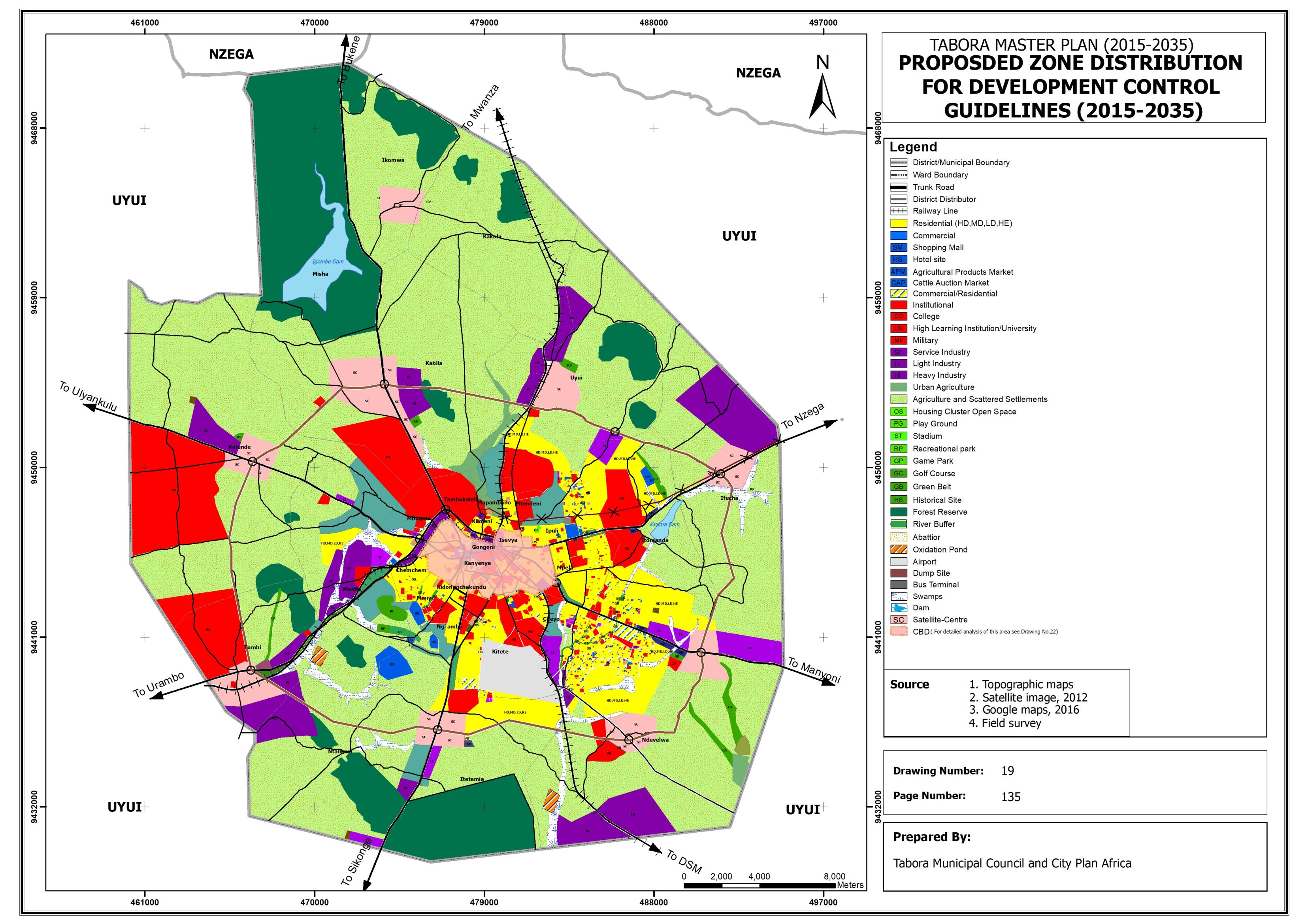
However, a critical planning gap persists. The prepared master plans of the towns and cities visited did not incorporate provisions for the SGR or its linkages with surrounding land uses and infrastructure; for example, the Tabora Master Plan (Figure 4) only accounted for the MGR. Similarly, the town planning schemes prepared around the stations in Dodoma do not adequately reflect the specific needs and opportunities presented by the SGR, with comparable gaps also evident in Morogoro and Dar es Salaam.
These findings highlight that urban and regional planning must proactively anticipate such transitions by introducing transit-oriented development (TOD)-inspired approaches adapted to rural and secondary town contexts. Planned subdivisions, provision of serviced plots, and controlled spatial expansion are critical to mitigating the risks of chaotic peri-urbanisation. Managed effectively, these transitions can strengthen rural–urban linkages, foster small-town growth, and reduce pressure on Dar es Salaam. Left unmanaged, however, they are likely to produce fragmented peri-urban belts, speculation-driven displacement and inefficient spatial structures.
4.3 Economic Activation: Trade, Logistics and Rural Markets
The findings indicate that economic activation along the SGR corridor varies considerably by station type, reflecting their differentiated roles within regional and national economies. In the major terminal cities of Dar es Salaam and Mwanza, economic activities are dominated by trade (40%) and logistics (30%), complemented by employment generation (20%) and the commercialisation of agriculture and fisheries (10%). Other major stations such as Morogoro, Dodoma and Tabora exhibit a more balanced profile, with trade (30%), rural markets (25%), logistics (25%) and employment (20%) emerging as key drivers. Medium stations like Isaka, Shinyanga, Malampaka, Manyoni and Itigi are developing as transitional hubs, where logistics lead at 35%, followed by trade (30%), commercialisation of resource frontiers (20%) and employment (15%). By contrast, minor and small stations such as Pugu, Soga and Kilosa primarily stimulate rural markets (40%), supplemented by trade (30%), employment (20%) and limited logistics (10%). Finally, the marshalling yards at Ruvu, Tabora and Fela function as specialised logistics nodes, with logistics activities accounting for 60% of economic activation, alongside employment (20%) and trade (20%).
The SGR is therefore catalysing multi-layered economic processes, spanning global trade integration, regional growth, and rural market revitalisation. At the national scale, the Dar es Salaam Port and Kwala Inland Container Depot anchor Tanzania’s trade flows, while the Isaka Dry Port serves as a strategic gateway linking the country with Rwanda, Burundi and the Democratic Republic of Congo. These facilities mirror regional initiatives such as Kenya’s LAPSSET corridor and Ethiopia’s industrial parks, which delivered mixed outcomes due to weak integration with local economies (Mitullah & Oirere, 2019). At the regional scale, towns such as Morogoro, Dodoma and Tabora are consolidating as growth centres: Morogoro as an agro-industrial hub, Dodoma as the administrative-political core, and Tabora as a processing and wholesaling centre. This trajectory resonates with Vietnam’s North–South railway corridor, where secondary cities became powerful growth engines when strategically connected (Fujita & Mori, 2005). At the local scale, rural markets in towns such as Itigi and Manyoni are expanding, integrating pastoralists and smallholders into wider value chains. Comparable experiences along Uganda’s Northern Corridor show that while such integration enhanced market access, it also exposed smallholders to volatile commodity prices (Byerlee, Jayne, & Myers, 2017). Employment creation is another dimension of economic activation, with new jobs emerging in logistics, construction, and service industries. However, many remain short-term and precarious, echoing Mozambique’s Nacala Corridor, where infrastructure investments spurred temporary jobs but failed to generate durable livelihoods (Kirshner & Power, 2015).
These findings underscore that planning for economic activation must extend beyond infrastructure provision. Embedding value-chain integration, strengthening rural market systems, and supporting smallholders and cooperatives are essential to ensuring that the economic benefits of the SGR corridor translate into inclusive and sustainable outcomes.
4.4 Hierarchy of Growth Poles Along the SGR Corridor
The hierarchy of growth poles along the SGR corridor reveals a differentiated pattern of influence across station types. Tier 1 growth poles, comprising the major stations of Dar es Salaam, Dodoma, Morogoro, Tabora and Mwanza, account for roughly 60% of regional and national influence, reflecting their role as primary urban and economic hubs. Tier 2 centres, including medium stations such as Isaka, Shinyanga, Malampaka, Manyoni, Itigi and Bukene, contribute about 25% of regional influence, serving as transitional growth nodes that absorb spillovers from Tier 1 cities while linking rural hinterlands to wider markets. Tier 3 nodes, represented by minor and small stations such as Soga, Ngerengere and Kilosa, exert around 15% influence at the local level, primarily facilitating peri-urban expansion and rural–urban connectivity. In addition, the marshalling yards at Ruvu, Tabora and Fela function as specialised logistics sub-nodes, strategically tied to Tier 1 and Tier 2 poles, anchoring freight handling, warehousing, and industrial functions that reinforce the broader corridor economy.
Analysis of the spatial typology of stations further illustrates the emergence of a nuanced hierarchy. At the apex are national growth poles: Dar es Salaam, functioning as the country’s primary metropolitan gateway linking port, airport, and highway networks to the global economy; Dodoma, whose administrative role is reinforced by the SGR, positioning it as a strategic service and governance hub; and Mwanza, a lake city anchoring cross-border trade with Uganda and Kenya. Below these, regional growth centres are consolidating, with Morogoro emerging as an agro-industrial hub, Tabora re-establishing itself as a logistics and service town, and Shinyanga integrating mining, livestock, and agricultural economies. A further tier of sub-regional centres includes Isaka, which is evolving into a dry port and cross-border trade hub linking Rwanda and Burundi; Manyoni and Itigi, consolidating as intermediate service towns; and rural-specialised centres such as Bukene and Malampaka, which function as agro-mining and agricultural processing nodes. At the base of the hierarchy are local service centres such as Pugu and Soga, which connect peri-urban fringes of Dar es Salaam, alongside a constellation of rural growth poles like Ruvu, Kilosa, Kidete, Gulwe, Igunda, Bahi and Makutopora, which facilitate agricultural flows and incremental settlement densification. Smaller halts including Nzubuka, Ipala, Tura, Malongwe, Goweko and Igalula operate as micro-nodes, enabling basic service functions for agrarian villages. Complementing these is a network of specialised logistics poles, particularly the Ruvu, Tabora and Fela marshalling yards, together with Isaka’s dry port, which consolidate freight flows and enhance cross-border trade. Collectively, this hierarchy illustrates how the SGR is both reinforcing existing urban centres and activating new rural and regional nodes, laying the foundation for a more polycentric, corridor-driven spatial structure in Tanzania.
The hierarchical structure observed along Tanzania’s SGR corridor mirrors broader trends from other African rail investments. In Kenya, the Standard Gauge Railway reinforced Nairobi and Mombasa as dominant gateways while stimulating intermediate growth centres such as Voi and Naivasha, though much of the rural hinterland remained marginalised (Calas, 2020; Kamau & Fashoyin, 2021). Similarly, Ethiopia’s Addis Ababa–Djibouti railway strengthened Addis Ababa as a primate city pole and consolidated Dire Dawa and Djibouti as regional logistics hubs, while triggering ribbon-like settlement expansion in smaller towns (Alemayehu, 2021; Bekele & Kjosavik, 2016). Compared with these experiences, Tanzania’s SGR corridor demonstrates a more polycentric configuration, characterised by the interaction of national poles (Dar es Salaam, Dodoma, Mwanza), regional centres (Morogoro, Tabora, Shinyanga), and a constellation of sub-regional and rural service nodes. This suggests that the SGR has the potential to support more balanced territorial development than neighbouring corridors, provided planning institutions effectively mediate growth, curb speculative land markets, and channel investment into strategically identified rural and intermediate growth centres.
4.5 Suitable Planning Interventions
The analysis of planning interventions along the SGR corridor reveals differentiated priorities according to station typology, reflecting both opportunities and risks in guiding spatial transformation. At the major stations, where Transit-Oriented Development (40%) and integrated land use planning (30%) dominate, interventions have been most effective in anchoring densification and mixed-use development around transport hubs. However, weaknesses in participatory governance and inter-sectoral coordination (each only 15%) suggest that while physical planning has advanced, community involvement and institutional alignment remain limited—raising the risk of exclusionary outcomes and fragmented infrastructure provision. In medium stations, emphasis on integrated land use (35%) and participatory governance (30%) has enabled more context-sensitive planning, but the relatively modest share of TOD (20%) indicates missed opportunities to consolidate compact growth; in practice, this has contributed to ribbon expansion and speculation. For minor and small stations, participatory governance accounts for the largest share (40%), reflecting attempts to involve communities in managing peri-urbanisation; yet without stronger land use integration (30%) and TOD measures (10%), these areas risk uncoordinated sprawl that undermines service delivery. At the marshalling yards, where integrated sectoral coordination (40%) and TOD (30%) dominate, interventions have successfully structured logistics and freight flows, though limited emphasis on governance (10%) highlights a persistent weakness in linking these specialised nodes to surrounding communities and labour markets.
These findings demonstrate that interventions have worked best where physical planning and logistics coordination have been prioritised, particularly in major stations and marshalling yards. Conversely, they have failed or remained weak in ensuring participatory governance, balancing TOD principles in smaller nodes, and integrating sectoral efforts across scales (P. Healey, 1997). Precaution is therefore needed to strengthen governance mechanisms, align sectoral investments, and adapt TOD frameworks to rural and peri-urban contexts (Cervero & Murakami, 2009; Mchome & Nzoya, 2023). Without such measures, the SGR risks producing exclusionary growth poles, fragmented peri-urban belts, and logistics enclaves disconnected from local economies (Mchome & Nzoya, 2023). Managed carefully, however, the differentiated intervention mix could lay the groundwork for inclusive, corridor-wide spatial development.
4.6 Towards Inclusive and Sustainable Outcomes
The Tanzanian SGR illustrates the transformative but uneven nature of infrastructure-led development, where opportunities and risks coexist. Comparative experiences provide important lessons: in China, high-speed rail corridors redistributed growth across regions and reduced territorial inequalities (Zheng & Kahn, 2013), while in Kenya, the SGR reinforced Nairobi–Mombasa primacy with limited spillovers to secondary towns (Owuor & Mbatia, 2021). Tanzania must therefore avoid similar polarisation by ensuring equitable investment in secondary towns and rural markets. The history of the Copperbelt underscores the dangers of extractive frontier expansion, where benefits largely accrued to foreign corporations with limited reinvestment locally. By contrast, experiences from Uganda’s transport corridors show that smallholders can be integrated into value chains when deliberate support mechanisms are in place. For Tanzania, this means embedding governance frameworks that protect communities from dispossession while promoting local reinvestment, through targeted credit schemes, cooperative strengthening, and training programmes that anchor rural producers in emerging economic systems. At the same time, ecological safeguards are vital. The Brazilian Amazon highlights the environmental risks of unchecked infrastructure corridors, including biodiversity loss and land degradation. Tanzania must prioritise strategic environmental assessments, the creation of ecological corridors, and participatory monitoring to mitigate these risks. Ultimately, the SGR is more than a railway, it represents a spatial and institutional reconfiguration project. Its capacity to deliver inclusive and sustainable transformation will depend on how effectively planning institutions mediate growth, regulate resource frontiers, and integrate rural communities into national development trajectories.
5. Conclusion and Contribution
This study has demonstrated how Tanzania’s Standard Gauge Railway (SGR) is reshaping spatial, economic, and institutional landscapes along its corridor through a set of interlinked processes. Enhanced accessibility has opened agricultural, mineral, and ecological frontiers to wider markets, generating opportunities for commercialisation but also exposing vulnerabilities to speculative land transactions. Land-use change, and settlement transitions are evident in densification, ribbon-like expansion, and agrarian-to-mixed-use transformations, signalling both opportunities and risks associated with rapid corridor urbanisation. Economic activation has occurred through the expansion of rural markets, the rise of logistics hubs, and the diversification of employment opportunities. Together, these processes have crystallised into a hierarchical system of growth poles ranging from metropolitan gateways such as Dar es Salaam to local service centres and micro-nodes revealing a polycentric spatial reconfiguration that distinguishes Tanzania’s SGR from other African railway corridors.
The findings emphasise that the transformative potential of the SGR is not automatic. Without robust planning and governance, speculative land dynamics, unregulated sprawl, and inequitable distribution of benefits risk deepening rural and regional disparities. Planning interventions spanning land-use regulation, growth pole planning, and integrated corridor governance are therefore critical to steer these transformations towards inclusive and sustainable outcomes.
Comparative insights from Kenya and Ethiopia highlight that railway corridors can either entrench primate city dominance or open pathways for more balanced territorial development. Tanzania’s SGR corridor suggests the potential for a more polycentric model, but its realisation depends on deliberate institutional mediation, coordinated investment strategies, and the empowerment of local communities. Ultimately, the study underscores the importance of situating railway infrastructure within broader spatial planning frameworks so that the SGR functions not merely as a transport project, but as a catalyst for equitable and sustainable national development.
6. Declaration of competing interest
The author declares that there is no known competing financial interests or personal relationships that could have appeared to influence the work reported in this paper.
7. Acknowledgements
The author extends sincere gratitude to the Tanzania Railways Corporation (TRC) for granting permission to publish this manuscript. The data and insights presented in this study are drawn from various consultancy reports, including the Environmental and Social Management Plan (ESMP), Environmental and Social Impact Assessment (ESIA), Resettlement Action Plan (RAP), Scoping Report and other project documents prepared and submitted to TRC over the course of related assignments. The support and collaboration of TRC were instrumental in enabling this publication.
Special appreciation is directed to Mr. Jason Petrunia, a colleague from Land and People Company in Canada, for his integral role in the collection of primary data and the co-production of the Scoping Report that informed key aspects of this article. His involvement in conducting stakeholder interviews was particularly valuable in triangulating secondary information and enhancing the analytical depth of the study.
The author also thanks all stakeholders who contributed in one way or another to the successful completion and dissemination of this work. Their engagement and insights are gratefully acknowledged.
8. Data Availability
The datasets generated and analysed during this study are not publicly available due to confidentiality agreements with TNCL. However, data may be made available by the author upon reasonable request and with permission from TNCL.
9. Funding
SGR project in Tanzania has been funded by the Government of Tanzania through different donor funds.
References
- AfDB. (2021). African Economic Outlook 2021: From Debt Resolution to Growth – The Road Ahead for Africa. Retrieved from Abidjan: DOI ↗ Google Scholar ↗
- AfDB. (2022). Transport Infrastructure for Inclusive Growth in East Africa. Retrieved from Abidjan: DOI ↗ Google Scholar ↗
- Alemayehu, M. (2021). Railway infrastructure and regional integration in the Horn of Africa. Journal of Eastern African Studies, 15(4), 567–586. DOI ↗ Google Scholar ↗
- Arvis, J. F., Saslavsky, D., Ojala, L., Shepherd, B., Busch, C., Raj, A., & Naula, T. (2019). Connecting to Compete: Trade Logistics in the Global Economy. Retrieved from Washington, DC: DOI ↗ Google Scholar ↗
- Atack, J., Bateman, F., Haines, M., & Margo, R. (2009). Did Railroads Induce Or Follow Economic Growth? Urbanization And Population Growth In The American Midwest, 1850-60. Boston University - Department of Economics, Boston University - Department of Economics - The Institute for Economic Development Working Papers Series, 34. doi: DOI ↗ Google Scholar ↗
- AUDA-NEPAD. (2020). Africa Integrated High-Speed Railway Network: Implementation Strategy. Retrieved from Addis Ababa: DOI ↗ Google Scholar ↗
- Banister, D., & Berechman, Y. (2001). Transport investment and the promotion of economic growth. Journal of Transport Geography, 9(3), 209-218. doi: DOI ↗ Google Scholar ↗
- Bekele-Thomas, N. (2024). Calls for a Transformative Infrastructure Drive for Africa’s Sustainable Development. DOI ↗ Google Scholar ↗
- Bekele, S., & Kjosavik, D. J. (2016). Urbanisation and the new frontiers of land in Ethiopia: The case of Addis Ababa–Djibouti railway corridor. Forum for Development Studies, 43(3), 541–562. DOI ↗ Google Scholar ↗
- Boone, C., Dyzenhaus, A., Ouma, S., Owino, J., Gateri, C., Gargule, A., . . . Manji, A. (2016). Land Politics under Kenya's New Constitution: Counties, Devolution, and the National Land Commission. DOI ↗ Google Scholar ↗
- Bryceson, D., Bradbury, A., & Bradbury, T. (2008). Roads to Poverty Reduction? Exploring Rural Roads' Impact on Mobility in Africa and Asia. Development Policy Review, 26, 459-482. doi: DOI ↗ Google Scholar ↗
- Byerlee, D., Jayne, T. S., & Myers, R. J. (2017). Managing food price instability in East and Southern Africa: Policy responses to maize price shocks. Food Policy, 70, 7–25. DOI ↗ Google Scholar ↗
- Calas, B. (2020). The politics of infrastructure-led development in East Africa: The case of Kenya’s SGR. Journal of Eastern African Studies, 14(2), 241–260. DOI ↗ Google Scholar ↗
- Cervero, R., & Murakami, J. (2009). Rail and property development in Hong Kong: Experiences and extensions. Urban Studies, 46(10), 2019–2043. DOI ↗ Google Scholar ↗
- Chen, C. L., & Haynes, K. E. (2017). The Impact of High-Speed Rail Development on Urban Transformation in China. Journal of Transport Geography, 62, 184–196. DOI ↗ Google Scholar ↗
- Datta, A. (2012). The Illegal City: Space, Law and Gender in a Delhi Squatter Settlement. Ashgate: Farnham. DOI ↗ Google Scholar ↗
- Dodson, J. (2017 ). The global infrastructure turn and urban practice. Urban Policy and Research, 35(1), 87–92. DOI ↗ Google Scholar ↗
- Enns, C., & Bersaglio, B. (2020). On the Coloniality of “New” Mega-Infrastructure Projects in East Africa. Antipode, 52(1), 101-123. doi: DOI ↗ Google Scholar ↗
- Fujita, M., & Mori, T. (2005). Frontiers of the New Economic Geography*. Papers in Regional Science, 84(3), 377-405. doi: DOI ↗ Google Scholar ↗
- Healey, P. (1997). Collaborative Planning: Shaping Places in Fragmented Societies. London: Macmillan Press. DOI ↗ Google Scholar ↗
- Healey, P. (2007). Urban Complexity and Spatial Strategies Towards a Relational Planning for Our Times. London and Newyork: Routledge. DOI ↗ Google Scholar ↗
- Jedwab, R., & Moradi, A. (2015). The Permanent Effects of Transportation Revolutions in Poor Countries: Evidence from Africa. Review of Economics and Statistics, 98. doi: DOI ↗ Google Scholar ↗
- Kamau, P., & Fashoyin, T. (2021). Railways, land, and development in Kenya: The case of the Standard Gauge Railway. African Journal of Economic Policy, 28(2), 55-73. DOI ↗ Google Scholar ↗
- Kirshner, J., & Power, M. (2015). Mining and extractive urbanism: Postdevelopment in a Mozambican boomtown. Geoforum, 61, 67-78. doi: DOI ↗ Google Scholar ↗
- Kombe, W. J., & Kreibich, W. (2006). Governance of Informal Urbanisation in Tanzania. Dar es Salaam: Mkuki na Nyota. DOI ↗ Google Scholar ↗
- Laurance, W. F., Clements, G. R., Sloan, S., O’Connell, C. S., Mueller, N. D., Goosem, M., . . . Arrea, I. B. (2014). A global strategy for road building. Nature, 513(7517), 229-232. doi: DOI ↗ Google Scholar ↗
- Mchome, E., & Nzoya, M. (2022). Integrated Planning for Infrastructure Corridors in Tanzania: Challenges and Opportunities. Tanzania Journal of Regional and Urban Planning, 7(1), 45–62. DOI ↗ Google Scholar ↗
- Mchome, E., & Nzoya, M. (2023). Integration of Transport and Land Use Planning by Transit Oriented Development for Economic Sustainability of the Standard Gauge Railway Projects in Tanzania. DOI ↗ Google Scholar ↗
- Mhlanga, M., & Makochekanwa, A. (2020). The impact of transport infrastructure on economic growth in SADC. African Journal of Economic Policy, 27(1), 1–20. DOI ↗ Google Scholar ↗
- Mitullah, W. V., & Oirere, S. (2019). Infrastructure mega-projects and urban development in Africa: The case of LAPSSET in Kenya. Journal of African Political Economy & Development, 4(1), 1-20. DOI ↗ Google Scholar ↗
- Mwenda, C. (2023). Rail-led transformations and local development in East Africa: Opportunities and risks of the SGR. African Journal of Economic Policy, 30(2), 45–62. DOI ↗ Google Scholar ↗
- Obeng-Odoom, F. (2015). Oiling the Urban Economy: Land, Labour, Capital, and the State in Sekondi-Takoradi, Ghana. London: Routledge. DOI ↗ Google Scholar ↗
- Owuor, S., & Mbatia, P. (2021). Mega-transport projects and urban change: The socio-spatial impacts of Kenya’s Standard Gauge Railway. Urban Forum, 32, 245–262. DOI ↗ Google Scholar ↗
- Parnell, S., & Pieterse, E. (Eds.). (2014). Africa’s Urban Revolution. London, UK: Zed Books. DOI ↗ Google Scholar ↗
- Portugal-Perez, A., & Wilson, J. S. (2012). Export Performance and Trade Facilitation Reform: Hard and Soft Infrastructure. World Development, 40(7), 1295-1307. doi: DOI ↗ Google Scholar ↗
- Rodrigue, J. P. (2020). The Geography of Transport Systems (5th ed.): Routledge. DOI ↗ Google Scholar ↗
- Schindler, S., & Kanai, J. M. (2021). Getting the territory right: infrastructure‑led development and the re‑emergence of spatial planning strategies. Regional Studies, 55(1), 40-51. doi: DOI ↗ Google Scholar ↗
- UN-Habitat. (2014). The State of African Cities 2014: Re-imagining Sustainable Urban Transitions. Retrieved from Nairobi: DOI ↗ Google Scholar ↗
- UNECA. (2020). Infrastructure Development in Africa: Transformative Framework for Sustainable Development. Retrieved from Addis Ababa: DOI ↗ Google Scholar ↗
- URT. (2021). Five-Year Development Plan III (FYDP III), 2021/22–2025/26: Realising competitiveness and industrialisation for human development. Dar es Salaam. Retrieved from Dodoma: DOI ↗ Google Scholar ↗
- Watson, V. (2016). Shifting approaches to planning theory: Global North and South. Urban Planning, 1(4), 32–41. DOI ↗ Google Scholar ↗
- World Bank. (2019). Belt and Road Economics: Opportunities and Risks of Transport Corridors. Retrieved from Washington, DC: DOI ↗ Google Scholar ↗
- World Bank. (2020). Ethiopia Transport Sector Report: Harnessing transport for growth and competitiveness. Retrieved from Washington, DC: DOI ↗ Google Scholar ↗
- World Bank. (2021). Tanzania Economic Update: Enhancing the Efficiency and Effectiveness of Public Infrastructure Investment. Retrieved from Washington, DC: DOI ↗ Google Scholar ↗
- Zheng, S., & Kahn, M. E. (2013). China’s bullet trains facilitate market integration and mitigate the cost of megacity growth. Proceedings of the National Academy of Sciences, 110(14), E1248-E1253. doi:doi: DOI ↗ Google Scholar ↗
- Zoomers, A. (2010). Globalisation and the foreignisation of space: seven processes driving the current global land grab. The Journal of Peasant Studies, 37(2), 429-447. doi: DOI ↗ Google Scholar ↗