Abstract
Every task performance on a worktop requires coordinated movements of the upper extremities and the trunk. Studies on crab sorting and meat cutting have shown that the alteration of this worktop height changes the mechanical loadings of the musculo skeletal system. However, this information on fabric cutting task is scarce. Hence, this study that investigated how variations in table height influenced the biomechanical loads and kinematics of the neck, shoulder, elbow, wrist and trunk of the table users during cutting task. Twenty-four participants performed simulated fabric cutting tasks while angular deviation of 12 chosen anatomical regions were measured using an inertia measurement unit (Xsens motion capture system). Each participant carried out 24 cutting tasks of the same pattern on two fabric types using four different manual scissors on three different table heights (33" low - WH1, 36" medium - WH2 and 39" high - WH3). The collected angular data with duration was later analyzed. The ANOVA statistics showed that worktop height significantly affected task duration and almost all measured joint movements. Significant effects were observed for shoulder movements (UA1, UA2), elbow movements (LA1, LA2). Wrist radial/ulnar deviation (W2), wrist pronation/supination (WT1), neck movements (N1, N2, N3) and trunk movements (T1, T2, T3), with all p-values less than 0.05. Among all variables, trunk lateral bending (T1) exhibited the highest F-value (413.261), indicating that trunk posture was the most strongly influenced by the changes in worktop height. Shoulder flexion (UA1) and elbow abduction/adduction (LA2) also showed very large F-values, demonstrating substantial postural adaptation of the upper extremities. However, the wrist flexion/extension (W1) (p = 0.224) was the only part that was not significantly affected by the worktop height change. The crucial role of worktop height in the musculoskeletal strain of the neck, shoulder, elbow, wrist and trunk was therefore established as a function of the change in worktop height during cutting task.
Keywords
Worktop height Shoulder flexion Trunk bending Upper extremities Cutting task
Introduction
Work-related musculoskeletal disorders (WMSD) are a major health problem (Nazari et al., 2012; Widanarko et al., 2014, Tabrizi et al., 2025, Akinwande 2026, Condie et al., 2026) having negative impacts on production and revenues of both individuals (Pradhan and Khan 2024, Badea et al., 2025, Choobineh et al., 2026 ) and countries globally (Coury et al., 2000, Buckle and Devereux, 2002 Holt 2025, Tolera et al., 2025). WMSDs have been reported among virtually all occupational groups including students (Alghadier et al., 2026, Daltaban et. al., 2026), dental hygienists (Alotaibi et al., 2026), office workers (Mohammadian et al., 2025, Karim et al., 2026, Mirnajafi Zadeh et al., 2026) sewing machine operators (Bulduk et al., 2017, Brohi et al., 2022, Su al., 2023), computer operators (Prasetya et al., 2024, Demissie et al., 2025) custom tailors (Ahmad et al., 2025, Adeleye and Akanbi 2026), health workers (Gao et al. 2025, Bonin et al., 2026) butchers (Sompan and Keeratisiroj 2025, Jahangiri et al., 2026), fishermen and crab fishers (Sorensen et al., 2025, Adithiyalakshmi and PL 2026) and kitchen workers (Yates and Brown 2025, Göz and Göz 2025) among others.
All these studies go further to show that in performing either simple or complex tasks (occupational, domestic or social), work-surface height is an essential in all the tasks engaged in by all human beings - workers, children, adults and elderly. Examples of such tasks include writing, typing, drawing, eating, screen watching, painting; surgical operation on patients, patient transfer from bed to chair; meat cutting, fabric cutting, dough rolling, screwing, welding, sewing, and so on. Performance of these tasks as usually done with just about any available work-surface/table heights, leads to WMSD that affect several body parts—the neck, upper limbs, trunk and calf, and so on (Gorce and Jacquier-Bret 2025, Liu et al., 2025).
Obviously then, prevention of these WMSD would be expected to have salutary impact on enhancement of productivity during execution of these tasks, as well as promotion of health and safety at work (Alhashim et. al., 2025, Shakerian and Salehi 2026). Herein is one reason for researching the subject of worktop/table (WT) height and its impact on occupational health
WT-height tasks are usually repetitive engagements involving the coordination of the use of both hands at tasks, visual control of the respective task, and forward inclined posture of both head and trunk. Users have to adapt their posture to the WT-heights, if the latter is not well fitted to the human subjects, leading to awkwardness of body postures if the WT-height is too high or too low. This awkward posture is the basis of many cases of WMSD, particularly in the back, neck and upper limbs (Sealetsa and Thatcher, 2011, Anculia et al., 2025, Ramadan et al., 2026,).
WT-height is a basic, essential feature of most domestic, occupational and social activities. This height is a function of the sitting or standing posture required to perform a task. Almost all human activities involve the use of WT whose height ranges from floor height such as rod-working trade (Salas et al, 2016) to above shoulder height (Kadir et al., 2025, Pentenga et al., 2025, Martinez et al., 2025, Jin et al., 2025). Work surface, intermittently used as work top could be a table, counter or desk but this study will stick to worktop/table (WT). WT usage is neither age- nor gender-bound but covers different facets of life (from toddler to old age) and the height differs accordingly. Several scientific studies on WT revealing inappropriate usage that led to WMSD have had to make appropriate recommendation for improvement. For instance, butchers and custom tailors work on tables that are either too high or too low (Magnusson & Örtengren 1987, Ghasemi et al. 2020, Adeleye and Akanbi 2015); also, there is usually a mismatch of students and their desks leading to postural overload and adolescent low back pain (Milanese and Grimmer 2004, Batistão 2010, Yanto et al., 2017). Students performed significantly better when seated in furniture that suited their body sizes (Smith-Zuzovsky and Exner 2004, Wingrat and Exner 2005, Castellucci et al., 2016, Parvez et al., 2018, Abdul Latip et al., 2025, Wang et al., 2025). Inappropriate sorting table heights in crab fishers lead to low back loads/pain (Salehi et al., 2025). For the enhancement of task-performance, and avoidance of excessive bending and stress on the upper limb region, an adjustable work surface height of 700 - 900 mm was recommended for the elderly (Bonenberg et al., 2019; Kirvesoja et al, 2000; ¨Ozalp, 2020). The annual prevalence of WMSDs among computer users varied from 33.8 to 95.3 % (Demissie et al., 2025a, Demissie et al., 2025b).
Studies showed that garment workers (sewing, ironing, packing workers) and custom tailors have high prevalence of WMSD (Sealetsa and Thatcher 2011, Adeleye and Akanbi 2015, Javed et al., 2025, Bizuneh et al., 2026) attributable to poor working postures as determined by their worktop height during cutting, sewing and ironing tasks. Butchers have high prevalence of hands, shoulders, low back and neck WMSD which has been attributed to inappropriate working postures among other factors (Salehi et al., 2025). Commercial fishermen, Dungeness crab fishers and harvesters suffer from WMSD of the lower back, shoulders and knees attributable to inappropriate sorting-table work surface heights (Nørgaard Remmen et al., 2021; Kim and Kincl, 2022, Kim et al., 2023, Salehi et al., 2025)
Several other studies examined the effects of work-height on physical workload (Gupta 2024, Petju et. al., 2026.) and biomechanical loads on the low back and shoulders (De Bock et al., 2022, Choi et. al., 2024). Work top height has extensively been studied by researchers (Pekkarinen and Anttonen 1988, Magnusson and Örtengren 1987, Berquer et al., 2002, Manasnayakorn et al., 2009, Lee et al., 2025). Some identified four critical anthropometric measures for working surface height are stature, floor-to-elbow height (standing), floor-to-elbow height (seated), and seat-to-elbow height (Ward & Kirk, 1970, Ackermann et al., 2025, Silva et al., 2025, Kan-Dapaah et al., 2025). Additionally, literature emphasized that specific tasks and functions performed on work surfaces could vary and require varying work heights (e.g., sink for cleaning tasks, stovetop for cooking tasks, and counter for food preparation tasks) (Ward & Kirk, 1970; Yang & Yu, 1990; Ward, 1971; Sandhu et al., 2008; Patil & Rajhans, 2018). Therefore, adjustability of the counter height, if possible, was frequently proposed as an important design consideration in contemporary kitchens (Hoag & van Dyke, 1975; Bonenberg et al., 2019; Pheasant & Haslegrave, 2006). Moreover, studies conducted in Asia reported kneading and rolling dough as an important task to be considered in worktop height designing (Kishtwaria et al., 2007; Sandhu et al., 2007).
In both seated and standing worker, the basic biomechanics of the Body load and Work-table height are found in the neck, upper limbs, trunk, legs and butts. In their study, Magnusson and Ortengren (1987) found out that working at a table that is too low requires a forward bent posture, meaning increased load on the back; when the arms are kept in front of the body the load increases even more (Nachemson, 1966; Andersson et al, 1977; Rahman et al., 2025). Crab sorting on low surface-height forces severe trunk flexion and increases biomechanical load in the low back thereby elevating the risk of low back injuries (Salehi et al., 2025). When the work is performed at a table that is too high, a compensatory raising of the shoulders and an abduction of the arms are demanded. Such arm positions very quickly lead to fatigue in the shoulder muscles even when the load is only the weight of the arm (Hagberg, 1981, Tobias et al., 2025). The reason why fatigue develops rapidly when the arms are abducted over 30 ° is that larger torque is required and that the shortening of the active muscles decreases their capacity to develop force (Chaffin, 1973, Zimmermann et al., 2025). Working with the neck bent forward may cause large load on the neck (Hagberg, 1981).
The WMSD of Butchers are localised in the low back, shoulders, neck, hand, wrist, and elbow and is attributable to inappropriate working postures among other factors. (Magnusson et al, 1987, Nordander et al., 2009). Most times, meat cutting or trimming is done on the table of varying heights which could be too low or too high for the workers (Magnusson & Örtengren 1987, ) This incongruency between anthropometry and table height was also found in custom tailors (Adeleye and Akanbi 2015) Students (Yanto et al., 2017). Working posture, muscles activity, standing duration and holding time are some of the known risk factors associated with standing jobs and could be the basis for developing the prolonged standing strain index (Halim and Rahman, 2012). Metal stamping workers, electronics parts assembly operators, automotive industry welders, and lathe operators require working in a standing posture, a risk factor WMSD (Halim and Rahman, 2012, Anderson et al., 2018).
Workers who perform their work standing continuously load their back during standing for about 78% of their working time. This prolonged loading of the musculo skeletal system can be modified by provision of adjustable worktop height because change in work-surface height significantly affects the shoulder and low back (Pekkarinen and Anttonen 1988, Adeleye et al., 2020). For workers whose work must be performed standing, 78% of their working time involves standing postures (Pekkarinen and Anttonen, 1988). Standing for prolonged periods has been associated with health concerns such as low back pain (LBP) and leg discomfort (Tissot et al., 2009; Ryan, 1989; McCulloch, 2002; Waters and Dick, 2015). When tasks are carried out in standing positions, the back (spinal column) is continuously loaded in a peculiar way. Although the musculoskeletal system (MSS) is continuously loaded whether in standing or sitting position but the nature of tasks to be done and how it is to be done further determines the additional loading of the MSS (Zhao et al., 2026). The type and perceived demands of standing work tasks can affect postural movement (Glinka et al., 2018). Risk factors associated with standing jobs, such as working posture, muscles activity, standing duration, holding time, whole-body vibration, and in-door air quality, were the basis for developing the prolonged standing strain index (PSSI). Prolonged standing can contribute to discomfort and muscle fatigue particularly in the back and legs (Halim, and Rahman 2012). This study was therefore designed to quantify an objective biomechanical metric (joint angles) in the neck, shoulder, elbow, wrist and trunk during table-top tasks at different work-surface heights.
Methodology
Twenty-four (24) healthy volunteers with mean age 25.58 (±3.57) yrs, height 66.09 (± 3.54) inches and weight 29.24 (± 6.80) Kg participated in the study. The inclusion criteria were right-handedness, normal or corrected-to-normal vision, and no musculoskeletal problems in the last one year of the study. The study protocols were approved by the Virginia Tech IRB, and informed consent procedures were completed by each before any data collection. Each participant performed his/her experiment independently. The first session of the study involved detailed explanation of the experimental procedure given to the participant followed by familiarization with materials and equipment to be used. Next came the participant’s paperwork where the participant read through and signed the consent form if comfortable with the contents otherwise, opted out of the experiment. This was followed by biodata collection which were dully recorded on each participant’s data form. A Standiometer and a weighing scale were used for collecting the height and weight data. Next is Xsens suit wearing where the MVN Xsens system connected to a computer was used for the data collection of the anatomical region angular deviation from the neutral. Once fully kitted as shown below, the participant moved to the work-station to carry out the experimental tasks.
Each participant carried out 24 tasks involved cutting of same pattern on two different kinds of fabric using 4 different designs of manual scissors on 3 different table heights. This experimental design gave a 2x4x3 task orders. To avoid the pitfall of standard repeated measures designs, counterbalancing was used since all participants were exposed to the same experimental conditions. A complete balanced Latin matrix square was used to randomly assign task-order to the 24 subjects in order to evenly distribute the tasks without any bias. The upper body posture was monitored using the passive Xsens motion capture system. A computer system was set up with the MVN software for data collection from the Xsens system. Xsens system, (two inertial measurement units IMUs: Xsens technologies B.V., Enschede, the Netherlands) was worn by participants on the upper body to monitor the angular deviation of some anatomical regions from their normal posture. These regions are stated in table 1 of the results and discussion.
Prior to cutting, the participant stood still in front of the workstation without any motion other than breathing for the Xsens system calibration. The N-pose was chosen; once prompted by the computer system that the calibration was good or acceptable, the procedure continues but if the report was poor, then the sensors of the Xsens system were re-adjusted and the calibration repeated until a good result was achieved. Calibration was repeated at the beginning of every session. Each cutting session involved 4-different cutting tasks and there were 6 sessions in the experiment separated by 5- minutes break each. Each cutting task involved cutting of the traced template pattern and was immediately followed by questionnaire filling for each task by the participant. Still pictures of participants at the work-stations are equally part of the data acquisition and the experiment ended with the removal of the Xsens system followed by other protocols.
The simulated fabric-cutting tasks involved a uniformly drawn pattern of C and S joined by a straight line drawn on all the experimental fabric pieces. Participants were instructed to cut the drawn pattern on the fabric pieces (10" x 30" each) which had been prepared in advance. The tasks were completed in 24 conditions of three independent variables: four right-handed scissor designs (SD 1-4), three workstation heights (WH), and two fabric types (FT). The vertical distance between the top of the work surface and the ground (workstation height - WH) was set at three levels WH Low (33"), WH Mid (36"), and WH High (39"). Fabric types (FT) were the softer (FT Soft) and the harder (FT Hard). Participants’ training and testing sessions were completed in standing posture, but sitting was available during the rest periods. During the experimental tasks, participants adhered strictly to the given instructions such as unidirectional right hand cutting only, non-lifting of the fabric piece off the table and starting scissors usage from the unlocked position.
All the digital information from the camera and computer were transferred to the external drive safety and further analysis. As part of the precautions taken during the experiment, the researcher ensured that there was no group contact nor group training of participants so as to avoid bias, not more than 2 participants were taken per day, and each had a separate experimental time without contact with the second person. Each participant’s data were correctly labelled as they got saved into the computer, each task was correctly input into the system as it was performed by the participant and the table height was changed intermittently as required by each task to 33, 36 or 39 inches. The Xsens data recorded in sinusoidal waves and translated into numeric values by the MVN software were first entered into a Matlab software where the descriptive statistics were found for each task of every participant. These results were then transferred into excel sheets for further analysis.
Results And Discussion
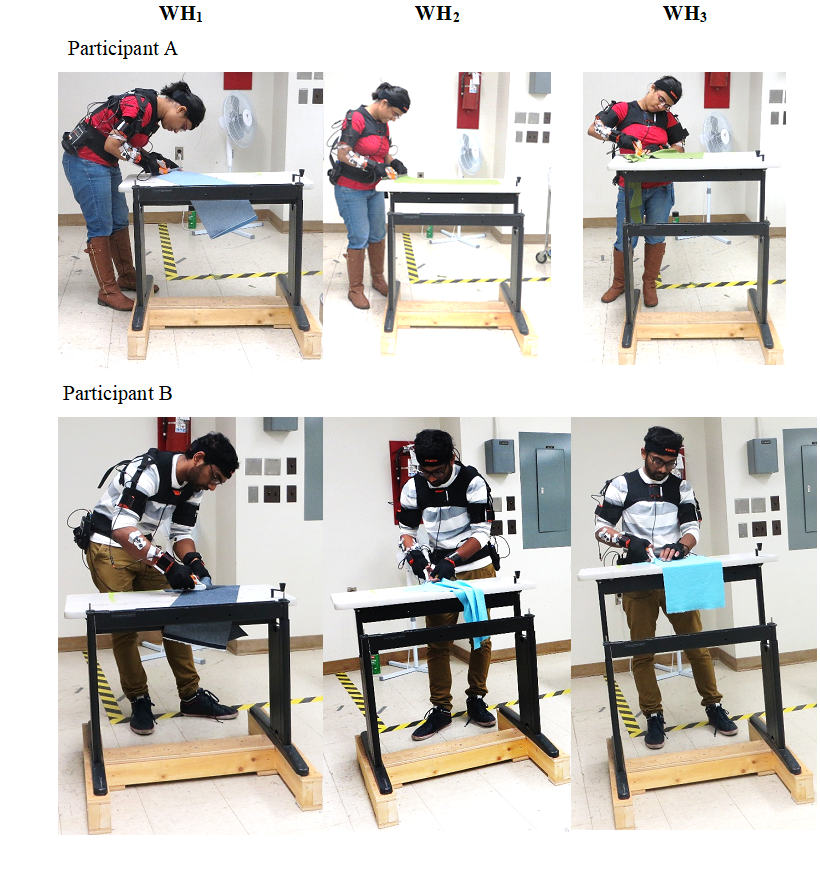
Fig 1 shows two participants of different anthropometry (A - short; B - tall) cutting fabric at the different table heights WH1 (33"), WH2 (36"), and WH3 (39"). The participants adapted themselves to the low WH1 by engaging over 450 trunk bending angle which included neck flexion. While WH2 looks perfect for the shorter participant A, WH3 seems best for the taller participant B where both participants are at near neutral work posture.
Improper table height as shown in fig 1 led to the awkward posture of the neck, trunk and upper extremities of the participants in agreement with Rahman et. al., (2025). However, appropriate table height for every individual is a function of his/her anthropometric features. Trunk and neck flexion from neutral position elevated lower spinal loading as indicated at WH1 station; at WH2 station, participants tended to more neutral alignments which reduced the biomechanical strain of their upper body but increased the neck flexion. WH3 showed increase in shoulder elevation and arm abduction, especially in participant A. The arm elevation and abduction as well as lateral neck flexion were more pronounced in the participant A because she is shorter. Hence the table height 39" was above elbow height for participant A while it was below elbow height for participant B. This shows that the upper body kinematics which involved movements of the neck, trunk, shoulder, elbow, wrist, and forearm was controlled by both the table height and the participants’ anthropometry during task performance in agreement with Tobias et al., (2025). The participants’ average age, height and weight were (25.58 ± 3.57)yrs, (66.09 ± 3.54) cm, and (29.24 ± 6.80) kg respectively.
Variation of duration with worktop height
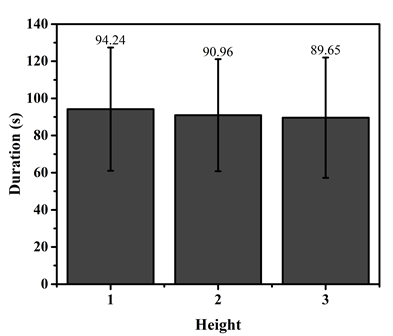
Figure 1 shows the variation of duration with worktop height. The average task duration decreased slightly as worktop height increased from WH1 (94.24 s) to WH2 (90.96 s) and WH3 (89.65 s). Although the reduction appears small, the repeated-measures ANOVA (Table 1) indicates that worktop height significantly affected task completion time (p = 0.004). This suggests that participants performed the cutting task more efficiently at higher worktop heights. At the lower worktop (WH1), greater trunk and neck flexion were required, increasing postural demands and potentially slowing task execution. The reduced duration observed at WH2 and WH3 may therefore be attributed to improved visibility of the cutting line at lower trunk flexion angle. Reduction in discomfort reduces task performance duration in agreement with Bhasker et al., (2025).
Variation of Shoulder Movement with Worktop Height
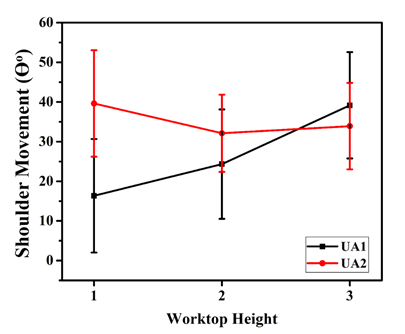
The shoulder flexion/extension angle (UA1) increased markedly from 16.34o at WH1 to 39.62o at WH3, while shoulder abduction/adduction (UA2) decreased from 39.62 at WH1 to 32.12o at WH2 and slightly increased to 33.90o at WH3. This pattern indicates that increasing worktop height progressively elevated the upper arm in front of the body, thereby increasing shoulder flexion. At low worktop heights, participants compensated lowering their shoulders and leaning forward. As the table height became higher, shoulder elevation increased to maintain hand contact with the cutting surface. Excessive should flexion at WH3 may increase static muscular loading of the deltoid and trapezius muscles, contributing to shoulder fatigue during prolonged work. Conversely, the reduction in shoulder abduction suggests that higher worktops brought the arms closer to the body, thereby reducing lateral shoulder displacement.
Variation of Elbow Movement with Worktop Height
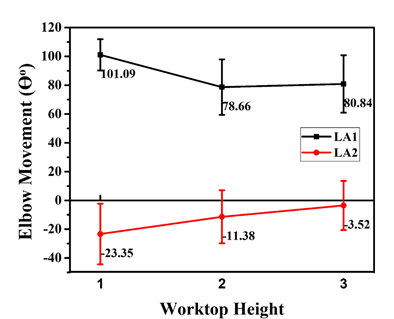
Figure 3 shows that elbow flexion/extension (LA1) decreased substantially from 101.09o at WH1 to 78.66o at WH2 and 80.84o at WH3. Similarly, elbow abduction/adduction (LA2) moved progressively toward the neutral position as worktop height increased. These findings suggest that lower worktops required participants to bend their elbows more while performing the cutting task. Increased elbow flexion is expected when workers lean toward a low work surface. As the worktop height is increased, the forearm became more extended and elbow posture approached a neutral configuration. The reduction in elbow abduction/adduction also indicates improved upper-limb alignment at higher worktop heights. Therefore, WH2 and WH3 appear more favourable than WH1 with respect to elbow posture.
Wrist Movement
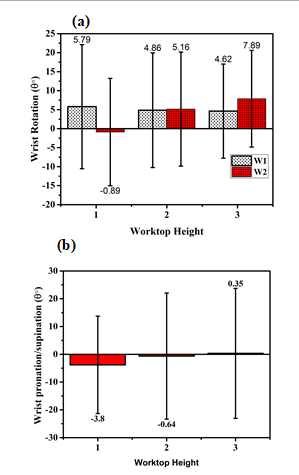
Figure 4a shows that the wrist rotation in flexion/extension (WI) remained relatively stable across all worktop heights, varying only between approximately 4.6o and 5.8o. Wrist radial/ulnar deviation (W2), however increased from -0.89o at WH1 to 7.89o at WH3. The minimal variation in W1 confirms that worktop height had little influence on wrist flexion and extension. This agrees with the ANOVA results in Table 1, which showed no significant effect of worktop height on W1. In contrast, the increase in radial/ulnar deviations suggests that participants gradually altered wrist orientation as table height increased. Nevertheless, the magnitude of change remained relatively small compared with changes observed in other regions. Meanwhile, Figure 4b indicates that wrist pronation/supination (WT1) changed only slightly from -3.80o at WH1 to 0.35o at WH3. This limited variation indicates that forearm rotational movements were largely determined by the cutting technique and scissor operation rather than worktop height. The relatively constant wrist posture across all workstations suggests that participants maintained a consistent hand orientation regardless of the vertical position of the cutting surface.
Variation of Neck Movement with Worktop Height
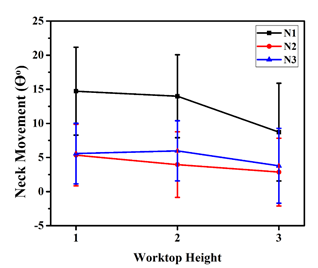
Figure 5 shows that neck lateral bending (N1) decreased from 14.72o at WH1 to 8.7o at WH3. Neck abduction/adduction (N2) and neck axial rotation (N3) also showed decreasing trends with increasing worktop height. The results indicate that low worktop heights imposed greater neck postural demands. Participants were required to bend and rotate the neck to maintain visual contact with the cutting pattern while simultaneously compensating for the lower work surface. Increasing the worktop height reduced these deviations and brought the neck closer to a neutral posture. Since excessive neck flexion and lateral bending are known risk factors for neck discomfort and work-related musculoskeletal disorders, the observed reduction at WH2 and WH3 suggests improved ergonomic conditions.
Variation of Trunk Movement with Worktop Height
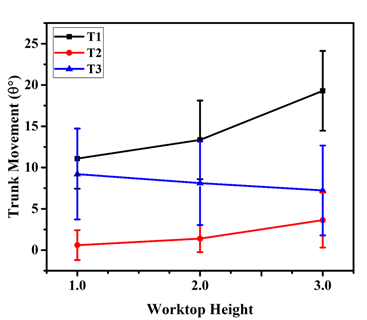
Figure 6 indicates that trunk lateral bending (T1) increased substantially from 11.08o at WH1 to 19.29o at WH3. Trunk abduction/adduction (T2) also increased, while trunk axial rotation (T3) showed a gradual decrease with increasing worktop height. The increase in trunk lateral bending at higher worktop heights indicates that participants compensated for the elevated work surface by shifting their torso sideways. This finding contrasts with the neck results, where posture improved as worktop height increased. The decrease in trunk rotation suggests that higher worktops reduced the need for rotational adjustments during cutting. Generally, the trunk exhibited the greatest sensitivity to worktop height, indicating that inappropriate worktop design may substantially alter whole-body posture. Excessive trunk bending at WH3 may increase loading of the lumbar and thoracic spine during prolonged task performance.
Repeated-measures ANOVA Results
Table 1 shows the repeated-measures ANOVA statistics which demonstrate that worktop height significantly affected task duration and almost all measured joint movements. Significant effects were observed for shoulder movements (UA1, UA2), elbow movements (LA1, LA2). Wrist radial/ulnar deviation (W2), wrist pronation/supination (WT1), neck movements (N1, N2, N3) and trunk movements (T1, T2, T3), all with p-values less than 0.05.
Among all variables, trunk lateral bending (T1) exhibited the highest F-value (413.261), indicating that trunk posture was the most strongly influenced by the changes in worktop height. Shoulder flexion (UA1) and elbow abduction/adduction (LA2) also showed very large F-values, demonstrating substantial postural adaptation of the upper extremities. The only variable not significantly affected by worktop height was wrist flexion/extension (W1) (p = 0.224), indicating that wrist posture remained relatively constant across all workstation heights.
| Body Region | df | Mean square | F | Significance |
| Duration | 1 | 2170.62 | 8.601 | 0.004 |
| UA1 | 1 | 49178.27 | 321.983 | <0.001 |
| UA2 | 1 | 3167.62 | 67.259 | <0.001 |
| LA1 | 1 | 37939.609 | 119.672 | <0.001 |
| LA2 | 1 | 36798.123 | 177.266 | <0.001 |
| W1 | 1 | 207.997 | 1.488 | 0.224 |
| W2 | 1 | 7115.555 | 68.338 | <0.001 |
| WT1 | 1 | 1618.415 | 5.031 | 0.026 |
| N1 | 1 | 3608617 | 130.276 | <0.001 |
| N2 | 1 | 583.513 | 51.712 | <0.001 |
| N3 | 1 | 280.491 | 29.236 | <0.001 |
| T1 | 1 | 6279.004 | 413.261 | <0.001 |
| T2 | 1 | 880.743 | 147.939 | <0.001 |
| T3 | 1 | 393.887 | 23.687 | <0.001 |
Legend: Angles in degrees
UA1Shoulder flexion/extension angle UA2 Shoulder abduction/adduction angle
LA1Elbow flexion/extension angle LA2 Elbow abduction/adduction angle
W1Wrist flexion/extension W2 Wrist radial/ulnar deviation
WT1pronation/supination of the wrist N1 Neck lateral bending
N2Neck abduction/adduction N3 Neck axial rotation
T1Trunk lateral bending T2 Trunk abduction/adduction
T3Trunk axial rotation
Summary Statistics
The descriptive statistics in Table 2 reveal a clear pattern of postural adaptation with increasing worktop height. Shoulder flexion increased, elbow flexion decreased, neck deviations generally reduced, and trunk lateral bending increased as the worktop became higher. Taken together, the data suggest that WH1 promoted excessive neck and elbow flexion, whereas WH3 increased shoulder elevation and trunk bending. WH2 generally produced intermediate values for most variables and therefore appears to represent the best compromise between the adverse postural effects observed at the lower and higher workstation heights. From an ergonomic perspective, the medium worktop height (36 inches) may provide the most balanced posture during standing fabric-cutting tasks.
| Body Region | WH1 | WH2 | WH3 |
| Duration | 94.23±30.14 | 90.96±32.38 | 89.65±32.38 |
| UA1 | 16.34±14.30 | 24.32±13.79 | 39.62±13.41 |
| UA2 | 39.62±11.24 | 32.12±9.73 | 33.90±10.90 |
| LA1 | 101.086±22.69 | 78.66±19.28 | 80.84±19.90 |
| LA2 | -23.36±21.06 | -11.38±18.43 | -3.52±17.05 |
| W1 | 5.79±16.33 | 4.86±15.10 | 4.63±12.38 |
| W2 | -0.89±14.13 | 5.16±15.00 | 7.89±12.72 |
| WT1 | -3.80±17.52 | -0.64±22.69 | 0.35±23.39 |
| N1 | 14.72±6.44 | 13.98±6.08 | 8.72±7.17 |
| N2 | 5.35±4.51 | 3.96±4.82 | 2.86±4.97 |
| N3 | 5.58±4.44 | 5.98±4.40 | 3.79±5.49 |
| T1 | 11.08±3.65 | 13.35±4.76 | 19.29±5.83 |
| T2 | 0.60±1.81 | 1.39±1.64 | 3.63±3.33 |
| T3 | 9.21±5.50 | 8.11±5.07 | 7.23±5.44 |
Conclusion
This study supports the findings of previous studies that work surface height plays a major role in coordination movements of the shoulder, neck, vertebrae column and the upper limbs in agreement with Goncaves et al., 2019. The results indicated that as table height increased from low WH1 to high WH3 almost all the certain joint angles measured underwent significant changes. The neck lateral bending (N1) angle was significantly greater at higher table heights WH2 and WH3. The neck axial rotation (N3) angle at WH2 (5.86° ± 3.92) is significantly greater than that at WH3 (4.13° ± 5.43), with a p < 0.10 between WH2 and WH3. The shoulder flexion/extension angle (UA1) showed significant differences of increasing shoulder flexion as table height increased. The elbow flexion/extension angle (LA1) showed a significant decrease as table height increased. No significant differences were found across table heights for wrist flexion/extension (W1), wrist radial/ulnar deviation (W2), and pronation/supination (WT1). However, trunk lateral bending (T1) significantly increased with the table height.
While all the other angular body parts considered show a significant change with work surface height, the wrist kinematics were relatively unaffected by table height. Trunk and neck flexion from neutral position elevated lower spinal loading at WH1. A more neutral alignments that reduced biomechanical strain of the upper body was observed at WH2 with increased the neck flexion while WH3 showed increase in shoulder elevation and arm abduction. None of the table height resulted in a posture without load on both back and shoulders at the same time. However, the table height below the elbow height of each participant resulted in low Ioadings on both the low back and the shoulder. An adjustable cutting table is therefore recommended to accommodate various users’ height.
References
- Abdul Latip, M. S., Abdul Latip, S. N. N., Tamrin, M., & Rahim, F. A. (2025). Modelling physical ergonomics and student performance in higher education: the mediating effect of student motivation. Journal of Applied Research in Higher Education, 17(3), 1081-1098. DOI ↗ Google Scholar ↗
- Ackermann, A., Wischniewski, S., Bonin, D., Gaida, A. K., & Jaitner, T. (2025). Validation of a 3D whole-body scanning system to collect anthropometric data from a working-age population for ergonomic design. International Journal of Industrial Ergonomics, 105, 103698. DOI ↗ Google Scholar ↗
- Adeleye, A. A., & Akanbi, O. G. (2015). Hand cumulative trauma disorders in Nigerian custom tailors: The need for redesign of manual scissors. Ergonomics, 58(8), 1410–1423. DOI ↗ Google Scholar ↗
- Adeleye, A. A., & Akanbi, O. G. (2026). Assessment of Work-Related Musculoskeletal Disorder Risk Factors and its Health Implications among Informal Sewing Machine Operators in Nigeria. International Journal of Recent Advances in Multidisciplinary Research, 27(1), 10-22. Google Scholar ↗
- Adeleye, A. A., Alabdulkarim, S. A., & Nussbaum, M. A. (2020). Impacts of different fabric scissor designs on physical demands and performance in simulated fabric cutting tasks. Applied Ergonomics, 89, 103219. DOI ↗ Google Scholar ↗
- Adithiyalakshmi, S. N., & PL, S. S. (2026). Lower-back discomfort and ergonomic hazards among artisanal fishermen in Tamil Nadu, India: a cross-sectional study. International Journal of Occupational Safety and Health, 16(1), 80-91. DOI ↗ Google Scholar ↗
- Ahmad, S., Aamir, S., Gul, F., Wahid, E., Khan, M. S., & Khan, A. (2025). Work-related musculoskeletal disorders among tailors in Saddar, Peshawar: a cross-sectional study. Journal of Modern Health and Rehabilitation Sciences, ID-104. Google Scholar ↗
- Akinwande, F. A. (2026). Assessing the Effects of Exoskeletons on Physical Demands, Trip and Slip Risks, and User Perceptions in Manual Mining Tasks. Google Scholar ↗
- Alghadier, M., Alsubaie, A., Alrabie, A., Alquraini, K., & Emails. (2026). Work-related musculoskeletal risk factors in medical laboratory students: A cross-sectional insights from a RULA-based assessment with lifestyle correlates. Scientific Reports. Google Scholar ↗
- Alhashim, A. A., Alyousof, A. A., Aldawsari, M. R., Alghannam, A. A., Alsayed, M. A., Alawadh, R. A., ... & Almulhim, S. A. (2025). Work-related musculoskeletal disorders and their impact on quality of life: a comprehensive review. Saudi J Med Pharm Sci, 11(5), 360-377. Google Scholar ↗
- Alotaibi, R. N., Al-Ayyaf, H., Alshibani, S., & Hashem, M. I. (2026). Assessment of dental ergonomics knowledge and prevalence of work-related musculoskeletal disorders among dental hygienists in Saudi Arabia: a cross-sectional study. Frontiers in Public Health, 14, 1816571. Google Scholar ↗
- Anculia, R. C., Popescu, F. G., Borcan, C. L., Talpoș-Niculescu, C. I., Păcurar, M., Popovici, R. A., ... & Cristina, N. (2025). Workplace Ergonomics in Dentistry: How Poor Posture Affects Musculoskeletal Health. Balneo & PRM Research Journal, 16(2). Google Scholar ↗
- Anderson, J., Nester, C., & Williams, A. (2018). Prolonged occupational standing: the impact of time and footwear. Footwear Science, 10(3), 189–201. DOI ↗ Google Scholar ↗
- Andersson, G. B. J., Ortengren, R., Nachemson, A., & Elfström, G. (1977). Lumbar disc pressure and myoelectric back muscle activity during sitting. Clinical Orthopaedics and Related Research, 129, 156–164. Google Scholar ↗
- Badea, D. O., Darabont, D. C., Chivu, O. R., Karabulut, Ş., Trifu, A., & Iordache, R. M. (2025). Vibrations: a silent risk in work-related musculoskeletal disorders. Acta technica napocensis-series: applied mathematics, mechanics, and engineering, 68(3&4). Google Scholar ↗
- Batistão, M. V. (2010). School furniture dimensions and musculoskeletal symptoms among students. Revista Brasileira de Fisioterapia, 14(2), 150–156. Google Scholar ↗
- Berquer, R., Smith, W. D., & Davis, S. (2002). An ergonomic study of the optimum operating table height for laparoscopic surgery. Surgical Endoscopy, 16(3), 416–421. DOI ↗ Google Scholar ↗
- Bhasker, B., Kaliraj, S., Gobinath, C., & Sivakumar, V. (2025). Optimizing energy task offloading technique using IoMT cloud in healthcare applications. Journal of Cloud Computing, 14(1), 9. Google Scholar ↗
- Bizuneh, B., & Kidanemariam, B. (2026). Prevalence of musculoskeletal disorders among industrial sewing machine operators and their associated factors. International Journal of Occupational Safety and Ergonomics, 32(1), 98-112. Google Scholar ↗
- Bonenberg, W., Szymanek, A., & Ciesielski, M. (2019). Ergonomic evaluation of kitchen worktop heights for elderly users. Applied Ergonomics, 74, 211–219. DOI ↗ Google Scholar ↗
- Bonin, W. R., Brost, S., Kalun, P., Tomescu, S., Strauss, B. H., Whyne, C. M., & Li, Q. (2026). Ergonomic risks in healthcare workers in acute care; the POSTURE framework. Injury, 113085. Google Scholar ↗
- Brohi, S., Khokhar, R., Marriam, P., Rathor, A., & Memon, A. R. (2022). Prevalence of symptoms of work-related musculoskeletal disorders and their associated factors: A cross-sectional survey of sewing machine operators in Sindh, Pakistan. Work, 73(2), 675-685. Google Scholar ↗
- Buckle, P. W., & Devereux, J. J. (2002). The nature of work-related neck and upper limb musculoskeletal disorders. Applied Ergonomics, 33(3), 207–217. DOI ↗ Google Scholar ↗
- Bulduk, S., Bulduk, E. Ö., & Süren, T. (2017). Reduction of work-related musculoskeletal risk factors following ergonomics education of sewing machine operators. International journal of occupational safety and ergonomics, 23(3), 347-352. Google Scholar ↗
- Castellucci, H. I., Catalán, M., Arezes, P. M., & Molenbroek, J. F. M. (2016). Evaluation of the match between anthropometric measures and school furniture dimensions in Chile. Work, 53(3), 585-595. Google Scholar ↗
- Chaffin, D. B. (1973). Localized muscle fatigue—Definition and measurement. Journal of Occupational Medicine, 15, 346–354. Google Scholar ↗
- Choi, B., Park, J., & Kim, J. H. (2024). Assessment of an arm-support exoskeleton on physical demands, task performance, and usability during simulated agricultural tasks. International Journal of Industrial Ergonomics, 101, 103569. Google Scholar ↗
- Choobineh, A., Karami, M., Sahranavard, Y., Fakhraei, M. R., Mohammad, F. G., Alibeygian, F., ... & Tahmasebi, R. (2026). Prevalence and Multivariate Impact of Musculoskeletal Disorders on General Health, Occupational Fatigue, and Productivity in an Industrial Workforce. La Medicina del Lavoro, 117(1), 18043. DOI ↗ Google Scholar ↗
- Condie, E., Weale, V., Lambert, K. A., & Oakman, J. (2026). Implementation of a Participatory Ergonomics Intervention to Reduce Musculoskeletal and Stress-Related Mental Health Risks in Australian Retail Workers: Protocol for a Randomized Controlled Trial. JMIR Research Protocols, 15(1), e84864. Google Scholar ↗
- Coury, H. J. C. G., Walsh, I. A. P., & Alem, M. E. R. (2000). Influence of gender on work-related musculoskeletal disorders. Applied Ergonomics, 31(5), 493–501. DOI ↗ Google Scholar ↗
- Daltaban, Ö., Hatipoğlu, M., Tanase, M., Pistol, A. M., Biriş, C. I., Djuric, M., ... & Mikic, M. (2026). Understanding the Burden of Work‐Related Musculoskeletal Disorders in Dental Students: A Multinational Cohort Study. European Journal of Dental Education, 30(1), 205-217. Google Scholar ↗
- De Bock, S., Rossini, M., Lefeber, D., Rodriguez-Guerrero, C., Geeroms, J., Meeusen, R., & De Pauw, K. (2022). An occupational shoulder exoskeleton reduces muscle activity and fatigue during overhead work. IEEE Transactions on Biomedical Engineering, 69(10), 3008-3020. Google Scholar ↗
- Demissie, B., Bayih, E. T., & Demmelash, A. A. (2024). A systematic review of work-related musculoskeletal disorders and risk factors among computer users. Heliyon, 10(3), e25075. DOI ↗ Google Scholar ↗
- Demissie, B., Mekonnen, G. B., & Aytenew, T. M. (2025a). Musculoskeletal disorders among computer user workers in Ethiopia: a systematic review and meta-analysis. Scientific Reports, 15(1), 26858. DOI ↗ Google Scholar ↗
- Demissie, B., Mekuriaw, B. Y., Asmare, T. B., Gobezie, N. Z., Wubet, H. B., Diress, G. M., ... & Abuhay, A. G. (2025b). Work-related musculoskeletal disorders among computer user office workers in Sub Sharan Africa: a systematic review and meta-analysis. Discover Social Science and Health, 5(1), 1-15. Google Scholar ↗
- Gao, G., Ng, S. S., Man, S. S., & So, B. C. (2025). Ergonomic risk assessment methods for work-related musculoskeletal disorders among healthcare workers: A systematic review. Journal of Safety Research, 95, 189-196. Google Scholar ↗
- Ghasemi, F., Gholamizadeh, K., Rahmani, R., & Doosti-Irani, A. (2020). Prevalence and severity of carpal tunnel syndrome symptoms among Iranian butchers and their association with occupational risk factors: Implications for ergonomic interventions. Work, 66(4), 817-825. Google Scholar ↗
- Gorce, P., & Jacquier-Bret, J. (2025). Work-related musculoskeletal disorder prevalence by body area among nurses in Europe: Systematic review and meta-analysis. Journal of functional morphology and kinesiology, 10(1), 66. DOI ↗ Google Scholar ↗
- Göz, E., & Göz, A. (2025). Investigation of Ergonomic Risk Factors, Musculoskeletal System Problems, and Physical Workload in Kitchen Workers. Akdeniz Tıp Dergisi, 11(2), 180-186. Google Scholar ↗
- Gupta, K. (2024). A Review on Ergonomic Studies for Different Industrial Setups. Journal of Research & Practice on the Musculoskeletal System (JRPMS), 8(3). Google Scholar ↗
- Hagberg, M. (1981). Electromyographic signs of shoulder muscular fatigue in two elevated arm positions. American Journal of Physical Medicine, 60(3), 111–121. DOI ↗ Google Scholar ↗
- Halim, I., & Omar, A. R. (2012). Development of prolonged standing strain index to quantify risk levels of standing jobs. International Journal of Occupational Safety and Ergonomics, 18(1), 85–96. DOI ↗ Google Scholar ↗
- Hoag, L. H., & van Dyke, J. R. (1975). Preferred working surface heights for seated and standing tasks. Human Factors, 17(3), 277–285. Google Scholar ↗
- Holt, K. L. (2026). Zero-Emission Ports and Public Health: Forecasting Avoided Mortality and Morbidity in the San Francisco Bay Area Post-2025. Journal of Environment, Climate, and Ecology, 3(1), 27-35. Google Scholar ↗
- Jahangiri, H., Ghasemi, F., Zoaktafi, M., Nodooshan, H. S., Vali, M., & Daneshmandi, H. (2026). The Silent Strain: Grip Strength, and Wrist/Hand Musculoskeletal Disorders Among Meat Cutters. La Medicina del Lavoro, 117(1), 17299. Google Scholar ↗
- Javed, I., Ahmad, A., Nukman, Y., bin Raja Ghazilla, R. A., Dawal, S. Z. M., & Abd Rahman, N. I. (2025). Occupational health and Safety for Sewing Machine Operators in Pakistan: Revealing Hazards in Small and Medium Garment Enterprises. Journal of Scientific & Industrial Research (JSIR), 84(8), 901-913. Google Scholar ↗
- Jin, X., Dong, Y., Yang, L., Huang, W., Cao, L., Zhang, Z., & He, L. (2025). Ergonomic interventions to improve musculoskeletal disorders among vehicle assembly workers: a one-year longitudinal study. BMC Public Health, 25(1), 824. Google Scholar ↗
- Kadir, A., Sunindijo, R. Y., Widanarko, B., Erwandi, D., Nasri, S. M., Satrya, B. A., ... & Maharani, C. F. (2025). Impact of physical and psychological strain on work-related musculoskeletal disorders: a cross-sectional study in the construction industry. INQUIRY: The Journal of Health Care Organization, Provision, and Financing, 62, 00469580251315348. Google Scholar ↗
- Kan-Dapaah, K., Normeshie, P., Tetteh, R., Owusu, C., & Zedek, J. L. (2025). Ranking lecture-room furniture used in a Ghanaian University with students’ anthropometric data via multi-criteria decision making analysis. Scientific African, 27, e02610. Google Scholar ↗
- Karim, S., Amin, N. A., Saidi, A. A. F., Ahmad, M. A., Mohd, N. A., & Nazri, A. R. T. (2026). Study On Work-Related Musculoskeletal Disorders (WRMSDs) In Relation to Physical Factors Among Office Workers of University in Malaysia. Malaysian Journal of Medicine and Health Sciences, 22, 51-57. Google Scholar ↗
- Kim, J. H., & Kincl, L. (2022). Improving Vessel Equipment: Evaluating Fishermen-Led Safety Design Ideas in the Dungeness Crab Fleet. DOI ↗ Google Scholar ↗
- Kim, J. H., Vaughan, A., & Kincl, L. (2023). Characterization of musculoskeletal injury risk in dungeness crab fishing. Journal of agromedicine, 28(2), 309-320. Google Scholar ↗
- Kirvesoja, H., Väyrynen, S., & Häikiö, A. (2000). Three evaluations of task-surface heights in elderly people's homes. Applied Ergonomics, 31(2), 109–119. DOI ↗ Google Scholar ↗
- Kishtwaria, J., Rana, A., & Dangayach, G. S. (2007). Ergonomic evaluation of kitchen work surfaces for rural women. Journal of Human Ecology, 21(1), 43–46. Google Scholar ↗
- Lee, J. E., Hong, K. Y., Chung, C., & Min, J. J. (2025). Effect of bed height on laryngoscopy force and operator ergonomics during simulated endotracheal intubation: A randomized controlled study. Plos one, 20(10), e0333104. Google Scholar ↗
- Liu, F., Duan, Y., Wang, Z., Ling, R., Xu, Q., Sun, J., ... & Wu, C. (2025). Mixed adverse ergonomic factors exposu re in relation to work-related musculoskeletal disorders: a multicenter cross-sectional study of Chinese medical personnel. Scientific reports, 15(1), 14705. Google Scholar ↗
- Magnusson, M., & Örtengren, R. (1987). Investigation of optimal table height and surface angle in meat cutting. Applied ergonomics, 18(2), 146-152. Google Scholar ↗
- Manasnayakorn, S., Cuschieri, A., & Hanna, G. B. (2009). Ergonomic assessment of optimum operating table height for hand-assisted laparoscopic surgery. Surgical Endoscopy, 23(4), 783–789. DOI ↗ Google Scholar ↗
- Martinez, A., Tovar, L., Irigoyen Amparan, C., Gonzalez, K., Edayath, P., Pennathur, P., & Pennathur, A. (2025). Heuristic evaluations of back-support, shoulder-support, handgrip-strength support, and sit-stand-support exoskeletons using universal design principles. IISE transactions on occupational ergonomics and human factors, 13(1), 18-31. DOI ↗ Google Scholar ↗
- Milanese, S., & Grimmer, K. (2004). School furniture and the user population: An anthropometric perspective. Ergonomics, 47(4), 416–426. DOI ↗ Google Scholar ↗
- Mirnajafi Zadeh, F. S., SheikhMozafari, M. J., & Mohsenian, A. (2026). Assessing organizational and physical risk factors among office workers: Key insights into musculoskeletal disorders prevention using fuzzy DEMATEL analysis. Work, 10519815261417363. Google Scholar ↗
- Mohammadian, M., Mollahoseini, S., & Naghibzadeh-Tahami, A. (2025). Musculoskeletal disorders among office workers: prevalence, ergonomic risk factors, and their interrelationships. Scientific Reports. Google Scholar ↗
- Nachemson, A. (1966). The load on lumbar disks in different positions of the body. Clinical Orthopaedics and Related Research, 45, 107–122. Google Scholar ↗
- Nazari, G., Bobos, P., MacDermid, J. C., & Sinden, K. E. (2012). Prevalence of musculoskeletal symptoms among computer users. Work, 41(Suppl. 1), 2791–2794. DOI ↗ Google Scholar ↗
- Nørgaard Remmen, L., Fromsejer Heiberg, R., Høyrup Christiansen, D., Herttua, K., & Berg-Beckhoff, G. (2021). Work-related musculoskeletal disorders among occupational fishermen: a systematic literature review. Occupational and environmental medicine, 78(7), 522-529. Google Scholar ↗
- Özalp, G. (2020). Ergonomic assessment of kitchen counter heights for older adults. Journal of Ergonomics, 10(4), 1–8. Google Scholar ↗
- Parvez, M. S., Parvin, F., Shahriar, M. M., & Kibria, G. (2018). Design of ergonomically fit classroom furniture for primary schools of Bangladesh. Journal of Engineering, 2018(1), 3543610. DOI ↗ Google Scholar ↗
- Patil, A. S., & Rajhans, N. R. (2018). Human factors in designing workspace: Customizing kitchen counter design. In R. Goossens (Ed.), Advances in Social and Occupational Ergonomics (Advances in Intelligent Systems and Computing, Vol. 605, pp. 288–298). Springer. DOI ↗ Google Scholar ↗
- Pekkarinen, A., & Anttonen, H. (1988). The effect of working height on the loading of the muscular and skeletal systems in the kitchens of workplace canteens. Applied Ergonomics, 19(4), 306–308. DOI ↗ Google Scholar ↗
- Pentenga, H. M., Coenen, P., Huysmans, M. A., & Speklé, E. M. (2025). The effects of working with a passive arm-support exoskeleton on objective and self-reported measures during field tasks–a randomised cross-over study. Ergonomics, 68(7), 1094-1112. Google Scholar ↗
- Petju, N., Saadprai, S., Charoenporn, N., & Rungroungdouyboon, B. (2026). The Design and Evaluation of Passive Shoulder Exoskeleton in Reducing Physical Demands. Ergonomics in Design, 34(2), 85-97. Google Scholar ↗
- Pheasant, S., & Haslegrave, C. M. (2006). Bodyspace: Anthropometry, ergonomics and the design of work (3rd ed.). CRC Press. Google Scholar ↗
- Pradhan, J. and Khan, M. R. (2024). Subjective Health Complaints and Associated Risk Factors Among. In Recent Advances in Industrial and Systems Engineering: Selected Papers from International Conference on Industrial Engineering and Analytics (ICONIEA) 2024 (p. 123). Springer Nature. Google Scholar ↗
- Prasetya, T. A. E., Samad, N. I. A., Rahmania, A., Arifah, D. A., Rahma, R. A. A., & Al Mamun, A. (2024). Workstation risk factors for Work-related musculoskeletal disorders among IT professionals in Indonesia. Journal of Preventive Medicine and Public Health, 57(5), 451. DOI ↗ Google Scholar ↗
- Rahman, M. S., Yazaki, T., Chihara, T., & Sakamoto, J. (2025). Evaluating Lumbar Biomechanics for Work-Related Musculoskeletal Disorders at Varying Working Heights During Wall Construction Tasks. Biomechanics, 5(3), 58. Google Scholar ↗
- Ramadan, M. A., Elsaid, N. Y., Saad, T. A., & Mohammed, R. S. (2026). Evaluation of ergonomic posture risk and its relationship with workers’ propensity for musculoskeletal disorders in metal fabrication workshops. International Journal of Occupational Safety and Ergonomics, 1-7. Google Scholar ↗
- Salas, E. A., Vi, P., Reider, V. L., & Moore, A. E. (2016). Factors affecting the risk of developing lower back musculoskeletal disorders (MSDs) in experienced and inexperienced rod workers. Applied ergonomics, 52, 62-68. Google Scholar ↗
- Salehi, M., Choi, S., Kia, K., Chan, A., Kincl, L., & Kim, J. H. (2025). Effects of different sorting table heights on low back and shoulders biomechanical loads during dungeness crab sorting. Applied ergonomics, 128, 104537. DOI ↗ Google Scholar ↗
- Sandhu, P., Sidhu, L. S., & Dhillon, B. S. (2007). Ergonomic assessment of work surface heights in kitchen activities. Journal of Human Ecology, 22(3), 203–207. Google Scholar ↗
- Sandhu, P., Sidhu, L. S., & Dhillon, B. S. (2008). Biomechanical evaluation of kitchen counter heights for household work. Journal of Human Ecology, 24(2), 109–114. Google Scholar ↗
- Sealetsa, O. J., & Thatcher, A. (2011). Ergonomics issues among sewing machine operators in the clothing industry. Work, 38(3), 279–289. DOI ↗ Google Scholar ↗
- Shakerian, M., & Salehi, A. (2026). Technology‐Driven Ergonomics: A Narrative Review of Innovative Strategies for Preventing Musculoskeletal Disorders in Modern Work Environments. Health Science Reports, 9(5), e72064. DOI ↗ Google Scholar ↗
- Silva, E. C., Concha-Opazo, N., Morales-Gutiérrez, F., Piceros-Henríquez, D., Soza-Gallo, R., Castellucci, H. I., ... & Dianat, I. (2025). Evaluating a novel maximum desk height equation: Integrating biomechanical safety and anthropometric fit in educational furniture design. International Journal of Industrial Ergonomics, 107, 103756. Google Scholar ↗
- Smith-Zuzovsky, N., & Exner, C. E. (2004). The effect of seated positioning and desk height on upper-extremity function. American Journal of Occupational Therapy, 58(3), 310–318. Google Scholar ↗
- Sompan, R., & Keeratisiroj, O. (2025). Effectiveness of a Participatory Program for Preventing Work-Related Musculoskeletal Disorders among Slaughterhouse Workers in Thailand. Health Education and Health Promotion, 13(2), 347-356. Google Scholar ↗
- Sorensen, J. A., Jenkins, P., Gertz, K., Roome, A., Weil, R., Graham, J., ... & McCue-Weil, L. (2025). Adding insult to injury: The impact of musculoskeletal pain on fishermen’s sleep patterns. Journal of Agromedicine, 30(2), 286-296. Google Scholar ↗
- Su, J. M., Chang, J. H., Indrayani, N. L. D., & Wang, C. J. (2023). Machine learning approach to determine the decision rules in ergonomic assessment of working posture in sewing machine operators. Journal of Safety Research, 87, 15-26. Google Scholar ↗
- Tabrizi, A., Babazadeh Choobtarash, A., Darzi, M., Olazadeh, K., Paridokht, F., & Salehi Sahlabadi, A. (2025). Investigation of the association between ergonomic conditions of nursing workstations and the risk of musculoskeletal disorders among nurses: a case study in selected hospitals of Shahid Beheshti University of medical sciences. BMC nursing. Google Scholar ↗
- Tobias, M., Okhuoya, O., Ancel, J., Intintoli, M., Thompson, L. A., & Chen, J. (2025). Evaluation of a myoelectrical arm for transradial amputation in functional Activities. Applied Sciences, 15(7), 3769. DOI ↗ Google Scholar ↗
- Tolera, S. T., Muzeyin, M., & Alemu, B. M. (2025). National Environmental Impact Assessment and Challenges: Scoping Review in Ethiopia Context. Journal of Global Warming and Climate Change. SRC/JGWCC-117. DOI: doi. org/ (1), 116, 2-5. DOI ↗ Google Scholar ↗
- Wang, C. H., Hsieh, M. D., Chiang, B. Y., Chiou, Y. T., Hung, K. E., Wang, C. H., & Liao, Y. Y. (2025). Exploring the Impact of Classroom Seat Design on Comfort and Learning Performance. The Japanese Journal of Ergonomics, 61(Supplement), 3D04-01. Google Scholar ↗
- Ward, J. S. (1971). Ergonomic techniques in the determination of optimum work surface heights. Applied Ergonomics, 2(3), 171–177. DOI ↗ Google Scholar ↗
- Ward, J. S., & Kirk, N. S. (1970). The relation between some anthropometric dimensions and preferred working surface heights in the kitchen. Ergonomics, 13(6), 783–797. DOI ↗ Google Scholar ↗
- Widanarko, B., Legg, S., Devereux, J., & Stevenson, M. (2014). The combined effect of physical, psychosocial/organisational and/or environmental risk factors on the presence of work-related musculoskeletal symptoms and its consequences. Applied ergonomics, 45(6), 1610-1621. Google Scholar ↗
- Wingrat, J. K., & Exner, C. E. (2005). School workstation ergonomics and handwriting performance in children. American Journal of Occupational Therapy, 59(6), 678–689 Google Scholar ↗
- Yang, C. M., & Yu, C. Y. (1990). Anthropometric considerations in the design of work surfaces. International Journal of Industrial Ergonomics, 6(2), 151–158. DOI ↗ Google Scholar ↗
- Yanto, E. S., et al. (2017). Anthropometric study of school furniture mismatch and musculoskeletal complaints among students. International Journal of Industrial Ergonomics, 57, 69–75. DOI ↗ Google Scholar ↗
- Yates, K. A., & Brown, S. H. (2025). Prevalence of musculoskeletal discomfort, occupational working factors, and work demands amongst food service kitchen workers in Ontario Canada. Discover Public Health, 22(1), 151. Google Scholar ↗
- Zhao, R. M., Yu, N., & Chen, W. L. (2026). Effects of seat height and inclination on muscle activity during sit-to-stand movements: Reference for assistive device design. International Journal of Industrial Ergonomics, 112, 103872. Google Scholar ↗
- Zimmermann, H. B., Macintosh, B. R., & Dal Pupo, J. (2025). The relationship between length and active force for submaximal skeletal muscle contractions: a review. Sports Medicine, 55(1), 37-47. Google Scholar ↗