Abstract
Aluminum-carbon fiber composite structures are considerably preferred in engineering applications demanding lightweight construction and high mechanical strength. The performance of structures bonded using such materials can be changed significantly, particularly depending on the geometric properties of the bonding surface and the applied surface patterns. Surface patterns in the bonding zone directly affect not only the bonding strength but also the dynamic behavior of the structure. In this study, a composite cantilever beam element consisting of aluminum and carbon fiber bonded adhesively is considered. The effects of the number of bonding zones and surface properties on the beam's natural frequencies and damping ratio are investigated conducting experimental studies. The results obtained from the experiments show that the bonding surface design and the number of bonding regions is influential parameters for the natural frequency and damping ratio values
Keywords
Aluminum-Carbon Fiber Composite Structures Surface Patterns Dynamic Behavior Adhesive Bonding
1. Introduction
Recently, composite structures requiring high mechanical strength and lightweight construction have become increasingly needed in engineering applications. Aluminum-carbon fiber composite structures respond to this need and are widely used, particularly in the aerospace, automotive, ship, and defense industries. However, the performance of these composite structures is directly dependent not only on the material properties used but also on the bonding methods and bonding surface properties. In adhesively bonded structural elements, the geometric properties of the bonding surface and the applied surface patterns play an important role in both static and dynamic behavior. Therefore, the impact of bonding techniques and bonding surface design parameters on the dynamic performance of composite structures has been investigated in the literature.
To understand the dynamic behavior of adhesively bonded structures, it is first necessary to examine analytical modeling and fundamental dynamic approaches that provide the physical basis for these systems. In this context, Saito and Tani [1] analytically modeled the natural frequency and damping capacities of beams joined with a viscoelastic interlayer. Expanding on these models, Rao and Crocker [2] modeled the adhesive using a Kelvin-Voigt model and validated the natural frequencies, modal damping ratios, and mode shapes against experimental data. While Ingole and Chatterjee [3] used Euler-Bernoulli beam theory to examine the effect of overlap length on fundamental frequency sensitivity, Chełmecki et al. [4] reported that increasing the attached mass and adhesive layer thickness decreased the natural frequencies and increased the damping of adhesively bonded cantilever beams using flexible polyurethane adhesives.
Beyond theoretical models, surface roughness, texture, and mechanical interlocking properties, which are among the most critical physical factors determining bonding performance, are directly correlated with interfacial performance. In this regard, Mohamad et al. [5] emphasized the significance of mechanical interlocking in aluminum-carbon laminates. While Budhe et al. [6] defined optimum roughness values (Ra=1.64-1.68 µm) for aluminum AA6061, Hirsch and Kästner [7] analyzed cohesive and adhesive failures at rough interfaces through microscale simulations. Zarei et al. [8] reported the effect of roughness on adhesive energy in thermoplastic surfaces. Zheng et al. [9] investigated the effects of surface roughness on surface energy, wettability, and bonding performance in duralumin alloys and Khan et al. [10] investigated the effects of surface roughness and oxidation on the bond strength of aluminum and steel alloy joints. Furthermore, Pereira et al. [11] demonstrated the influence of specific surface textures on bonding quality in Aluminum 7075, and Guo et al. [12] demonstrated that bond strength is influenced more significantly by surface features such as texture direction and nanoscale pores rather than by the Ra value alone.
In cases where conventional mechanical roughening methods prove insufficient, modern surface modification techniques and hybrid designs developed to optimize surface properties have emerged in the literature. As an alternative to traditional methods, Feng et al. [13] showed that nanosecond laser ablation strengthens the bond by removing resin and exposing fibers. Wang et al. [14, 15] reported that ultrasonic vibration assistance improves adhesive penetration into micro-scale surface structures, enhancing interfacial bonding through increased contact area and mechanical interlocking. During this process, Nasreen et al. [16] noted that anodization increases the stiffness of metallic joints by 36% while reducing the damping capacity by approximately 23%. Ramezani et al. [17] summarized recent developments in the modification of laminates for composite joints, highlighting the advantages of hybrid structures.
The success of a surface-prepared joint under dynamic operating conditions is dependent on the accurate analysis of its structural damping capacity and geometric parameters. Investigating energy dissipation under dynamic loads, Lasowicz and Jankowski [18, 19] demonstrated that flexible polyurethane-based adhesives dramatically increase damping ratios. Damm and Albiez [20] characterized the damping properties of large-scale adhesively bonded overlap joints through experimental investigations and analytical modeling. Yaman et al. [21, 22] investigated the vibration damping and energy absorption capabilities of different adhesively bonded joint configurations, including single- and double-strap designs. Du and Shi [23] experimentally and numerically investigated how vibration fatigue reduces the natural frequencies of single-lap adhesive joints. García-Barruetabeña et al. [24, 25] investigated the influence of joint geometry on the vibrational response of adhesively bonded structures through experimental and finite element analyses.
Recent studies on failure analysis and impact behavior highlight the importance of ongoing research into the service life of joints. Luan et al. [26] investigated the energy-absorption characteristics and failure mechanisms of aluminum-carbon fiber reinforced thermoplastic (Al/CFRTP) adhesive joints under transverse impact, demonstrating the influence of mechanical interlocking and adhesive bonding on impact resistance. Pulkit et al. [27] reviewed various interfacial bond tests and failure mechanisms, providing an overview of approaches for evaluating bond integrity. Imanaka et al. [28] compared the fatigue crack growth behavior of acrylic and epoxy adhesives, investigating the influence of adhesive type and adherend thickness ratio on crack propagation under cyclic loading. Acar [29] investigated the effects of interply and intraply hybridization of aramid-carbon fiber composite adherends on the vibration behavior of adhesive joints using the finite element anlaysis. Wei et al. [30] reviewed recent advancements in adhesively bonded composite joints from 2016 to 2023, covering joint configurations, manufacturing techniques, and defect detection methods.
Additionally, Ertürk et al. [31] demonstrated that the inherent roughness of additively manufactured Ti6Al4V achieves basic interlocking. However, they discovered that a laser-induced hierarchical morphology, which combines micro-scale features with a nanoporous oxide layer, enhances bond strength by 162% and extends fatigue life by 130%. These findings underscore the necessity of optimized surface patterning to ensure long-term durability in high-performance hybrid joints.
The reviewed literature provides an extensive overview of methods to enhance the mechanical performance of adhesive joints. A significant portion of existing research focuses on the effects of random surface roughness on adhesive strength [6, 8, 17] or the fundamental vibrational characteristics of standard joint geometries [3, 4]. Furthermore, the variation in dynamic parameters, such as damping and natural frequency, across adhesive types has been comprehensively addressed [18, 20, 21]. However, a distinct gap remains in the literature regarding the influence of controlled surface patterns and their combination with various overlap configurations on the dynamic performance of aluminum-CFRP hybrid structures.
Specifically, it has not been fully explained how geometric surface patterns applied instead of random roughening modify the stress distribution at the adhesive interface and how this modification characterizes modal parameters, such as natural frequencies and damping ratios. Current research primarily examines the structural strength of adhesive joints; however, there is a lack of research on how surface modifications can be used to engineer and control the vibration response of structures. To address this gap, the present study:
•Investigates the influence of discrete surface patterns and the number of bonding zones on the dynamic behavior of Al-CFRP cantilever structures,
•Characterizes natural frequencies and damping ratios by experimental impact response tests,
•Identifies critical design parameters to demonstrate how bonding surface architecture dictates the energy dissipation (damping) of hybrid assemblies.
In this regard, the study provides a new perspective on structural dynamics and modal control, which is essential for aerospace and automotive industries where controlling damping characteristics and operational vibrations is paramount.
2. Materials and Methods
In this study aluminum and composite beams are used to investigate the effect of the surface pattern on the bonding performance. The composite beams were 3D printed using a polyamide filament reinforced with 15% carbon fiber (PAHT CF15). The dimensions of the aluminum and composite beams are 12.7x127x0.9 mm, and 12.7x127x1.0 mm, respectively. The aluminum beams are coded as Al-0, Al-1, Al-2 which corresponds to having no laser pattern, two-pattern and three-pattern, respectively. The carbon fiber reinforced beams are coded as Cf-0, Cf-1 and Cf-2 which corresponds to related pairs of aluminum beams (Fig. 1). The properties of aluminum and PATH CF15 materials are given in Table 1.
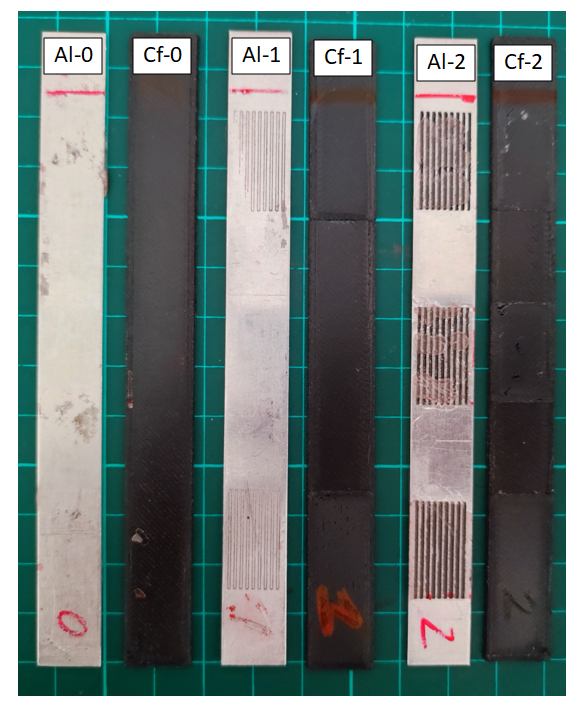
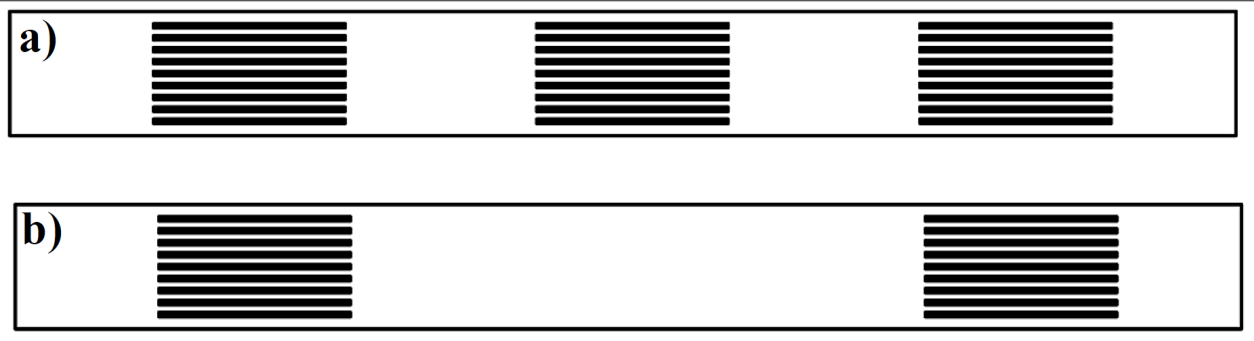
Surface engraving was carried out using a 50 W fiber laser marking system (Raycus RFL-50QB). As shown in Figs. 1 and 2, a rectangular processing area measuring 10 mm high and 20 mm wide was defined on the surface. Within this area, nine rectangular bands were created, each 0.5 mm tall and extending across the full 20 mm width. The spacing between adjacent bands was fixed at 0.75 mm. Each band was processed using a hatch scanning strategy with a hatch spacing of 0.03 mm, a scanning speed of 300 mm/min, and a laser frequency of 50 kHz. The same scanning path was repeated 15 times over the textured region.
| Material | Young's Modulus, E (GPa) | Density, ρ (kg/m3) |
| Aluminum | 67.91 | 2653.61 |
| PAHT CF15 composite | 5.05 | 1230 |
| Epoxy adhesive | 2.19 | 1.10 |
To evaluate the effect of the texturing configuration, two different layouts were employed. In the configuration shown in Fig. 2(a), the laser-textured rectangular area was placed on an aluminum plate measuring 12.7 mm in height and 127 mm in width, with 20 mm spacing between adjacent textured areas. In the layout shown in Fig. 2(b), the distance between the textured rectangular regions was increased to 60 mm.
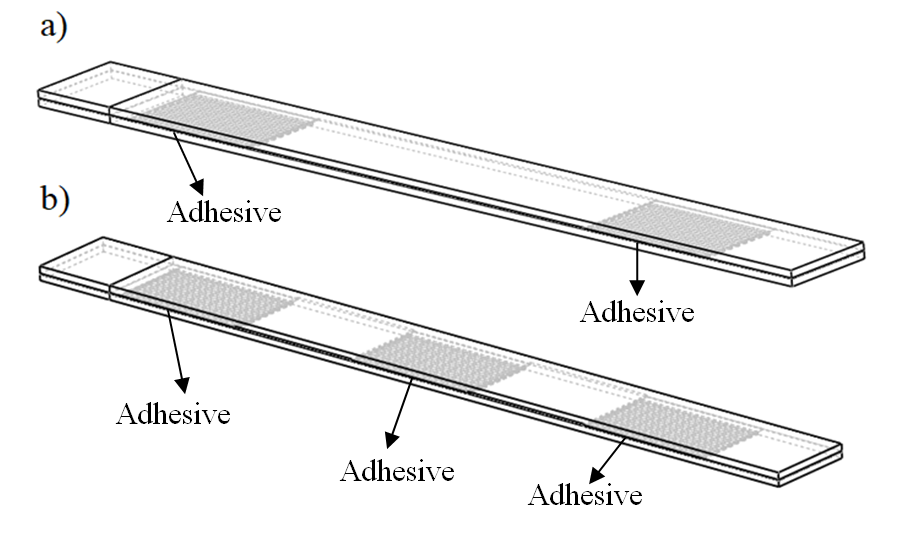
An adhesive with the properties given in Table 1 was used to join the beams. The beams have been joined together with their numbers aligned. The schematic views of the joined beams are given in Fig. 3.
3. Experimental Setup
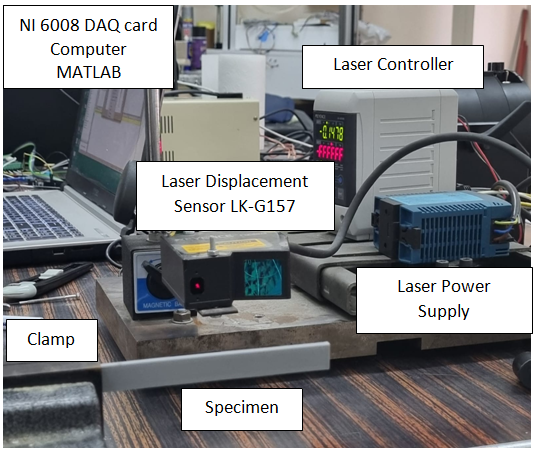
The fundamental free vibration frequencies of the test specimens were determined from the free vibration responses initiated by an impact applied at the tip of the cantilever beam, where 127 mm long beams were clamped at 12 mm from one end to form a cantilever configuration, resulting in an effective free length of 115 mm. In the experimental setup, displacement responses were gathered via a laser sensor (Keyence LKG-157) having ±40 mm measurement range corresponding to ±10 V output. The displacement signal was transferred to a PC via a USB DAQ card NI-6008. The sampling frequency is 8 kHz. The experimental setup is shown in Fig. 4.
4. Dynamic Characteristics Analysis and Discussion
Damping is a fundamental parameter that controls the dynamic response of engineering structures. It reduces vibration amplitudes caused by dynamic excitations and improves stability. Therefore, accurate determination of the damping ratio is essential in fields such as structural vibration analysis and electromechanical system design. Among various damping determination techniques, the exponential decay envelope approach is commonly used.
This approach identifies the damping ratio through several steps: (1) examining the system response following an initial excitation; (2) approximating the decaying oscillations with an exponential function; (3) collecting experimental data from the free vibration response, typically using acceleration, velocity, or displacement measurements; (4) representing the recorded data in the time domain (Fig. 5); (5) applying a curve-fitting procedure to determine the envelope that bounds the decreasing oscillations; (6) expressing this envelope as function x t =A e - n t , where A is the initial amplitude, ωn is the undamped natural frequency, is the damping ratio, and t is time; (7) identifying the damped natural frequency from the frequency spectrum; and (8) evaluating the damping ratio using the decay coefficient −ωn .
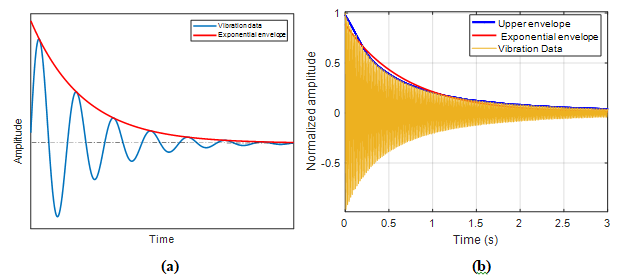
Fig. 5(a) shows the free vibration response of a simple single-degree-of-freedom system. On the other hand, the beam structure examined in this study behaves as a multi-degree-of-freedom system, resulting in several damped natural frequencies. The first damped natural frequency has the most significant effect on vibration, as its oscillations decay more slowly than those of higher modes. For this reason, the first damped natural frequency is taken into account in this study. Fig. 5(b) presents the exponential decay envelope and the corresponding viscous damping ratio for the first vibration mode of the beam specimen.
| Aluminum beam | PAHT CF15 beam | Joined beams | |||
| Al-0 | no laser pattern | Cf-0 | no laser pattern | Bonded-0 | Al-0 and Cf-0 |
| Al-1 | two-pattern | Cf-1 | two-pattern | Bonded-1 | Al-1 and Cf-1 |
| Al-2 | three-pattern | Cf-2 | three-pattern | Bonded-2 | Al-2 and Cf-2 |
Table 2 shows the aluminum (Al) and PAHT CF15 beam specimens used in the analyses, along with their surface laser pattern configurations. The Al-0/Cf-0 specimens represent the reference condition with no laser pattern applied, while Al-1/Cf-1 and Al-2/Cf-2 correspond to surfaces treated with two and three laser patterns, respectively. The ‘Bonded’ series denotes the joined configurations of the corresponding aluminum and composite beams.
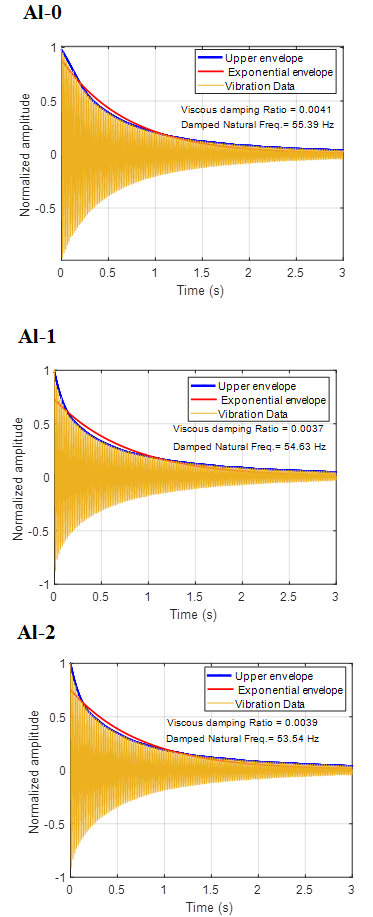
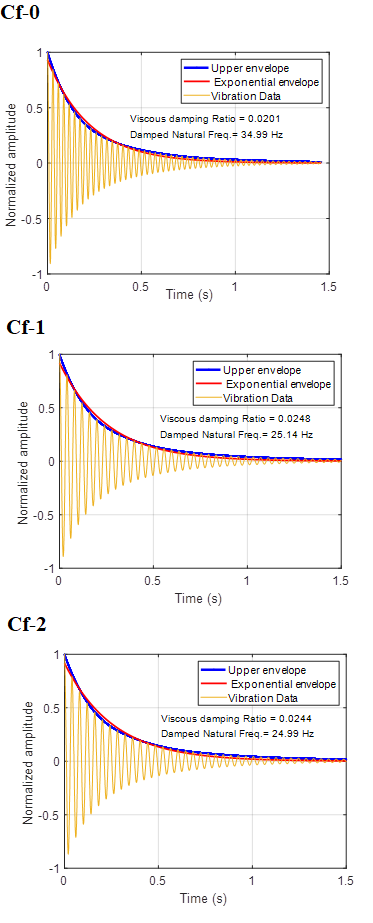
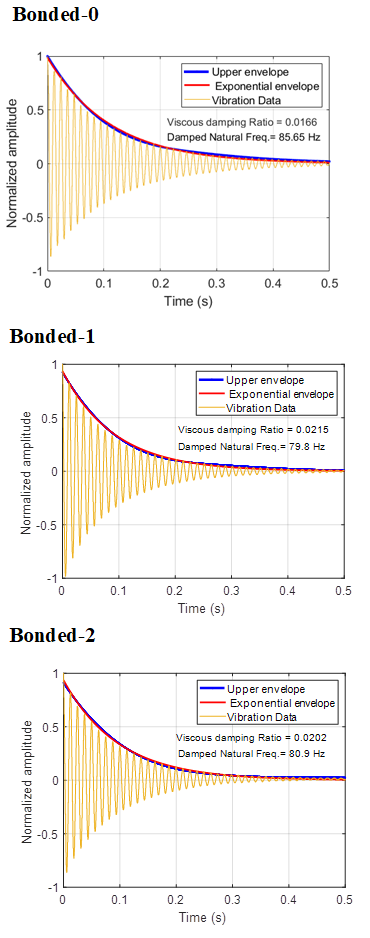
Figs. 6-8 show the experimentally measured acceleration responses of the beam specimens. The first damped natural frequencies were identified using Fast Fourier Transform (FFT) analysis, while the damping ratios were determined using the exponential decay envelope method.
| Al-0 | Al-1 | Al-2 | Cf-0 | Cf-1 | Cf-2 | Bonded-0 | Bonded-1 | Bonded-2 | |
| fd, Hz | 55.39 | 54.63 | 53.54 | 34.99 | 25.14 | 24.99 | 85.65 | 79.80 | 80.90 |
| Damping Ratio | 0.0041 | 0.0037 | 0.0039 | 0.0201 | 0.0248 | 0.0244 | 0.0166 | 0.0215 | 0.0202 |
According to Table 3, the damped natural frequency values for the three beam configurations indicate that the joined beams (Bonded 0-2) exhibit the highest frequency range, approximately 80–85 Hz, indicating relatively high structural stiffness. In contrast, the natural frequencies of the PAHT CF15 beams decrease to 25–35 Hz, suggesting lower stiffness. The aluminum beams, on the other hand, exhibit intermediate frequency values compared to the other structures. This situation is a natural consequence, depending on the rigidity of these three types of beams. As previously mentioned, three different bonding configurations were considered for each structure: without pattern, with double pattern, and with three patterns (Figs. 1-3). Based on the obtained results, it was observed that the values of natural frequencies decreased as the number of patterns and, consequently, the number of void regions increased. This trend was consistently observed in all three structural configurations.
A different tendency emerges when the damping ratios are evaluated. The PAHT CF15 beams exhibit the highest damping ratios ( 0.020–0.025), whereas the Joined beams (Bonded 0-2) show moderate damping values ( 0.016–0.021). In contrast, the aluminum structures demonstrate considerably lower damping ratios ( 0.0037–0.0041). These results clearly indicate that the PAHT CF15 beams exhibit a high capacity for vibration energy dissipation despite their relatively low stiffness. Furthermore, it was observed that increasing the number of surface patterns in the bonding region increased the damping ratio for the PAHT CF15 beams and Joined beams (Bonded 0-2). However, the aluminum beams exhibited the opposite trend, with the damping ratio generally decreasing with increasing pattern number.
5. Conclusions
This study experimentally investigated the influence of laser-generated surface patterns on the dynamic characteristics of aluminum, PAHT CF15 composite, and adhesively bonded aluminum-PAHT CF15 hybrid cantilever beams. Three different surface configurations, namely unpatterned, two-pattern, and three-pattern, were examined to evaluate their effects on the first damped natural frequency and damping ratio. The dynamic characteristics of the specimens were determined from impact hammer tests using Fast Fourier Transform (FFT) analysis to identify the first damped natural frequencies and the exponential decay envelope method to determine the damping ratios. The main findings of this study are summarized as follows.
The experimental results demonstrated that the surface pattern configuration significantly influences the dynamic behavior of all beam types. In general, increasing the number of laser-generated surface patterns from the unpatterned configuration to the two-pattern and three-pattern configurations resulted in a reduction in the first damped natural frequency for the aluminum, PAHT CF15 composite, and adhesively bonded hybrid beams. This consistent trend suggests that increasing the number of laser-generated surface patterns alters the structural dynamic response and consequently modifies the modal characteristics of the beam structures. Accordingly, the geometry of the surface pattern should be considered an important parameter in the vibration design of both individual and hybrid beam systems.
The damping behavior was found to depend on both the material type and the bonding configuration. For the PAHT CF15 composite beams and the adhesively bonded hybrid beams, the damping ratio generally increased with increasing number of surface patterns, indicating improved vibration damping characteristics. In contrast, the aluminum beams exhibited a slight decrease in damping ratio as the number of surface patterns increased. These observations indicate that identical surface pattern configurations may produce different dynamic responses depending on the mechanical characteristics of the material and the presence of an adhesive interface.
Comparison of the individual beam specimens with the adhesively bonded hybrid beams further indicates that the adhesive layer and the bonding surface architecture jointly influence the dynamic response of the structure. The observed variations in the natural frequency and damping ratio suggest that the patterned bonding interface affects both the effective structural stiffness and the vibration damping characteristics of the hybrid beams. Therefore, controlled laser-generated surface patterns can be considered an effective design parameter for tailoring the dynamic characteristics of adhesively bonded hybrid structures.
The findings of this study provide practical guidance for the design of lightweight hybrid structures in which vibration performance is a critical design consideration. By appropriately selecting the surface pattern configuration prior to bonding, the modal characteristics of aluminum-composite assemblies can be adjusted to satisfy different application requirements. Overall, the present study demonstrates that controlled laser-generated surface patterns can be utilized as a practical approach for tailoring the modal characteristics of adhesively bonded hybrid beam structures.
Future studies should investigate the influence of different surface pattern geometries, laser processing parameters, adhesive layer thicknesses, and bonding configurations on the dynamic characteristics of hybrid joints. Furthermore, the combined effects of cyclic loading, environmental conditions, and long-term service conditions on the vibration behavior of patterned adhesively bonded structures should be examined to establish comprehensive design guidelines for advanced lightweight hybrid systems.
Author contributions The authors declare that they contributed equally to the research and preparation of this article.
Funding Not applicableData availability statement Not applicableDeclarationsConflict of interest. The authors declare that they have no known competing financial interests or personal relationships that could have appeared to influence the work reported in this paper.
References
- Saito H, Tani H. Vibrations of bonded beams with a single lap adhesive joint. J Sound Vib. 1984;92(2):299–309. DOI ↗ Google Scholar ↗
- Rao MD, Crocker MJ. Analytical and experimental study of the vibration of bonded beams with a lap joint. J Vib Acoust. 1990;112(4):444–451. DOI ↗ Google Scholar ↗
- Ingole SB, Chatterjee A. Vibration analysis of single lap adhesive joint: Experimental and analytical investigation. J Vib Control. 2011;17(10):1547–1556. DOI ↗ Google Scholar ↗
- Chełmecki J, Szeptyński P, Jasińska D, Kwiecień A. Analyzing the vibration response of adhesively bonded composite cantilevers. Materials. 2025;18(1):93. DOI ↗ Google Scholar ↗
- Mohamad M, Marzuki HFA, Ubaidillah EAE, Abidin MFZ, Omar S, Rozi IM. Effect of surface roughness on mechanical properties of aluminium-carbon laminates composites. Adv Mater Res. 2014;879:51–57. DOI ↗ Google Scholar ↗
- Budhe S, Ghumatkar A, Birajdar N, Deopurkar K. Effect of surface roughness using different adherend materials on the adhesive bond strength. Appl Adhes Sci. 2015;3(20): 1-10. DOI ↗ Google Scholar ↗
- Hirsch F, Kästner M. Microscale simulation of adhesive and cohesive failure in rough interfaces. Eng Fract Mech. 2017;178:416–432. DOI ↗ Google Scholar ↗
- Zarei H, Marulli MR, Paggi M, Pietrogrande R, Üffing C, Weißgraeber P. Adherend surface roughness effect on the mechanical response of adhesive joints. Eng Fract Mech. 2020;240:107353. DOI ↗ Google Scholar ↗
- Zheng X, Hu N, Zhang D, Da Z, Shu L, Li Z, Cang X. Study on the interface and failure characteristics of joints between epoxy adhesive and duralumin alloy. Sci Prog. 2025;108(2):1-19. DOI ↗ Google Scholar ↗
- Khan MH, Gali OA, Edrisy A, Riahi AR. Effect of oxidation and surface roughness on the shear strength of single-lap-joint adhesively bonded metal specimens by tension loading. Appl Adhes Sci. 2016;4(21):1-17. DOI ↗ Google Scholar ↗
- Pereira A, Fenollera M, Prado T, Wieczorowski M. Effect of surface texture on the structural adhesive joining properties of Aluminum 7075 and TEPEX®. Materials. 2022;15(3):887. DOI ↗ Google Scholar ↗
- Guo L, Liu J, Xia H, Li X, Zhang X, Yang H. Effects of surface treatment and adhesive thickness on the shear strength of precision bonded joints. Polym Test. 2021;94:107063. DOI ↗ Google Scholar ↗
- Feng Z, Zhao H, Tan C, Zhang X, Chen B, Song X. Nanosecond laser ablation for improving the strength of CFRTP and aluminum alloy adhesively bonded joints. Compos Struct. 2021;274:114369. DOI ↗ Google Scholar ↗
- Wang H, Hao X, Yan K, Zhou H, Hua L. Ultrasonic vibration-strengthened adhesive bonding of CFRP-to-aluminum joints. J Mater Process Technol. 2018;257:213–226. DOI ↗ Google Scholar ↗
- Wang H, Gao C, Chen Y, Wu M, Hua L. Ultrasonic vibration-strengthened adhesive bonding of CFRP/aluminum alloy joints with anodizing pretreatment. JOM. 2020;72(10):3472–3482. DOI ↗ Google Scholar ↗
- Nasreen A, Bangash MK, Shaker K, Nawab Y. Effect of surface treatment on stiffness and damping behavior of metal-metal and composite-metal adhesive joints. Polymers. 2023;15(2):435. DOI ↗ Google Scholar ↗
- Ramezani F, Simões BD, Carbas RJC, Marques EAS, da Silva LFM. Developments in laminate modification of adhesively bonded composite joints. Materials. 2023;16(2):568. DOI ↗ Google Scholar ↗
- Lasowicz N, Jankowski R. Experimental and numerical analysis of an aluminum cantilevered beam with polymer adhesive. Procedia Eng. 2017;172:634–639. DOI ↗ Google Scholar ↗
- Lasowicz N, Kwiecień A, Jankowski R. Experimental study on the effectiveness of polyurethane flexible adhesive in reduction of structural vibrations. Polymers. 2020;12(10):2364. DOI ↗ Google Scholar ↗
- Damm J, Albiez M. Damping properties of large-scale overlap joints bonded with epoxy hybrid resin or polyurethanes: Experimental Characterisation and Analytical Description. Polymers. 2023;15(5):1102. DOI ↗ Google Scholar ↗
- Yaman M, Şansveren MF, Maraş S. Vibration characteristics analysis of adhesively bonded different joints. Turk J Electromech Energy. 2020;5(1):21–28. DOI ↗ Google Scholar ↗
- Yaman M, Şansveren MF. Numerical and experimental vibration analysis of different types of adhesively bonded joints. Structures. 2021;34:368–380. DOI ↗ Google Scholar ↗
- Du Y, Shi L. Effect of vibration fatigue on modal properties of single lap adhesive joints. Int J Adhes Adhes. 2014;53:72–79. DOI ↗ Google Scholar ↗
- García-Barruetabeña J, Cortés F. Experimental analysis of the vibrational response of an adhesively bonded beam. Measurement. 2014;55:238–245. DOI ↗ Google Scholar ↗
- García-Barruetabeña J, Cortés F. Finite elements analysis of the vibrational response of an adhesively bonded beam. Eng Struct. 2018;171:94–104. DOI ↗ Google Scholar ↗
- Luan X, Deng Y, Chen J, Li Y. Damage evolution and residual strength evaluation of Al/CFRTP adhesive joints under transverse impact. J Compos Sci. 2025;9(9):490. DOI ↗ Google Scholar ↗
- Pulkit K, Saini B, Chalak HD. Effect of various interface bond tests and their failure behavior on substrate and overlay concrete -A Review. Res Eng Struct Mater. 2023;9(2): 541-562. http://dx. DOI ↗ Google Scholar ↗
- Imanaka M, Ishii K, Hara K, Ikeda T, Kounoe Y. Fatigue crack propagation rate of CFRP/aluminum adhesively bonded DCB joints with acrylic and epoxy adhesives. Int J Adhes Adhes. 2018;85:146–156. DOI ↗ Google Scholar ↗
- Acar V. Numerical modal analysis of adhesively bonded joints of aramid fiber composites with interply and intraply carbon fiber hybridization. Erzincan Univ J Sci Technol. 2025;18(2):618–630. DOI: DOI ↗ Google Scholar ↗
- Wei Y, Jin X, Luo Q, Li Q, Sun G. Adhesively bonded joints: A review on design, manufacturing, experiments, modeling and challenges. Compos B Eng. 2024;276:111225. DOI ↗ Google Scholar ↗
- Ertürk E, Diez JG, Vitale P, Höfer P. Surface morphology influences on the adhesive bond performance of PBF-LB manufactured Ti6Al4V parts: Investigation of quasi-static and fatigue loading conditions. J Adhes. 2025;101(10):1219–1251. DOI ↗ Google Scholar ↗